



Blue Tapestry Chair
A blue tapestry chair brings rich textile depth and period timber into a room, offering both traditional seating and distinct historical character.
Blue Tapestry Chair
When searching for a blue tapestry chair, buyers encounter a diverse selection of seating ranging from Georgian and Victorian periods through to the early twentieth century. These pieces encompass various forms including armchairs, dining chairs, side chairs, stools, and nursing chairs.
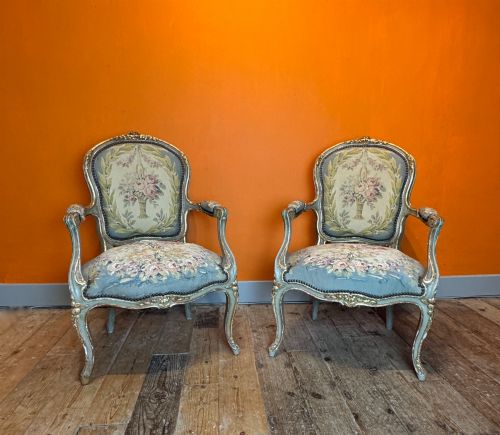
The aesthetic embraces multiple historical revivals, featuring French Louis XV and Rococo styles alongside Queen Anne, Regency, Victorian Gothic, and Arts and Crafts designs.
Upholstery defines these listings, utilising needlepoint, wool, and textile covers often executed in shades of blue and duck egg, paired with foundational frames of mahogany, walnut, rosewood, oak, and painted beechwood.
Materials and construction methods
Makers constructed the structural frames from dense hardwoods such as mahogany, walnut, rosewood, and oak, occasionally employing painted beechwood enhanced with gold leaf or parcel gilt highlights.
Upholstery work relies on woven textiles, wool, and detailed needlepoint, sometimes incorporating decorative elements like brass detailing or classical claw and ball feet.
Joinery and carving techniques reflect the specific period of production, from the robust carved oak of Gothic revival pieces to the graceful curves of French Rococo revival armchairs.
Blue Tapestry Chair Retail Price Guide 2026
Typical asking prices for blue tapestry chair among the pieces listed under this phrase on Sellingantiques today, from the lower quarter to the upper quarter. They describe what is for sale here now, not the wider market.
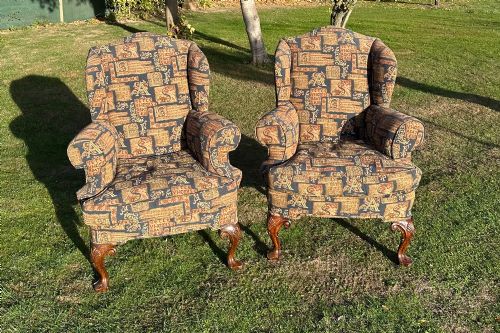
Several armchairs come equipped with classic claw and ball feet for maximum grip on your parlour floor.
Judging the quality of pieces
Quality separates through the crispness of timber carving and the architectural integrity of the frame, where deeply hand-carved details and substantial hardwoods indicate superior execution.
The finesse of the textile work dictates value, with intricate needlepoint and tightly woven tapestry upholstery showing a higher level of artisan skill than standard fabric applications.
Coherence of style marks the better examples, where period characteristics such as French Louis XV revival lines or George III proportions remain uncompromised by later alterations.
The Blue Tapestry Chair Glossary
- Tapestry Upholstery
- Woven or needleworked fabric covering applied to seating. This textile layer provides both decorative pattern and functional cushioning.
- Needlepoint
- A type of canvas work embroidery executed with a yarn threaded through a mesh grid. It creates the detailed pictorial or geometric surfaces seen on many period seats.
- Parcel Gilt
- A decorative technique where specific carved details of a wooden frame receive a thin application of gold leaf. It highlights particular architectural motifs against a painted background.
- Fauteuil
- An open-armed French armchair with upholstered back and armrests supported by an exposed wooden frame. This form typically dates to revival periods influenced by French eighteenth-century design.
- Claw and Ball
- A furniture foot carved to resemble a bird's talon gripping a spherical object. This motif appears frequently on the legs of eighteenth-century and revival seating.
Blue Tapestry Chair: Frequently Asked Questions
How do I date a blue tapestry chair?
Dating relies on identifying the underlying timber, framing style, and carving motifs associated with periods like the Georgian era or Victorian times.
Secondary clues include the weave and technique of the textile upholstery, though many chairs have been re-covered during their lifespan.
Are these chairs suitable for daily use?
Most sturdy mahogany, walnut, or oak framed seating is structurally robust enough for regular sitting when properly maintained.
Delicate painted or gilt armchairs require more mindful placement to protect the decorative finish and antique textiles.
What is needlepoint upholstery?
Needlepoint is a stitched canvas work using wool or thread to form dense, durable patterns across the seat or backrest.
This technique allows for intricate multicolored designs that define many traditional upholstered chairs.
How do I clean antique tapestry?
Gentle surface dusting with a soft brush helps maintain wool and textile fibres without disturbing the historic weave.
Professional textile conservation cleaning is recommended for deep dirt removal to protect fragile antique threads.