


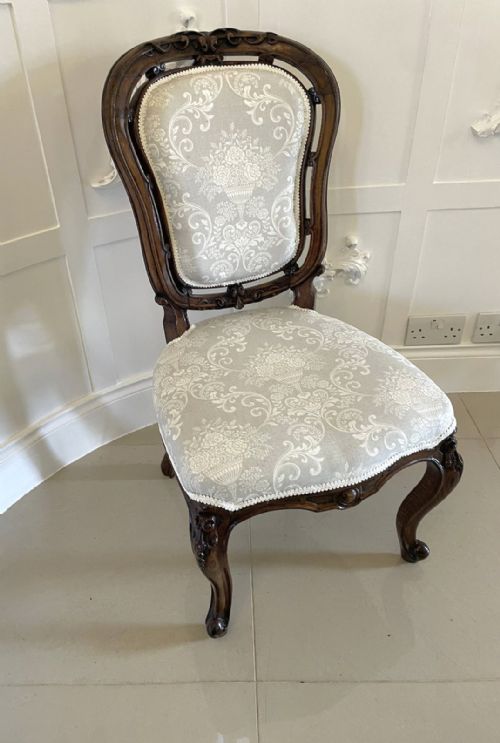


Cabriole Leg Occasional Seat
A cabriole leg occasional seat brings curved lines and period character into a room.
Cabriole Leg Occasional Seat
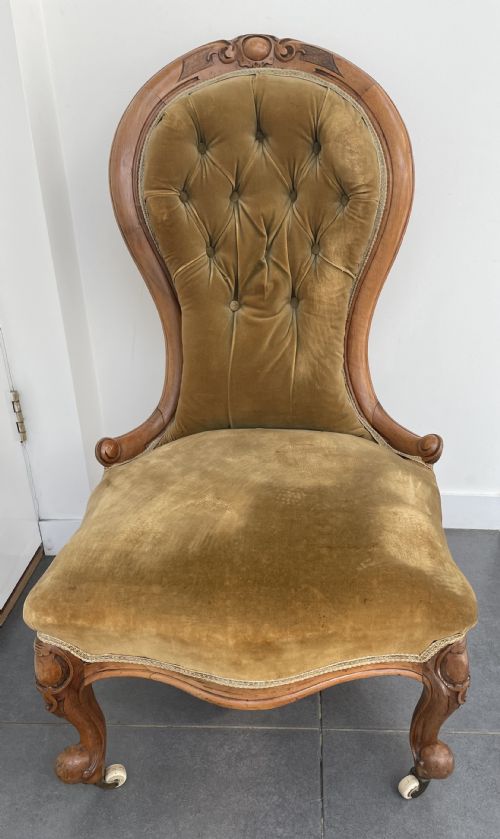
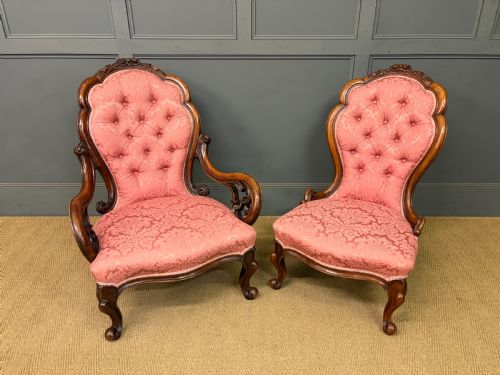
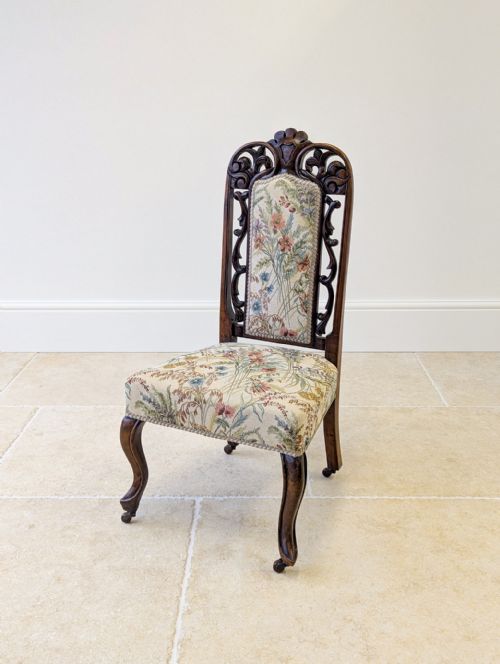
Makers produced these seating forms in walnut and mahogany, often incorporating carved details, pierced splats, or scroll backs. Upholstery materials include velvet, fabric, and tapestry, whilst other pieces remain ready for re-upholstery.
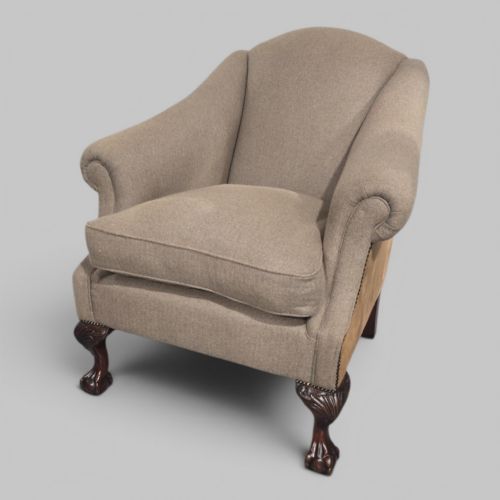
French Rococo and Chippendale revival styles appear frequently alongside straightforward Victorian designs. Buyers encounter single chairs, pairs, and small sets suited to occasional use in domestic spaces.
How they were made
Cabinetmakers shaped the distinctive curved legs from hardwoods such as walnut and mahogany, sometimes applying paint or gilt surfaces. Construction methods relied on traditional joinery to support the weight and movement of everyday use.
Upholstered versions combined internal webbing or stuffing with textile coverings like velvet, tapestry, or patterned fabric. Carved ornamentation, scroll backs, and pierced splats were executed by hand using chisels and gouges.
One set awaits a completely fresh start in the drawing room, currently offered entirely bare for re-upholstery.
What varies in quality
The crispness of the carved detail on the woodwork marks the distinction between standard production and finer workshops. Well-defined scrolls and smoothly contoured cabriole legs show greater artisan skill than softened or heavy-handed carving.
The selection of timber grain and the integrity of the frame construction influence the durability of each seat. Original upholstery techniques and surviving textile coverings also separate untouched examples from pieces that have undergone extensive modern intervention.
The Cabriole Leg Occasional Seat Glossary
- Cabriole leg
- A furniture leg that curves outward at the knee and tapers inward toward the ankle, mimicking animal limbs. This form became a defining feature of eighteenth-century design and later revival styles.
- Salon chair
- A light, decorative chair intended for formal entertaining in a drawing room or parlour. These seats prioritised elegant proportions over heavy comfort.
- Pierced splat
- A vertical wooden strip in the centre of a chair back that has been cut through to create an openwork pattern. Cabinetmakers used this technique to lighten the visual weight of mahogany and walnut framing.
- Scroll back
- A chair back featuring outward-curving terminals shaped like scrolls. This design detail appears frequently on nineteenth-century seating.
- Gilt wood
- Timber treated with a thin layer of gold leaf or metallic paint. This finish provided a reflective surface for candlelit rooms.
Cabriole Leg Occasional Seat: Frequently Asked Questions
Where should I place an occasional seat?
These compact seats suit corners, hallways, and drawing rooms where extra seating is needed without heavy furniture.
They work well as standalone decorative accents alongside larger upholstery.
How do I identify a Victorian chair?
Victorian pieces often feature dark hardwoods like walnut, substantial carving, and styles that nod to earlier Rococo or Gothic revivals.
Construction details and upholstery choices help narrow down the decade of manufacture.
Can I use these chairs every day?
Most antique occasional seats handle normal daily sitting, though delicate frames require sensible care.
Checking the stability of the joints ensures the piece remains suitable for regular domestic use.
What is the difference between a salon chair and a side chair?
Salon chairs were made specifically for entertaining guests in formal rooms, often featuring more ornate carving and lighter proportions.
Side chairs served a wider range of household functions around tables or against walls.