


Walnut Sideboard Cabinet
When choosing a walnut sideboard cabinet, you select from a rich variety of nineteenth-century credenzas and streamlined twentieth-century designs.
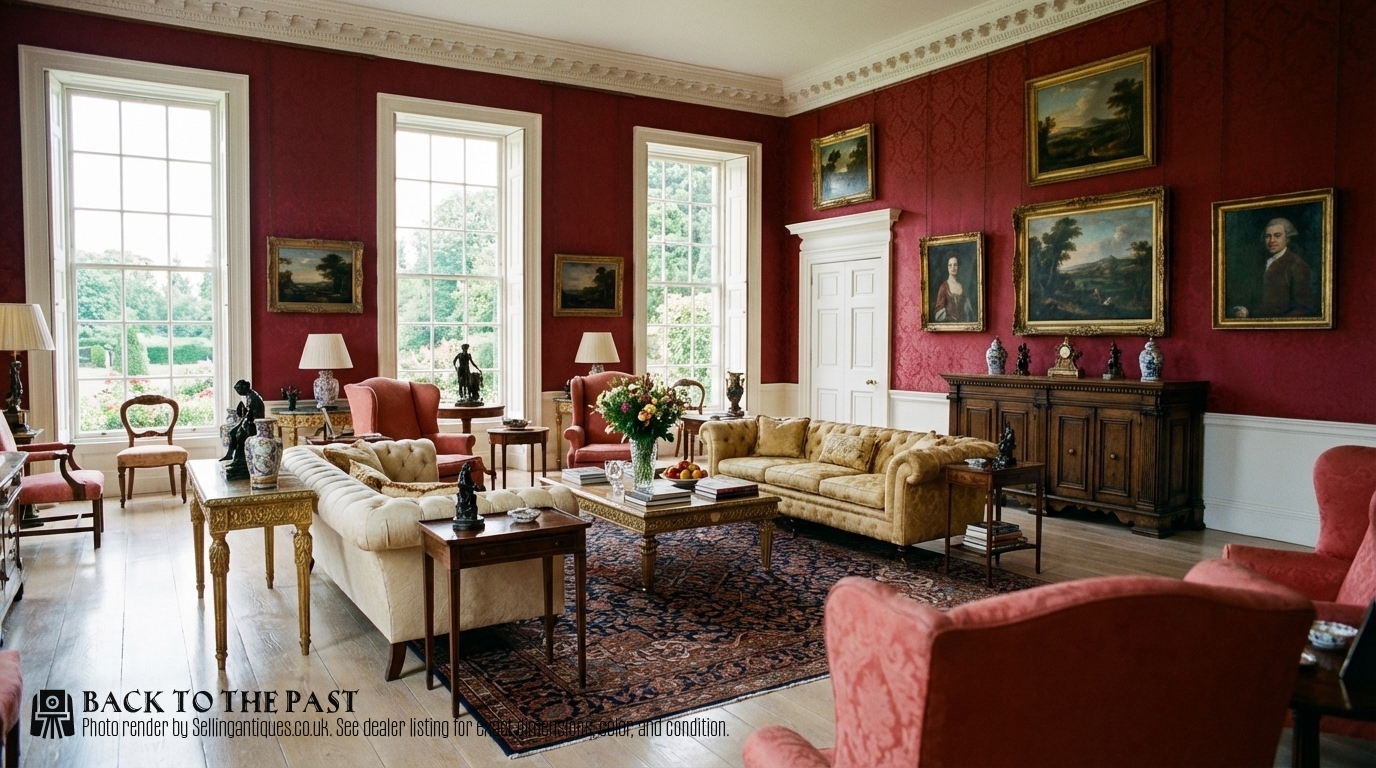
Walnut Sideboard Cabinet
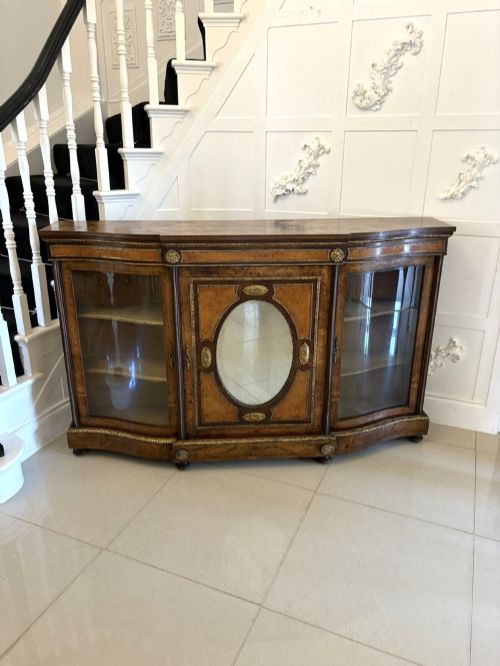
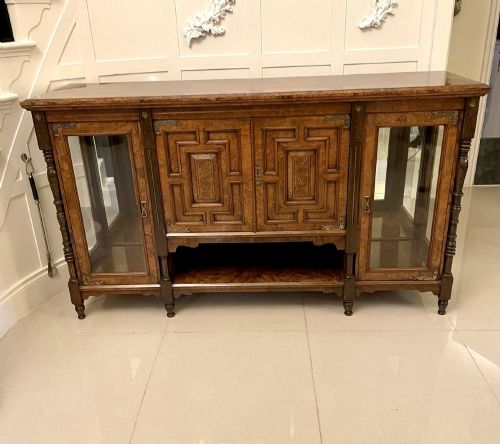
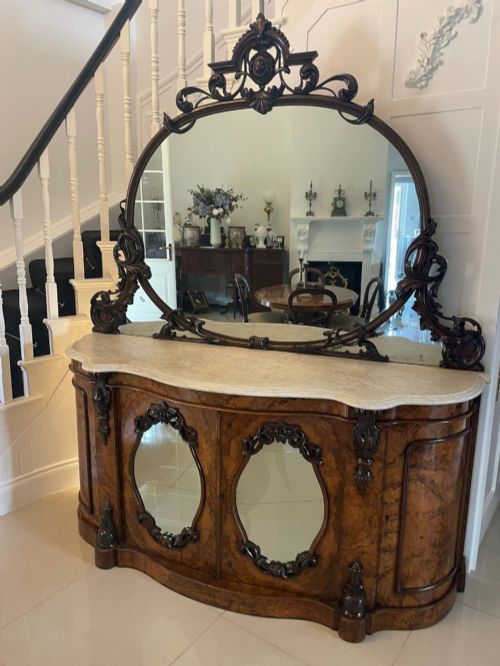
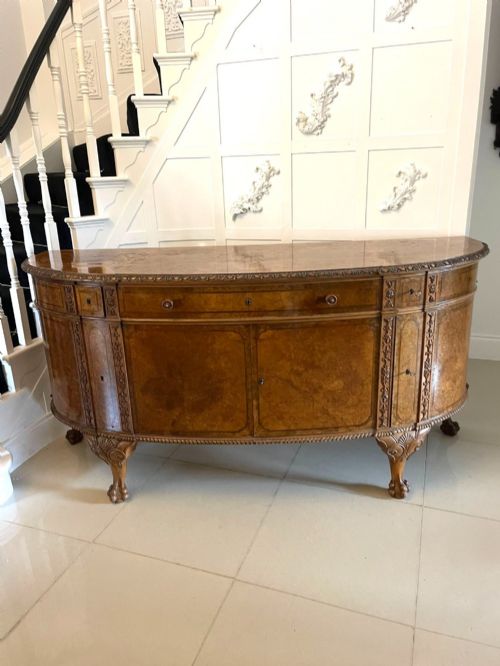
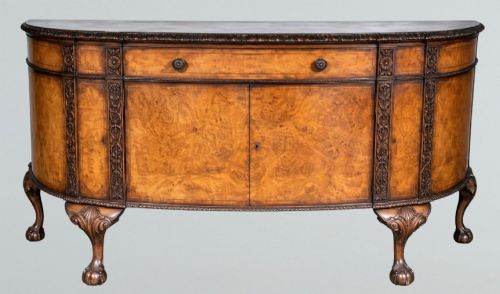
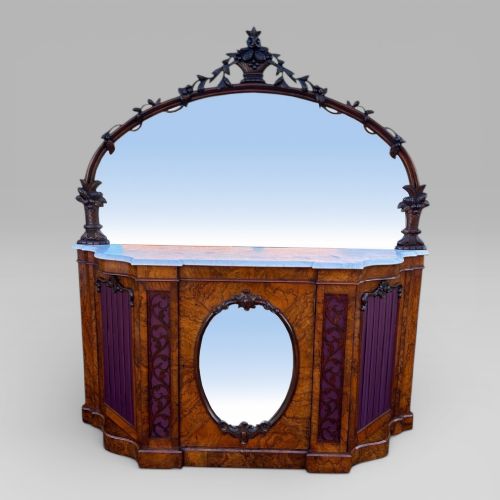
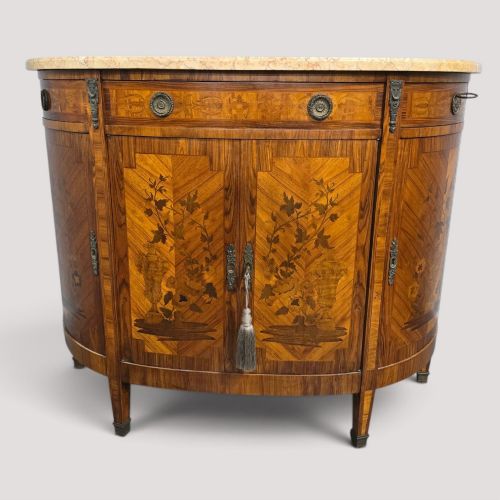
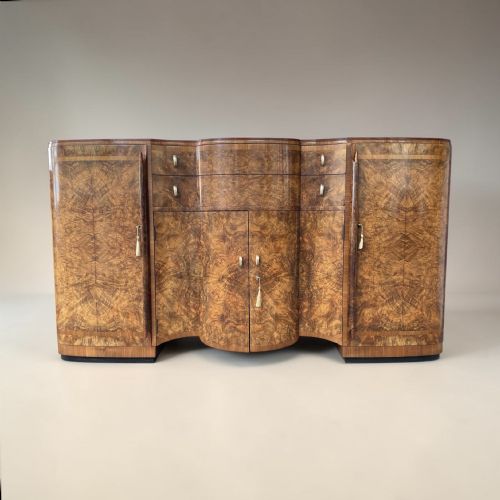
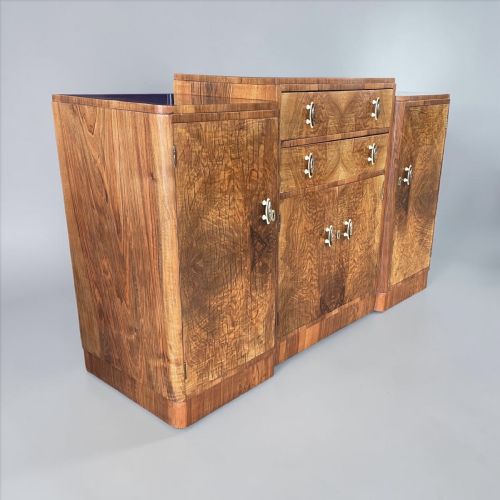
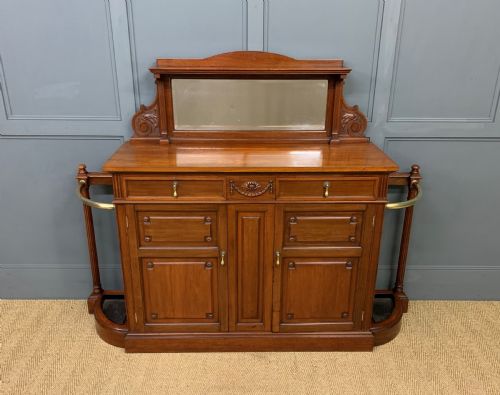
A walnut sideboard cabinet serves as a substantial storage piece and display surface for dining rooms, salons, and principal entertaining spaces. The selection ranges widely across forms, encompassing Victorian credenzas, serpentine servers, demi-lune cabinets, and geometric Art Deco sideboards.
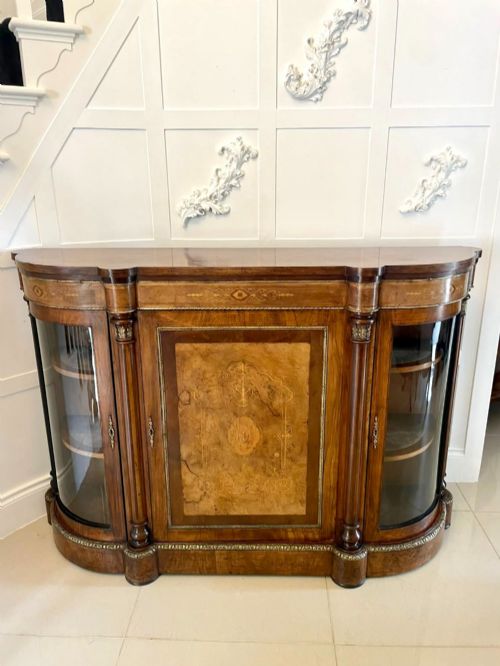
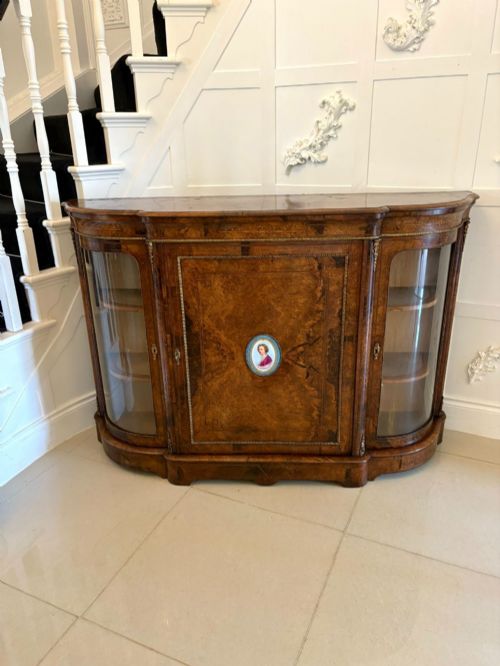
Victorian examples frequently feature mirror backs, porcelain mounts, and delicate marquetry inlay across burr walnut surfaces. Mid-century and Art Deco interpretations favour clean, figured grain patterns combined with sycamore or satin birch.
Originating predominantly from British, French, and Austrian workshops, these items span periods from the mid-nineteenth century through to the interwar twentieth century.
Materials and Construction
Makers utilised solid walnut and decorative veneers, particularly highly figured burr walnut, applied over secondary timbers to achieve dramatic visual movement across large door panels and curved fronts. Ormolu mounts, brass fittings, and inset marble tops provide structural contrast and decorative weight.
Marquetry inlay incorporating floral motifs or geometric banding demonstrates precise hand-cutting techniques common to nineteenth-century cabinet makers. Later Art Deco pieces rely on sleek, book-matched veneers and contrasting light woods like sycamore to define their architectural silhouettes.
Several pieces include secret compartments once used to secure family silver and vintage cocktail recipes.
Judging Quality
Superior quality rests upon the selection and matching of the walnut veneer, where continuous grain patterns flow smoothly across multiple drawers and doors. The complexity of the timber preparation and the precision of hand-cut marquetry separate standard production from exhibition pieces.
Hardware integration also defines grade, with heavy chased ormolu mounts, original bevelled mirror glass, and stamped maker signatures marking out exceptional workshops. Construction integrity shows in the weight of the timber and the smooth operation of fitted cocktail compartments and serpentine doors.
Shoolbred and Co·Edward Barnsley·Harry and Lou Epstein·Hille·Gillows
The Walnut Sideboard Cabinet Glossary
- Burr walnut
- A highly prized wood grain featuring swirling knot clusters that create intricate, organic patterns across cabinet doors.
- Credenza
- A low, freestanding storage cabinet originating in Italy, frequently featuring mirrored doors and ormolu mounts during the Victorian period.
- Ormolu
- Gilded bronze ornamentation applied to cabinet corners and friezes, providing metallic contrast against dark wood.
- Marquetry
- Decorative patterns formed by fitting small pieces of veneer into wooden panels to create pictorial or geometric designs.
- Demi-lune
- A half-moon shape characteristic of sideboards and console tables designed to sit flush against a wall.
Walnut Sideboard Cabinet: Frequently Asked Questions
How do I style a walnut sideboard cabinet?
Position the piece as a focal point in a dining room or hallway, utilising the surface top for lamps, ceramics, or silver display. Pair the darker wood tones with neutral walls to let the natural burr grain patterns stand out.
Interior storage accommodates glassware, linens, or dinnerware depending on whether the piece contains fitted drawers, shelves, or dedicated cocktail compartments.
What is the difference between a credenza and a sideboard?
Credenzas traditionally sit lower to the ground and often incorporate glass display doors, mirrored back panels, and decorative ormolu mounts. Sideboards generally emphasise larger storage capacities and serving surfaces suitable for dining spaces.
Many nineteenth-century examples blur these distinctions, combining the enclosed cabinets of a sideboard with the decorative mountings of a credenza.
How do I identify Art Deco walnut cabinets?
Art Deco pieces display streamlined silhouettes, symmetrical waterfall edges, and book-matched figured veneers without traditional period carving. They frequently combine dark walnut with lighter contrasting woods like sycamore.
Many of these twentieth-century designs function as dedicated cocktail cabinets, incorporating mirrored interiors, pull-out serving slides, and specialised bottle storage.
How do I care for antique walnut furniture?
Maintain the wood by keeping the cabinet away from direct sunlight and steady heat sources to prevent veneer lifting. Apply specialist wax polish sparingly to nourish the grain without building up heavy residue.
Dust regularly with a soft, dry cloth and avoid using chemical sprays that can damage historic French polish or lacquered finishes.