
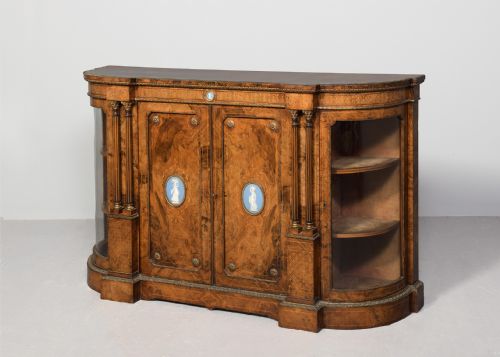


Walnut Porcelain Cabinet
A walnut porcelain cabinet brings together rich timber and hand-painted ceramic plaques to anchor a formal interior.
Walnut Porcelain Cabinet
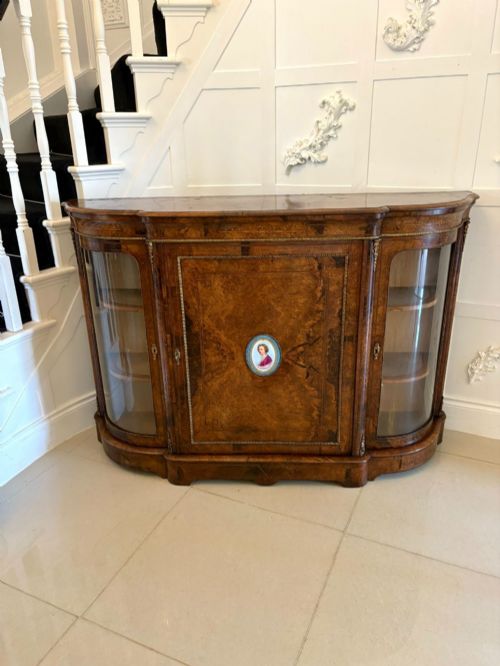
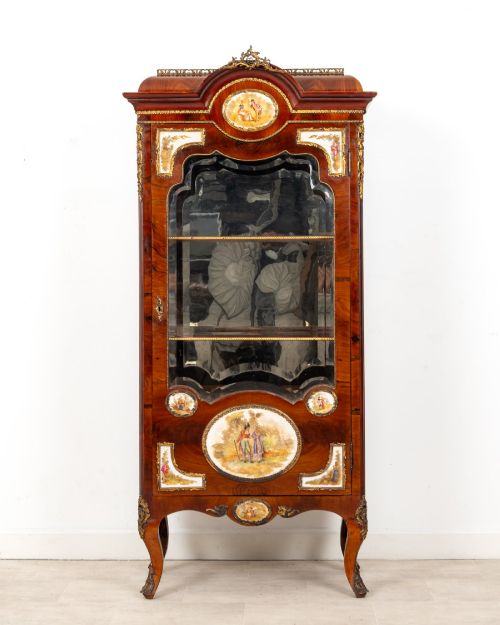
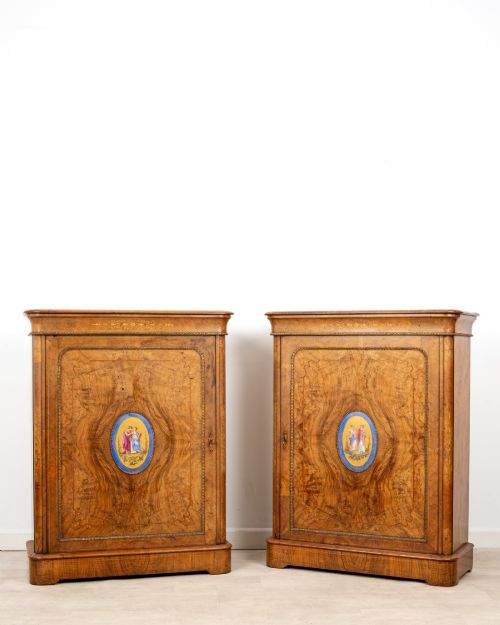
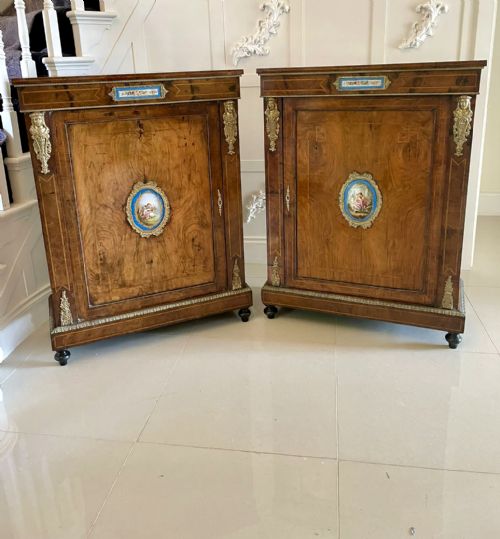
A walnut porcelain cabinet combines dark timber construction with inset ceramic plaques, taking the form of credenzas, side cabinets, pier cabinets, and display cases. These pieces emerge predominantly from Victorian English workshops and French revival settings dating across the nineteenth century.
The most frequent encounter on this page is the credenza or side cabinet, often detailed with marquetry inlay and glass panels. Such pieces serve as both storage units and display surfaces within formal rooms.
What varies in quality
The refinement of the marquetry inlay and the depth of the burr walnut grain determine the visual impact of the timber surfaces. Finely figured veneers demonstrate careful matching across the doors and panels.
The artistry of the porcelain plaques separates standard production from exceptional work. Hand-painted ceramic inserts with detailed figures or florals sit within heavier, more precisely cast ormolu mounts.
Current listings span the Victorian period through to 1920, uniting walnut, burr walnut, ebonised wood, and ormolu.
The Walnut Porcelain Cabinet Glossary
- Burr walnut
- A figured timber taken from the wart growths of the walnut tree, prized for its swirling grain patterns. Cabinetmakers slice this wood into thin veneers for decorative furniture fronts.
- Credenza
- A low cabinet, typically featuring central and side cupboards with glass panels, designed for nineteenth-century drawing rooms. This form frequently incorporates porcelain plaques and ormolu mounts.
- Ormolu
- Gilded brass applied as decorative mounts, feet, and border trim on nineteenth-century furniture. The technique involves applying a mercury-gold amalgam to bronze or brass.
- Pier cabinet
- A tall, narrow cabinet designed to stand against the wall space between windows. These pieces often feature glazed doors and single or paired porcelain mountings.
- Marquetry
- The art of applying pieces of veneer to a structure to form decorative patterns and pictures. Makers utilise contrasting woods such as ebony, kingwood, and walnut for this work.
Walnut Porcelain Cabinet: Frequently Asked Questions
Where did these cabinets go in a Victorian home?
These pieces occupied principal reception rooms and drawing rooms where guests gathered. They functioned as display surfaces for porcelain and ornaments while housing household silver or linens inside.
Their polished timber and ceramic plaques caught the light from oil lamps and windows, adding colour and texture to formal interior schemes.
How do I distinguish English Victorian from French revival pieces?
English pieces from the nineteenth century tend towards structured credenzas with substantial burr walnut veneers and disciplined marquetry inlay. French examples often reflect Louis XV, Louis XVI, or Napoleon III revival styles with more pronounced ormolu mounts and curved contours.
Both traditions incorporate hand-painted ceramic plaques, though French cabinets frequently lean towards lighter kingwood accents and vitrine display configurations.
What is the best way to clean burr walnut veneer?
Maintenance requires a soft, dry cloth to remove dust from the intricate grain and marquetry surfaces. Excessive moisture damages the polish and veneer beneath.
Periodic application of appropriate wax feeds the timber and preserves the depth of the nineteenth-century finish without building up residue.
Are the porcelain plaques removable?
The ceramic plaques are secured permanently into the cabinet carcase or door frames during manufacture. Removing them risks damaging the surrounding wood, ormolu mounts, and the ceramic edges.
These plaques remain an integrated decorative element of the furniture design rather than interchangeable panels.