


Georgian Walnut Display Cabinet
A georgian walnut display cabinet brings rich grain and formal proportion to a room, offering both display space and refined storage.
Georgian Walnut Display Cabinet
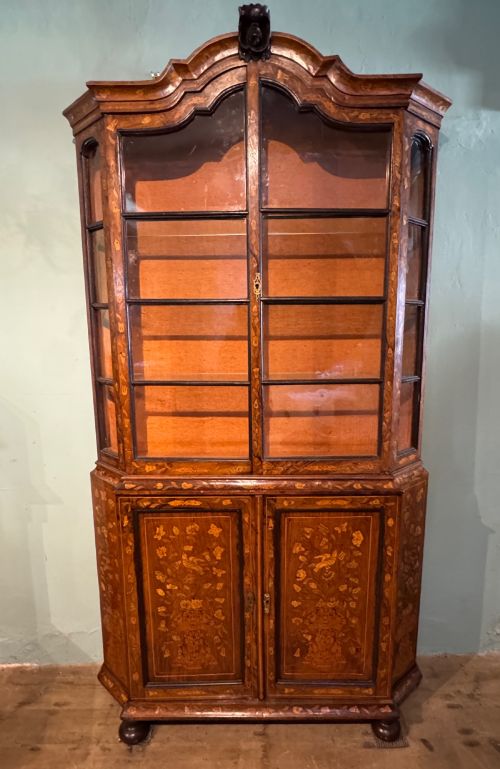
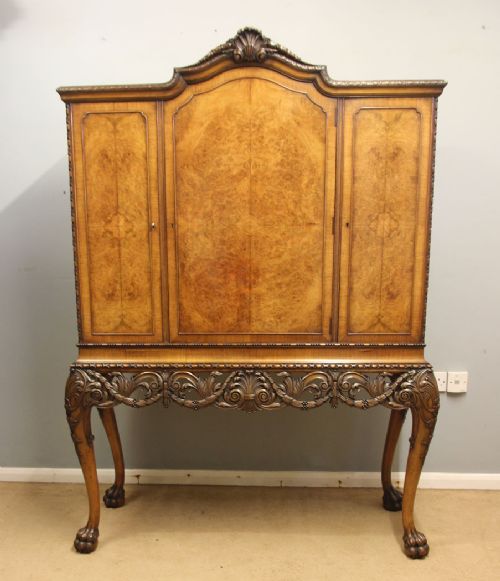
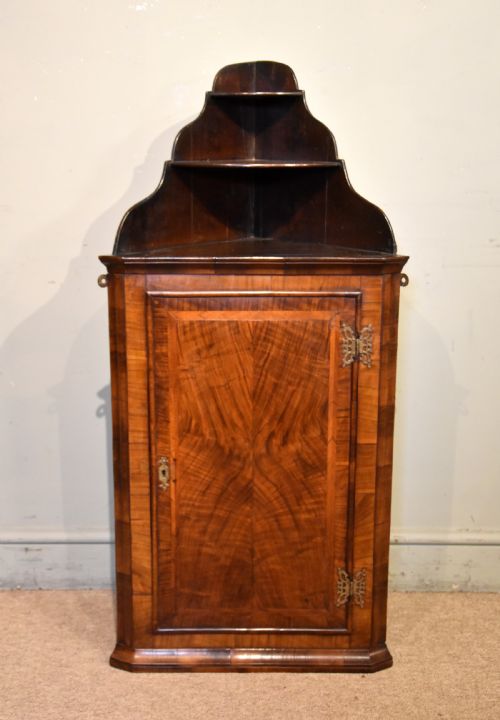
A georgian walnut display cabinet encompasses corner cupboards, tall bookcases, and glazed side cabinets originating primarily from the eighteenth century, alongside later revival pieces. Buyers most frequently encounter corner cabinets and bookcases dating from the eighteenth century up to the early twentieth century.
The selection ranges from Dutch marquetry bombé examples to plain upright bookcases and hanging corner cupboards. Walnut serves as the primary timber, often paired with oak or fruitwood and enriched with glass panels and brass hardware.
Materials and Construction
Cabinet makers utilised solid walnut and burr walnut veneer laid over secondary timbers such as oak and fruitwood to build these pieces. Marquetry inlay, astragal glazing bars, and brass fittings completed the construction.
Surfaces often display intricate grain patterns through the application of burr walnut veneer, whilst doors frequently feature glazed panels held by timber framing.
Several pieces conceal their contents behind ovoid and diamond interlaced glazing designed to trick the eye.
Craftsmanship and Proportion
Quality rests in the depth of the walnut grain, the crispness of any marquetry inlay, and the harmony of the proportions. Finer examples display careful timber selection, particularly in burr walnut veneers, and precise glazing bar construction.
The integrity of the construction, the retention of original brass hardware, and the subtlety of period revival styling separate standard pieces from exceptional ones.
The Georgian Walnut Display Cabinet Glossary
- Burr Walnut
- Timber taken from a tree growth that produces complex, swirling grain patterns. This veneer is prized for decorative furniture surfaces.
- Astragal Glazing
- Wooden bars that divide glass panes within a cabinet door. They create geometric patterns typical of period bookcases.
- Bombé
- A swelling, outward-curving shape found on the lower sections of certain cabinets. It requires advanced woodworking skill to achieve.
- Marquetry
- Inlaid pieces of wood fitted into a veneer to form decorative patterns. Dutch examples frequently utilise floral and scroll motifs.
Georgian Walnut Display Cabinet: Frequently Asked Questions
How do I date a walnut cabinet?
Dating relies upon examining construction methods, timber choices, and hardware styles alongside known period characteristics.
Secondary woods, hinge types, and glazing bar thickness often provide reliable clues to the decade of manufacture.
Where should I place a corner cabinet?
Corner cupboards suit transitional spaces and awkward angles where standard rectangular furniture proves impractical.
They utilise empty room junctions whilst providing visible storage for ceramics or books.
Are revival pieces well made?
Revival items from the nineteenth and early twentieth centuries frequently employ traditional joinery and high-grade timber.
Craftsmen during these periods closely copied eighteenth-century proportions and decorative techniques.
How do I care for walnut veneer?
Walnut veneer requires stable humidity levels and protection from direct sunlight to prevent fading and lifting.
Regular dusting with a dry cloth keeps the surface clean without moisture damage.