
Walnut Pedestal Dining Table
A walnut pedestal dining table brings warmth and rich grain to a room, offering a sturdy central base that leaves plenty of room for chairs.
Walnut Pedestal Dining Table
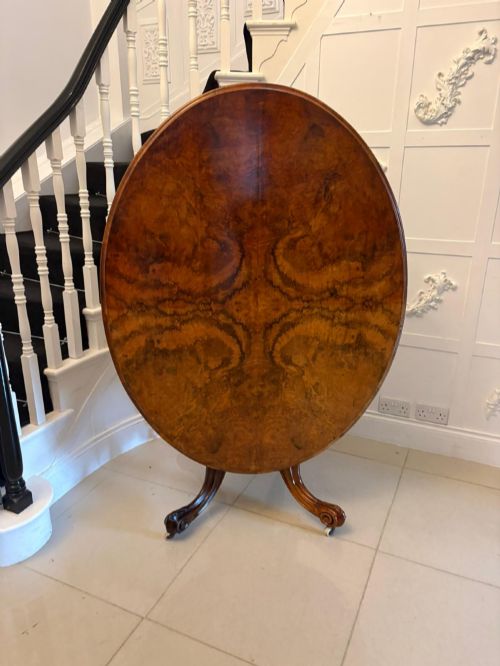
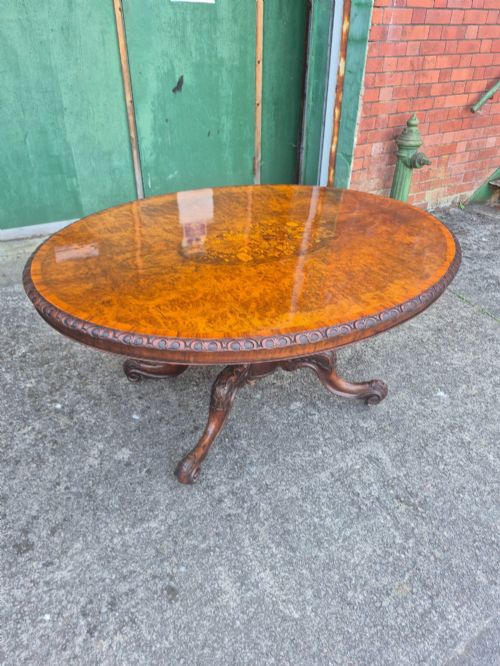
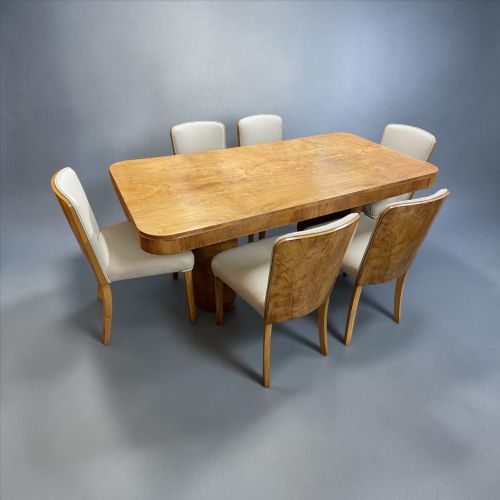
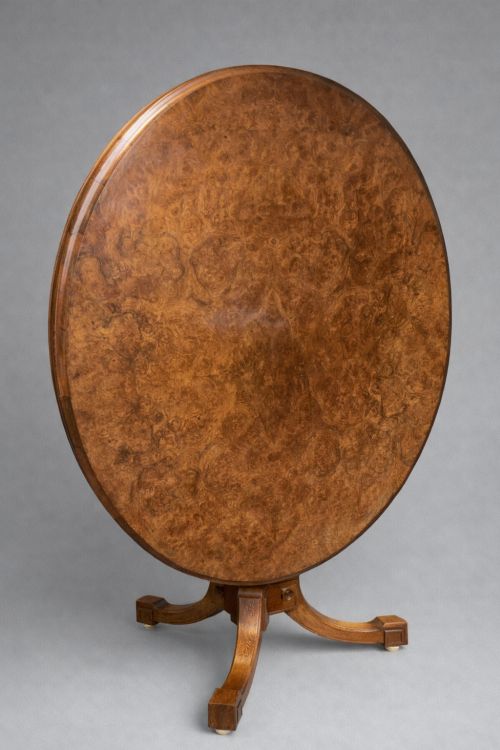
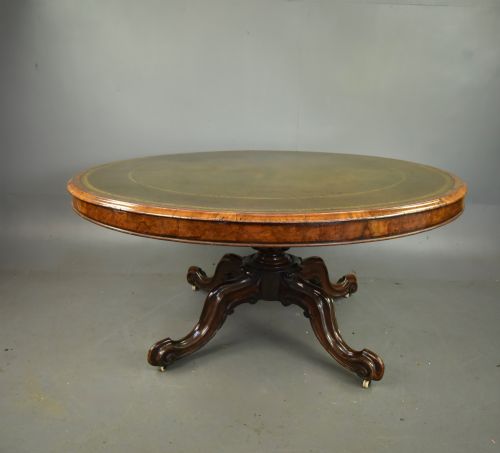
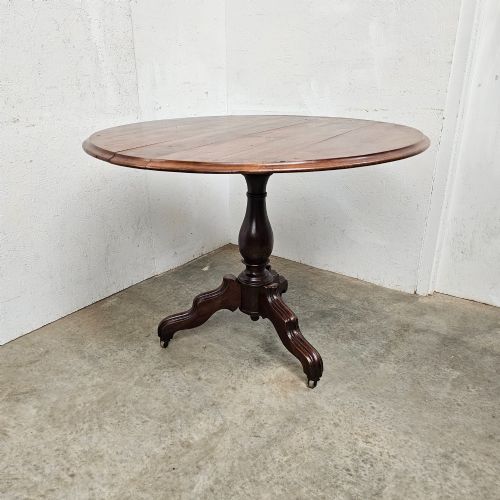
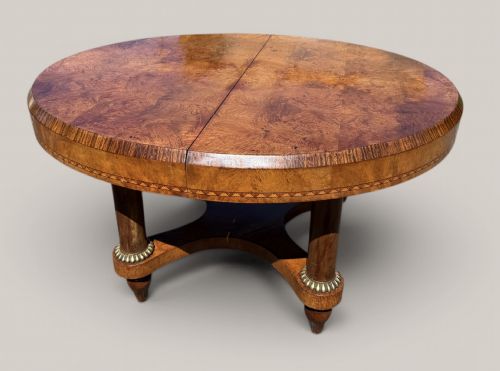
A walnut pedestal dining table brings together useful dining space and distinctive timber, appearing frequently in Victorian and Art Deco forms across these listings. Buyers seek these pieces for their central pillar supports, which provide stable seating arrangements without corner legs getting in the way of diners.
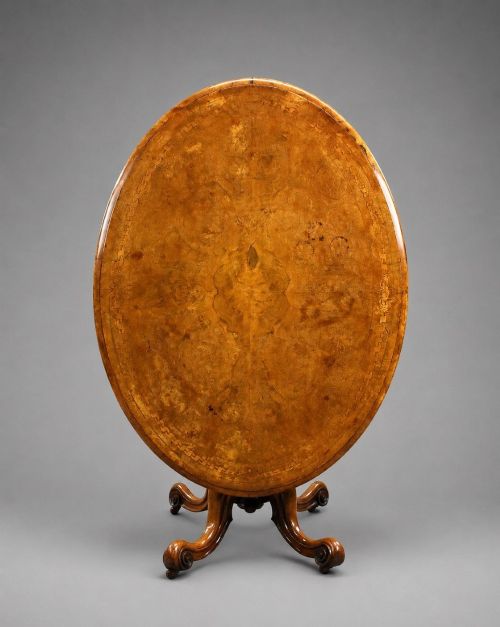
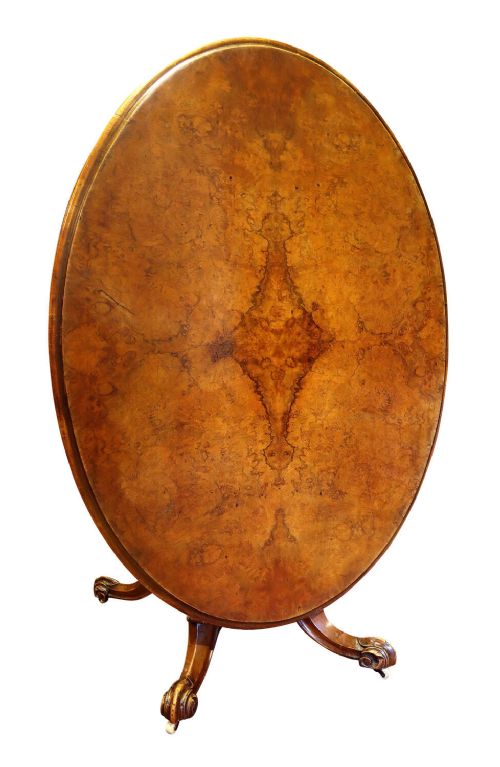
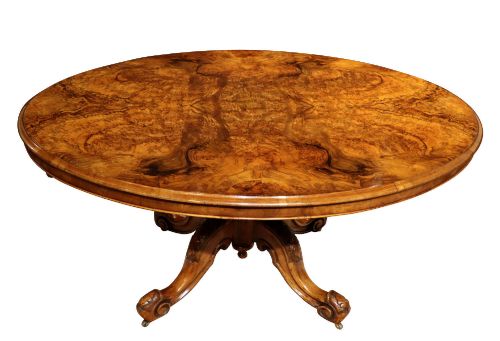
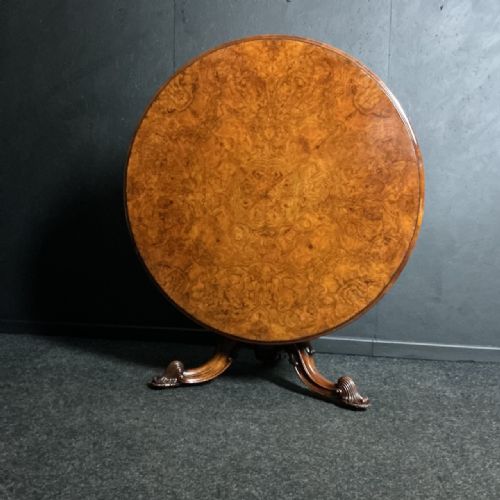
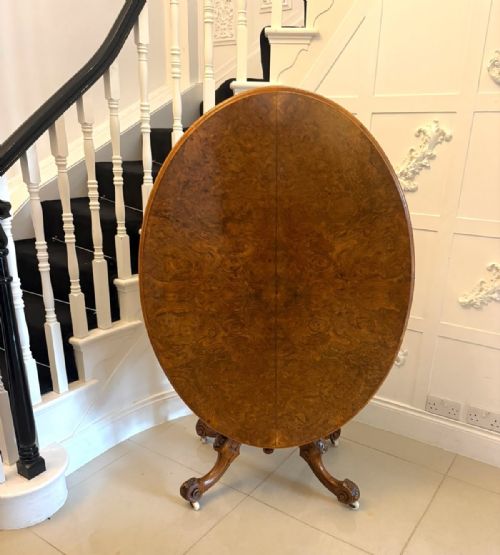
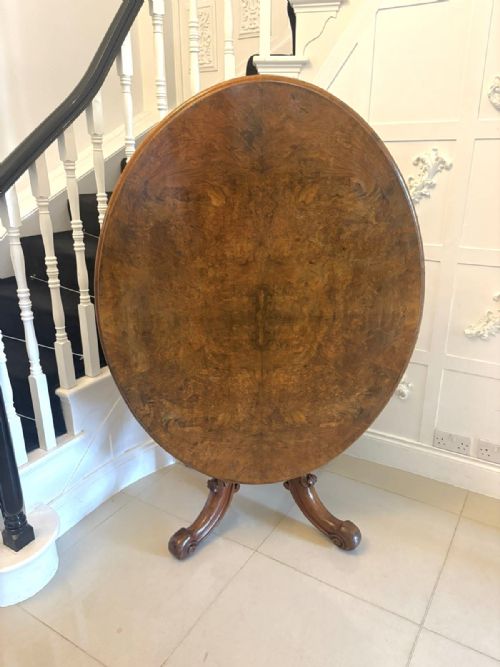
The selection ranges from compact circular breakfast tables and tilt-top loo tables to large extending twin and triple pedestal dining formats designed to seat eight or more guests. Victorian examples often feature carved quadrapod or tripod bases with oval or round tops, while later twentieth-century pieces lean towards streamlined Art Deco silhouettes.
How they were made
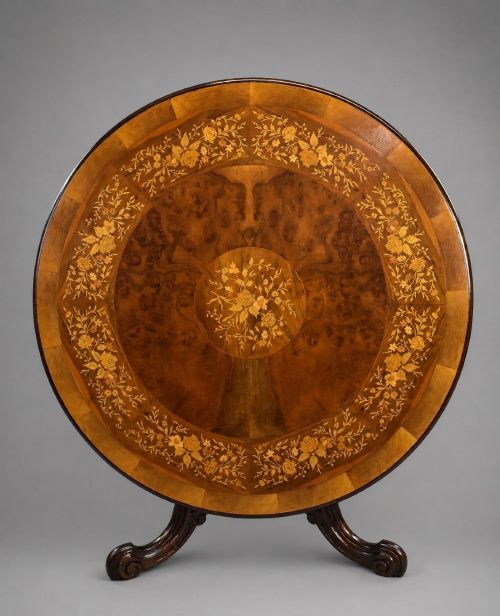
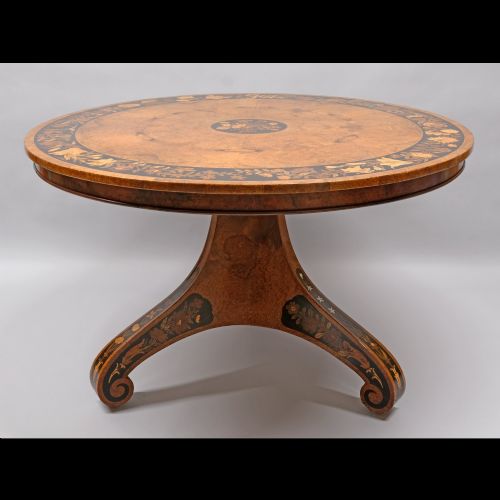
Cabinet makers utilised solid walnut and decorative walnut veneer, often selecting highly figured burr walnut for the primary surfaces to display complex grain patterns. Tops were frequently embellished with marquetry inlay and boxwood banding, contrasting sharply against the darker timber ground.
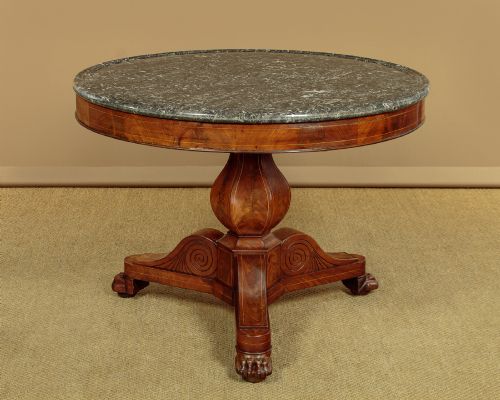
Structural stability relied upon heavy timber pedestals, sometimes reinforced with brass fittings or resting on carved feet. Extending mechanisms on larger tables incorporated additional leaves supported by auxiliary pedestals to maintain balance when fully opened.
Card players in the nineteenth century relied on tilt-top tables to quickly clear the parlour after a late game of loo.
What varies in quality
The distinction between standard examples and the finest pieces lies heavily in the selection of the timber and the crispness of the carving. Highly figured burr walnut with symmetrical grain patterns sits at the upper end of the scale, accompanied by intricate hand-cut marquetry and boxwood inlay rather than simpler surface finishes.
Construction methods also set pieces apart, visible in the weight and stability of the pedestal base, the smooth operation of tilt-top mechanisms, and the seamless integration of extending leaves. Master workshops invested significantly more labour into carved floral decoration and gilded highlights on the central column.
Harry and Lou Epstein·Holmes Baldock
The Walnut Pedestal Dining Table Glossary
- Burr Walnut
- A specialised timber cut from the abnormal growth or burl of a walnut tree, yielding highly intricate and swirling grain patterns. It was favoured by cabinet makers for tabletops and cabinet doors.
- Loo Table
- A nineteenth-century round or oval table designed for the card game loo, frequently manufactured with a tilt-top mechanism so it could be stored against a wall when not in use.
- Marquetry Inlay
- Decorative patterns created by fitting thin pieces of wood veneer and other materials like boxwood into a prepared surface. This technique added complex floral or geometric designs to tabletops.
- Tilt-Top
- A hinged tabletop mechanism allowing the surface to be rotated from a horizontal dining position to a vertical storage orientation. It is commonly found on Victorian breakfast and loo tables.
- Quadrapod Base
- A central pedestal column supported by four spreading feet or legs, often heavily carved with scrolls or foliage. It provides enhanced stability for large oval tabletops.
Walnut Pedestal Dining Table: Frequently Asked Questions
How do I seat six people comfortably?
Tables featuring a central pedestal are particularly well suited for seating six because they eliminate obstructive corner legs. Oval or round tops measuring around six feet generally provide adequate elbow room for a dinner party.
For larger gatherings, look for extending versions that accept additional leaves. These expand outward while keeping the diners spaced evenly around the central supports.
What is a tilt-top mechanism used for?
A tilt-top allows the surface of a table to pivot from horizontal to vertical via a brass or wooden catch beneath the top. This clever engineering allowed nineteenth-century households to push large tables against the perimeter when the dining room needed to serve other functions.
When buying a tilt-top table, ensure the locking mechanism holds the surface firmly flat when in use. The hinge should operate smoothly without excessive wobble in the central column.
How do I tell Victorian from Art Deco pieces?
Victorian examples tend to display dark walnut timber, highly figured burr surfaces, and ornate details such as carved floral pedestals and marquetry inlay. Many of these date from the mid to late nineteenth century and include tilt-top breakfast formats.
Art Deco tables from the 1920s and 1930s favour cleaner geometric lines, sleek black walnut finishes, and matching dining suites with streamlined chairs. They abandon historical revival ornamentation in favour of modern industrial elegance.
How do I care for a walnut tabletop?
Walnut benefits from occasional polishing with traditional beeswax to nourish the timber and maintain a soft sheen. Avoid placing hot dishes or wet glasses directly onto the polished surface to prevent marking the antique finish.
Keep these tables away from direct heat sources and strong sunlight, which can dry out the walnut veneer and cause fading over time. Gentle dusting with a dry cloth is sufficient for daily maintenance.