





Gillows Walnut Table
These pieces are a gillows walnut table, defining nineteenth-century cabinet work with a distinct honesty that draws serious collectors to their craftsmanship.
Gillows Walnut Table
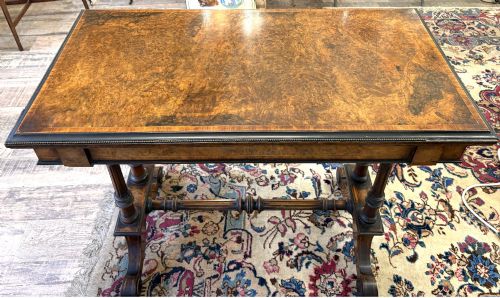
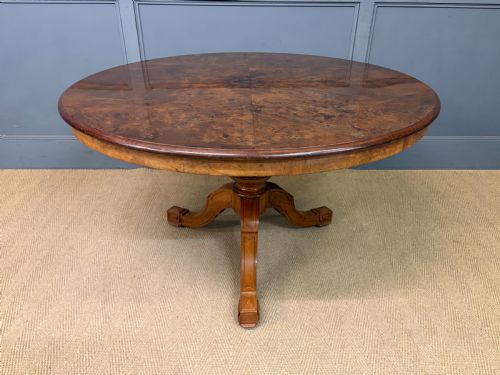
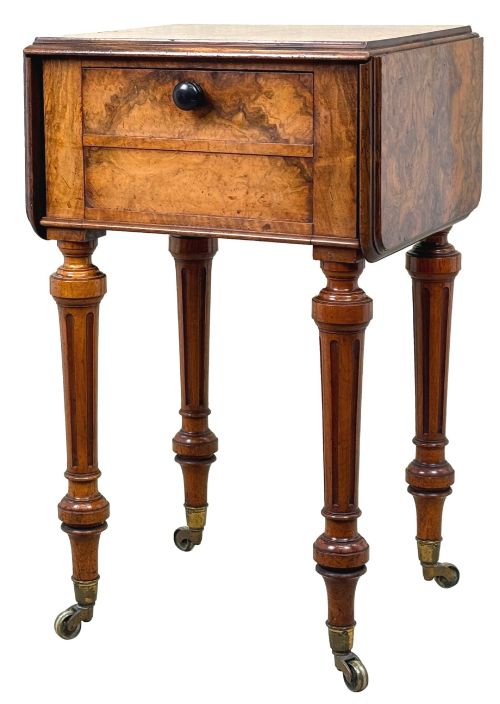
A gillows walnut table encompasses a range of nineteenth-century forms, most frequently appearing as Victorian centre tables, writing desks, and work tables. Buyers searching this phrase will most likely encounter walnut and burr walnut examples dating from the mid to late Victorian decades.
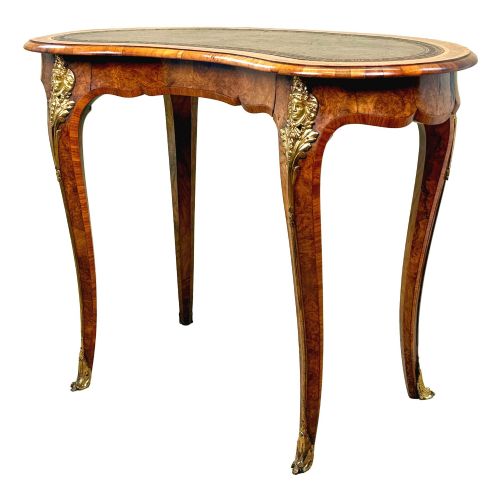
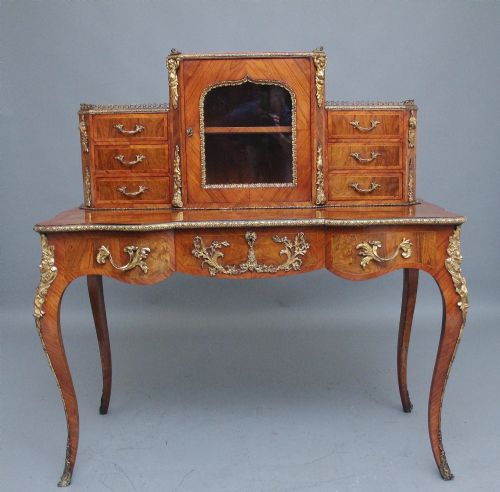
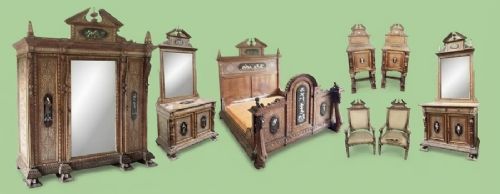
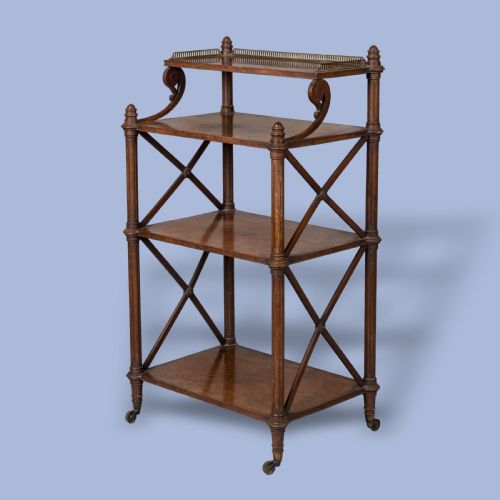
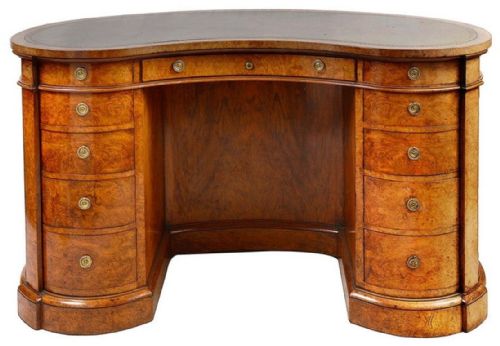
The selection ranges from attributed three-tier whatnots and card tables to signed pieces by Gillows of Lancaster and Waring & Gillow. Alongside formal library writing tables, one finds bedroom suite components and kidney-shaped desks showing distinct stylistic influences from Louis XV Revival to Gothic Revival.
How they were made
Cabinet makers utilised richly grained walnut and burr walnut veneers over solid secondary timbers, often incorporating satinwood and amboyna mounts to accentuate the surfaces. Brass handles, ormolu details, and inset leather writing surfaces completed the functional areas of desks and tables.
Structural embellishments relied on period-specific design vocabularies, seen in bevelled glass panels and architectural Pugin-inspired motifs. The construction reflects the high standards of nineteenth-century workshops in Lancaster and London.
Gillows Walnut Table Retail Price Guide 2026
Typical asking prices for gillows walnut table among the pieces listed under this phrase on Sellingantiques today, from the lower quarter to the upper quarter. They describe what is for sale here now, not the wider market.
The site listings feature nineteenth-century walnut and burr walnut furniture across Victorian and Edwardian periods, utilising brass, leather, and ormolu.
What varies in quality
The distinction between standard production and top-tier pieces rests on the choice of timber and the precision of the cabinet work. Finely figured burr walnut veneers and well-executed secondary wood framing elevate an example above simpler utility pieces.
Makers' signatures, stamps, or firm attributions add a layer of documentary value that separates works produced directly in the Gillows workshops from those simply in the manner of the firm.
Gillows·Gillow and Co·Waring and Gillow
The Gillows Walnut Table Glossary
- Burr walnut
- A prized timber veneer taken from the warted growths of walnut trees, displaying swirling, highly decorative grain patterns. Cabinet makers selected it for the primary visible surfaces of high-status tables and desks.
- Ormolu
- Gilded bronze ornamentation applied to furniture mounts and feet, adding metallic contrast to the dark wood. It appears frequently on pieces influenced by French revival styles.
- Whatnot
- A set of open shelves supported by slender pillars, designed for displaying ornaments or holding books. The multi-tiered walnut examples reflect mid-Victorian interior tastes.
- Kidney-shaped
- A curved desk or table top designed to wrap slightly around the seated user. This ergonomic form appears in late nineteenth-century writing furniture.
Gillows Walnut Table: Frequently Asked Questions
How do I identify a genuine Gillows table?
Look for stamped maker marks, typically found on drawer edges, brass locks, or timber frames, alongside the characteristic build quality of the Lancaster workshops.
Attributed pieces without physical stamps often rely on distinct design traits, timber selection, and historical provenance to link them to the firm.
What styles are common in these walnut tables?
Victorian aesthetics dominate the selection, ranging from standard nineteenth-century utilitarian forms to elaborate Louis XV Revival curves.
You will also encounter Gothic Revival influences, including Pugin-inspired designs that showcase the heavier architectural lines favoured in the later decades of the century.
How should I care for a walnut surface?
Keep the wood away from direct sunlight and steady heat sources to prevent the walnut veneers from drying out or splitting.
Apply a traditional microcrystalline wax occasionally to nourish the grain and maintain a soft protective sheen without building up heavy residues.
Where were these pieces originally used?
Library writing tables and centre tables served as central furnishings in grand nineteenth-century homes, functioning as workspaces or display surfaces.
Smaller work tables and kidney-shaped desks were typically designated for private sitting rooms or ladies' boudoirs for correspondence and needlework.