



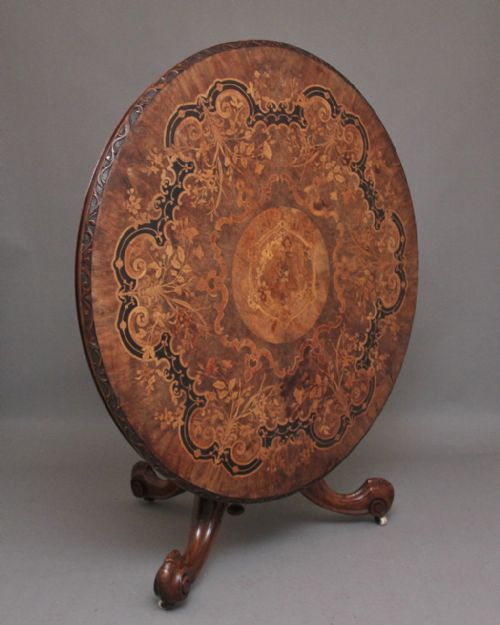


Circular Walnut Breakfast Table
A circular walnut breakfast table combines domestic scale with rich timber figures, offering a versatile centrepiece for daily use and intimate dining.
Circular Walnut Breakfast Table
A circular walnut breakfast table stands on a central pedestal, bringing timber surfaces into domestic rooms with practical elegance.
The evidence shows these tables span the Victorian and 19th Century periods, incorporating styles such as Victorian Rococo Revival and Regency alongside forms known as centre tables, dining tables, and tripod tables.
You will most frequently meet Victorian examples featuring burr walnut veneers, brass fittings, and circular tops designed for two to four seats or intimate dining.
How they were made
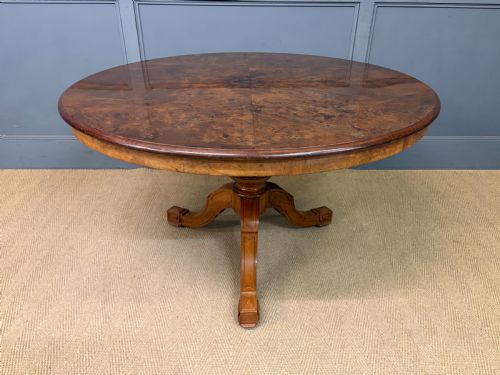
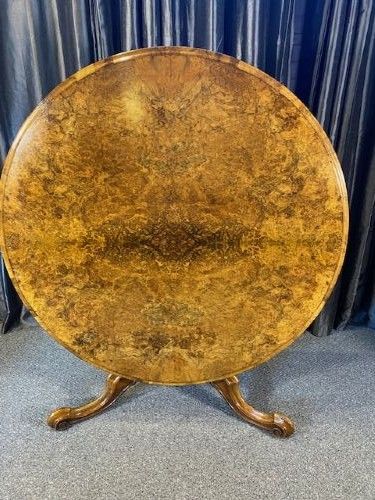
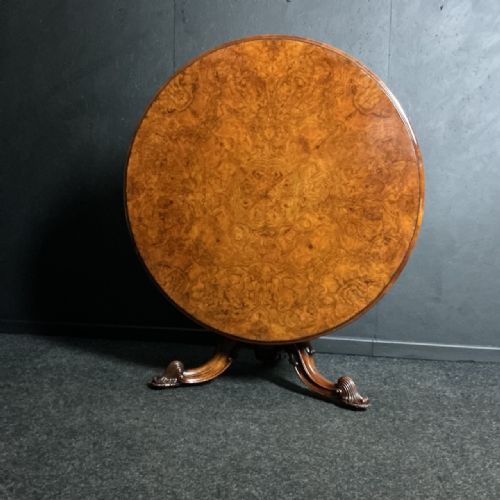
Cabinet makers constructed these tables using solid timber frames overlaid with burr walnut veneer, creating swirling grain patterns across the circular tops.
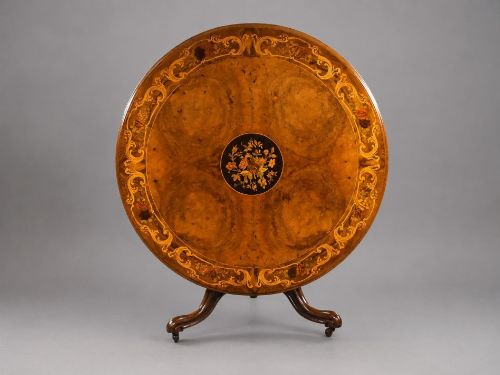
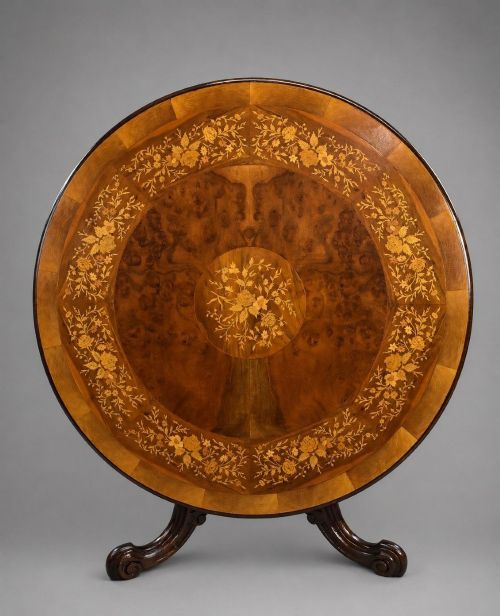
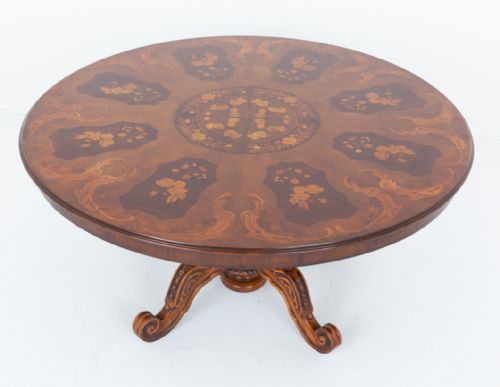
Many examples incorporate intricate wood inlay and marquetry details alongside contrasting secondary woods such as mahogany and fruitwood.
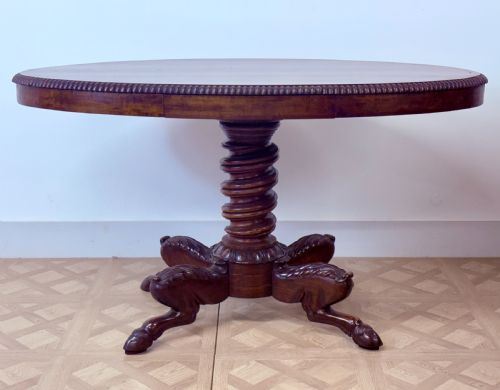
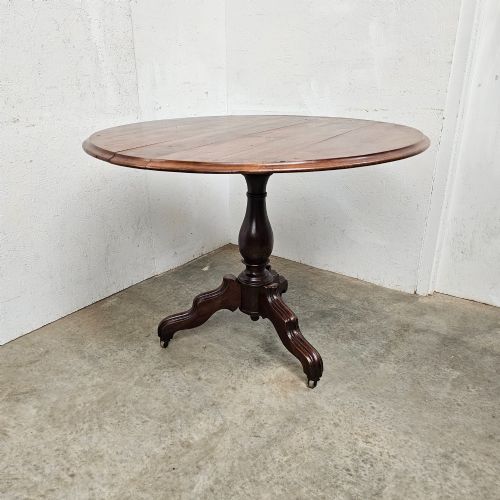
Pedestal supports often feature carved tripod or multi-footed bases, sometimes housing functional elements like secret drawers.
Circular Walnut Breakfast Table Retail Price Guide 2026
Typical asking prices for circular walnut breakfast table among the pieces listed under this phrase on Sellingantiques today, from the lower quarter to the upper quarter. They describe what is for sale here now, not the wider market.
Listings feature walnut, burr walnut, mahogany, and fruitwood alongside brass elements and intricate marquetry inlay.
What varies in quality
The choice of timber figure defines the upper tier of examples, particularly where burr walnut shows deep, symmetrical grain matching across the circular top.
Execution of the marquetry and wood inlay separates workshop output, ranging from simple banding to complex floral motifs integrated into the tabletop surface.
Structural stability in the central pedestal and the precision of fitted elements, such as tilt-top mechanisms or secret drawers, determine the overall execution.
Gillows·John Kendal
The Circular Walnut Breakfast Table Glossary
- Burr walnut
- A highly figured timber veneer harvested from the abnormal growths on walnut trees, prized for its swirling patterns. It forms the primary decorative surface on many Victorian tabletops.
- Marquetry
- The art of applying decorative veneer pieces to a structure to form pictorial or geometric designs. This technique appears frequently on the tops of Victorian examples.
- Tilt-top
- A hinged tabletop mechanism allowing the surface to fold vertical for storage when not in use. This mechanism is common in breakfast and supper tables.
- Pedestal table
- A table supported by a single central column rather than four corner legs. These columns frequently rest on tripartite or quadrupartite carved feet.
- Centre table
- A freestanding table designed to be viewed from all sides in the middle of a room. Many breakfast and dining tables share this functional classification.
Circular Walnut Breakfast Table: Frequently Asked Questions
How many people fit at a breakfast table?
These circular tables typically accommodate two to four diners comfortably for intimate meals.
Their compact footprint makes them practical for smaller dining spaces or multi-use rooms.
What is a tilt-top mechanism used for?
The hinged mechanism allows the circular top to lock in a vertical position against the pedestal.
This made it simple to store the table against a wall when the room needed to be cleared.
How do I identify a Victorian walnut table?
Look for rich walnut and burr walnut veneers combined with pedestal bases and often elaborate marquetry inlay.
These characteristics align with the 19th Century production methods recorded across the evidence.
Where should I place a centre table?
A centre table stands freely in the middle of a room, allowing access from all sides.
Because the inlay and timber figure extend across the entire top, they work best where they remain visible.