


Walnut Nesting Coffee Tables
Walnut nesting coffee tables offer a clever cascade of surfaces, combining rich wood figures with practical tiered arrangement.
Walnut Nesting Coffee Tables
When you search for walnut nesting coffee tables, you encounter sets of graduated tables designed to slide neatly beneath one another when floor space matters. These pieces appear frequently in Art Deco and Edwardian formats, spanning periods from eighteen-eighty through to nineteen-forty.
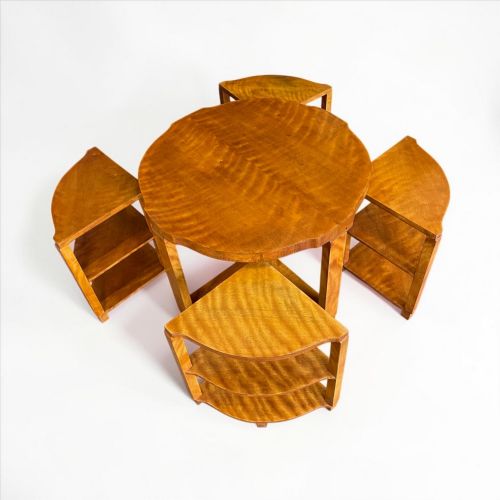
The selection ranges from traditional quartetto sets of four to more elaborate nests of five, sometimes called quintetto tables. Most examples rely on rich timber tones, offering multiple surfaces that deploy instantly for drinks or lamps before tucking out of sight.
Materials and construction
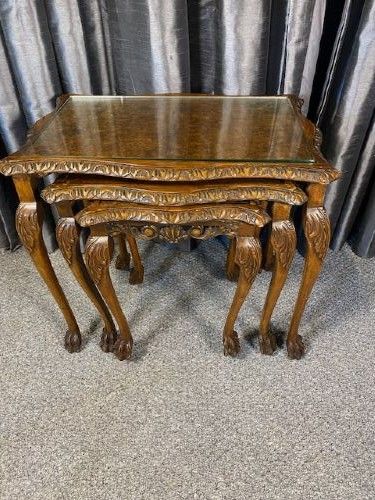
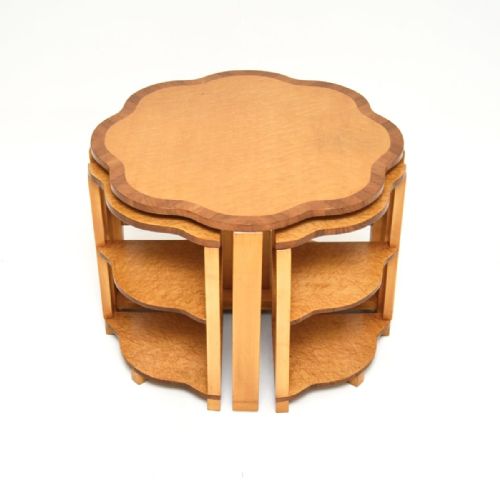
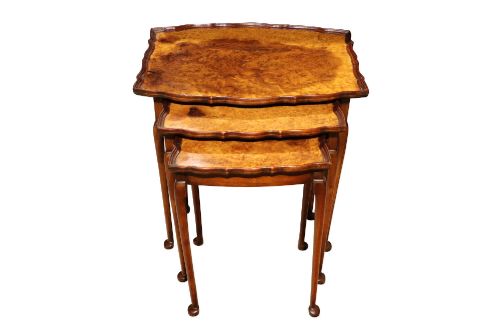
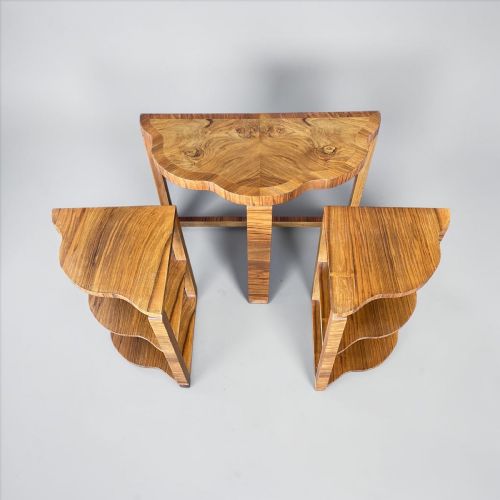
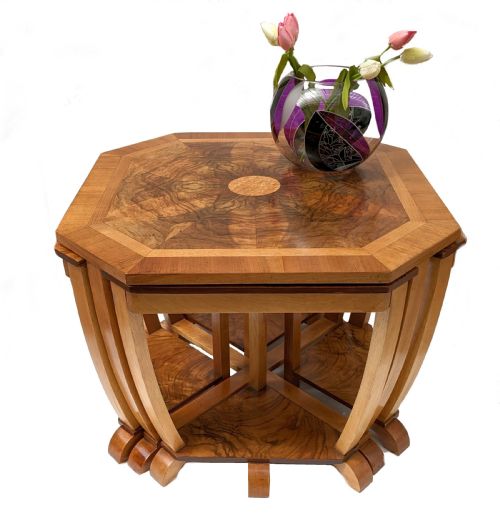
Cabinet makers utilised solid walnut and decorative veneers like burr walnut and birds-eye maple to create striking surface patterns. Parquetry and floral inlay also feature across Edwardian and early twentieth-century examples, adding geometric or botanical detail to the tops.
Frames combine hardwood structures with precise joinery to ensure the smaller tables slide smoothly into the main framework. Glass panels and specimen wood marquetry appear on specialised pieces, reflecting the diverse craftsmanship of the period.
The inventory records pieces spanning from eighteen-eighty through to nineteen-forty, with a strong concentration of Art Deco designs from nineteen-thirty.
Factors of quality
The distinction between standard production and top-tier pieces rests on the choice of timber and the precision of the veneer work. Matched burr walnut figures and intricate parquetry elevate a set far above plain hardwood versions.
Makers known for exceptional design, such as Harry and Lou Epstein or Heal's, command attention through superior proportion and finishing. The smoothness of the nesting action and the stability of each graduated frame further define the standard of execution.
Harry and Lou Epstein·Heal's·Emile Galle
The Walnut Nesting Coffee Tables Glossary
- Burr walnut
- A figured wood grain obtained from walnut tree growths, prized for its swirling patterns. It forms the primary decorative surface on many Art Deco tables.
- Quartetto
- A matching set of four small tables designed to nest together. This configuration is typical of Edwardian and early twentieth-century sets.
- Parquetry
- Geometric patterns formed by small pieces of wood veneer fitted together. Makers applied this technique to tabletop surfaces for visual depth.
- Veneer
- A thin slice of superior wood applied over a stable secondary timber base. This method displays expensive grain patterns efficiently.
- Art Deco
- A design style dominant in the nineteen-twenties and thirties, characterised by streamlined forms and geometric clarity. Many nesting tables from this era reflect these clean lines.
Walnut Nesting Coffee Tables: Frequently Asked Questions
How do you arrange a nest of five tables?
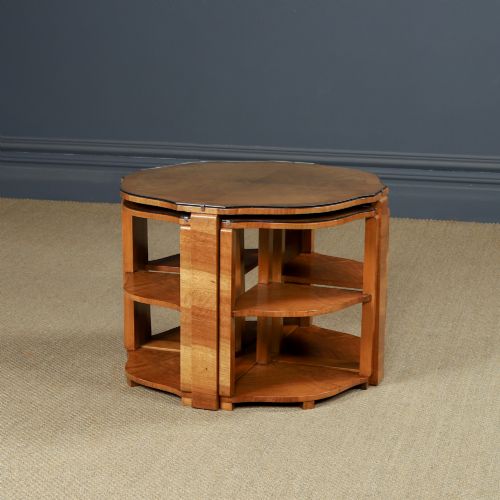
A nest of five typically comprises four smaller graduated tables surrounding a larger central piece. You deploy them individually around a room as needed for guests.
When not in use, each table slides sequentially back into position beneath the main frame to save space.
What is the difference between Art Deco and Edwardian nests?
Edwardian nests often feature quartetto sets with slender legs and occasional parquetry or floral inlay. They lean towards traditional revival styles.
Art Deco sets from the nineteen-thirties showcase bold burr walnut veneers, streamlined geometric shapes, and occasionally larger sets of five tables.
Can these tables be used as a main coffee table?
The primary table serves well as a standard low coffee surface in front of a sofa. The smaller tables remain stored underneath until extra surface area is required.
Separating the set provides multiple independent spots for drinks, books, or lamps across the room.
How do I identify burr walnut timber?
Burr walnut displays distinctive swirling, circular grain patterns created by growth deformations in the tree. Cabinet makers slice this wood into fine veneers to highlight the dramatic figuring on tabletops.
Plain walnut offers a straighter, more uniform grain without these complex natural clusters.