
Walnut Marquetry Side Cabinet
When you search for a walnut marquetry side cabinet, you enter a world of figured timber and precise floral inlays that anchor a room.
Walnut Marquetry Side Cabinet
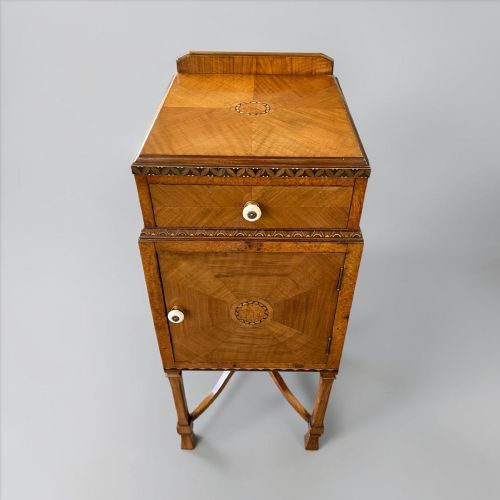
A walnut marquetry side cabinet brings intricate wood-inlay work together with the deep, warm grain of walnut timber. These furnishings serve practical storage roles while displaying decorative patterns on doors, panels, and tops.
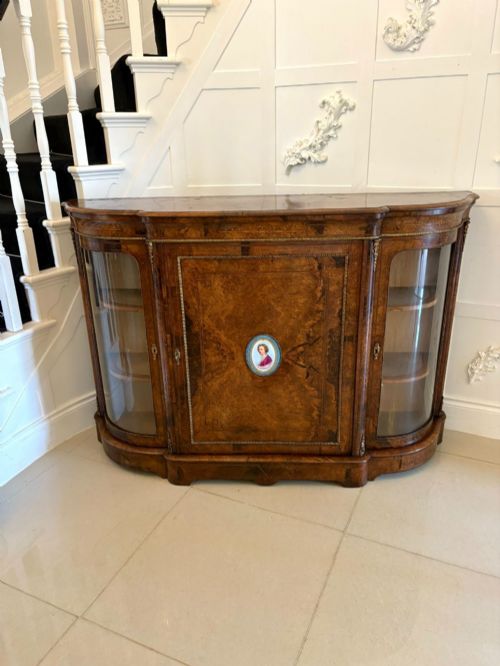
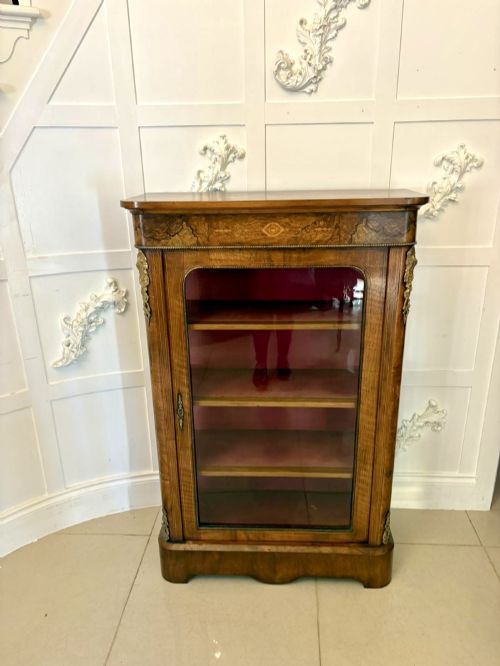
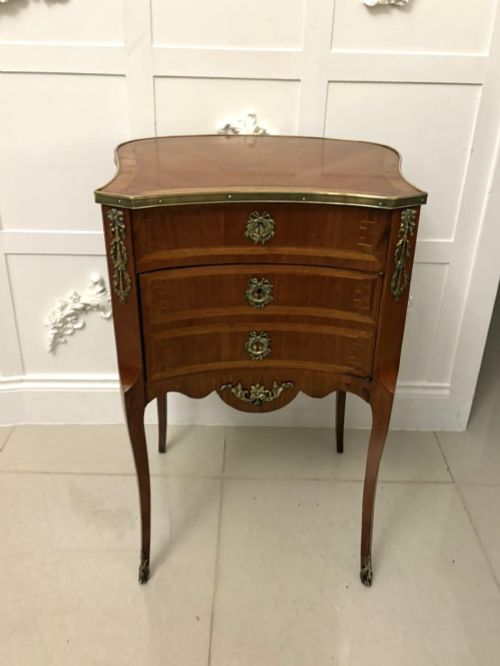
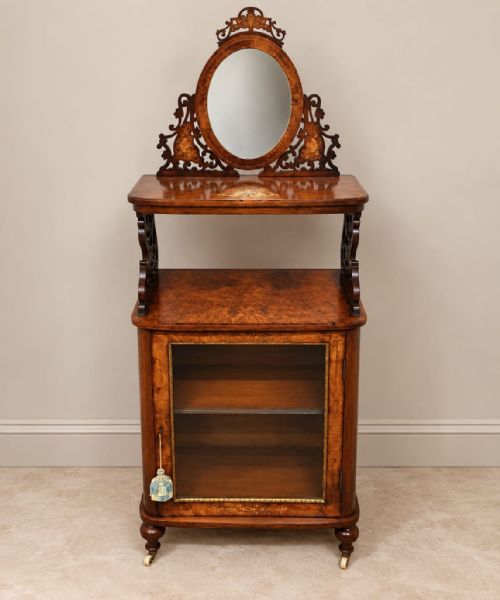
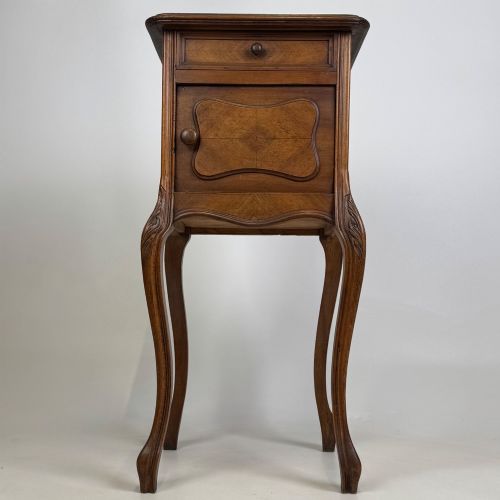
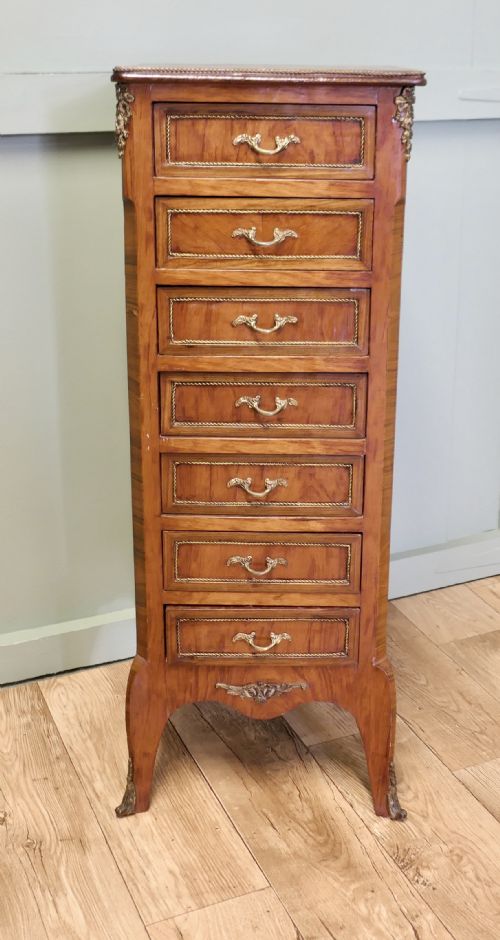
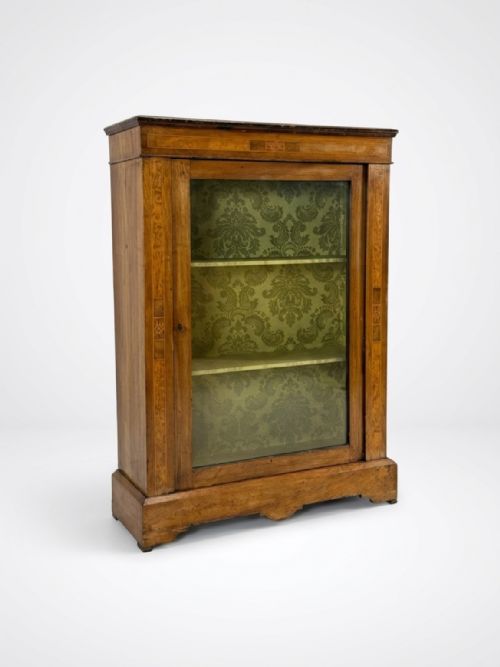
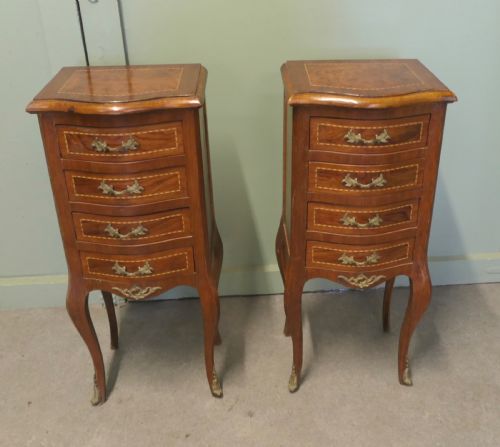
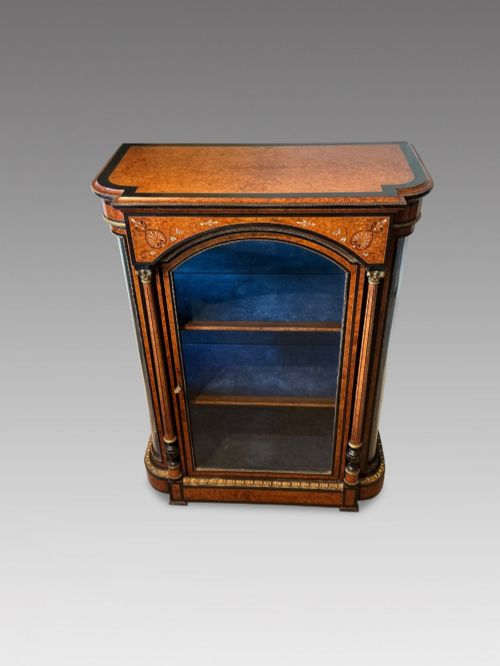
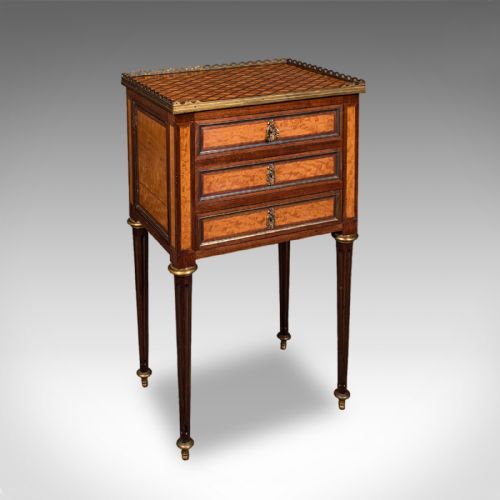
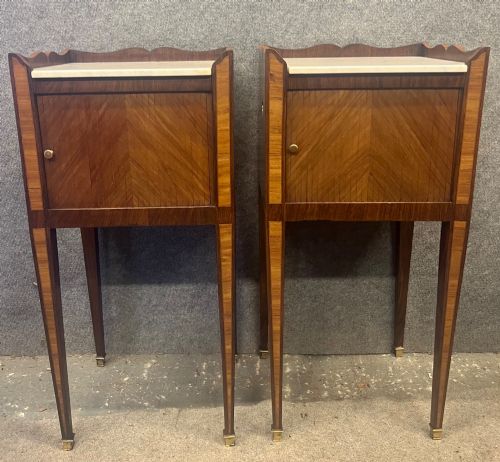
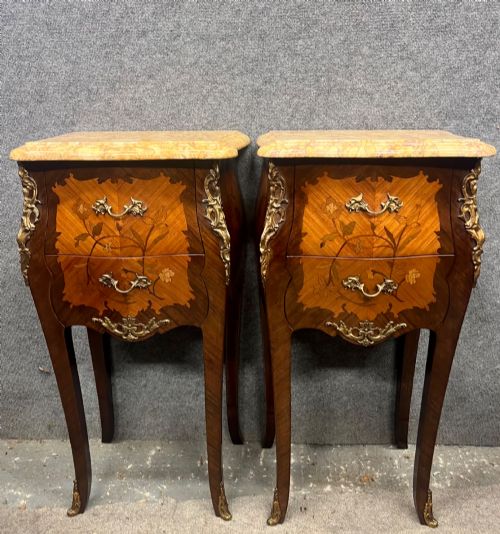
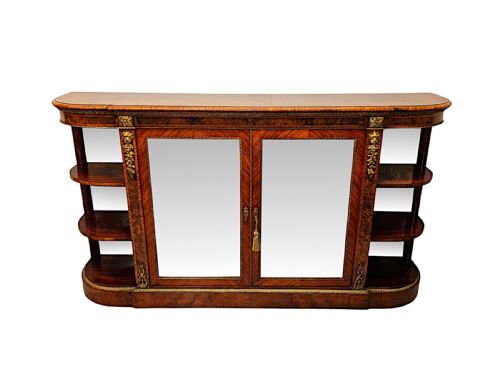
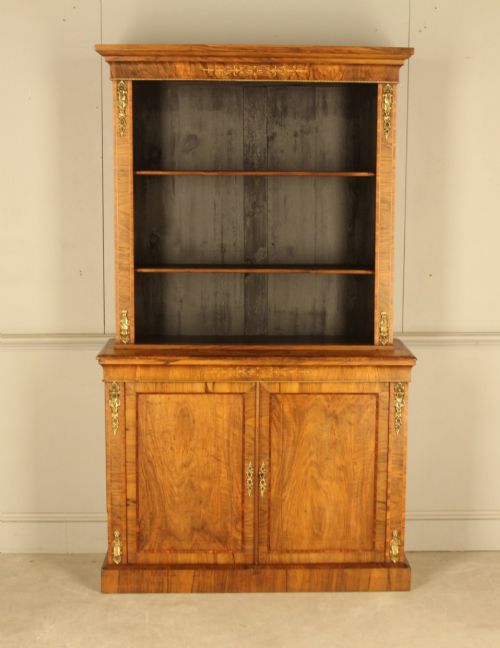
The selections you encounter span nineteenth-century Victorian credenzas and pier cabinets alongside twentieth-century French bedside chests and lamp tables. Many pieces incorporate glazed doors, marble slabs, or gilt metal mounts alongside their patterned wooden surfaces.
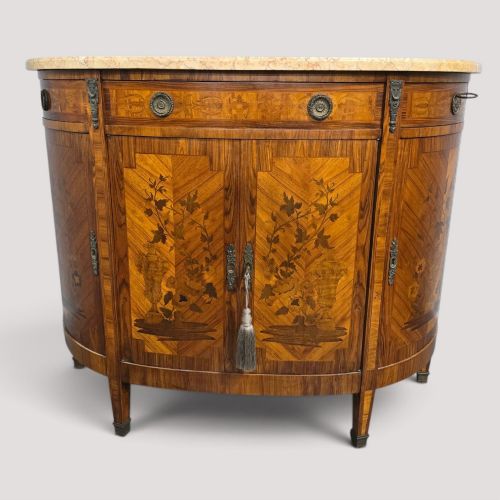
Victorian examples tend toward glazed display furniture and porcelain-mounted credenzas, while later French styles often present serpentine fronts, demi-lune shapes, and smaller bedside proportions.
How they were made
Cabinet makers utilised figured walnut and burr walnut veneers, laying delicate slices of timber over solid carcases to capture rich patterns and movement in the grain. Contrasting woods were cut precisely to form floral and geometric marquetry motifs across the doors and panels.
Ormolu and gilt bronze mounts were cast and chased to frame corners, borders, and feet, adding metallic contrast to the timber. Marble tops were cut and polished to fit specific cabinet profiles, particularly on French provincial and revival pieces from the later periods.
Listings feature walnut, burr walnut, kingwood, ormolu, marble, and glass across Victorian and twentieth-century periods.
What varies in quality
The standard of a walnut marquetry side cabinet rests on the crispness of the inlay work and the choice of timber veneer. Richly figured burr walnut and finely detailed floral marquetry demand exceptional skill from the maker.
The refinement of the cast ormolu mounts and the precision of the joinery elevate certain examples above standard production pieces. Original marble tops, intact glass, and stamped maker attribution further distinguish the finest specimens.
Gillows·Lamb of Manchester
The Walnut Marquetry Side Cabinet Glossary
- Marquetry
- Decorative veneer work formed by fitting together small pieces of different coloured wood to create pictorial or geometric designs.
- Burr Walnut
- A specialised growth from the walnut tree yielding intricate, swirling grain patterns highly prized for cabinet veneers.
- Ormolu
- Gilt bronze mounts used as decorative trim on furniture edges, feet, and doors.
- Credenza
- A grand Victorian display cabinet featuring central doors flanked by curved glass side cabinets, often mounted with porcelain plaques.
- Pier Cabinet
- A narrow cabinet designed to stand against the wall space between windows.
Walnut Marquetry Side Cabinet: Frequently Asked Questions
What is a walnut marquetry side cabinet?
These furnishings are storage cabinets featuring patterned wood-inlay designs set into walnut timber surfaces.
They appear in various forms, from large Victorian credenzas to compact twentieth-century bedside chests.
How do I date a walnut cabinet?
Dating relies on combining the timber choice, construction methods, and stylistic cues present in the piece.
Victorian items often display heavy porcelain mounts and glazed doors, whereas twentieth-century French pieces lean towards lighter marquetry and marble tops.
Where should I place a side cabinet?
These cabinets suit dining rooms, living spaces, or hallways where they provide surface display space and concealed storage.
Smaller bedside variants fit neatly beside beds or serve as lamp tables in sitting rooms.
What is the difference between burr walnut and plain walnut?
Burr walnut derives from specialised tree growths that produce dense, swirling patterns within the grain.
Plain walnut displays a straighter, more uniform grain structure compared to the wild movement of burr timber.