
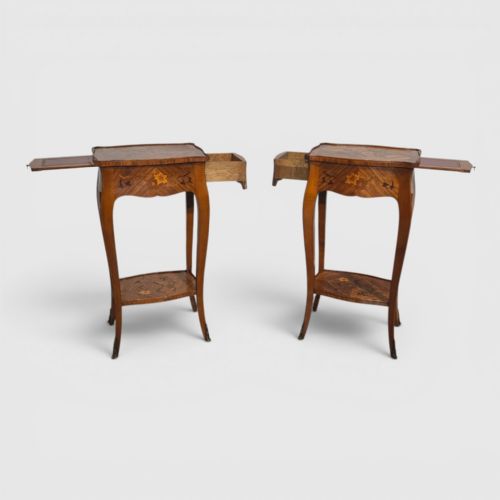
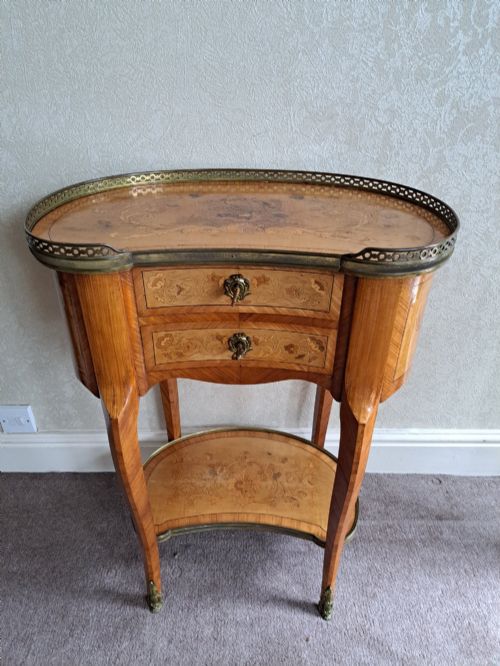
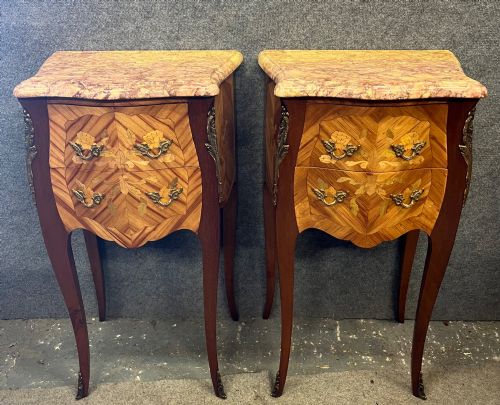
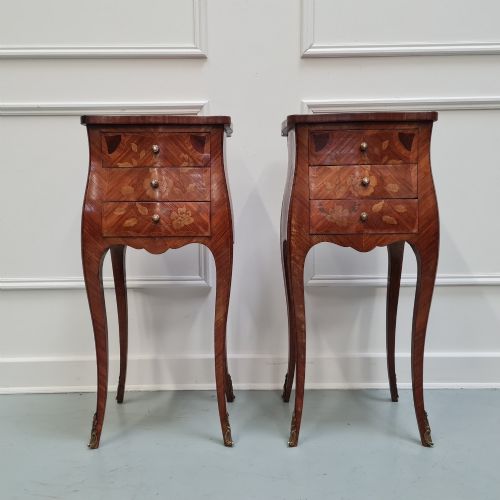

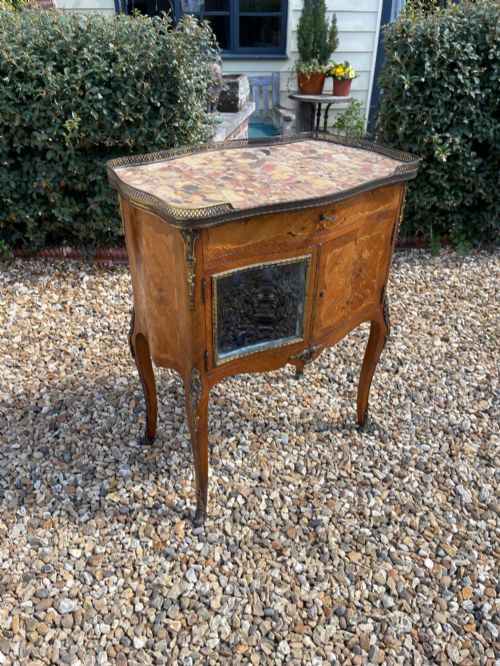


Floral Inlaid Side Cabinet
A floral inlaid side cabinet brings together intricate botanical marquetry and functional storage, offering a sophisticated focal point for any interior.
Floral Inlaid Side Cabinet
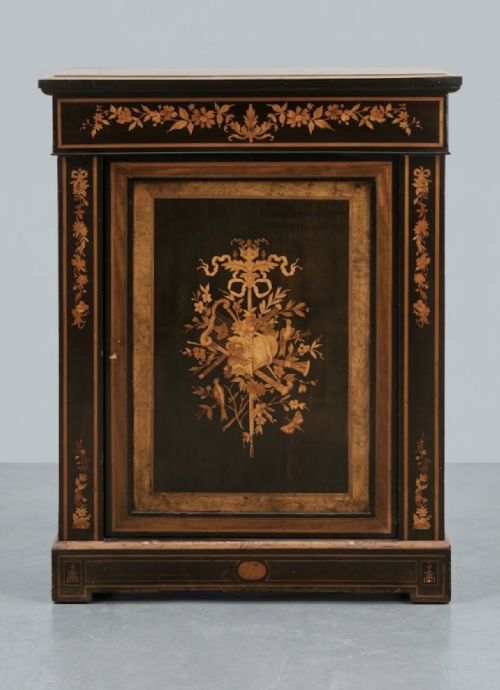
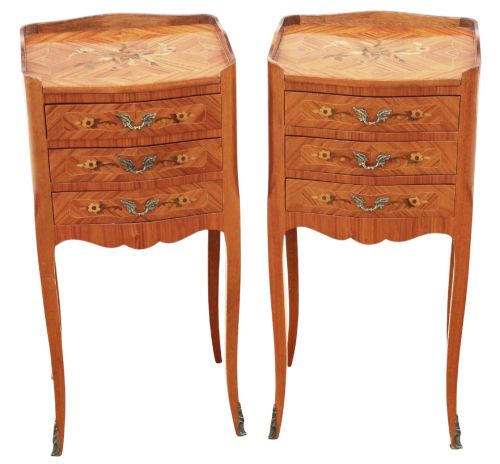
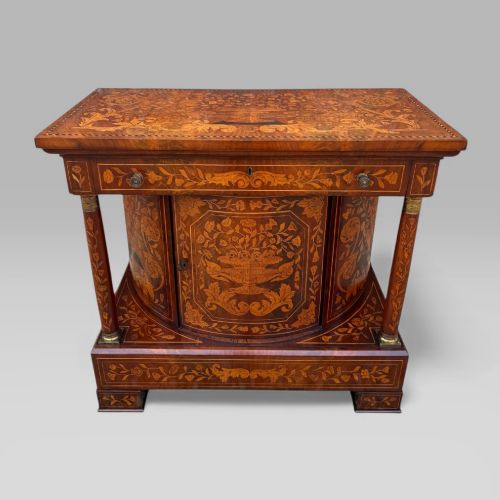
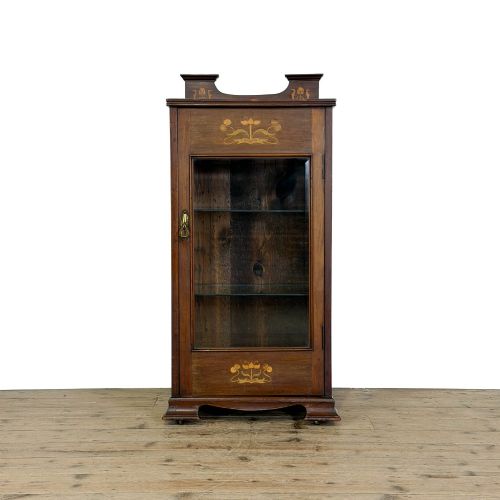
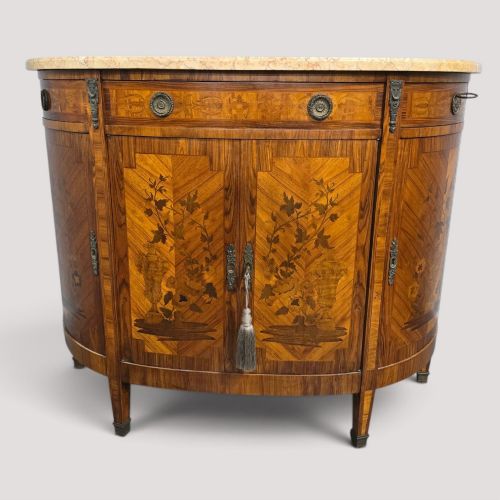
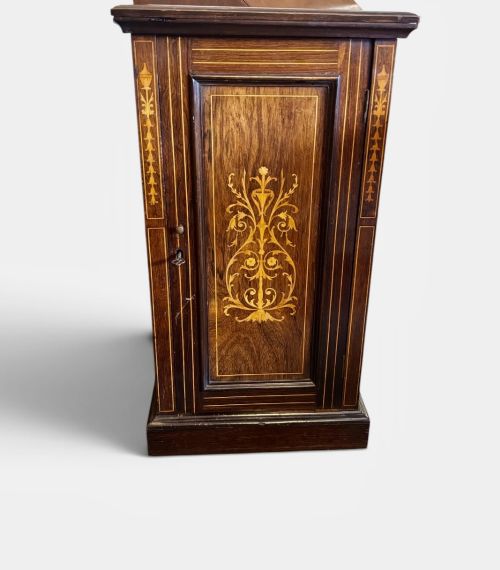
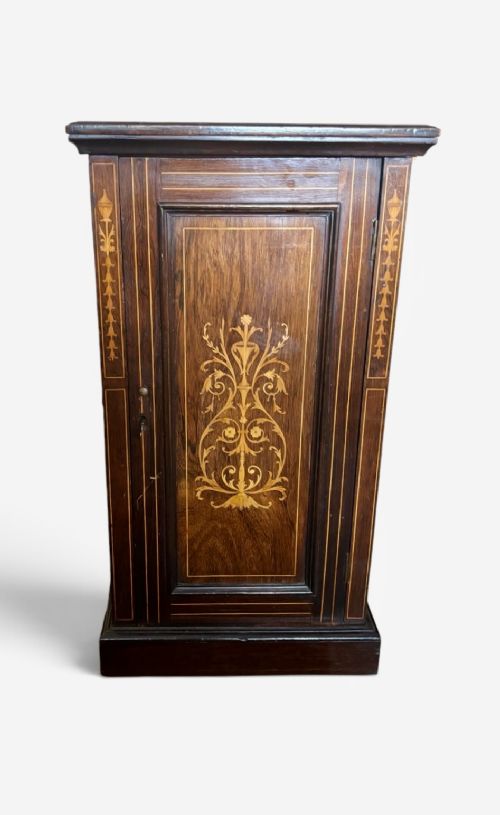
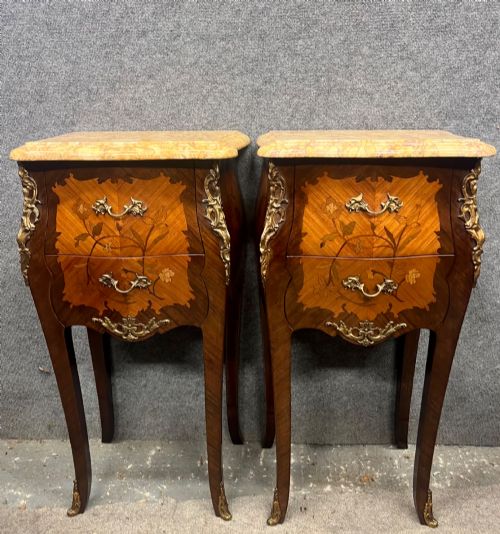
A floral inlaid side cabinet is a versatile storage piece defined by detailed wood-in-wood botanical decoration. Buyers searching this phrase encounter forms ranging from compact bedside chests and lamp tables to grand Victorian credenzas and French console cabinets.
The Victorian walnut pier cabinet and the French twentieth-century marquetry bedside table appear most frequently across these listings. These pieces combine practical surface space and enclosed shelving with delicate floral patterns rendered in contrasting timbers.
Origins span nineteenth-century British workshops and continental European centres, particularly France and the Netherlands. Pieces cross several periods including the Regency, Victorian era, and the early decades of the twentieth century.
How They Were Made
Cabinet makers utilised a rich palette of timbers such as walnut, rosewood, kingwood, mahogany, satinwood, and coromandel to form the primary carcase and the detailed marquetry motifs. Selected veneers were meticulously cut and fitted together to create naturalistic floral sprays and botanical panels.
Metal and stone elements frequently complement the woodwork. Cast ormolu mounts, brass stringing and hardware accent the structural lines, while inset marble tops provide durable and decorative surfaces on many French and Victorian examples.
Listings feature pieces spanning from the eighteenth century through to the 1930s, utilising walnut, rosewood, kingwood, mahogany, and satinwood.
What Varies in Quality
The fidelity and depth of the marquetry set exceptional examples apart from simpler items. Superior pieces display intricate shading within the floral petals and leaves, achieved by scorching veneer edges in hot sand before assembly.
The choice of foundational timbers and secondary mounts dictates overall character. High-tier items combine dense woods like burr walnut or kingwood with finely chased ormolu mounts and heavy marble slabs, whereas lesser examples rely on simpler mahogany or ebonised carcases.
The Floral Inlaid Side Cabinet Glossary
- Marquetry
- The art of applying pieces of veneer to a structure to form decorative patterns and pictures. Floral designs are built using contrasting coloured woods to depict natural subjects.
- Ormolu
- Gilded bronze mounts applied to furniture for decoration. These metal details typically highlight corners, feet, and aprons on continental and Victorian pieces.
- Demi-lune
- Half-moon shape in furniture design. Cabinets and console tables of this form sit flush against a wall with a curved front.
- Credenza
- A sideboard or cabinet designed for display and storage. Victorian examples often feature enclosed central cupboards flanked by curved glass doors.
- Pier cabinet
- A narrow cabinet built to fit the wall space between windows. These upright pieces frequently incorporate glass doors and velvet-lined interior shelving.
Floral Inlaid Side Cabinet: Frequently Asked Questions
Where should I place a side cabinet?
These cabinets suit hallways, living rooms, and bedrooms where surface space and subtle storage are required. Their compact footprints allow them to fit easily into alcoves or against narrow wall spaces.
Matching pairs often function well as bedside lamp tables or flanking a fireplace, while larger single credenzas anchor dining rooms or reception spaces.
How do I clean floral marquetry?
Dust the surface regularly with a soft, dry cloth to prevent particle buildup within the veneer joints. Avoid chemical sprays and excess moisture which can damage delicate timber inlays.
Apply a quality beeswax periodically to nourish the wood and maintain a natural sheen across the polished surfaces.
What is the difference between marquetry and inlay?
Inlay involves recessing a design into a solid piece of wood by carving out a channel. Marquetry creates a complete picture from assembled veneers which is then glued to the carcase.
Floral cabinets predominantly use marquetry techniques to piece together multi-toned botanical scenes across doors and tabletops.
How do I identify a Victorian piece?
Victorian cabinets often utilise dense native timbers like walnut and rosewood paired with elaborate marquetry motifs. Look for robust construction methods and typical nineteenth-century proportions.
Many examples from this era also incorporate ebonised details or gilt bronze mounts reflecting revival design movements.
Can I use a bedside chest as a lamp table?
Bedside chests and lamp tables share similar dimensions and functional surface areas. Many twentieth-century and period pieces marketed as bedside chests serve equally well in living spaces.
The enclosed drawers and lower shelves provide convenient storage for reading materials and small household items regardless of room placement.