


Walnut Marquetry Etagere
When you search for a walnut marquetry etagere, you seek a tiered display piece that combines figured wood with delicate floral or geometric inlay.
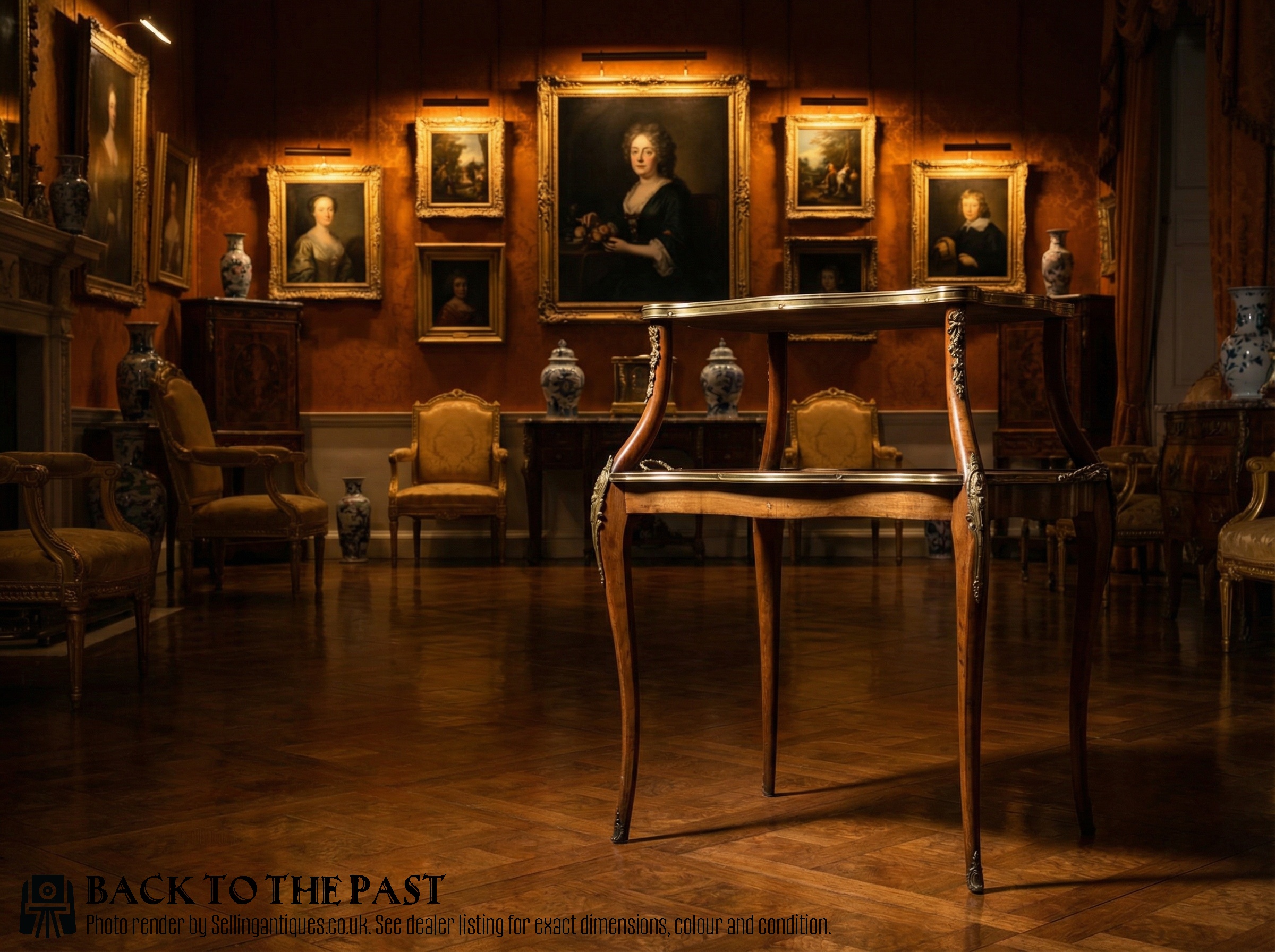
Walnut Marquetry Etagere
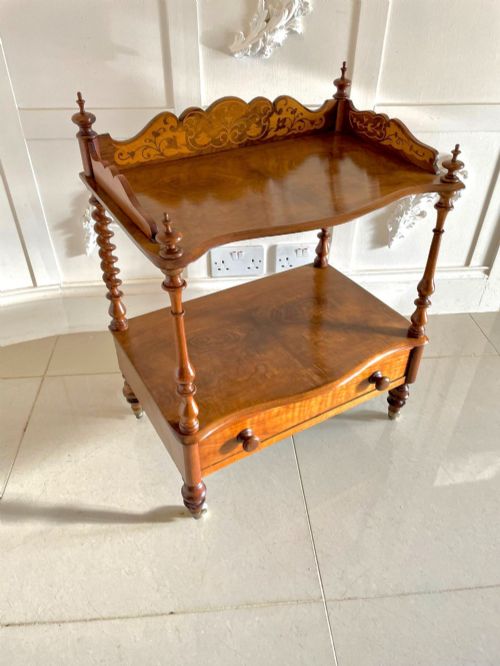
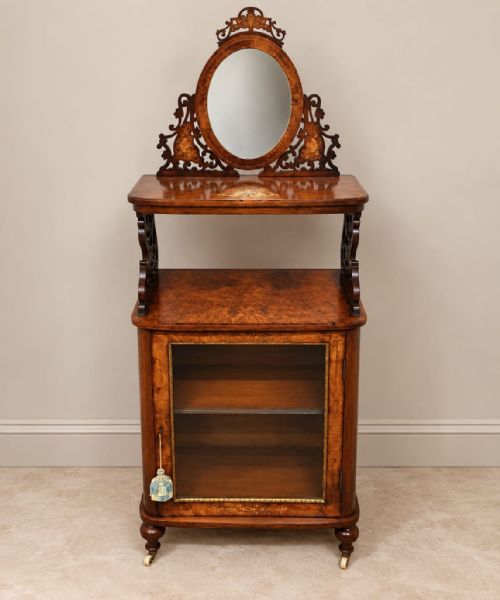
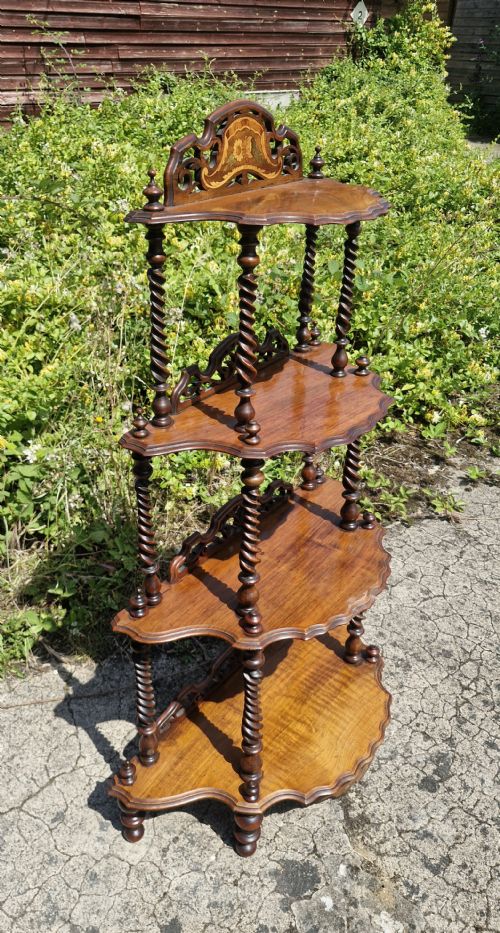
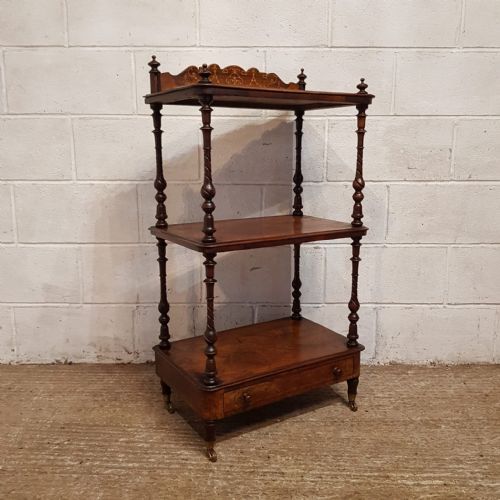
A walnut marquetry etagere provides open tier shelving for display, appearing in forms such as corner stands, side tables, and multi-tiered whatnots.
The pieces on this page span the Victorian and Edwardian eras, incorporating French Rococo and Louis XV revival influences alongside British cabinet-making traditions.
Most examples rely on walnut and burr walnut timbers, often arranged in multi-tier arrangements with two, three, or four levels for holding decorative items or jewellery.
Materials and construction
Craftsmen used marquetry veneer and inlay techniques to create patterned surfaces on walnut carcass structures, incorporating subsidiary timbers like kingwood, rosewood, and satinwood.
Metal mounts in ormolu, brass, and gilt metal frequently accent the tiers, while glass, mirror plates, and pierced brass galleries complete the upper ledges.
Listings combine British Victorian whatnots with French-influenced etageres, spanning the nineteenth and early twentieth centuries using walnut, brass, and ormolu.
Assessing craftsmanship
Quality depends upon the intricacy of the marquetry inlay and the choice of timber, with highly figured burr walnut commanding attention for its rich grain patterns.
The integration of cast ormolu mounts and pierced brass galleries distinguishes finer workshop output from simpler domestic shelving.
Donald Ross
The Walnut Marquetry Etagere Glossary
- Marquetry
- The art of applying pieces of veneer to a structure to form decorative patterns and pictures. It differs from simple inlay by covering the entire surface with fitted wood pieces.
- Burr walnut
- Timber taken from a walnut tree growth where the grain has grown in a deformed, swirling manner. This produces highly decorative patterns prized by cabinet-makers.
- Ormolu
- Gilded bronze or brass mounts applied to furniture. It provides metallic contrast against dark walnut surfaces.
- Whatnot
- A nineteenth-century term for an open multi-shelved stand used for ornaments. It serves a similar function to the etagere.
Walnut Marquetry Etagere: Frequently Asked Questions
What is a walnut marquetry etagere used for?
These tiered stands were originally designed to display ornaments, porcelain, and small decorative objects in Victorian and Edwardian reception rooms.
Today, they function well in similar living spaces to hold books, plants, or collections while adding vertical interest to a room.
How do I tell a Victorian etagere from an Edwardian one?
Victorian examples often feature heavier burr walnut timbers and darker finishes, sometimes with elaborate corner or side cabinet configurations.
Edwardian pieces tend to show lighter construction, occasionally leaning into French styles with delicate ormolu mounts and multi-tier shelving.
Where should I place an etagere in my home?
Corner stands fit neatly into unused angles of a room, while freestanding three or four-tier tables work effectively beside seating or against plain walls.
Because these pieces have open shelves on multiple levels, keeping them away from heavy foot traffic protects the delicate galleries and veneers.
What woods are used besides walnut?
While walnut and burr walnut form the primary surfaces, makers often incorporated contrasting timbers within the floral marquetry panels.
Woods such as satinwood, rosewood, and kingwood appear alongside mahogany structures to provide colour variation in the inlay work.