
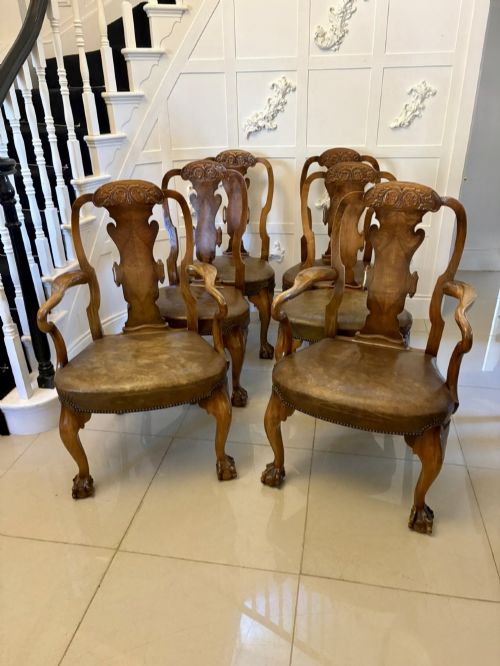
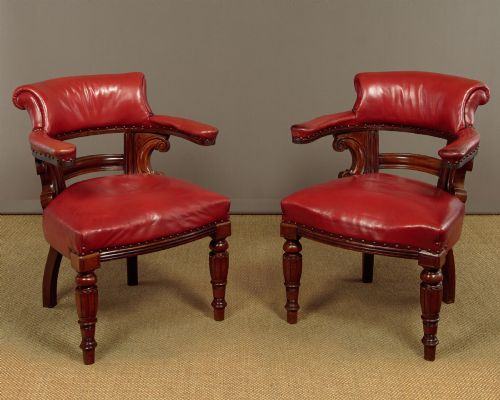
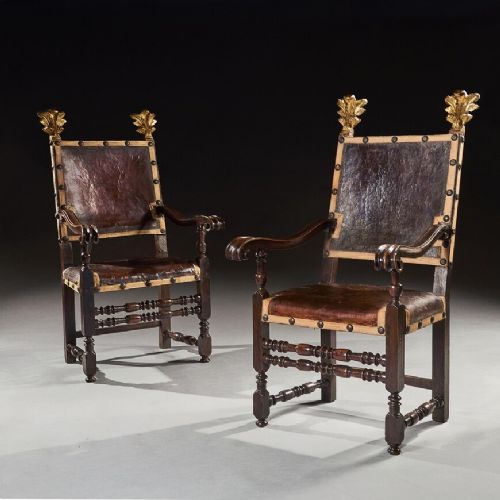
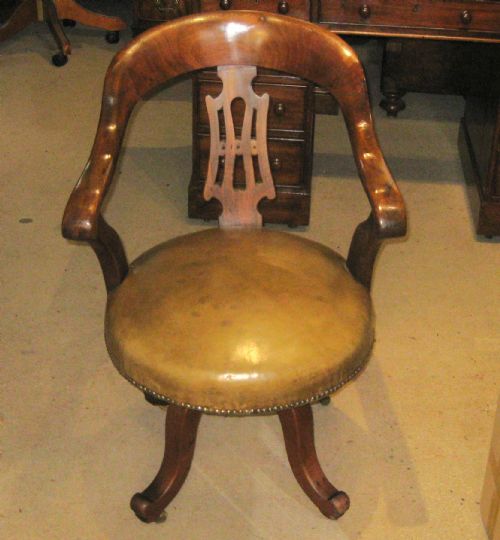

Walnut Leather Armchair
A walnut leather armchair offers solid timber framing paired with durable hides, spanning periods from the seventeenth century to Art Deco designs.
Walnut Leather Armchair
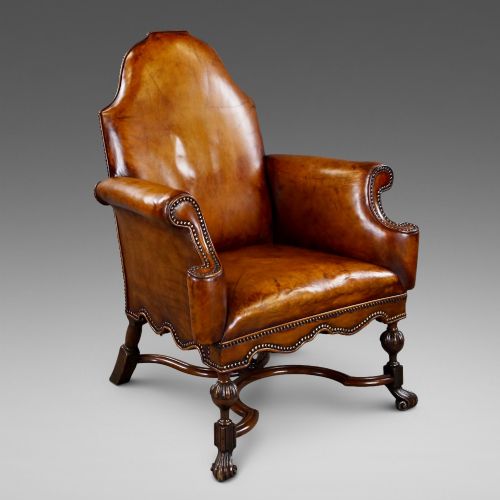
A walnut leather armchair brings together hardwood frames and hide upholstery across diverse historical eras. When exploring this phrase, buyers encounter everything from Victorian library seats to robust Art Deco club chairs.
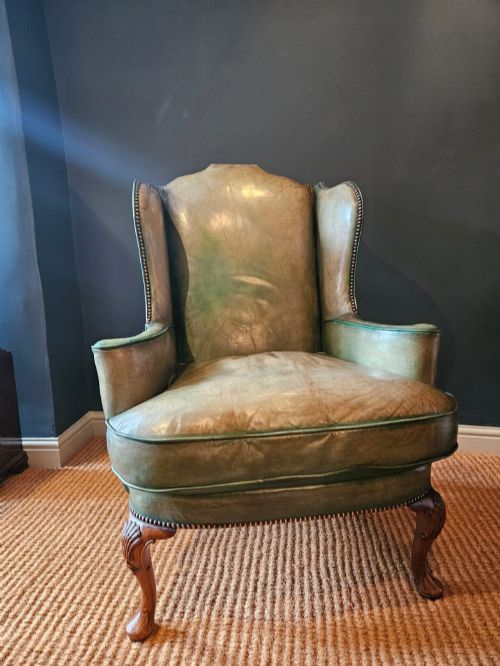
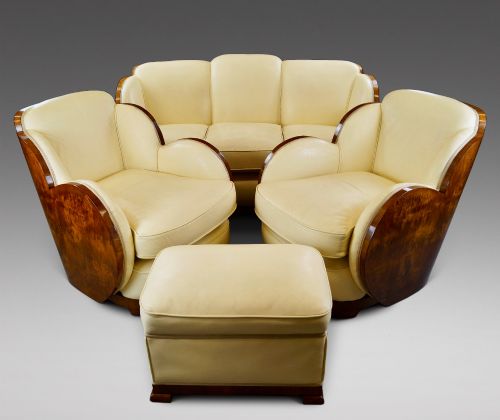
The selection frequently includes nineteenth-century revolving desk chairs, Georgian style wingbacks, and twentieth-century cloud suites. These forms serve functional roles in studies, offices, and principal living spaces.
Origins vary widely, encompassing English workshops, French studios, and Italian makers. Each regional tradition imparts distinct proportions and carving details to the finished seating.
Materials and construction methods
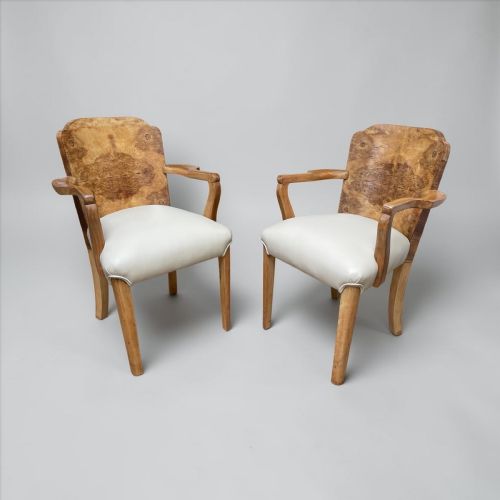
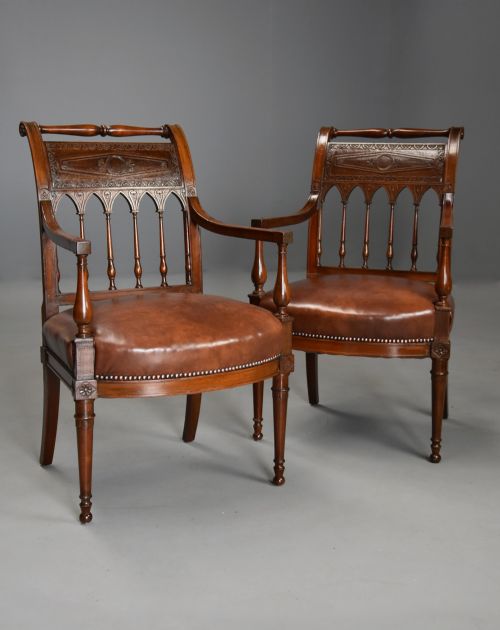
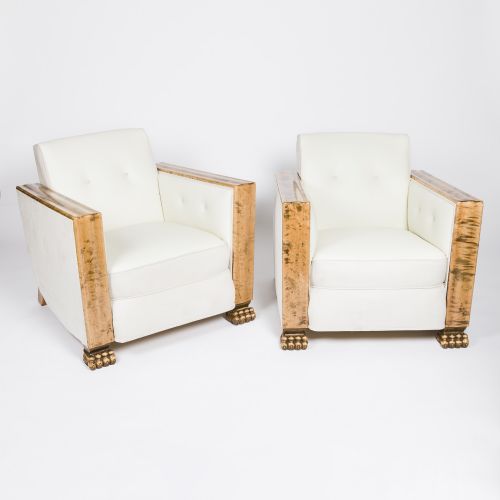
Craftsmen utilised dense walnut and burr walnut for structural integrity, often incorporating brass hardware, iron mechanisms, or gold leaf accents. Timber frames were shaped using traditional joinery before receiving upholstered hide seats and backrests.
Leather upholstery was applied via hand-tacking, sometimes featuring embossed patterns or hand-colouring techniques. Surface finishes on the timber relied on polishing methods that highlighted the natural grain of the wood.
Walnut Leather Armchair Retail Price Guide 2026
Typical asking prices for walnut leather armchair among the pieces listed under this phrase on Sellingantiques today, from the lower quarter to the upper quarter. They describe what is for sale here now, not the wider market.
Listings feature walnut and leather seating across Victorian, Edwardian, and Art Deco periods, incorporating brass and gold leaf details.
Factors determining quality
Superior examples exhibit crisp, deep carving on the walnut frame and retain substantial portions of original, patinated leather. The integration of the wooden structure with the upholstered components dictates the overall longevity of the piece.
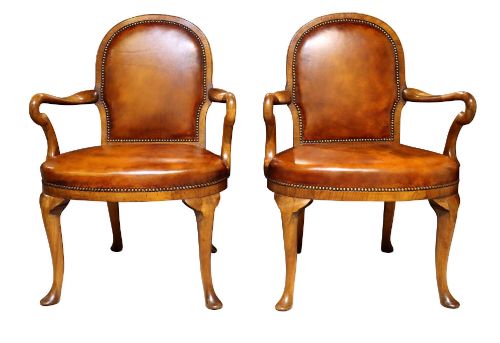
Design sophistication separates standard production items from masterworks. Pieces demonstrating deliberate period styling, such as Queen Anne cabriole legs or balanced Art Deco proportions, represent the upper echelon of the range.
Hille·Harry and Lou Epstein·Shoolbred
The Walnut Leather Armchair Glossary
- Cabriole leg
- A furniture leg that curves outward and tapers downward to a pad or foot, commonly seen on Georgian and Queen Anne style walnut frames.
- Burr walnut
- A figured wood veneer derived from walnut tree growths, prized for its complex swirling grain patterns on cabinetwork and chair backs.
- Cloud chair
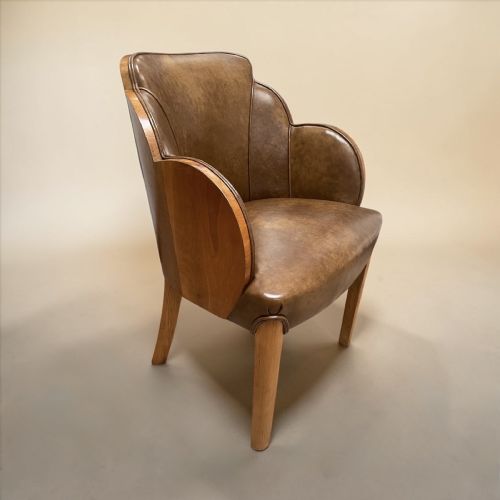
- A rounded, upholstered seating form associated with Art Deco design, often paired with matching sofas in suites.
- Wingback
- An armchair featuring side panels attached to the backrest to shield against drafts, frequently upholstered in leather.
- Carver
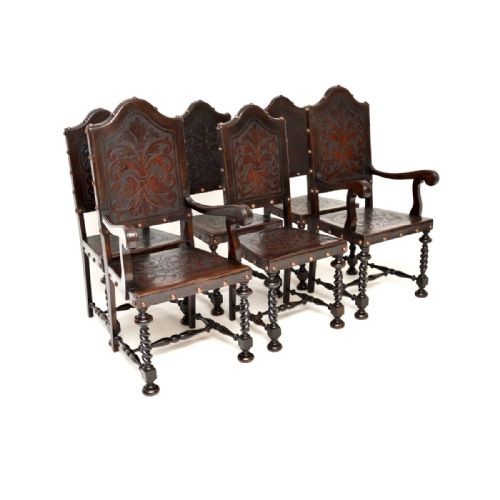
- An armchair designed with open arms, originally used at the head of a dining table or as a companion to side chairs.
Walnut Leather Armchair: Frequently Asked Questions
How do I identify a Victorian desk chair?
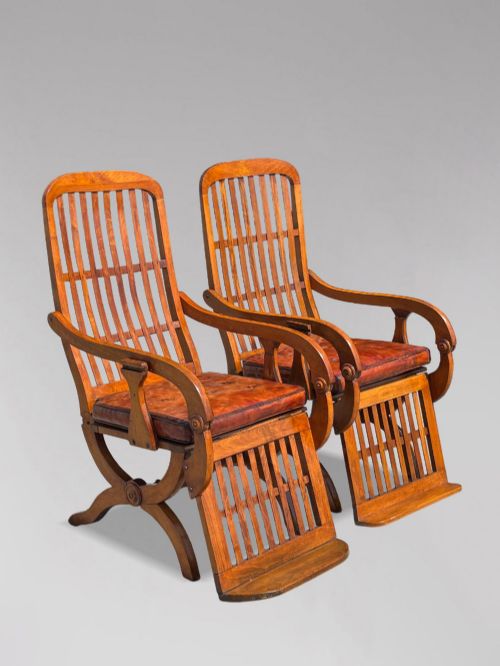
Victorian desk chairs often feature revolving mechanisms, brass castors, and button-tufted leather upholstery supported by walnut frames. Many examples from this era incorporate ergonomic tilt functions for office use.
Look for nineteenth-century construction markers such as hand-cut screws and seasoned timber frames. The combination of turned walnut spindles and sturdy leather distinguishes these from later reproductions.
What defines an Art Deco club chair?
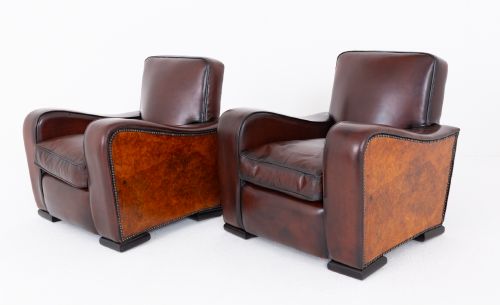
Art Deco club chairs are characterised by rounded profiles, substantial armrests, and smooth leather surfaces paired with walnut bases. They originated during the early twentieth century to provide relaxed lounge seating.
These pieces frequently arrive as pairs or part of matching suites alongside low sofas. The emphasis rests on streamlined comfort and the visual contrast between polished wood and supple hide.
Are walnut frames durable for daily use?
Walnut is a dense, hard timber that withstands structural stress well, making it suitable for functional seating. Properly joined frames maintain stability over generations of regular sitting.
Maintenance involves occasional conditioning for the leather and gentle cleaning for the wood. Solid timber construction ensures that historic chairs remain practical for contemporary interiors.
How do I spot a Georgian style reproduction?
Georgian style pieces produced in later eras often replicate eighteenth-century cabriole legs, wingback silhouettes, and carved walnut details. Examining the interior joinery and timber oxidation helps clarify the actual manufacturing date.
Maker labels or specific hardware styles can also provide clues regarding whether a chair dates to the original period or a subsequent revival movement.