
Walnut Inlay Pier Cabinet
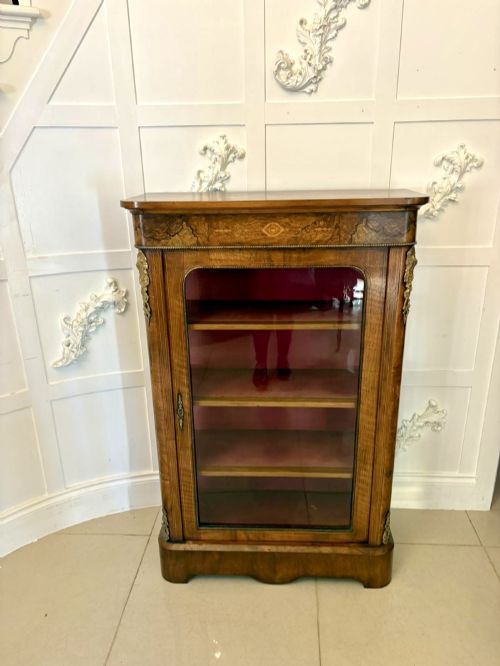
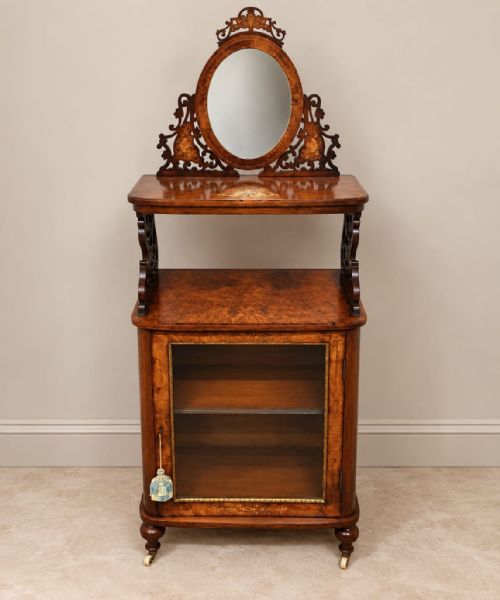
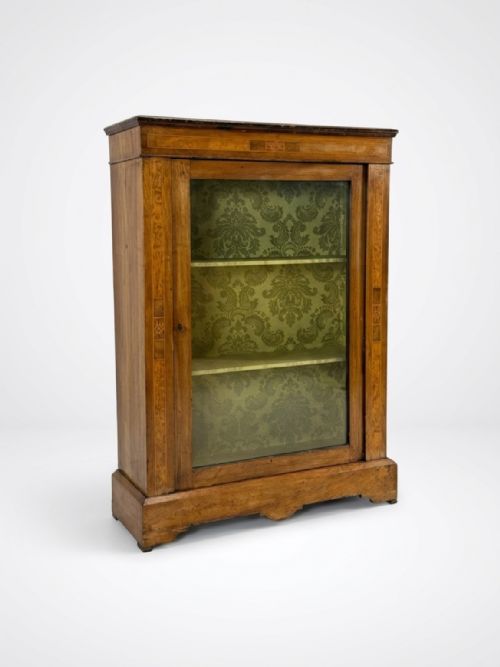
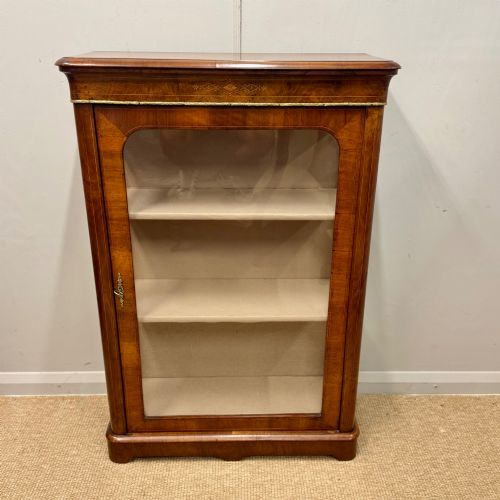
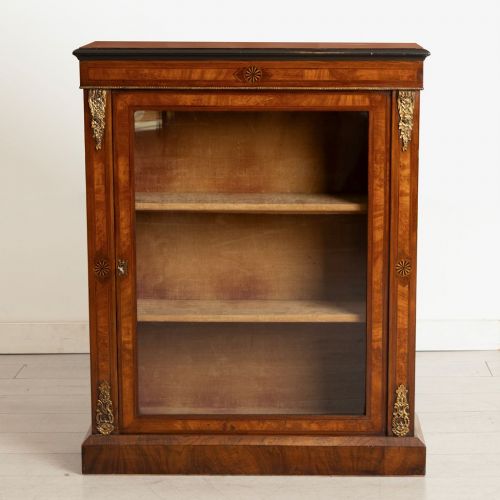
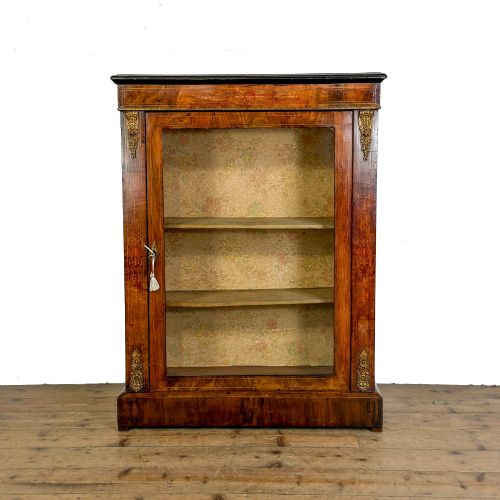
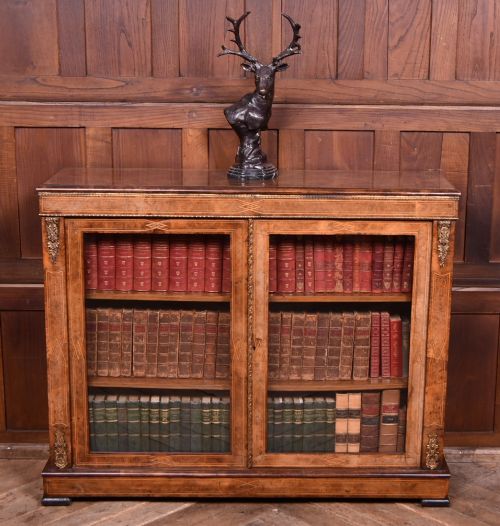
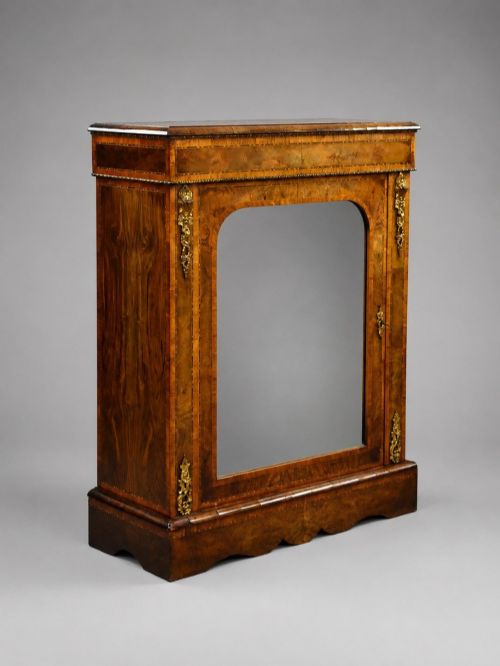
These walnut inlay pier cabinets are narrow display pieces designed for nineteenth-century drawing rooms, combining timber and glass to hold precious collections.
Walnut Inlay Pier Cabinet
A walnut inlay pier cabinet is a narrow display piece built to occupy the wall space between windows, known as the pier. The examples seen here belong largely to the Victorian period, spanning the mid-nineteenth century through the Edwardian era, alongside occasional Regency pieces.
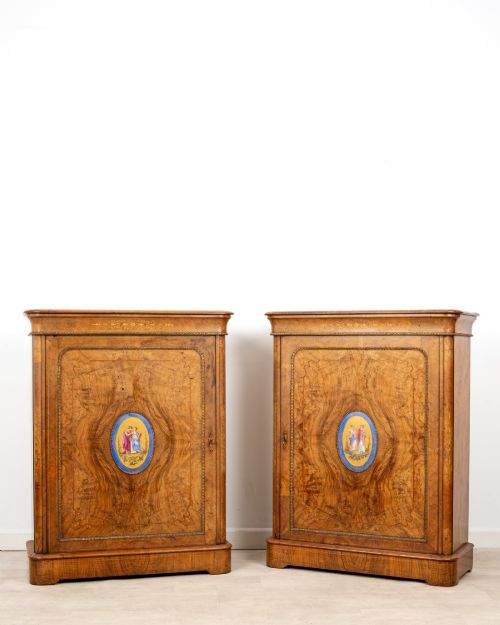
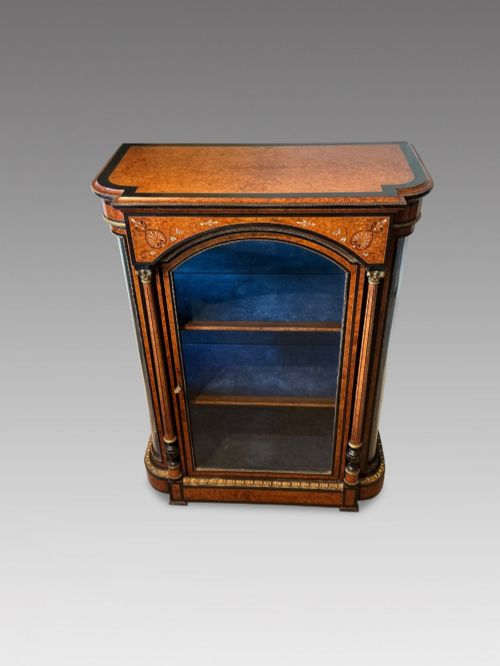
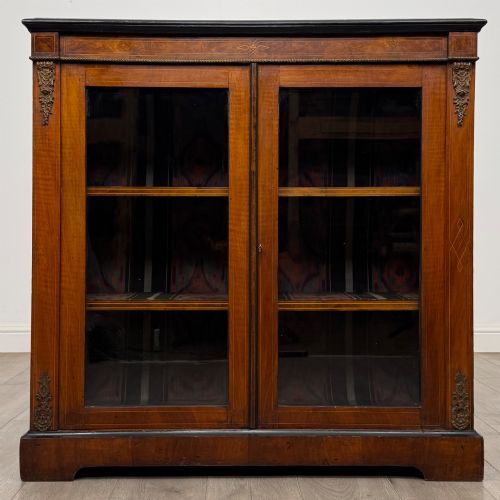
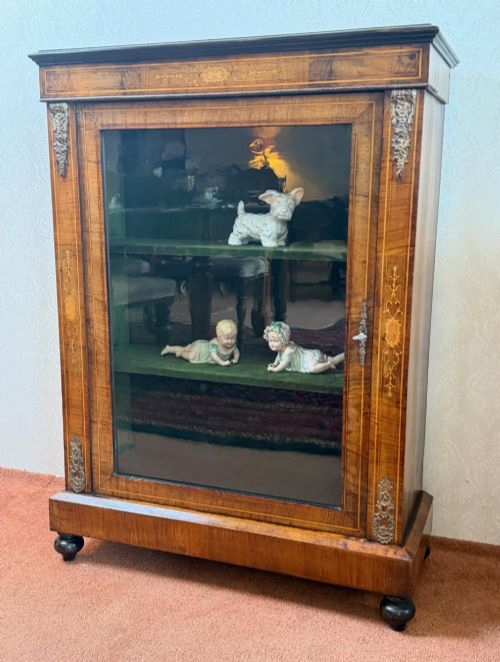
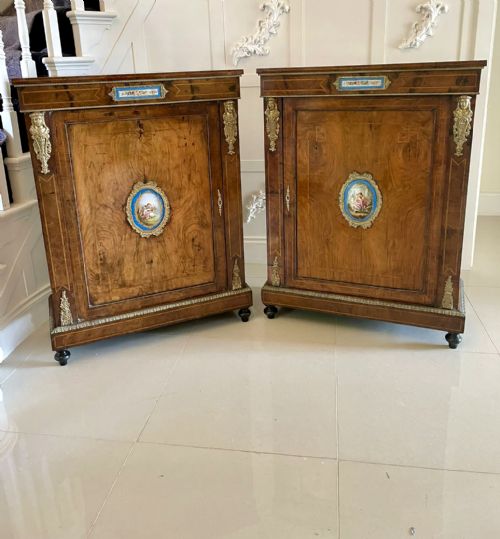
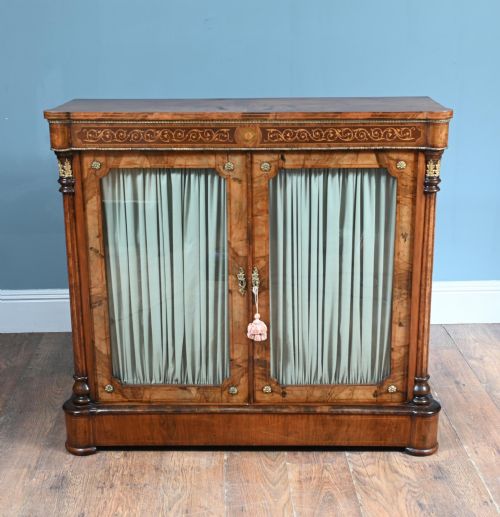
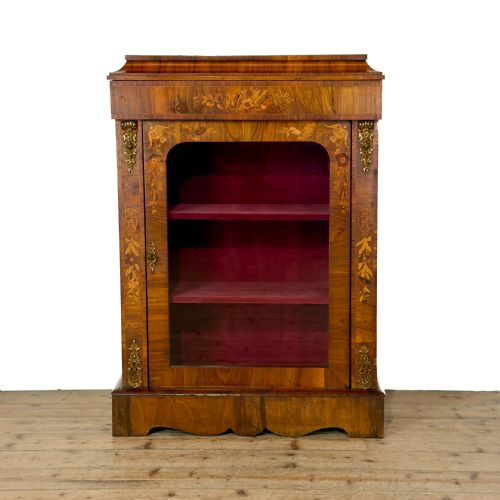
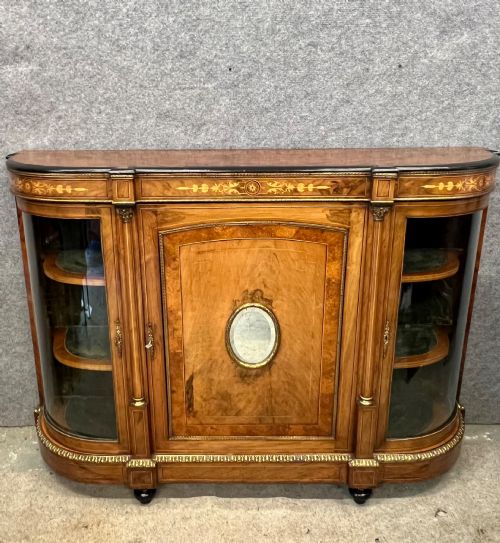
Most pieces take the form of glazed single-door display cabinets or side cabinets, often showing serpentine shapes or pairs designed to balance a room. The timber framework supports glass panels intended for showing ceramics and ornaments.
Makers drew on styles ranging from French Revival and Louis XVI to the Aesthetic Movement, producing furniture that served both utility and formal display in nineteenth-century homes.
Materials and construction
Cabinet makers utilised figured walnut and burr walnut veneers applied over solid foundations, creating rich, swirling grain patterns across the primary surfaces. Cross-banding and detailed marquetry utilised lighter woods such as boxwood.
Mounts in ormolu and brass framed the glazed doors and accented corners, while contrasting stringing employed ebony and rosewood to define panels and shelves.
Makers hid intricate floral marquetry on narrow cabinet doors so small that only a cat could comfortably inspect the stems.
Judging quality
The distinction between standard production and top quality rests on the selection of burr walnut veneers and the crispness of the boxwood marquetry inlay. Superior pieces often include porcelain plaques, finely cast ormolu mounts, and ebony stringing that remains intact.
Proportion and symmetry set the finer examples apart, particularly in matched pairs where the timber grain flows logically across both cabinets and glazing bars fit with absolute precision.
The Walnut Inlay Pier Cabinet Glossary
- Pier cabinet
- A narrow display cabinet built to stand against the wall space between two windows. These pieces feature glazed doors for exhibiting porcelain and small objects.
- Burr walnut
- A prized timber veneer taken from the growth deformations of walnut trees. It provides intricate, swirling patterns across cabinet doors.
- Marquetry
- Decorative patterns formed by fitting contrasting pieces of wood veneer into a background sheet. Floral motifs appear frequently in these designs.
- Ormolu
- Gilt bronze mounts applied to furniture for decorative accent. They frame panels and highlight structural corners on nineteenth-century cabinets.
- Cross-banding
- A decorative border technique where strips of veneer are laid with the grain running perpendicular to the surrounding surface.
Walnut Inlay Pier Cabinet: Frequently Asked Questions
What is a pier cabinet used for?
These narrow cabinets were made to sit against the wall between tall drawing room windows. They served to display porcelain, small ornaments, and books behind glass doors.
Inside, adjustable timber shelves held collections while protecting delicate items from dust and handling.
How do I identify a Victorian pier cabinet?
Victorian examples rely heavily on walnut and burr walnut timbers paired with intricate boxwood marquetry and glass doors. They often incorporate ormolu mounts and side columns.
Dating relies on stylistic clues such as French Revival shapes, Aesthetic Movement details, or specific marquetry patterns typical of the mid-nineteenth century.
Are these cabinets sold in pairs?
Many surviving examples were constructed as matched pairs to flank a fireplace or a pair of windows in a formal reception room. Single cabinets are also common on the market.
Matching pairs exhibit mirrored wood grain and identical inlay motifs across both carcasses.
How do I clean burr walnut furniture?
Burr walnut surfaces require dusting with a soft, dry cloth to prevent micro-abrasions on the polished veneer. Avoid modern chemical polishes and silicone sprays.
A light application of traditional beeswax preserves the lustre of the timber without damaging the delicate boxwood inlay.