


19th Century Glazed Credenza
A 19th century glazed credenza brings substantial timberwork, gilt mounts and display glass together for grand reception rooms.
19th Century Glazed Credenza
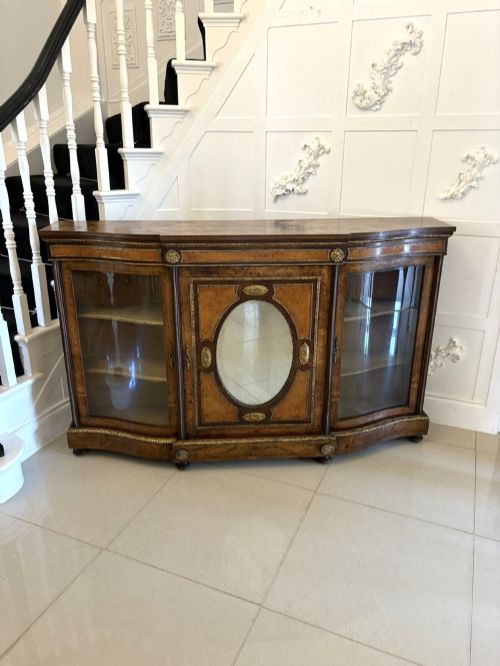
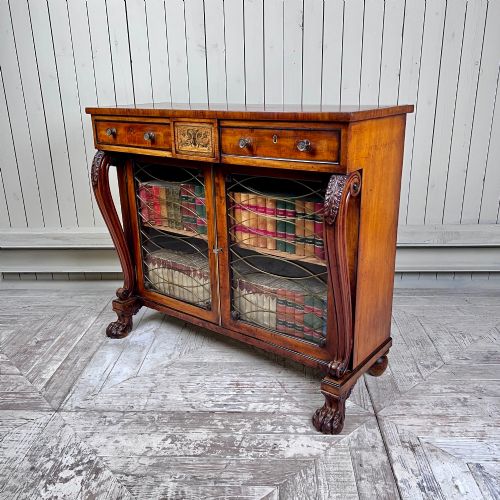
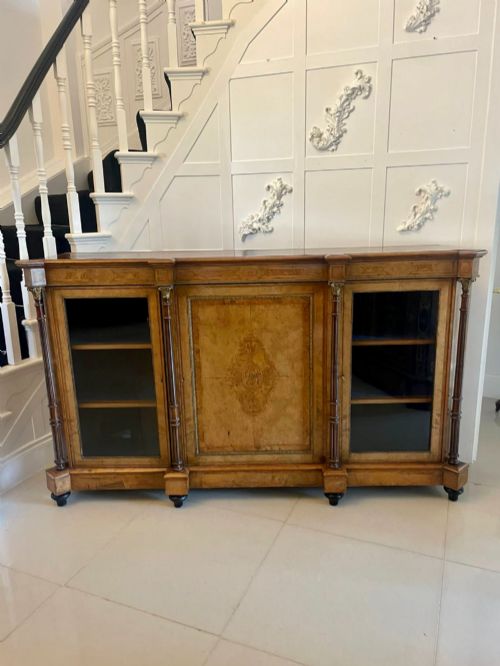
A 19th century glazed credenza is a low, cabinet-form piece designed primarily for display and surface storage in formal principal rooms. The listings show these pieces appearing across several decades, dominated by Victorian examples alongside Regency and French Revival variants.
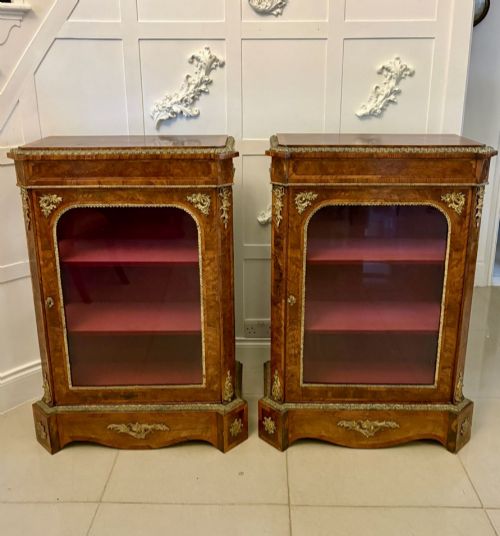
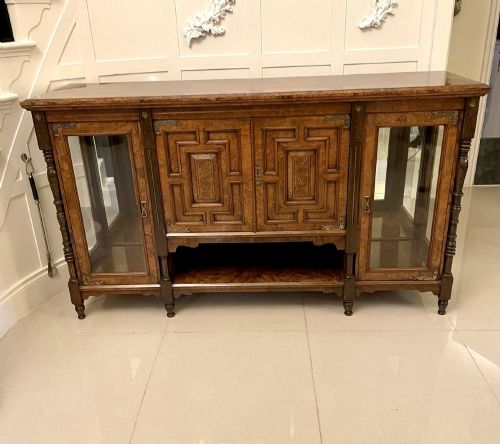
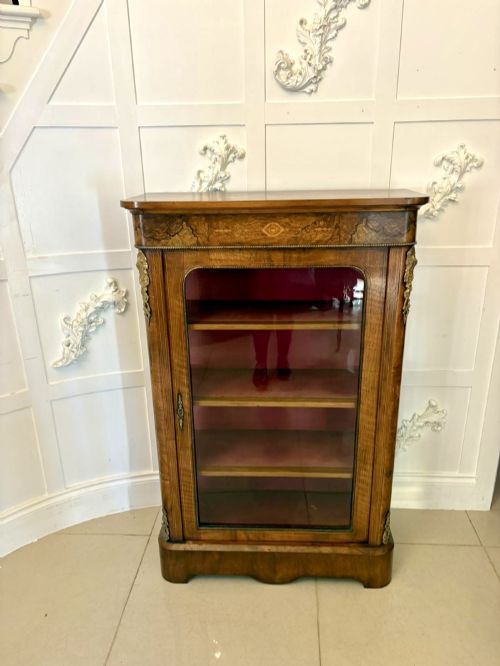
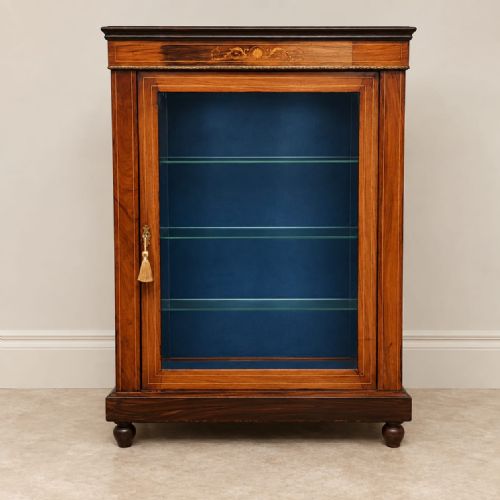
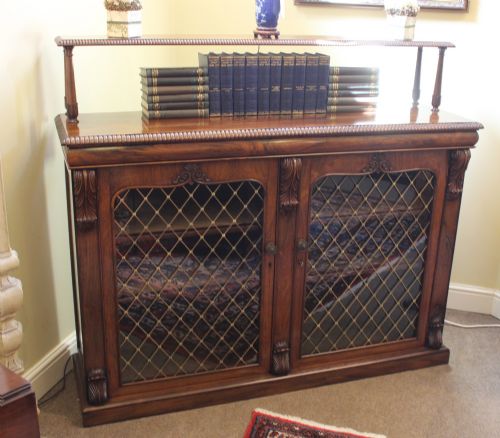
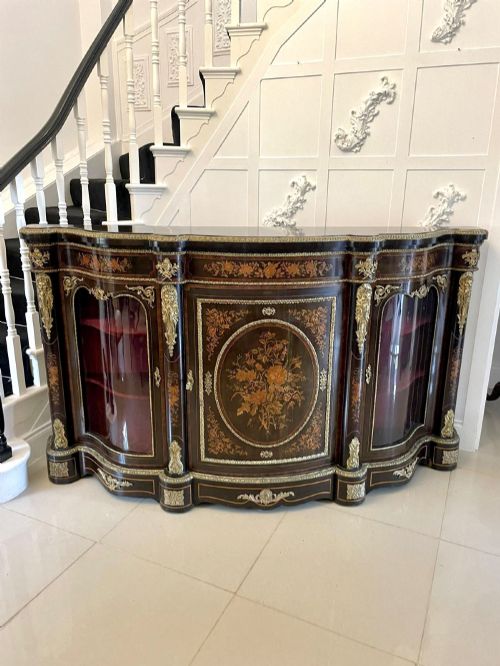
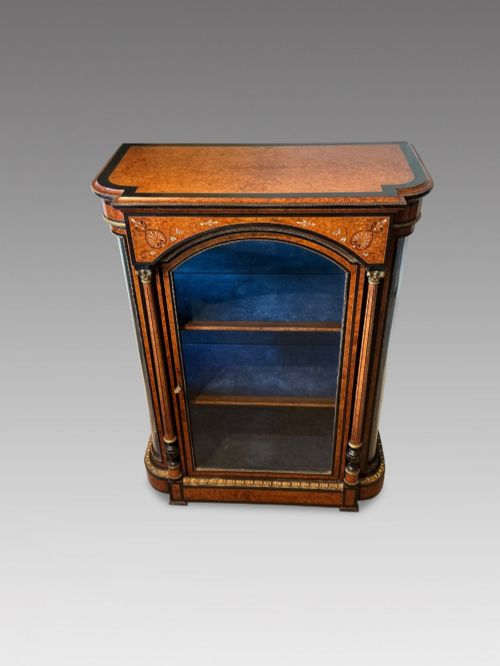
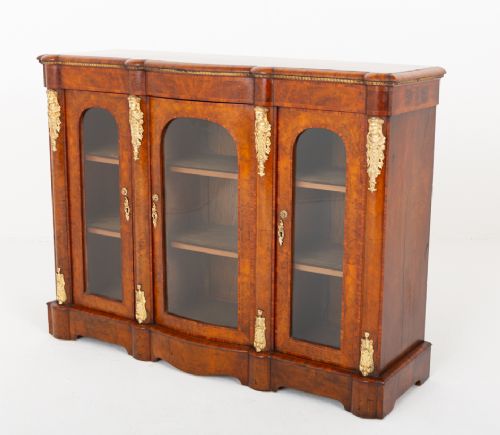
The form encompasses dedicated credenzas, sideboards, and narrower pier cabinets featuring glazed doors for housing ceramics and books. Buyers encounter serpentine shapes, breakfront profiles, and mirror-backed configurations designed to reflect light and interior space.
How they were made
Cabinet makers utilised foundational carcases of walnut, mahogany, and rosewood, frequently enhanced by decorative veneers such as burr walnut, amboyna, and kingwood. Surfaces often received intricate floral marquetry, floral inlay, and contrasting ebonised wood details.
Gilded bronze or brass ormolu mounts punctuate the timber structures, framing doors, corners, and plinths. Glazing panels provide secure display space, while select pieces incorporate marble tops and inset porcelain plaques.
Cabinets occasionally arrived with built-in mirrors at the back, ensuring guests could admire the display from every conceivable angle.
What varies in quality
The sophistication of the timber selection and the precision of the veneer work dictate the primary tier of craftsmanship. Pieces exhibiting complex serpentine curves and dense burr walnut grain demand greater skill than straight-fronted carcases.
The integration of cast ormolu mounts and detailed marquetry separates standard production from exhibition-grade examples. Heavier, finely chased bronze mounts and meticulous hand-cut inlay indicate superior workshops.
Lamb of Manchester
The 19th Century Glazed Credenza Glossary
- Credenza
- A low cabinet or sideboard designed for display and storage, often featuring a central glass door flanked by side cupboards.
- Ormolu
- Gilded bronze mounts applied to furniture for decorative accent, common on mid to late period cabinets.
- Marquetry
- Decorative veneer patterns formed from pieces of wood, ivory, or shell assembled to create floral or geometric designs.
- Pier Cabinet
- A narrow display cabinet built specifically to stand against the wall space between windows.
- Boulle
- A style of marquetry using brass and tortoiseshell inlaid into an ebonised wood ground.
19th Century Glazed Credenza: Frequently Asked Questions
What is a 19th century glazed credenza?
It is a low, timber-framed display cabinet featuring glass doors, designed during the Victorian and Regency periods for formal reception rooms.
These pieces combine surface storage with visible shelving for porcelain and decorative objects.
Where were these cabinets placed?
They typically stood against principal living room walls, often between tall windows in the case of narrow pier cabinets.
Larger credenzas occupied central wall spaces in dining rooms and drawing rooms.
How do I identify a Victorian piece?
Victorian examples frequently display burr walnut veneers, ebonised wood details, and ormolu mounts reflecting mid to late 19th century revival styles.
Makers of this era drew heavily on French influences and floral marquetry.
What is the difference between a credenza and a chiffonier?
A credenza is generally a broader, low cabinet with multiple glass-fronted sections designed for display.
A chiffonier tends to be a smaller sideboard form, often incorporating a raised shelf or bookcase superstructure.