


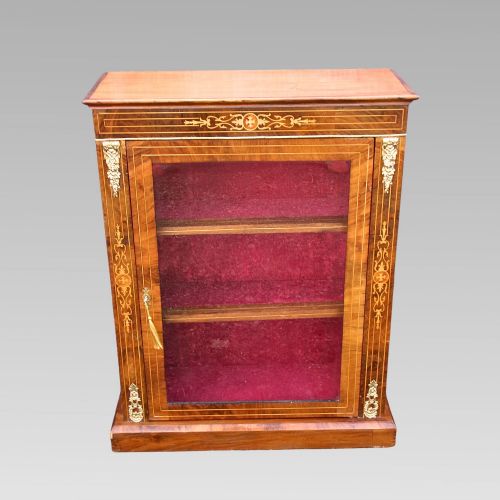


Small Walnut Display Cabinet
A small walnut display cabinet brings warmth and glass-fronted elegance to a room, holding prized porcelain or books within compact proportions.
Small Walnut Display Cabinet
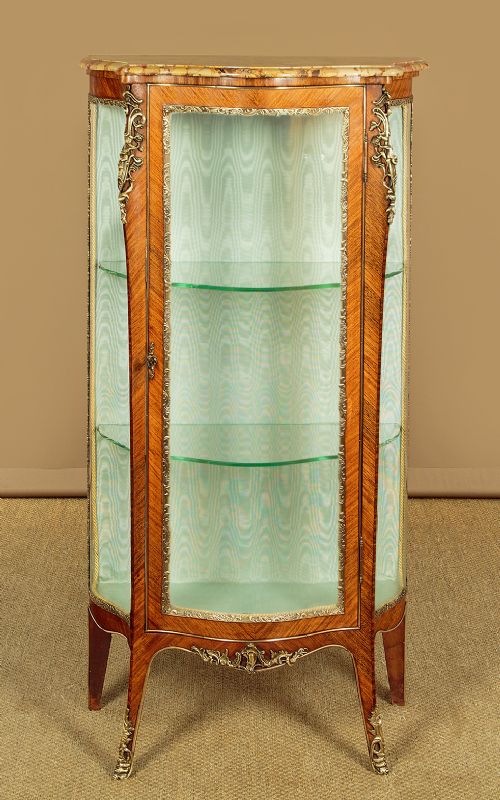
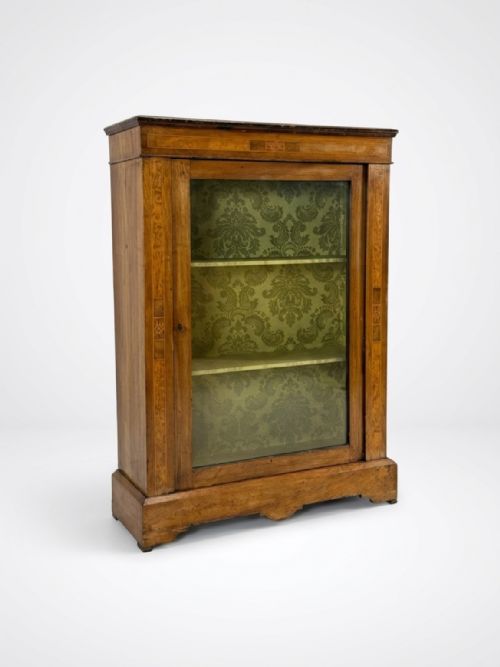
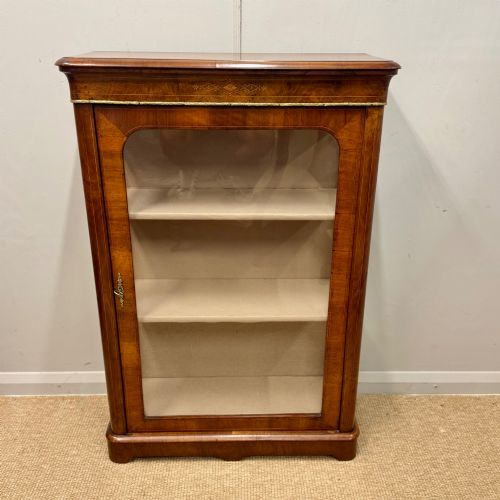
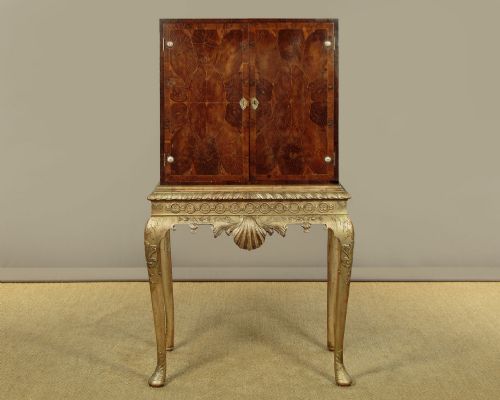
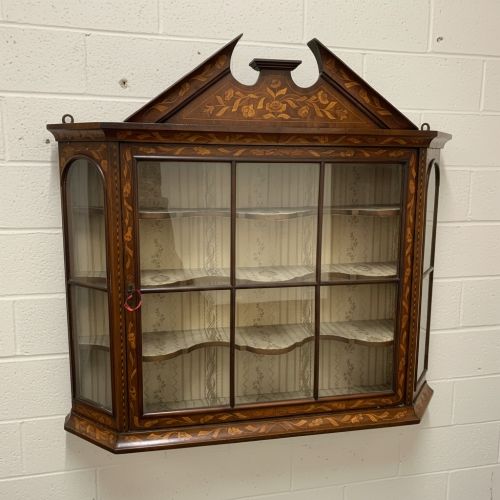
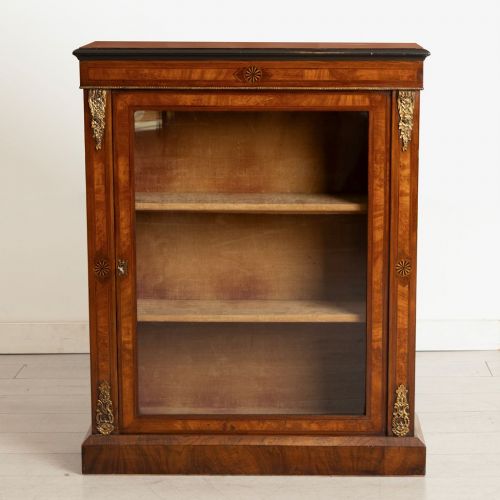
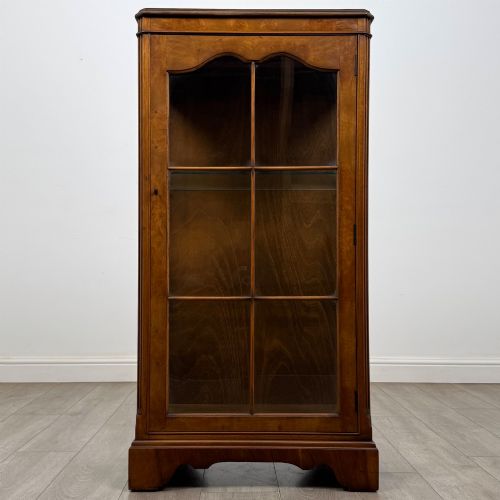
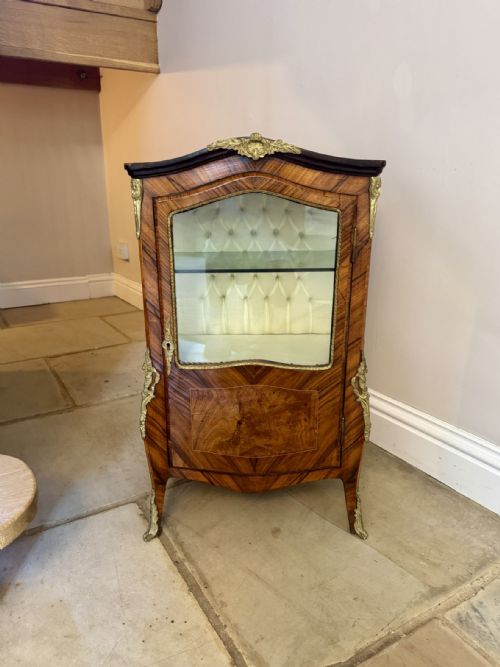
A small walnut display cabinet is a refined piece of furniture designed to exhibit precious items while keeping them protected behind glass. The selection ranges from compact Victorian pier cabinets and Edwardian glazed bookcases to French vitrines and Queen Anne revival pieces.
Most examples date from the nineteenth and early twentieth centuries, spanning Victorian, Edwardian, and Art Deco periods. Formats vary from freestanding pier cabinets and narrow credenzas to hanging corner cupboards and wall-mounted display cases.
Makers utilised rich timbers such as burr walnut, figured walnut, and standard walnut, often incorporating glass doors, mirrored backs, and open shelving to maximise light around the displayed objects.
Materials and construction methods
Makers applied fine walnut veneers, particularly burr walnut and figured walnut, over solid secondary timbers to create rich, swirling grain patterns on flat and serpentine surfaces. Inlays of boxwood, rosewood, and ebony frequently accent the primary timber.
Glazing bars hold the glass panes of the display doors, whilst brass mounts, ormolu fittings, and velvet or fabric linings complete the interior presentation of these cabinets.
The listings span Victorian, Edwardian, and Art Deco periods, featuring materials such as burr walnut, ormolu, brass, and glass across various cabinet formats.
Distinguishing quality in walnut display cabinets
Quality rests in the selection of the timber veneer and the precision of the marquetry or inlay work. Highly figured burr walnut and complex serpentine shapes demand superior carpentry.
The integration of cast ormolu mounts, well-fitted glass doors, and original brass hardware separates standard production from finer workshop pieces.
The Small Walnut Display Cabinet Glossary
- Pier Cabinet
- A low freestanding cabinet designed to fit against the wall space between windows. These typically feature glazed doors and walnut or burr walnut veneers.
- Vitrine
- A glass-fronted display cabinet used for showing porcelain, curiosities, or small objects. They often incorporate ormolu mounts and French styling.
- Burr Walnut
- Timber taken from a tree growth or burl, yielding highly decorative, swirling grain patterns. It is frequently used for the main exterior surfaces of better-quality cabinets.
- Ormolu
- Gilded bronze mounts applied to furniture for decoration. These metal details appear on nineteenth-century French and English display pieces.
- Marquetry
- Decorative patterns formed by fitting together thin slices of various woods and other materials. Craftsmen used this technique to ornament door panels and friezes.
Small Walnut Display Cabinet: Frequently Asked Questions
Where should I place a small display cabinet?
These compact cabinets suit alcoves, hallways, or reception rooms where floor space is limited. Their glazed doors allow them to function well in living areas without dominating the room.
Keep them away from direct sunlight to protect the walnut veneer and any interior fabric linings from fading over time.
How do I date a walnut cabinet?
Dating relies on combining the construction style, period characteristics, and secondary timbers. Victorian and Edwardian pieces show distinct shifts from heavy ebonised details to lighter inlaid marquetry.
Examining the backboards, hinges, and glass manufacturing clues helps narrow down the decade of production alongside stylistic cues like Queen Anne revival or Art Deco forms.
What items look best inside?
Small porcelain figures, antique books, silver trinkets, and glassware fit comfortably on the shelves of these cabinets. The combination of glass panes and occasional mirrored backs reflects light onto the contents.
Arranging items by height and material creates a balanced display that complements the warm tones of the surrounding walnut wood.
How do I care for antique walnut?
Maintain the timber by dusting regularly with a soft, dry cloth and avoiding silicone-based polishes. Traditional wax applied sparingly helps preserve the sheen of the walnut veneer.
Maintain stable room humidity to prevent the timber and veneers from drying out or splitting across the joints and decorative inlays.