



Antique Music Record Cabinet
An antique music record cabinet keeps your collection organised while anchoring a room with period timber.
Antique Music Record Cabinet
An antique music record cabinet serves as specialised storage for sheet music, early recordings, and player equipment across several decades of domestic entertainment. These pieces range from upright parlour versions to dedicated filing units designed to keep paper and media tidy.
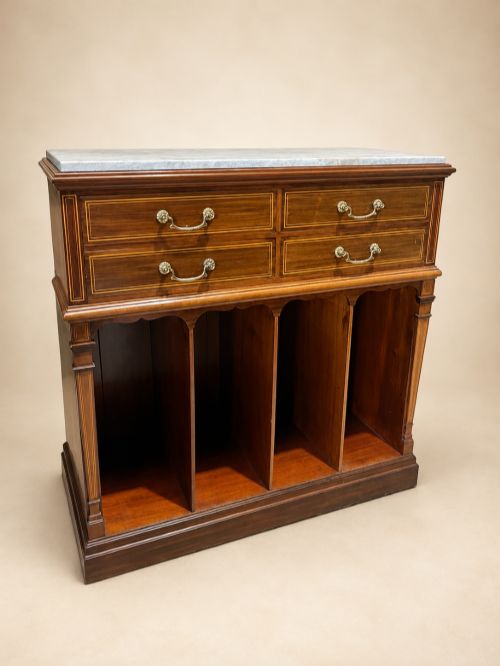
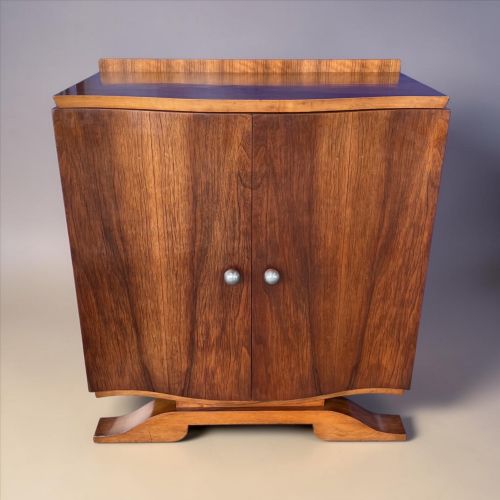
Buyers browsing this selection encounter various forms originating from the Victorian, Edwardian, and Art Deco eras. Mahogany, walnut, and oak dominate the selection, often finished with period inlay work or fitted with glass doors.
How they were made
Cabinetmakers constructed these pieces primarily using solid hardwoods and veneers such as mahogany, walnut, oak, and rosewood. Surface decoration frequently involved delicate satinwood stringing and marquetry inlay, reflecting prevailing styles from the late nineteenth and early twentieth centuries.
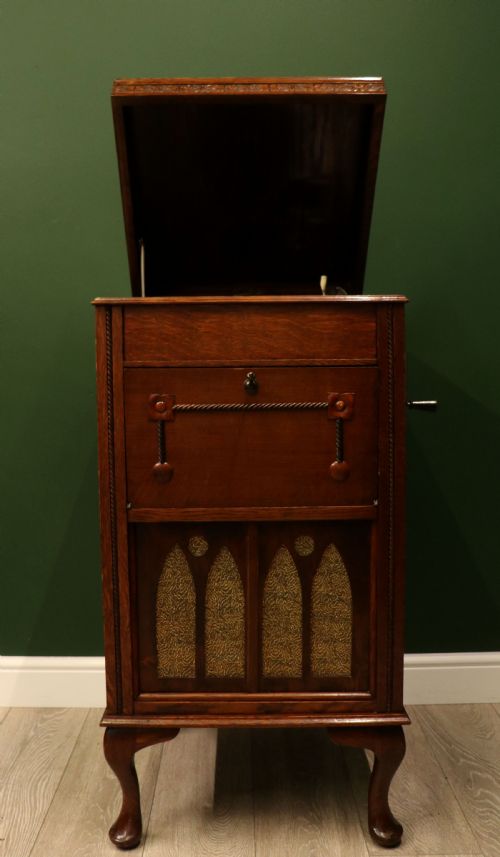
Functional elements relied on sturdy metal and brass hardware to support drop fronts, internal filing divisions, and cabinet doors. Some iterations integrated mechanical gramophones or phonographs directly into the wooden framework alongside record storage.
What varies in quality
The distinction between standard utility pieces and finer examples rests on timber selection and cabinetmaking precision. Richly figured burr walnut or carefully matched mahogany veneers elevate the visual impact of Edwardian and Victorian specimens.
Execution of inlaid detailing and the integration of specialised filing compartments differentiate workshop standards. Pieces that combine housing for both audio equipment and sheet music demonstrate greater complexity in their interior design.
U Phone of Leeds
The Antique Music Record Cabinet Glossary
- Burr walnut
- A highly figured wood grain obtained from walnut tree growths, prized for its swirling patterns on cabinet doors.
- Marquetry
- Decorative woodwork where pieces of veneer are fitted into a ground to form geometric or floral designs.
- Parlour gramophone
- A domestic sound-reproducing machine housed within a freestanding wooden cabinet suited for a reception room.
- Sheet music cabinet
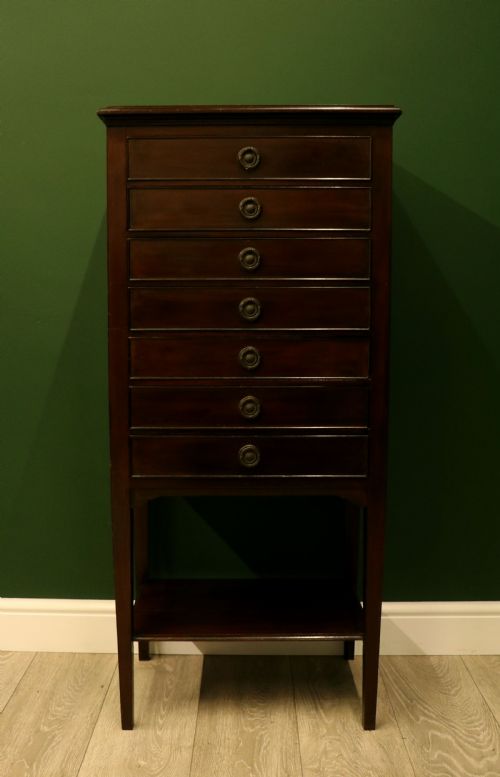
- A tall, narrow piece of furniture fitted with shallow drawers or vertical slots specifically sized for paper scores.
- Stringing
- Thin lines of contrasting timber inlaid into the surface of a cabinet to create borders and panel outlines.
Antique Music Record Cabinet: Frequently Asked Questions
What fits inside an antique music record cabinet?
These cabinets suit sheet music, early shellac discs, and modern vinyl depending on the internal shelf depth and filing setup. Many Edwardian and Victorian versions feature drop-down compartments or vertical dividers tailored for paper sheets.
Later iterations from the nineteen-thirties accommodate larger record formats alongside audio hardware. Measuring the internal clearance helps determine which media format sits comfortably inside.
How do I date an antique music record cabinet?
Dating relies on combining the overarching style, timber choice, and hardware signatures visible on the cabinet. Victorian pieces often use heavy black walnut, whereas Edwardian examples favour lighter inlaid mahogany and satinwood.
Art Deco variations from nineteen-thirty introduce streamlined geometric lines without traditional period revival ornamentation. Comparing the internal mechanisms and construction joints confirms the era of manufacture.
Where should I place a music cabinet at home?
Their compact, upright footprint makes these cabinets versatile additions to living rooms, studies, or hallways. Placing them away from direct heat sources protects the polished timber veneers and inlaid details from drying out.
They function well as side tables or accent pieces while providing concealed storage for media collections. The flat top surface also accommodates lamps or decorative objects.
How do Edwardian and Victorian cabinets differ?
Victorian examples lean towards darker timbers like black walnut and heavy proportions with minimal inlaid decoration. Edwardian pieces introduce brighter mahogany and rosewood surfaces accented with delicate stringing and Sheraton Revival motifs.
Edwardian makers also produced slimmer profiles intended for compact urban drawing rooms. Both styles maintain functional internal divisions tailored for home entertainment.