
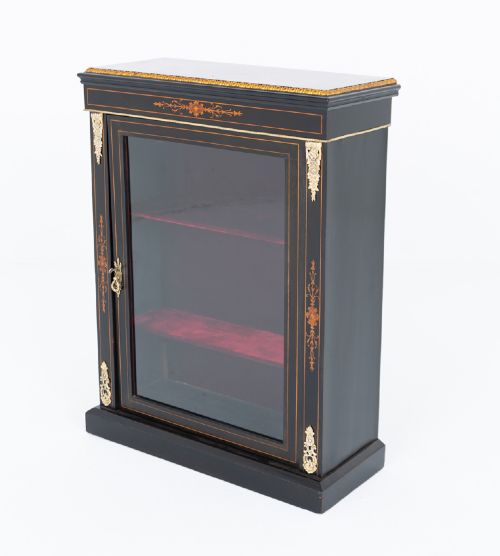


Victorian Inlay Music Cabinet
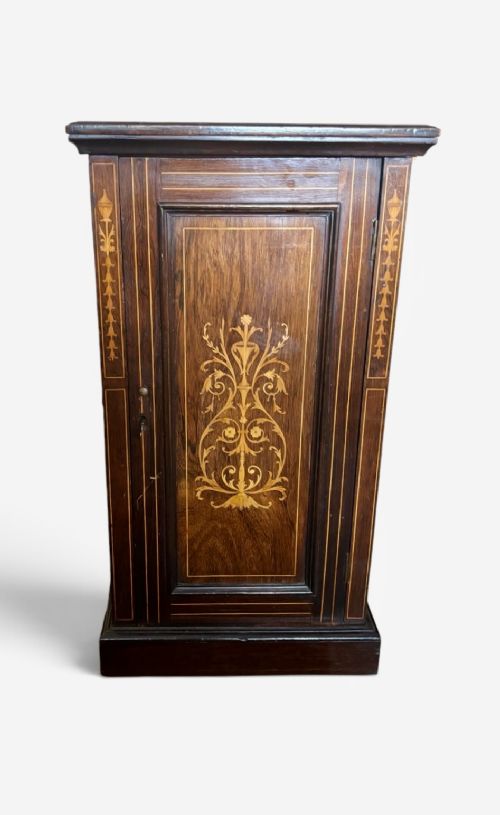
A victorian inlay music cabinet keeps sheet scores ordered in style, bringing rich timber and marquetry detail to a drawing room.
Victorian Inlay Music Cabinet
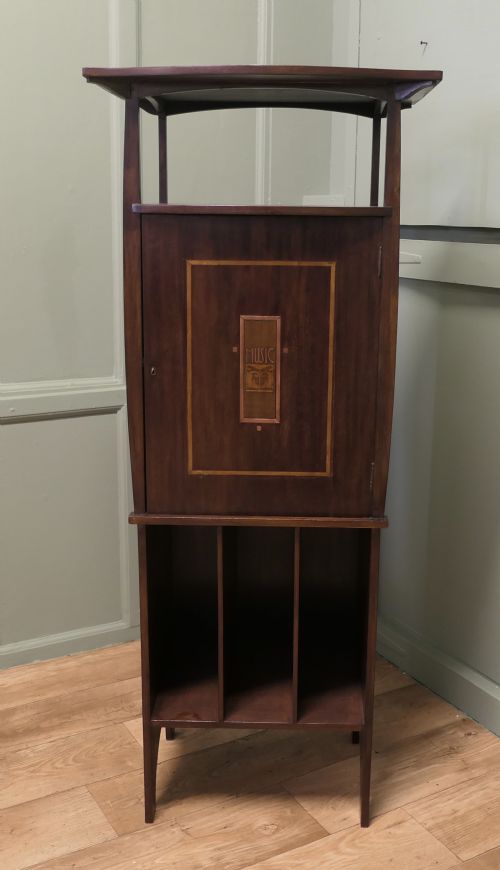
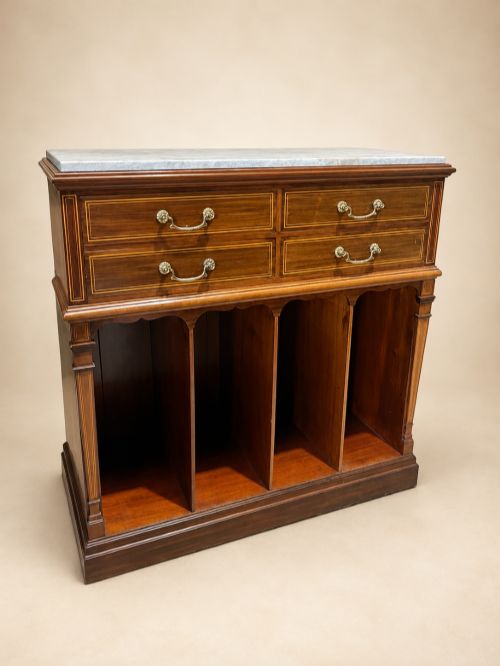
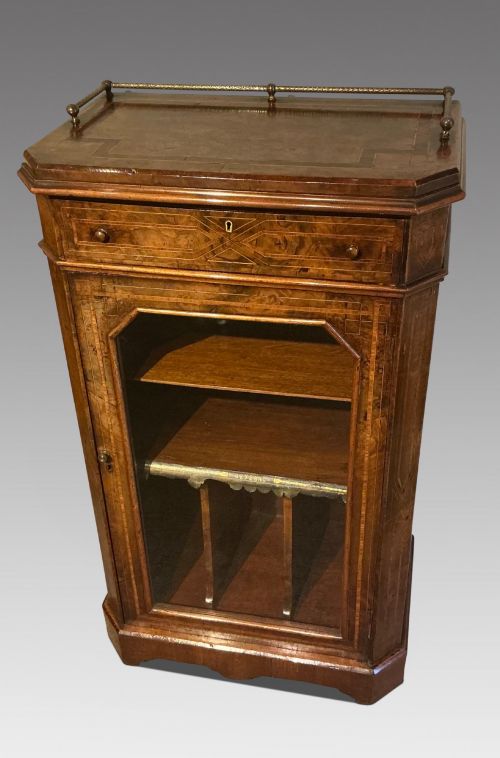
A victorian inlay music cabinet serves as a dedicated piece for storing sheet scores, combining upright shelving with enclosed doors or drop-front drawers. These pieces date principally from the nineteenth century, spanning decades from eighteen fifty through to nineteen hundred.
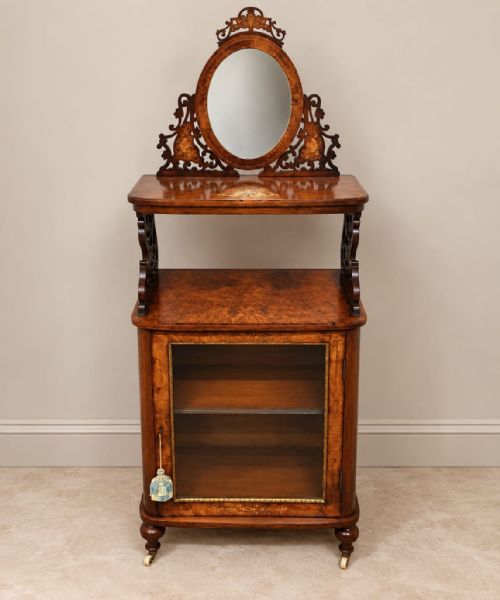
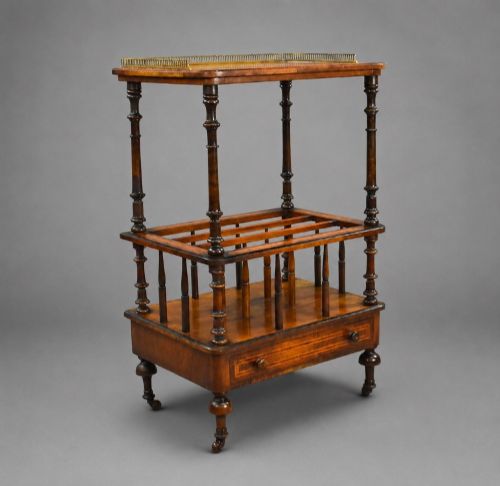
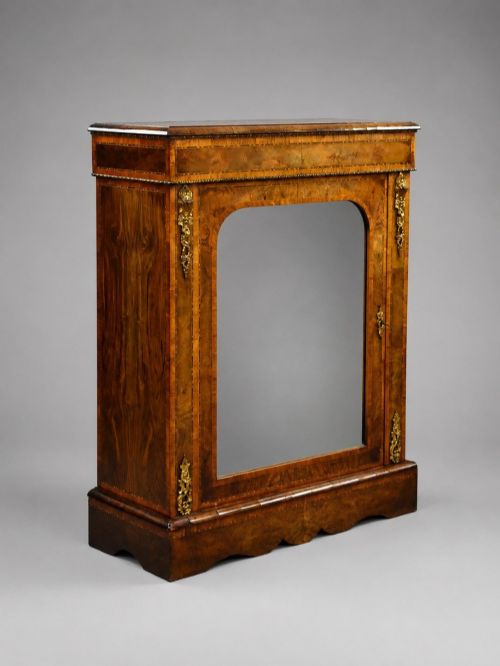
The walnut, burr walnut, and rosewood examples dominate the selection, often taking tall, narrow forms that suit smaller drawing rooms or parlours. Related furniture like canterburys, pier cabinets, and whatnots appear alongside these dedicated storage pieces.
Makers such as GM Elwood for JS Henry and Keeble of London represent the finer end of production, while many others remain anonymous workshop pieces. Styles range from straightforward Victorian and late Victorian to Arts and Crafts, Sheraton Revival, and Aesthetic Movement designs.
Materials and Construction
Cabinetmakers built these pieces using dense hardwoods like walnut, burr walnut, rosewood, mahogany, and occasional ebonised wood or gonçalo alves. The structural timber often received decorative veneers to create striking grain patterns across the front doors and top surfaces.
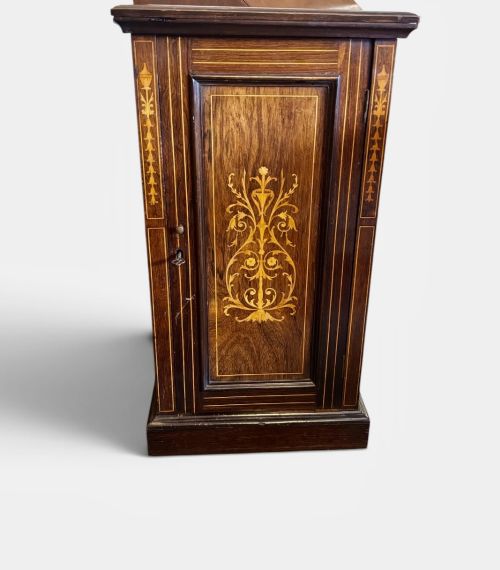
Marquetry inlay and boxwood or satinwood stringing provide contrasting geometric or floral ornamentation. Brass hardware, glass door panels, and mirror backs appear on select display variants, adding light and reflection to the interior.
Arts and Crafts, Sheraton Revival, and Aesthetic Movement styles appear alongside standard Victorian designs.
Judging Quality and Finish
The refinement of the marquetry inlay sets the standard for these cabinets, distinguishing crisp, detailed botanical or classical motifs from simpler line work. Selection of veneer also marks the tier of the piece, with rich burr walnut and figured rosewood commanding greater visual presence.
Joinery execution in the interior shelf divisions and drawer runners dictates the durability of the storage compartments. The harmony between the primary timber, the inlaid contrasting woods, and any applied brass or glass elements determines the visual balance.
GM Elwood for JS Henry·Keeble London
The Victorian Inlay Music Cabinet Glossary
- Marquetry Inlay
- Decorative woodwork where different coloured veneers are fitted into a primary ground to form pictures or patterns. It appears frequently on cabinet doors and tabletops.
- Burr Walnut
- Timber taken from the growth excrescences of walnut trees, prized for its swirling, highly figured grain patterns. Cabinetmakers used it extensively on high-end Victorian furniture.
- Canterbury
- A low stand featuring slatted partitions, originally designed for holding sheet music or folios. Many examples include a small drawer underneath.
- Pier Cabinet
- An upright display cabinet proportioned to fit the narrow wall space between windows. These pieces often feature glass doors and velvet-lined shelves for ornaments.
- Ebonised
- Wood finished with a dark stain or paint to imitate ebony. This technique gained popularity during the Victorian Aesthetic Movement.
Victorian Inlay Music Cabinet: Frequently Asked Questions
What is a victorian inlay music cabinet used for?
These cabinets were designed to hold and protect unbound sheet music and folios in nineteenth-century homes. The interior compartments kept delicate paper scores flat and organised near the piano.
Today, they serve equally well for storing modern papers, vinyl records, or general household items while maintaining a decorative presence in a living space.
How do I date a victorian inlay music cabinet?
Dating relies on identifying the prevailing timber choices, hardware styles, and overarching design movements like Sheraton Revival or Arts and Crafts. Mid-century examples often favour dense rosewood, whereas later decades lean towards burr walnut and ebonised finishes.
Construction methods inside the drawers and cabinet backs also offer clues, moving from hand-dovetailed joints towards more standardised machine-cut elements by the end of the century.
Are these cabinets suitable for small rooms?
Their characteristically tall and narrow proportions make them exceptionally well-suited for compact spaces. They occupy minimal floor area while offering substantial vertical storage through multiple internal shelves.
Many designs incorporate mirrored backs or glass panels, which help reflect light and visually expand the room around them.