



Vintage Music Sheet Cupboard
A vintage music sheet cupboard keeps scores organised in upright drawers, offering a practical piece of period furniture for any room.
Vintage Music Sheet Cupboard
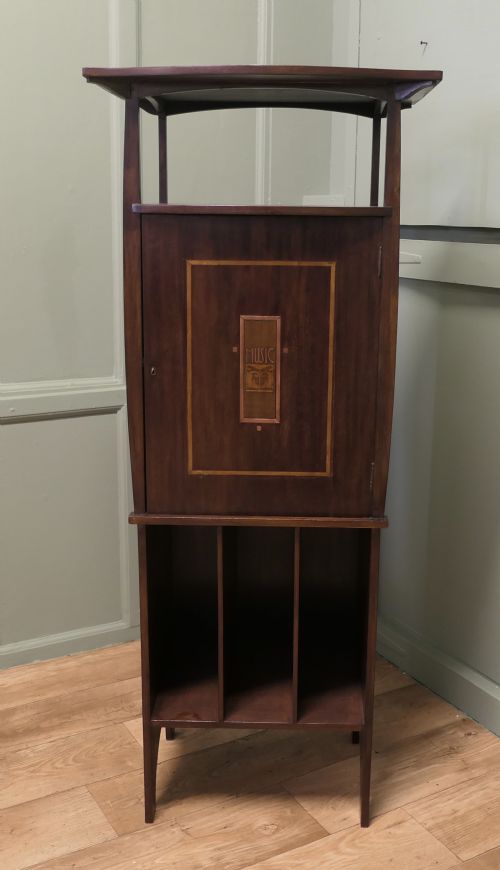
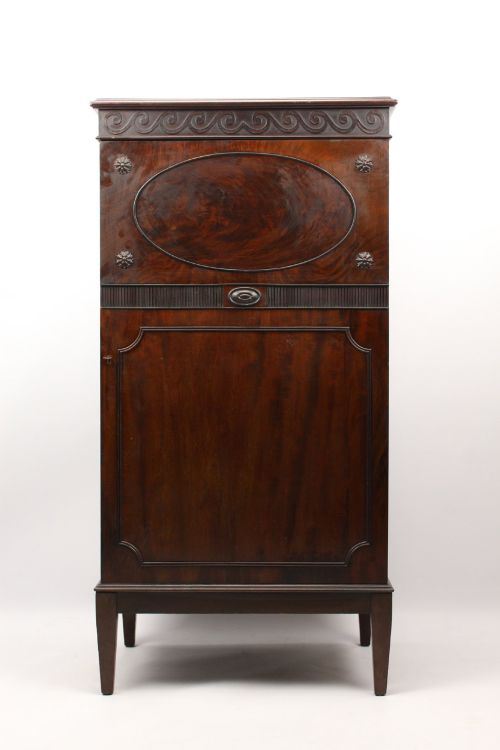
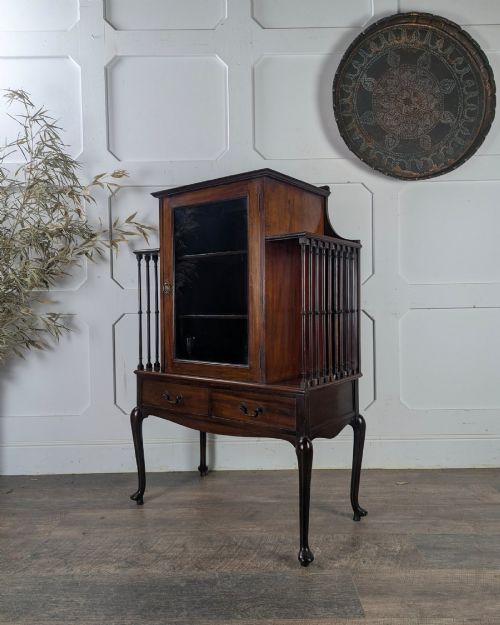
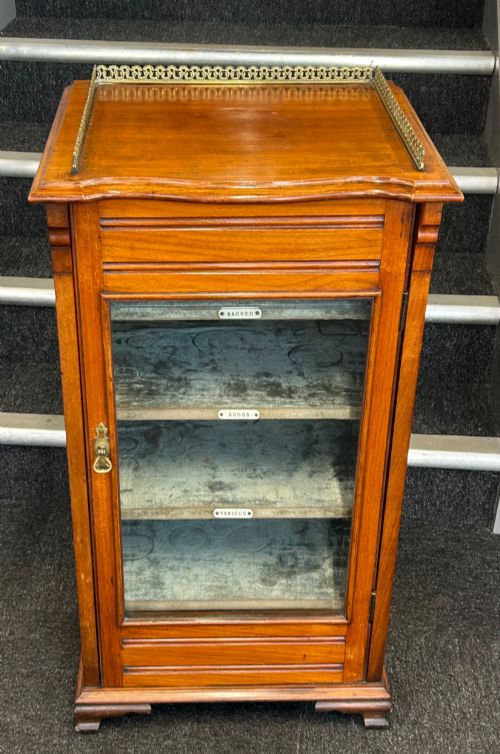
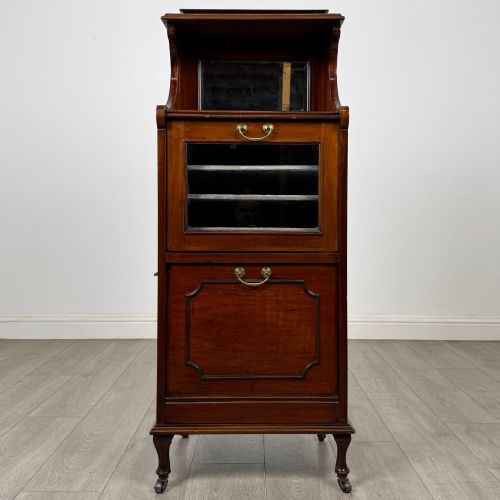
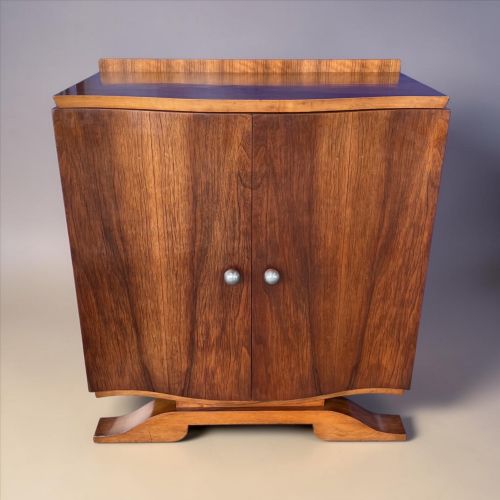
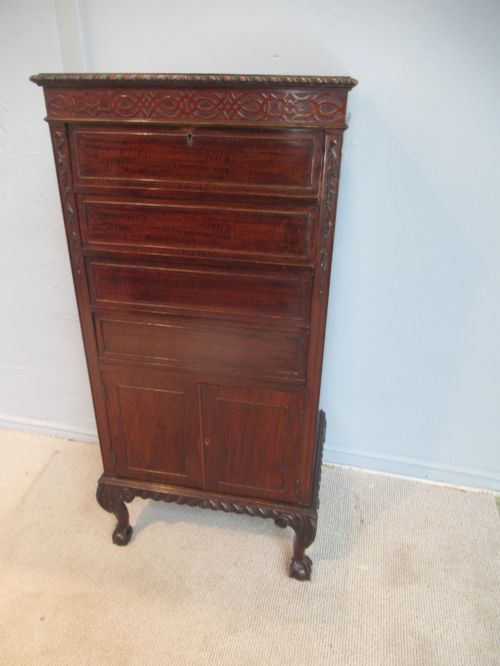
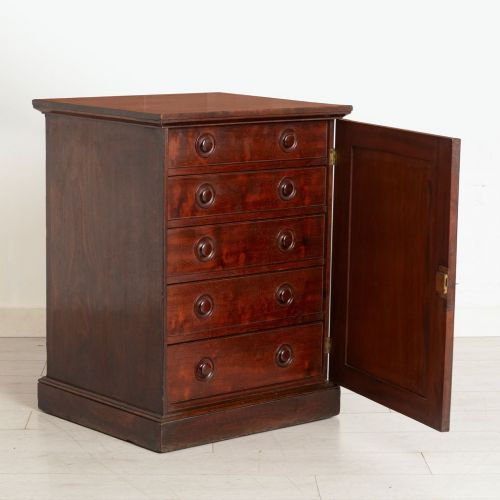
A vintage music sheet cupboard is designed specifically to store sheet music and folios, appearing in forms such as music cabinets, filing cabinets, and side cabinets. These pieces date across several periods, with Edwardian examples forming a significant portion alongside Victorian, 19th century, and 1930s pieces.
The most common formats on this page are Edwardian mahogany and walnut music cabinets, often featuring satinwood inlay or glazed doors. Buyers will also encounter Arts and Crafts, Art Deco, and French Art Nouveau styles reflecting the tastes of their respective eras.
Materials and Construction
Cabinet makers relied heavily on timber selections such as mahogany, walnut, black walnut, burr walnut, and oak to build these functional items. Finer pieces incorporate decorative elements like satinwood inlay and marquetry alongside brass hardware.
Structural designs frequently utilise vertical drawer arrangements or drop-front drop drawers to hold sheet music flat without bending. Glass panels appear on display variants, while pedestal and narrow cupboard formats maximise storage in compact floor spaces.
Assessing Quality and Craftsmanship
Quality in these cabinets rests upon the choice of timber and the precision of the cabinet work, particularly in the execution of satinwood inlay and marquetry. Superior examples exhibit tightly grained veneers and solid secondary woods.
The sophistication of the internal drawer mechanism and the original condition of the brass handles and glass panes also differentiate standard production items from finer workshop pieces.
GM Elwood for JS Henry·Denby & Spinks·Keeble, London
The Vintage Music Sheet Cupboard Glossary
- Marquetry
- The art of applying pieces of veneer to a structure to form decorative patterns. This technique adds visual depth to the door panels and tops of finer cabinets.
- Satinwood Inlay
- Contrasting light-coloured wood inserted into the primary timber surface for ornamentation. It defines the refined linear borders seen on Edwardian furniture.
- Burr Walnut
- Timber taken from a tree growth that yields highly swirled and mottled grain patterns. Cabinet makers prized this wood for its decorative impact on drawer fronts.
- Drop-front
- A hinged panel that opens downwards for easy access to internal contents. Music cabinets utilise this design to let musicians browse scores without creasing them.
- Folio Cabinet
- Storage designed for large paper sheets and unbound manuscripts. These pieces offer deep, flat compartments suited to organising sheet music collections.
Vintage Music Sheet Cupboard: Frequently Asked Questions
What is a music sheet cupboard used for?
These cabinets were built to store unbound sheet music, folios, and songbooks flat and in orderly stacks. The shallow drawers prevent paper from rolling up or folding over time.
Today, they serve equally well in living spaces or home offices for organising paperwork, art prints, or modern vinyl records.
How do I date an Edwardian music cabinet?
Edwardian pieces typically date from the start of the twentieth century up to the First World War. Look for characteristic lighter mahogany timbers paired with delicate satinwood stringing and inlay.
Construction details like machine-sawn internal drawer sides and original brass drop handles also point to this specific manufacturing period.
Can these cabinets hold modern vinyl records?
Certain larger music cabinets and record-specific compartments accommodate modern LP formats with ease. Depth and internal vertical clearance vary between individual pieces.
Buyers should check specific internal drawer dimensions if planning to store standard twelve-inch vinyl rather than traditional folded sheet music.
What is the difference between walnut and mahogany models?
Walnut cabinets often display richer, darker grain patterns or figured burr surfaces that bring warmth to a room. Mahogany versions lean towards a straight-grained reddish-brown tone favoured by cabinet makers across multiple decades.
Both timbers offer robust construction, so the choice depends entirely on personal interior style preferences.