


Spindled Sheet Music Stand
A spindled sheet music stand is a refined timber rack designed to hold folios and scores, bringing traditional elegance and practical division to any room.
Spindled Sheet Music Stand
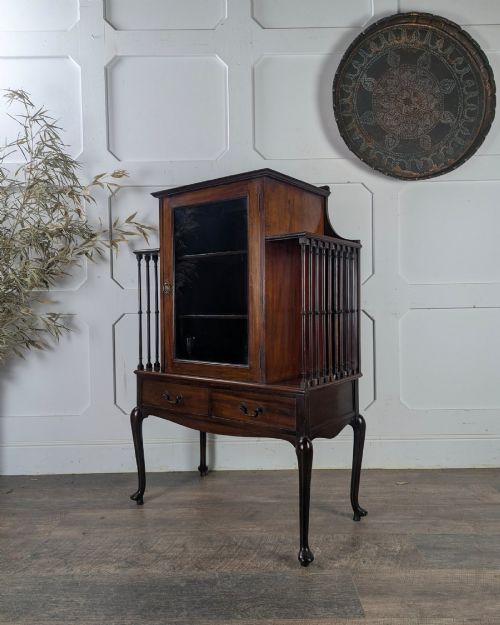
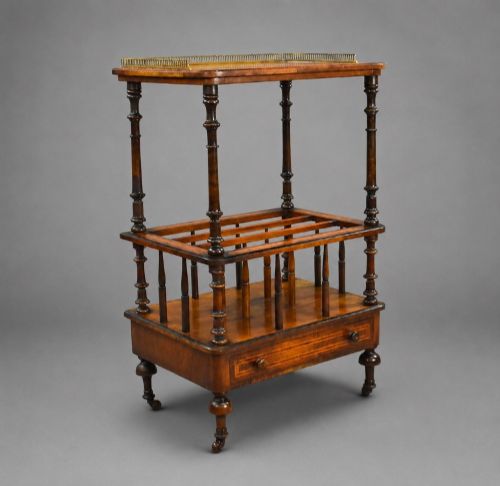
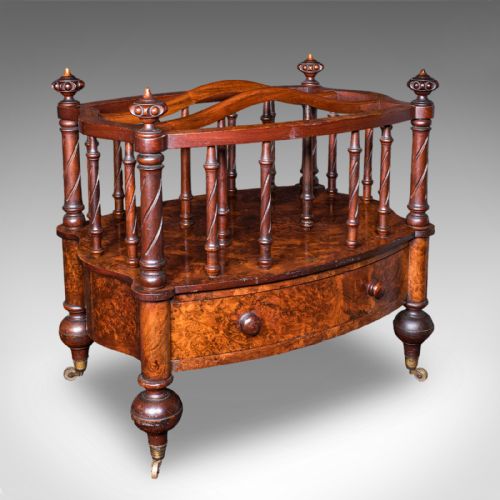
The objects on this page frequently take the form of canterburys, which serve as partitioned stands for holding folios, newspapers, and periodicals. Makers integrated low drawers, castors, and turned supports into these multifunctional furnishings.
Examples span the eras from eighteen hundred through to nineteen hundred, showing stylistic shifts from George IV designs down to Edwardian and mid-Victorian productions. Walnut and mahogany dominate the materials, often featuring inlaid details or ebonised finishes.
How they were made
Cabinetmakers utilised solid and figured timbers, selecting mahogany, rosewood, walnut, and burr walnut for their rich grain and structural stability. These woods were shaped into turned spindles, upright partitions, and integrated lower drawers.
Secondary details incorporated brass fixtures, ceramic elements, glass, and iron to construct moving parts, castors, and decorative inlays. Construction relied on traditional joinery methods suited to the demands of domestic music rooms and parlours.
Listings feature items from the Georgian, Regency, and Victorian eras, utilising mahogany, walnut, rosewood, and brass.
What varies in quality
Quality rests in the selection of figured timbers and the finesse of the timber turning used for the spindles and uprights. Superior examples exhibit tightly grained burr walnut or carefully matched rosewood alongside precise joinery.
Edwards and Roberts·Gillows·Shoolbred
The Spindled Sheet Music Stand Glossary
- Canterbury
- A low stand with partitioned uprights designed to hold sheet music, newspapers, and magazines. This form frequently incorporates a small drawer beneath the divisions.
- Burr walnut
- A timber taken from the burls or growths of walnut trees, prized for its swirling, highly figured grain patterns. Cabinetmakers utilised this veneer on prominent surfaces.
- Ebonised
- Wood treated with a dark stain or finish to imitate the appearance of ebony. This technique was common in Victorian furniture production.
- What-not
- A multi-shelved piece of freestanding furniture used for displaying ornaments and holding books or papers. These items often combined open shelving with lower canterbury sections.
Spindled Sheet Music Stand: Frequently Asked Questions
What is a canterbury?
A canterbury is a low, partitioned stand originally created for holding sheet music and folios. Nineteenth-century examples often include turned spindles and a small base drawer.
Over time, these pieces adapted to hold newspapers and magazines while retaining their compartmented structure.
Which woods were used?
Cabinetmakers predominantly used mahogany, walnut, burr walnut, and rosewood for these stands. Figured grain and rich natural tones defined the aesthetic.
Some variations also feature ebonised mahogany or decorative brass and ceramic details.
Where were they placed?
These stands sat in music rooms, parlours, and drawing rooms beside pianos or seating areas. Their open partitions kept scores and reading material close at hand.
Lower castors allowed them to be repositioned easily across carpets and wooden floors.