

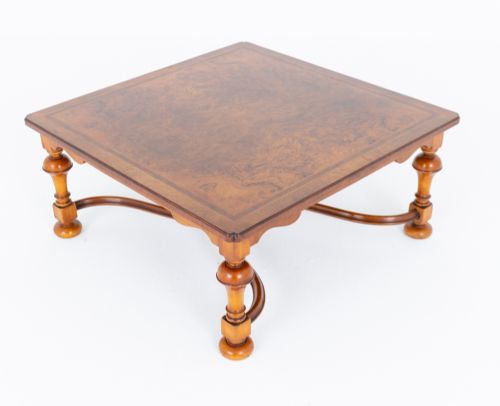
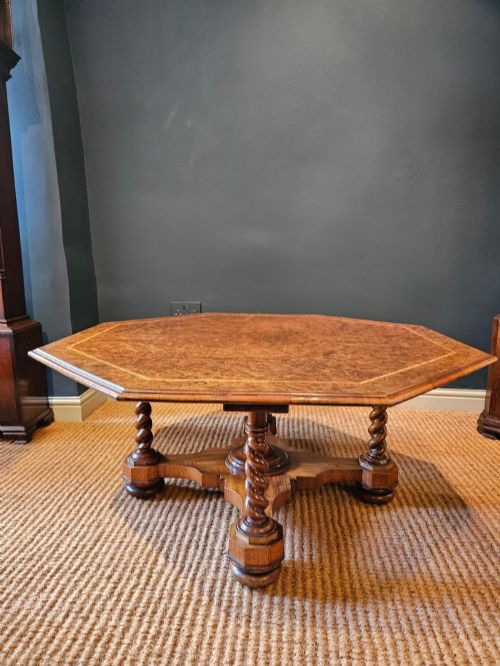
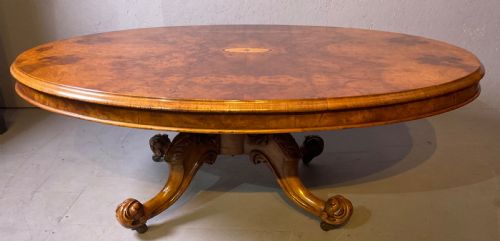
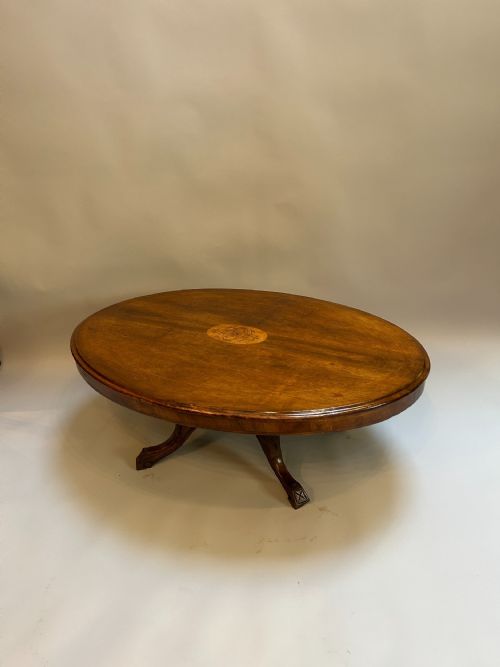
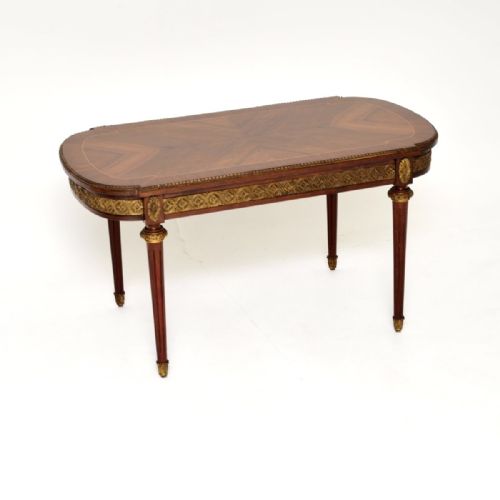


Walnut Inlay Coffee Table
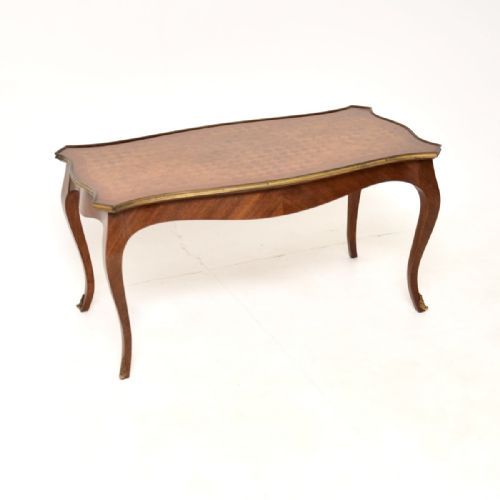
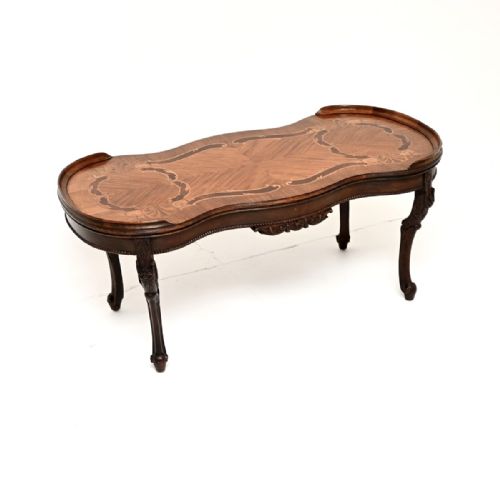
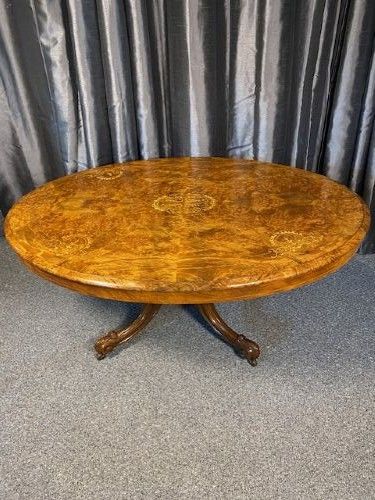
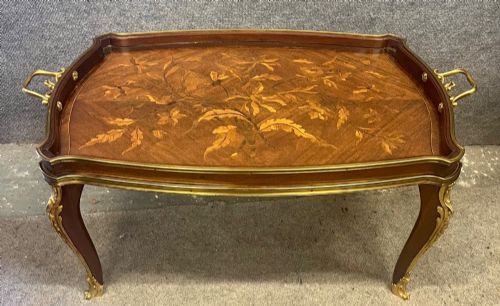
These walnut inlay coffee table pieces bring together rich timber and intricate marquetry, offering a functional centrepiece for a sitting room.
Walnut Inlay Coffee Table
A walnut inlay coffee table appears in several distinct historical guises across this selection, bridging the Victorian era and the early twentieth century. Buyers searching for a walnut inlay coffee table encounter forms ranging from low occasional tables and nests to adapted centre tables and tray tops.
Victorian examples in burr walnut dominate the selection, frequently displaying elaborate oval or octagonal tops with marquetry or parquetry. Alongside these, French designs from the early twentieth century introduce Louis XV styling, parquetry patterns, and occasional two-tier formats.
Materials and construction
The foundation of these pieces rests upon walnut and burr walnut timber, selected for its variegated grain and warm tone. Artisans enriched these surfaces with contrasting materials including fruitwood, boxwood, brass, and mother-of-pearl.
Intricate decoration relies on marquetry and parquetry inlay techniques, occasionally complemented by hand-carved bases, ormolu mounts, and raised galleries. These methods demand precise hand-fitting of veneers to create floral, geometric, or pictorial top designs.
Several tables manage to disguise themselves as games boards, proving that Victorians took their parlour entertainment very seriously indeed.
Assessing craftsmanship
Quality reveals itself in the choice of timber veneer, where dense burr walnut and finely figured grain command attention above plain stock. The crispness of the marquetry and the precision of the parquetry joints distinguish finer examples from simpler production.
Execution of secondary details, such as hand-carved mounts, cast ormolu, or the structural integrity of multi-tiered nests, separates standard workshop output from superior cabinet work.
The Walnut Inlay Coffee Table Glossary
- Burr walnut
- A prized timber harvested from walnut tree growths, yielding swirling, highly figured grain patterns that catch the light. It forms the primary decorative surface on many Victorian tables.
- Marquetry
- The art of applying decorative veneer pieces to a structure to form pictorial or floral designs. Artisans use various coloured woods to achieve tonal contrast.
- Parquetry
- A geometric mosaic of wood veneer pieces arranged in repeating patterns such as cubes or chevrons. It provides a structured decorative surface on French occasional tables.
- Ormolu
- Gilded bronze mounts applied to furniture edges and legs for ornamental effect. This technique appears frequently on French revival pieces.
- Pietra dura
- A method of inlaying polished, coloured stones into a stone base to create pictorial designs. It appears on select nineteenth-century specimen tables.
Walnut Inlay Coffee Table: Frequently Asked Questions
What is a walnut inlay coffee table?
A walnut inlay coffee table is a low surface fashioned from walnut timber and embellished with decorative wood veneers. These pieces often originate from the Victorian period or the early twentieth century.
Many examples started life as taller centre tables, occasional tables, or games tables before being adapted to coffee table height. Their decorated tops feature geometric parquetry or floral marquetry.
How do I date a walnut inlay coffee table?
Dating relies on examining the timber, construction methods, and stylistic cues present in the piece. Victorian examples often display rich burr walnut and hand-carved elements, whereas early twentieth-century pieces frequently show French Louis XV revival styling or parquetry nests.
Looking beneath the top and inspecting the secondary woods helps confirm the period of manufacture. Hardware fittings and edge treatments also offer clues to the workshop era.
How do I care for a walnut inlay coffee table?
Protecting the polished timber and delicate veneer requires keeping the table away from direct sunlight and strong heat sources. Regular dusting with a soft cloth preserves the finish without abrasive buildup.
Applying a traditional beeswax polish occasionally maintains the moisture and lustre of the walnut grain. Coasters protect the marquetry surface from moisture rings.
Are these tables sturdy enough for daily use?
Most of these tables were originally built as occasional or centre pieces rather than heavy-duty coffee tables. Their delicate inlaid tops and slender legs require mindful placement in a busy room.
Nesting tables and smaller side formats offer flexible surface space while remaining easy to reposition. Careful handling ensures the longevity of the historical veneer.