
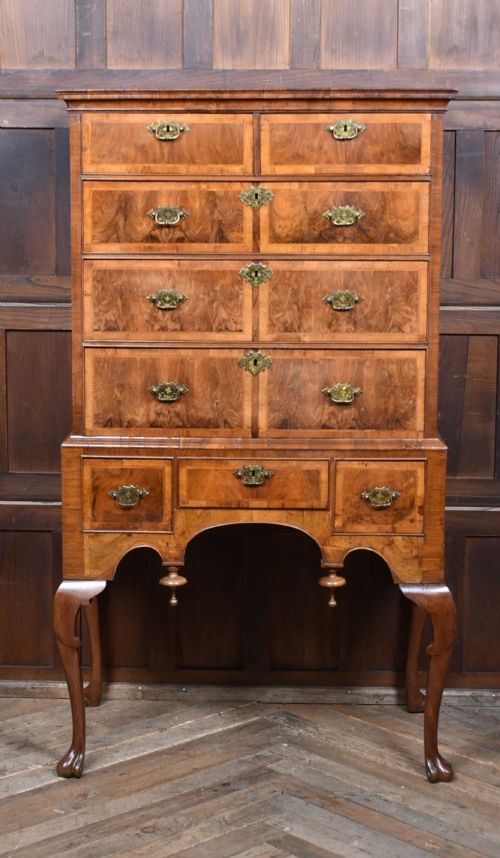


Walnut Highboy Cabinet
A walnut highboy cabinet combines towering storage with rich timber figuring, making it a commanding focal point for traditional interiors.
Walnut Highboy Cabinet
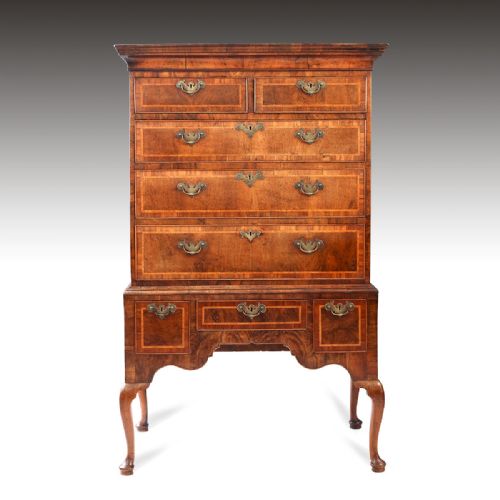
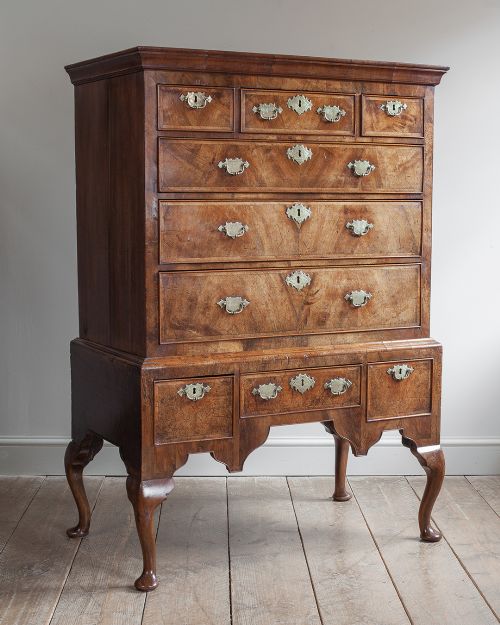
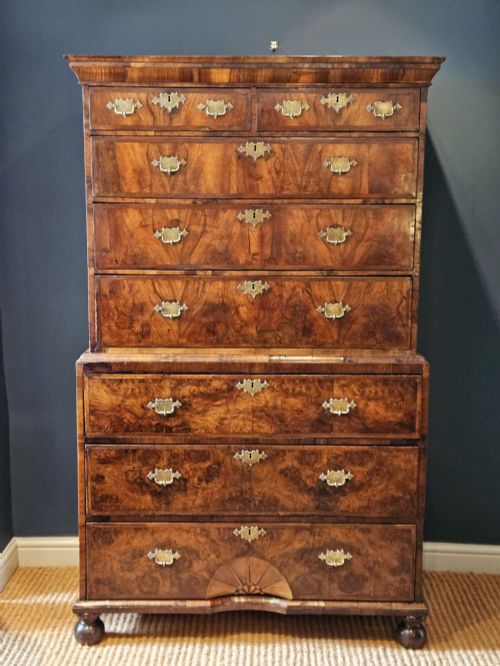
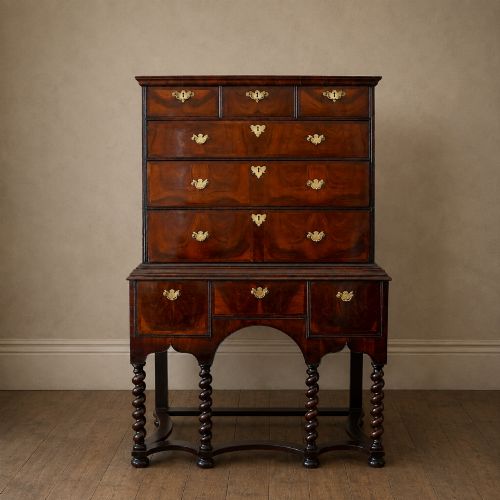
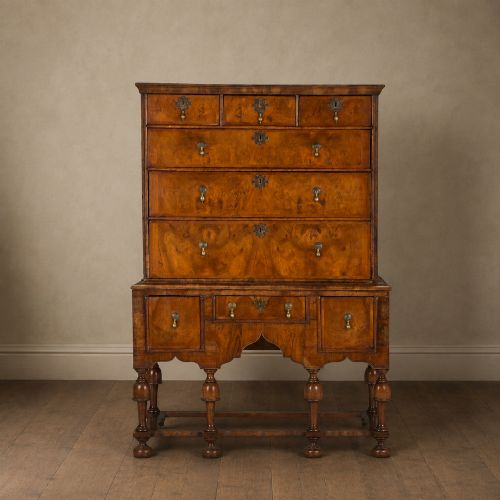
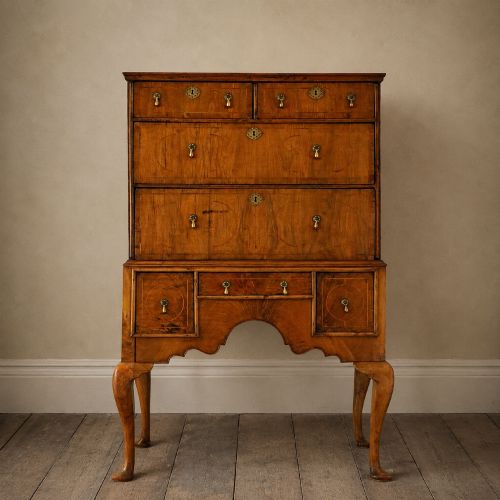
A walnut highboy cabinet spans multiple centuries of furniture making, though the examples seen here lean heavily toward early periods like the seventeenth and eighteenth centuries alongside later revivals. Buyers encounter forms such as the chest on stand, chest on chest, and tallboy, which combine upper compartments with lower drawer sections or dedicated support frames. Queen Anne, William and Mary, and George I styles dominate the selection, often showcasing the characteristic proportions of these earlier eras.
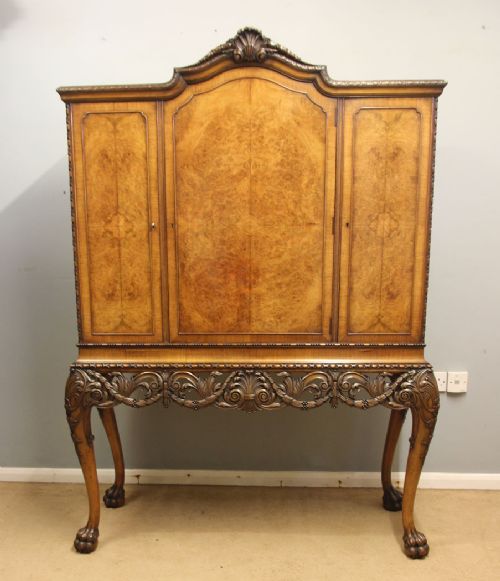
Makers and cabinetmakers from the seventeenth century onward utilised timber arranged in vertically stacked sections to maximise storage whilst maintaining a relatively small floor footprint. Pieces range from austere early configurations to later revival pieces from the twentieth century that mimic the classic silhouettes. The inventory reflects a diverse chronology, stretching from the late seventeen hundreds through to Art Deco interpretations of the form.
Materials and construction
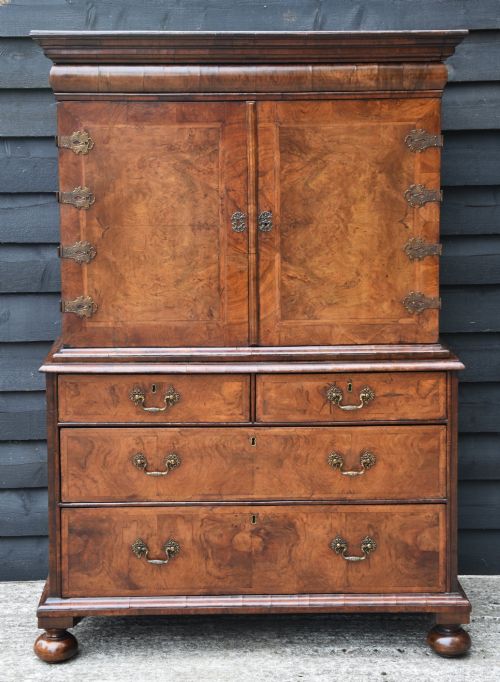
Construction relies heavily on walnut timber, frequently enhanced with decorative veneers such as burr walnut, burr amboyna, and oyster veneer to create striking patterns across the primary surfaces. Craftsmen paired these figured veneers with secondary structural woods like oak and fruitwood, adding brass hardware such as drop handles and escutcheons to secure the drawers and doors. Crossbanding often frames the drawer fronts, providing a crisp visual border that contrasts with the swirling grain of the central panels.
Joinery techniques from the seventeenth and eighteenth centuries governed how these multi-part cabinets were assembled, joining upper chests to their respective stands or lower drawer bases. Marquetry work appears on select pieces, introducing intricate floral or geometric inlays into the timber surface. The physical structure typically divides into distinct upper and lower modules, allowing the tall chests to be moved with greater ease.
Listings feature walnut highboy cabinets spanning from the seventeenth century through to 1930, utilising oak, fruitwood, and intricate burr veneer timbers.
Distinguishing quality
Quality rests upon the selection and matching of the timber veneers, where symmetrical grain patterns across multiple drawers elevate the visual impact of the piece. The crispness of the crossbanding, the retention of original brass hardware, and the harmony between the upper chest and its stand distinguish superior examples from standard ones. Master cabinetmakers achieved a depth of figure in burr walnut and oyster veneers that lesser workshops failed to replicate.
The integrity of the structural joins and the proportion of the lower stand relative to the upper cabinet define the structural excellence of a piece. Pieces featuring associated stands or later alterations sit lower in the hierarchy than those retaining their original unified construction from the seventeen hundreds. Subtle details like hand-cut dovetails and well-figured secondary timbers indicate higher craftsmanship.
The Walnut Highboy Cabinet Glossary
- Chest on stand
- A cabinet form comprising an upper section of drawers resting upon a low frame with legs. This configuration lifts the storage space off the floor.
- Oyster veneer
- Small circular or oval slices of branch wood laid edge to edge to create a pattern resembling oyster shells. This technique is frequently seen on William and Mary pieces.
- Crossbanding
- A narrow strip of veneer applied to the border of a drawer front or tabletop with the grain running perpendicular to the surrounding wood. It frames the central grain.
- Burr walnut
- Wood taken from a walnut tree growth or burl, yielding swirling patterns of grain. It was prized for luxury furniture veneers.
- Marquetry
- Inlays of various woods arranged to form decorative pictures or patterns on furniture surfaces. Dutch examples often display floral motifs.
Walnut Highboy Cabinet: Frequently Asked Questions
How do I date a walnut highboy?
Dating relies on examining the construction methods, hardware types, leg styles, and timber preparation. Earlier pieces from the seventeenth and eighteenth centuries feature distinct joinery and specific leg turnings like trumpet or cabriole shapes.
Later revival pieces from the twentieth century often replicate these historical styles but utilise modern manufacturing markers beneath the polished surface.
Where should I place a highboy?
Because of their considerable height, these cabinets suit hallways, bedrooms, or large living spaces where vertical wall room is available. They anchor a room visually and offer deep drawer space for linens or clothing.
Placement should avoid direct sunlight and intense heat sources to protect the delicate walnut veneers from drying and cracking over time.
What is the difference between a highboy and a tallboy?
A highboy traditionally refers to a chest of drawers sitting on a separate low stand with legs, lifting the main body well off the floor. A tallboy usually describes a single tall chest on chest structure.
Both forms maximise storage capacity vertically, though the terminology often overlaps within historical furniture descriptions.