

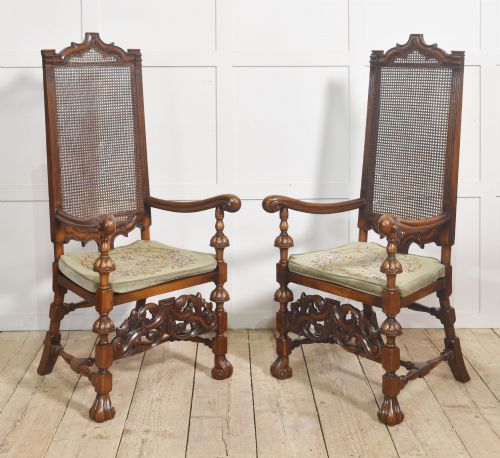
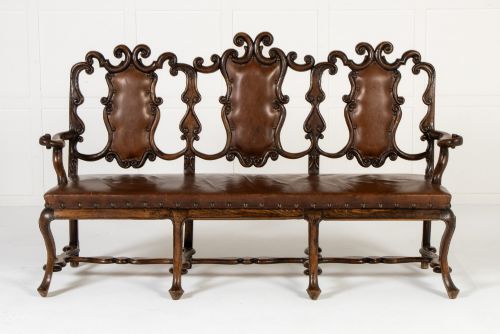

Walnut Hall Chair
When you search for a walnut hall chair, you enter a tradition of grand entranceways and upright seating spanning centuries.

Walnut Hall Chair
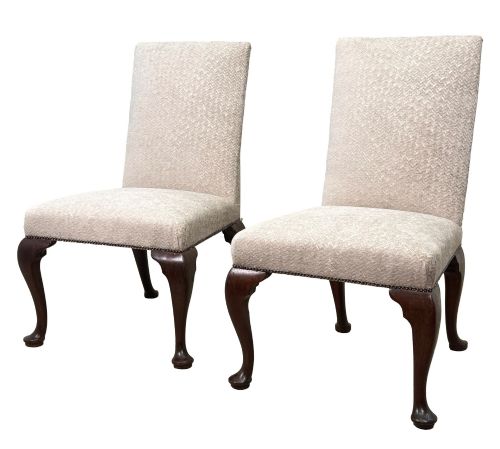
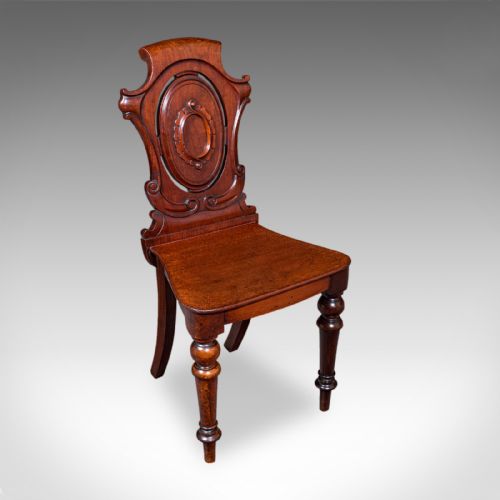
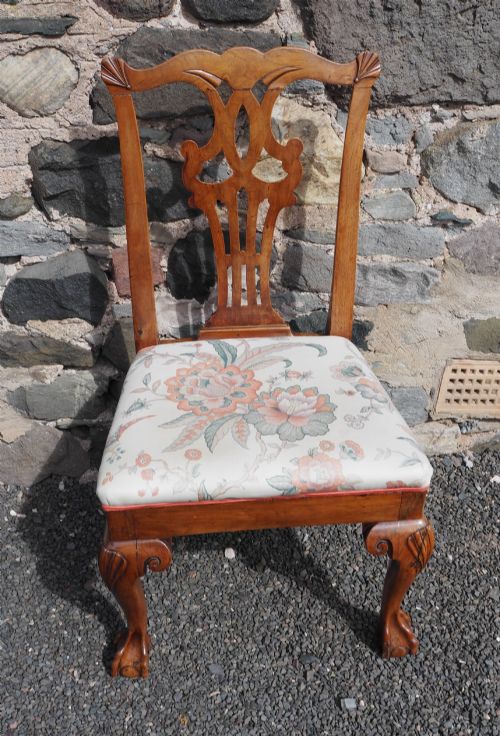
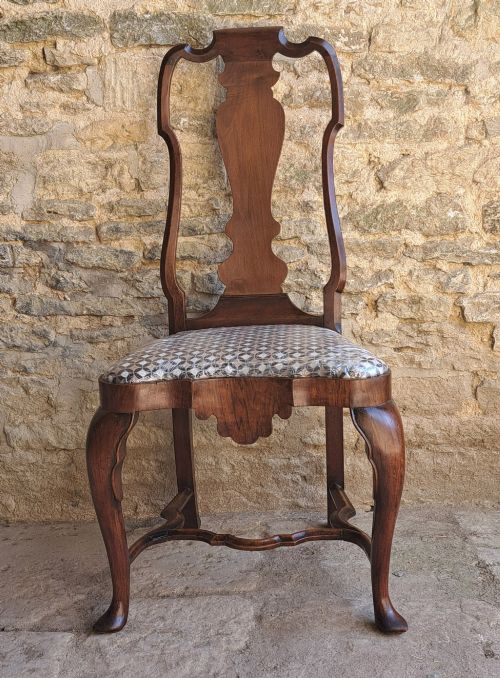
A walnut hall chair functions as a striking architectural statement intended for reception rooms, corridors, and entrance spaces rather than long periods of relaxation. The form prioritises a rigid, upright posture and prominent back designs, often featuring carved shields, pierced splats, or solid wood panels.
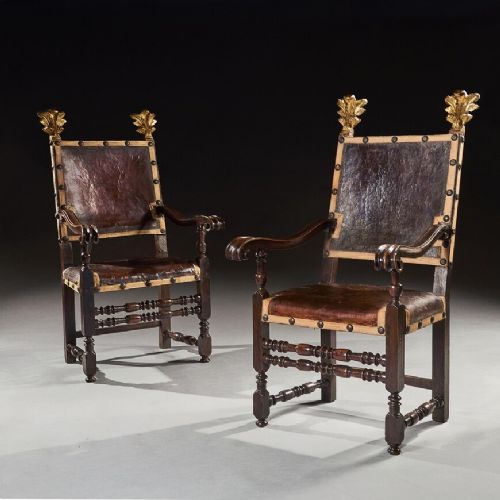
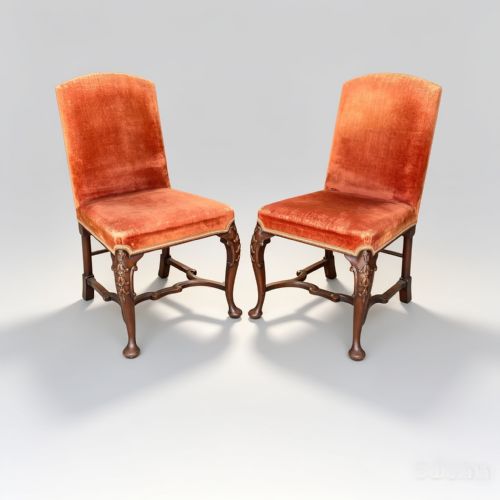
The versions most frequently encountered on this page stem from the Victorian era and the nineteenth century, alongside earlier Georgian and seventeenth-century Continental examples. These pieces frequently appear in pairs or sets, reflecting their original purpose of lining grand hallways.
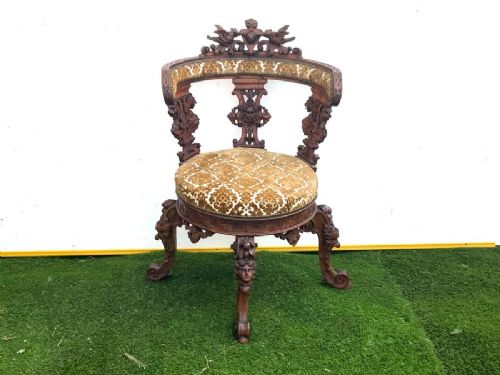
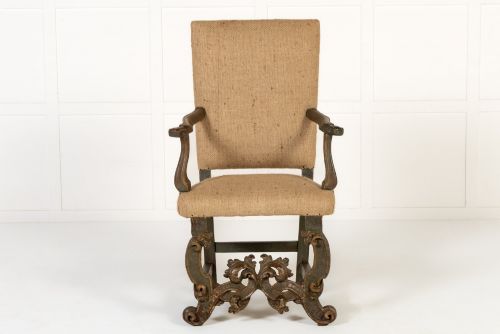
Makers often drew upon historical revivals, producing walnut hall chairs in styles ranging from Italian Renaissance and Baroque to Queen Anne and Carolean. While many follow British designs, Continental pieces - particularly from Italy and Switzerland - frequently surface with deep carved figural elements or marquetry.
Materials and Construction
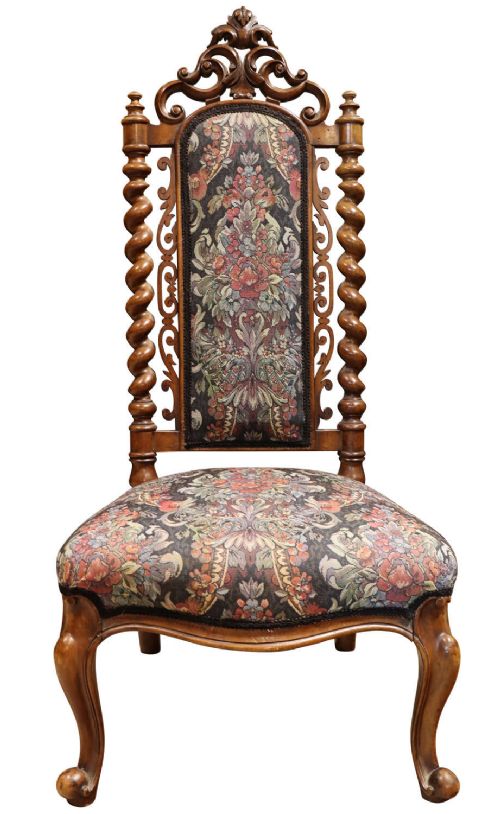
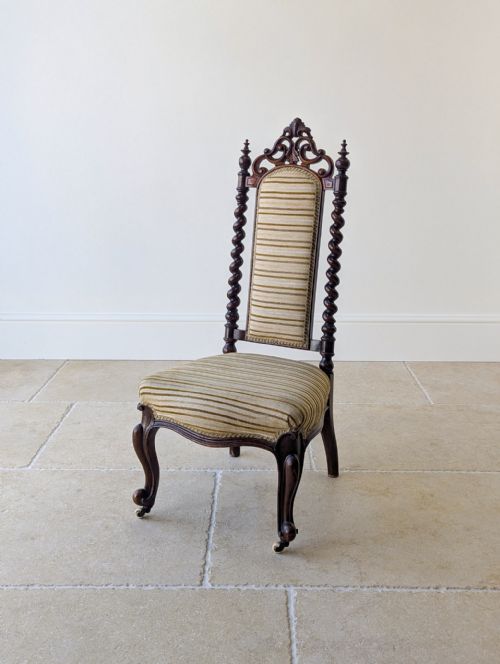
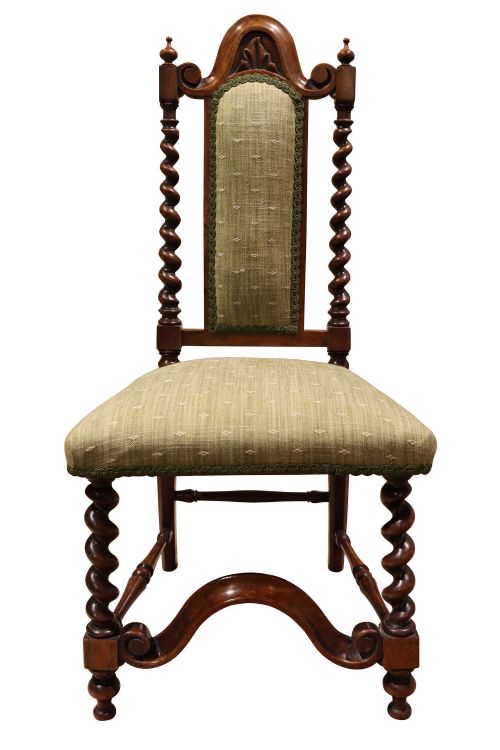
Solid walnut provides the structural integrity and dense grain necessary for intricate hand-carving, barley twist supports, and pierced backsplats. Cabinet makers selected the timber for its rich colour and ability to take a sharp, crisp edge during carving.
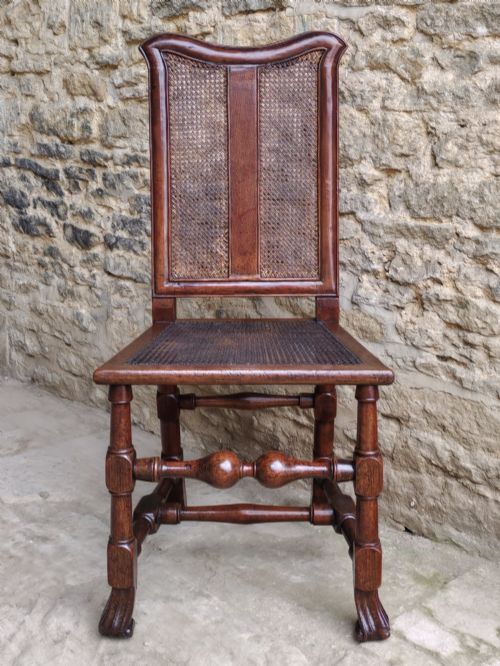
Upholstery elements, when present, utilise traditional textiles such as leather, velvet, tapestry, and needlepoint, secured with brass tacks. Cane and woven rush also appear as seat inserts in lighter variations.
Joinery relies on traditional mortise and tenon techniques, supplemented by parcel-gilding, marquetry inlay, and turned components like spiral twist legs and stretchers.
Walnut Hall Chair Retail Price Guide 2026
Typical asking prices for walnut hall chair among the pieces listed under this phrase on Sellingantiques today, from the lower quarter to the upper quarter. They describe what is for sale here now, not the wider market.
Materials recorded across the inventory include solid walnut, carved mahogany accents, leather, tapestry, cane, and brass hardware.
Assessing Quality
Quality rests upon the depth and crispness of the hand-carving, where superior examples display three-dimensional relief without the softening typical of mechanical reproduction. The choice of walnut timber, particularly figured grain or dense burr veneers, dictates the visual weight of the piece.
Construction rigour separates standard utilitarian seating from high-status commissions, visible in the tightness of the joinery and the substantial gauge of the frame. Original upholstery foundations and untouched surface patination elevate the standing of antique examples.
Charles Tozer·Waring & Gillow·Whytock & Reid of Edinburgh·Simpson and Sons, Halifax
The Walnut Hall Chair Glossary
- Sgabello
- A light, wooden chair of Italian Renaissance origin characterised by a solid back and trestle supports instead of legs. This form frequently appears in walnut with carved figural motifs.
- Splat
- The vertical central strip of wood in the back of a chair. In walnut hall chairs, these often feature pierced, carved, or marquetry-inlaid designs.
- Parcel-gilt
- Partially gilded with gold leaf applied to specific carved highlights to contrast against the dark walnut ground. This technique often appears on Baroque revival pieces.
- Barley twist
- A structural support or leg turned in a spiral resembling a twisted rope. This decorative turning method gained widespread popularity in seventeenth and nineteenth-century furniture.
- Marquetry
- Decorative patterns formed by fitting together thin veneers of wood and other materials onto a structural surface. Swiss and Dutch pieces frequently employ this technique.
Walnut Hall Chair: Frequently Asked Questions
Where were walnut hall chairs placed?
These chairs stood primarily in grand entrance halls, vestibules, and corridors of large estates and townhouses. They served as formal seating for visitors waiting to be received by the household.
Because entranceways required durable yet impressive furnishings, the chairs were typically positioned against walls rather than around tables. Their upright design discouraged lounging, matching the formal etiquette of historical reception rooms.
How do I date a walnut hall chair?
Dating relies on stylistic clues, construction methods, and the character of the walnut timber. Earlier pieces from the seventeenth and early eighteenth centuries display simpler joinery and native timber traits, while Victorian versions often incorporate heavier, revivalist carving.
Secondary woods used in the frame provide further chronological clues. Examining tool marks and the oxidation of the timber helps confirm whether a piece belongs to a historical period or a later revival movement.
Are these chairs comfortable for daily use?
Walnut hall chairs were built for visual impact and upright posture rather than lounging. Most feature rigid wooden seats or taut upholstery that offers minimal give.
Living with them works best in spaces where short-term seating is required, such as a hallway, bedroom accent corner, or desk space. Their strong architectural silhouettes ensure they function as sculptural objects when not occupied.
Why are many hall chairs found in pairs?
Historical interior design required symmetry, leading homeowners to commission or purchase hall chairs in matching pairs or larger sets. These groupings flanked doorways, fireplaces, and hallway consoles to create balanced focal points.
Finding surviving pairs remains common because the pieces spent their lives stationary against walls, reducing the risk of accidental separation or damage associated with mobile dining furniture.