
Walnut Glass Door Cabinet
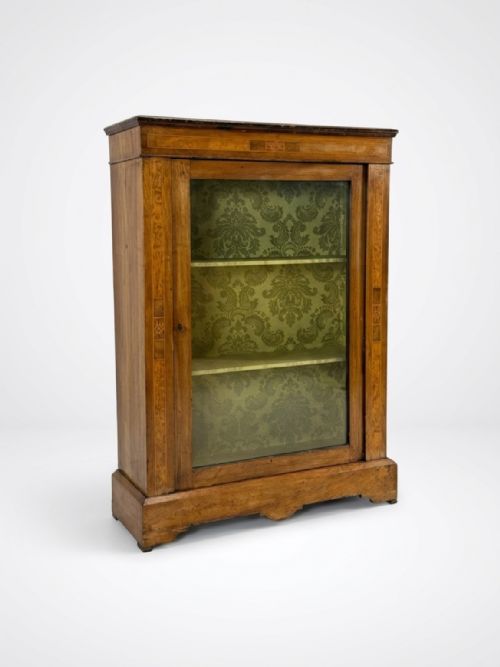
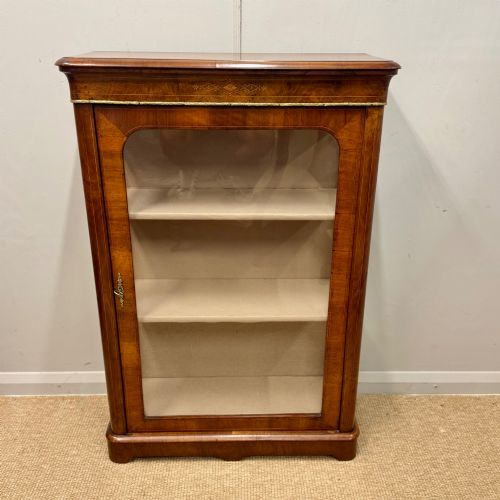
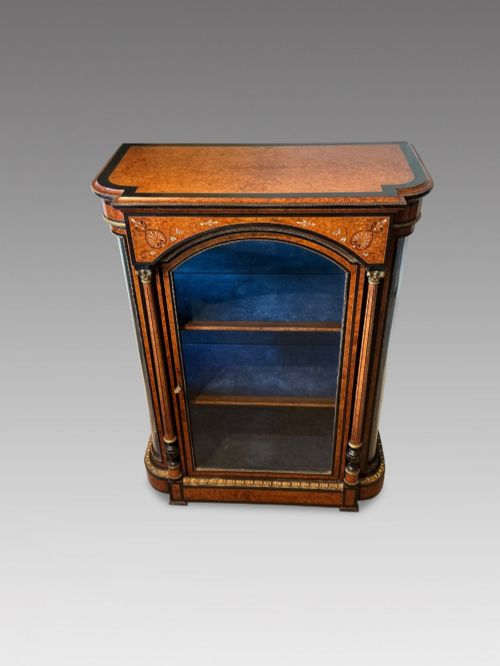
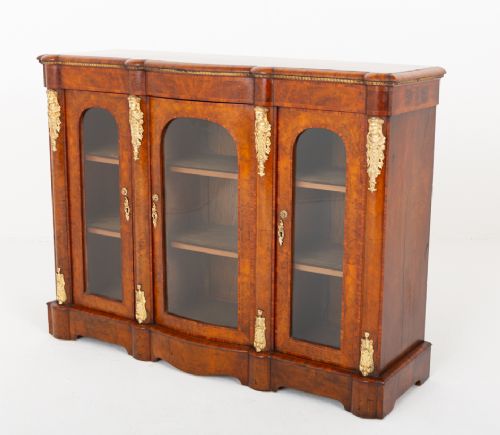
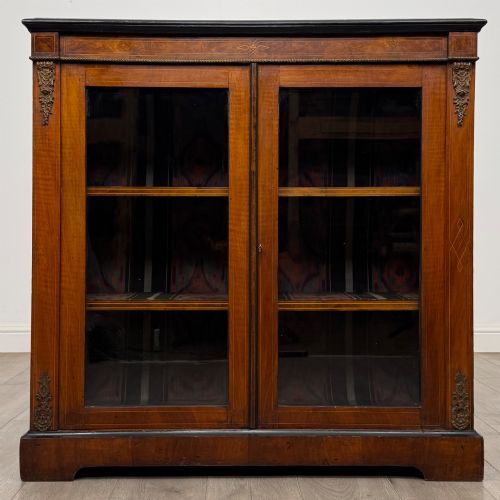
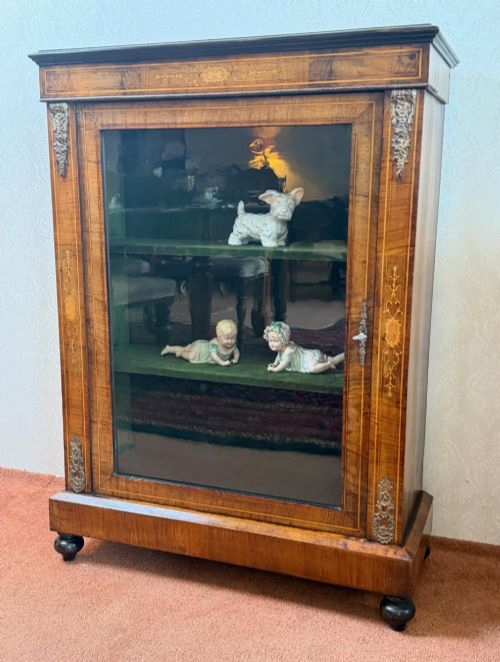
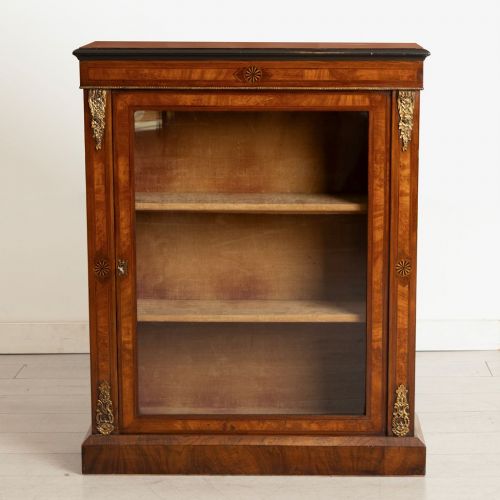
A walnut glass door cabinet provides visible storage for treasured books and objects, anchored most often by Victorian and Edwardian examples in burr walnut.
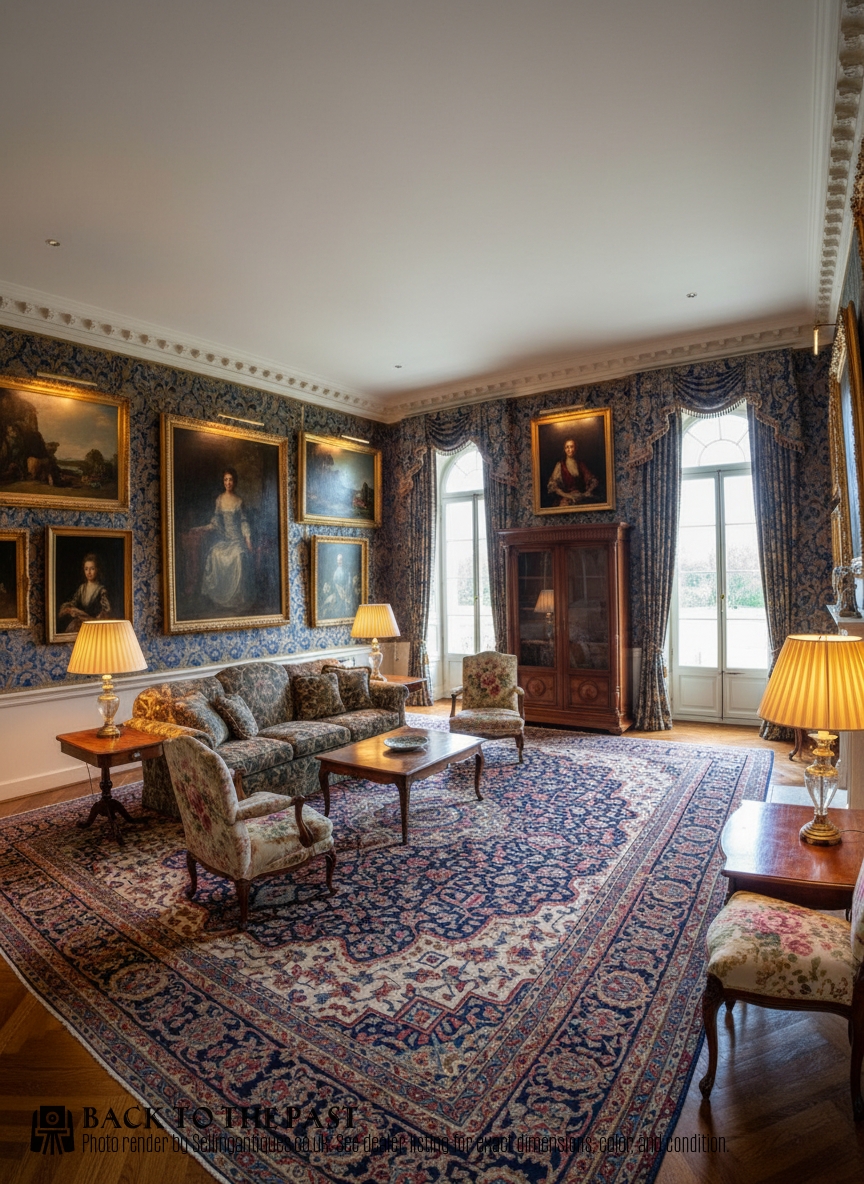
Walnut Glass Door Cabinet
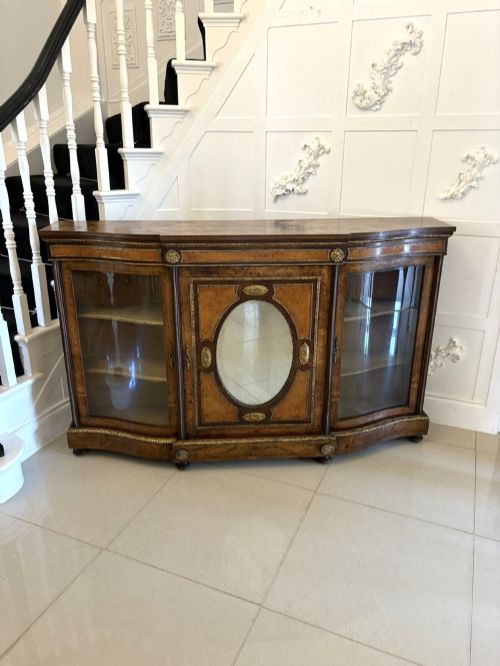
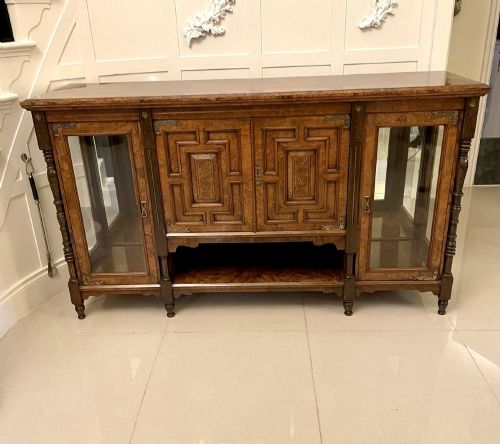
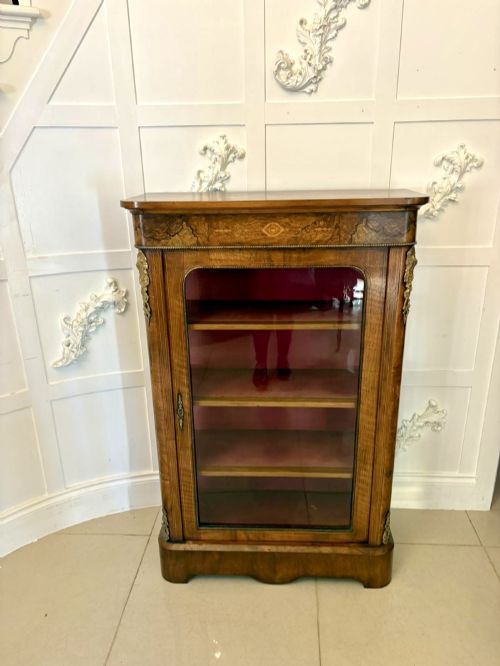
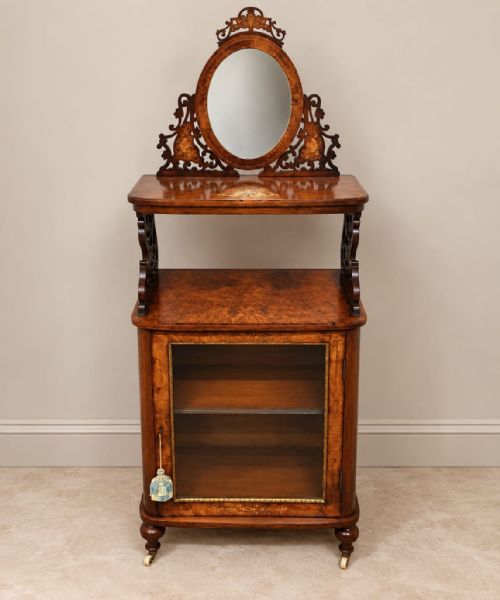
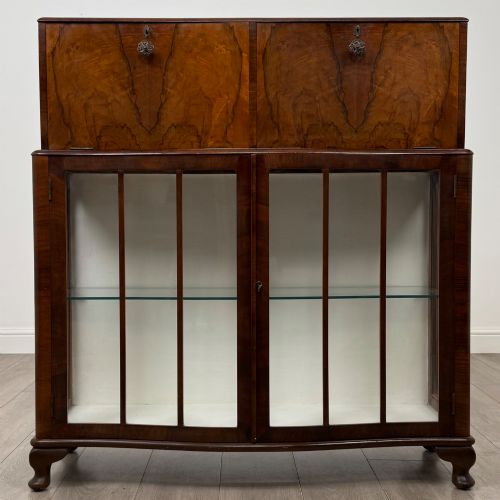
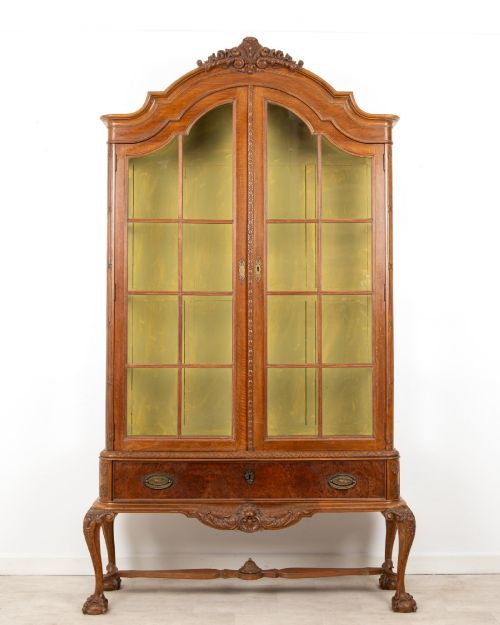
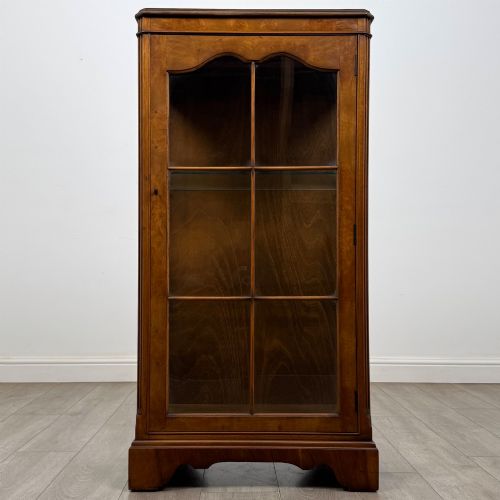
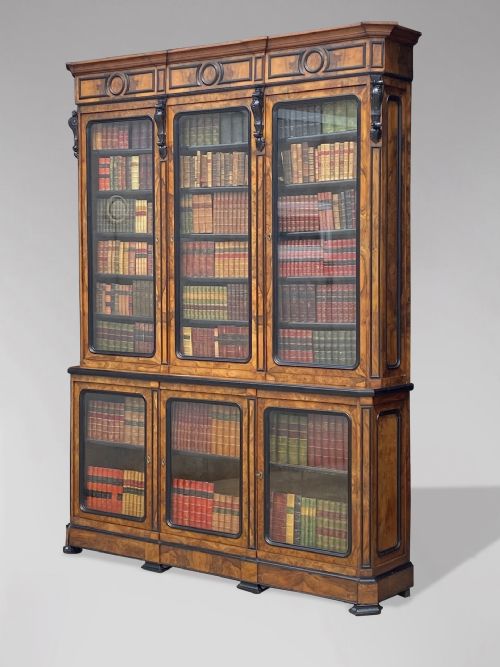
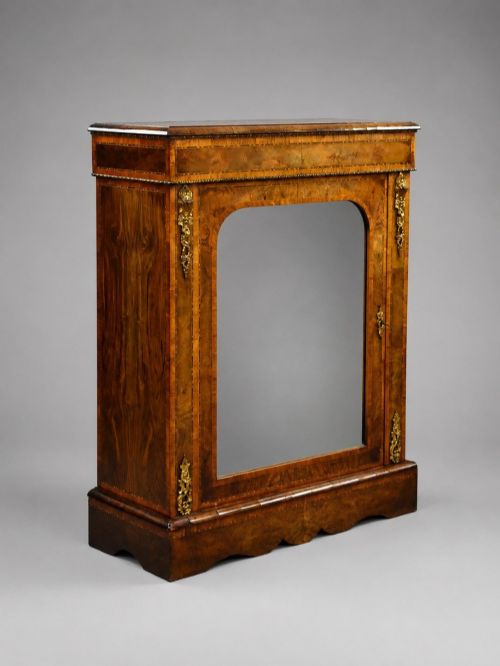
A walnut glass door cabinet serves multiple domestic functions across the periods seen here, appearing primarily as glazed bookcases, pier cabinets, credenzas, and display cabinets. Buyers seeking a walnut glass door cabinet will encounter substantial nineteenth-century pieces alongside twentieth-century iterations influenced by Art Deco and Queen Anne revival styles.
Victorian examples dominate the selection, utilising figured and burr timbers combined with glass doors to showcase collections within domestic interiors. Edwardian and later twentieth-century interpretations offer lighter proportions while maintaining the core requirement of glazed display space set within walnut woodwork.
Materials and construction
Cabinet makers utilised solid walnut and decorative veneers such as burr walnut and figured walnut applied to carcases, paired with transparent glass for door panels. Ormolu mounts, brass fittings, velvet linings, and boxwood or marquetry inlay frequently enrich the primary timber structure.
Glazing techniques secure glass panes within timber frames, while interior shelving accommodates display requirements. Secondary woods support the main walnut construction, and marquetry details demonstrate precision cutting of contrasting veneers.
Walnut Glass Door Cabinet Retail Price Guide 2026
Typical asking prices for walnut glass door cabinet among the pieces listed under this phrase on Sellingantiques today, from the lower quarter to the upper quarter. They describe what is for sale here now, not the wider market.
Listings span from the Victorian era through the Edwardian period into Art Deco and 1930s designs.
Assessing quality
The choice of timber grain defines visual merit, with complex burr walnut veneers and crisp marquetry inlay elevating certain pieces above plain surfaces. Finer examples display meticulous matching of wood patterns across doors and panels, alongside superior execution of brass hardware and ormolu mounts.
Structural integrity relies on the precision of joinery and the condition of the glass doors. Pieces retaining original velvet linings, intact boxwood stringing, and balanced proportions represent the upper tier of surviving cabinet work.
Epstein
The Walnut Glass Door Cabinet Glossary
- Burr walnut
- A figured wood grain obtained from tree growths, producing intricate patterns prized for veneering cabinet facades.
- Pier cabinet
- A narrow freestanding cabinet designed to fit wall spaces between windows.
- Credenza
- A low sideboard or cabinet, frequently fitted with glass doors and decorative mounts in Victorian iterations.
- Marquetry
- Decorative patterns formed by inserting pieces of contrasting veneer into a wood foundation.
- Ormolu
- Gilded bronze used for decorative mounts and furniture embellishments.
Walnut Glass Door Cabinet: Frequently Asked Questions
Where should I place a walnut glass door cabinet?
These cabinets suit living rooms, libraries, or dining spaces where glazed doors protect contents from dust while allowing full visibility.
Position them away from direct sunlight to protect the walnut timber and interior linings from fading over time.
How do I clean walnut veneer?
Dust surfaces regularly with a soft, dry cloth following the direction of the wood grain to maintain the finish.
Avoid chemical polishes or excessive moisture, which can damage delicate veneers and marquetry inlay.
Can shelves be adjusted?
Many period cabinets feature fixed wooden shelving integral to the original interior construction of the piece.
Later or custom variants may include adjustable supports, so checking internal configurations is recommended for specific display needs.
How do I distinguish Victorian from Edwardian pieces?
Victorian cabinets often display heavier proportions, rich burr walnut, and elaborate ormolu or marquetry details.
Edwardian examples tend towards lighter forms, sometimes incorporating Queen Anne revival influences or simpler glazed door frames.