
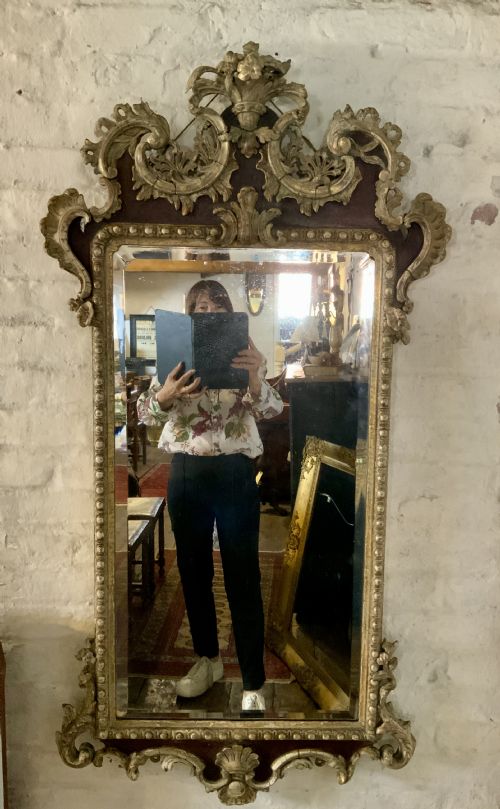


Walnut Giltwood Wall Mirror
A walnut giltwood wall mirror combines rich timber with gilded accents, offering timeless elegance and reflective depth for any room.
Walnut Giltwood Wall Mirror
A walnut giltwood wall mirror draws the eye through the contrast of dark, figured timber and bright metallic highlights. These pieces range from compact pier glasses intended for narrow wall spaces between windows to large overmantel mirrors designed to anchor a room.
The walnut giltwood wall mirror appears in various iterations across this selection, from genuine eighteenth-century examples to later Victorian revivals. Buyers encounter distinct periods such as George II and Victorian interpretations, reflecting shifting tastes for carved ornamentation over time.
The forms span classic rectangular plates, architectural Palladian frames, and exuberant rococo outlines. Each walnut giltwood wall mirror uses its reflective surface and decorative border to catch the light and alter the perceived scale of an interior.
How they were made
Construction relies upon solid timber foundations of walnut, sometimes enhanced with burr walnut veneers to introduce swirling grain patterns. Craftsmen applied thin layers of gold leaf to carved wooden mouldings or specific gesso details, creating the characteristic parcel gilt effect.
Mirror glass of the earlier periods differs substantially from modern float glass, often showing subtle distortions or handmade characteristics. Frames utilise traditional joinery methods to secure the heavy glass plates safely within the decorated wooden surrounds.
Materials across these listings combine walnut, burr walnut, giltwood, and traditional mirror glass.
What varies in quality
Depth and crispness of the carved ornamentation separate standard production from superior examples. Master carvers achieved fluid lines in foliage, scrollwork, and architectural pediments that retain their definition beneath the layers of gilding.
The selection of timber grain heavily influences visual appeal, with richly figured burr walnut commanding attention over plain planks. Preservation of the original gilding and the integrity of the antique mirror glass further dictate the standing of each piece.
The Walnut Giltwood Wall Mirror Glossary
- Parcel gilt
- Partially gilded, where gold leaf is applied only to specific raised carved details while leaving the underlying walnut exposed.
- Pier glass
- A tall, narrow mirror traditionally hung on the pier, the solid section of wall space situated between two windows.
- Overmantel mirror
- A wide horizontal mirror manufactured specifically to hang on the wall directly above a fireplace mantelpiece.
- Gesso
- A plaster-based mixture applied to wood frames to provide a smooth, responsive surface for subsequent carving and gilding.
- Palladian
- An architectural style featuring classical symmetry, pediments, and robust proportions frequently seen on mid-eighteenth-century frames.
Walnut Giltwood Wall Mirror: Frequently Asked Questions
Where should I hang a walnut giltwood wall mirror?
These mirrors work best on principal walls where they can capture natural light from windows and brighten darker corners of a room. Placing one above a mantelpiece or a console table creates a traditional focal point.
Ensure the wall fixings match the substantial weight of these timber and glass pieces. Secure them properly to wall studs or masonry to support the heavy frame safely.
How can I distinguish an eighteenth-century mirror?
Eighteenth-century examples often display distinct construction traits on the reverse, including hand-cut timbers and old fixings. The wood shows appropriate signs of age, oxidation, and dry shrinking within the joints.
Later Victorian revivals tend to utilise machine-sawn timber and more uniform backing boards while imitating earlier George II styles. Examining the depth of the carving and the character of the glass provides further clues to the true age.
What is burr walnut?
Burr walnut comes from a growth deformity on the tree trunk, producing intricate, swirling grain patterns filled with knots. Cabinetmakers sliced this timber into fine veneers to cover flat expanses of the mirror frame.
This decorative technique highlights the natural variation of the wood rather than uniform grain. It adds significant visual texture and depth to the overall appearance of the piece.