
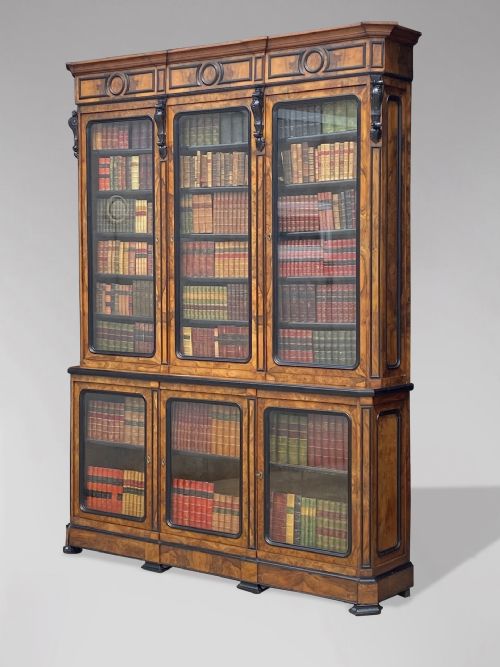
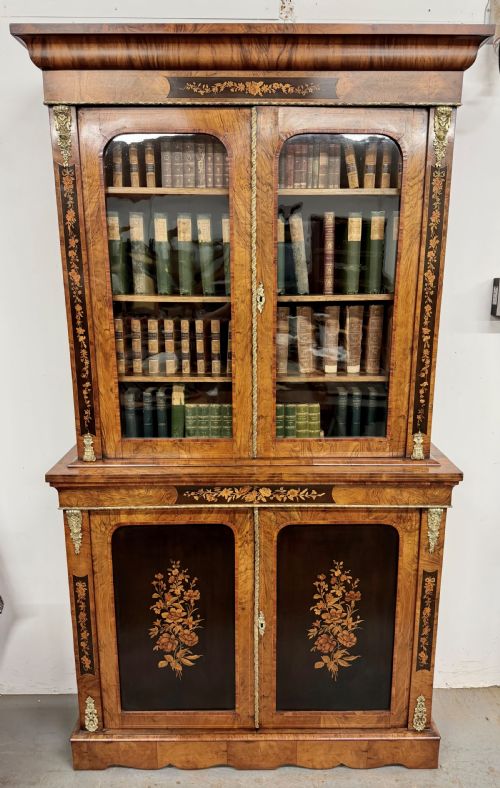

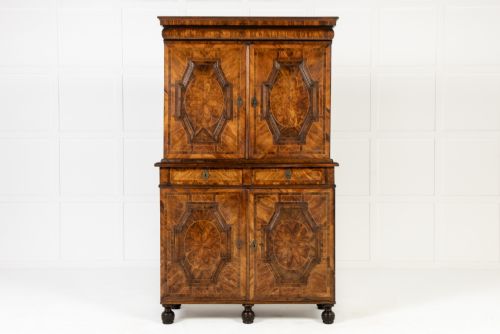


Walnut French Doors
Walnut french doors open into rooms possessing substantial nineteenth-century armoires, bookcases and architectural cabinets.
Walnut French Doors
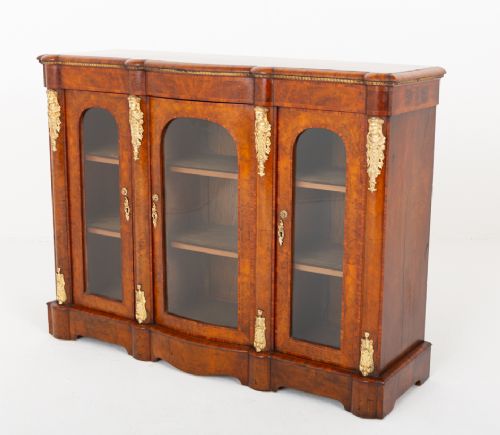
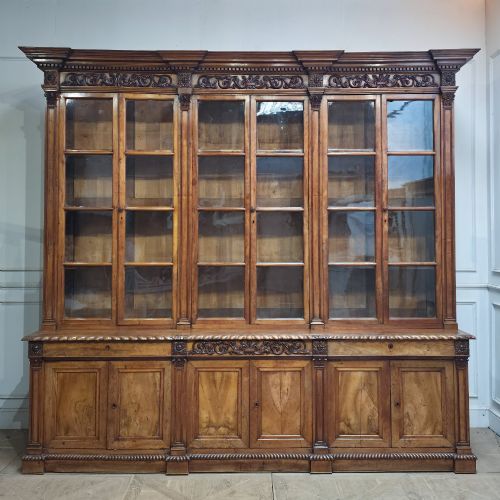
Buyers seeking walnut french doors encounter large nineteenth-century armoires, bookcases, display cabinets and credenzas incorporating glazed or panelled opening doors. The selections span eighteenth-century French buffets, Victorian burr walnut pieces, and revival styles including Louis XVI and Louis XV.
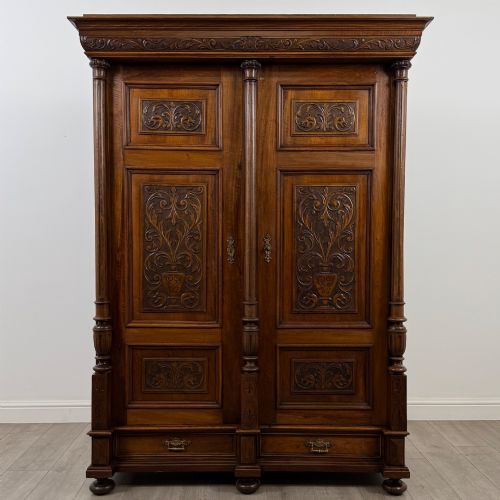
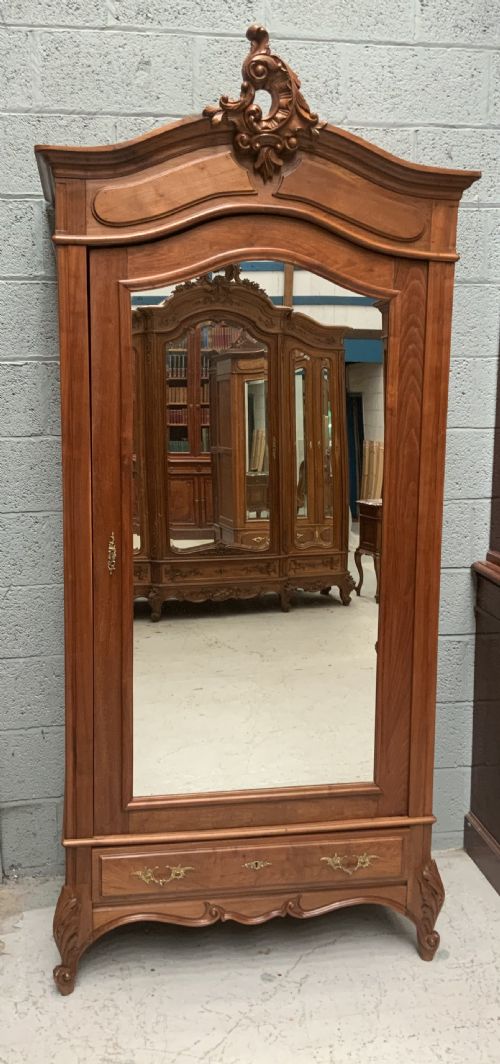
Armoires and large bookcases dominate the available forms, utilising paired doors constructed in rich walnut timbers. These functional storage pieces reflect distinct periods from the seventeenth century through to the Edwardian era and the 1920s.
French provincial and revival designs appear frequently alongside Victorian marquetry pieces, offering structural timber frames fitted with glass, brass and ormolu mounts. The predominant focus rests on cabinetry featuring operational doors that reveal shelved or hanging interiors.
Distinctions in quality and execution
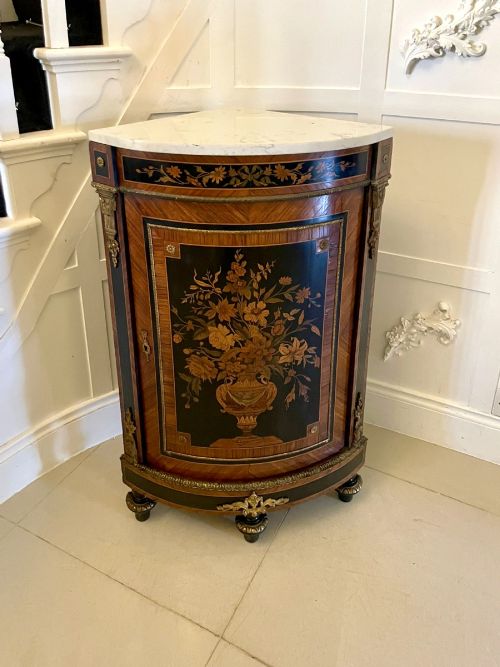
The refinement of the marquetry inlay and the selection of highly figured burr walnut veneers separate standard production from exhibition pieces. Superior examples integrate finely chased ormolu mounts and substantial marble tops with flawless timber grain alignment.
Structural integrity depends upon the original joinery of the door frames and the precision of the hinge mountings supporting heavy timber and glass. Original hardware and well-preserved interior shelving elevate the standing of individual cabinets.
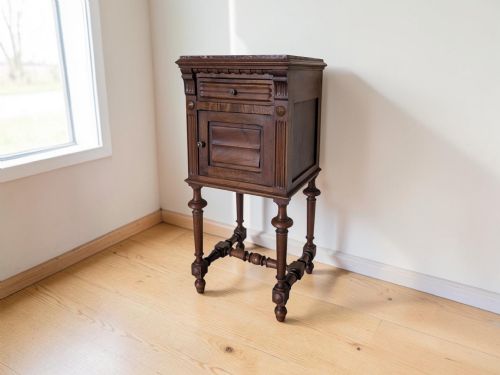
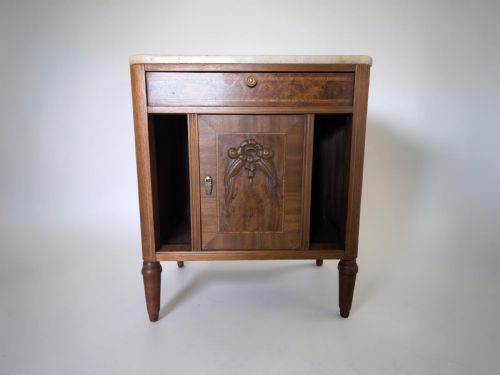
Object types span armoires, bookcases, display cabinets, credenzas, sideboards, bedside cabinets and commodes with doors.
JEAN FAURE
The Walnut French Doors Glossary
- Marquetry
- Decorative veneer work arranged in pictorial or geometric patterns using various coloured woods. This technique frequently adorns Victorian and Louis revival cabinet doors.
- Ormolu
- Gilded bronze mounts applied to furniture for decorative enrichment. These metallic ornaments appear on nineteenth-century French armoires and credenzas.
- Burr walnut
- Timber harvested from walnut tree growths that produces intricate, swirling grain patterns. Cabinet makers prized this material for high-status Victorian facades.
- Breakfront
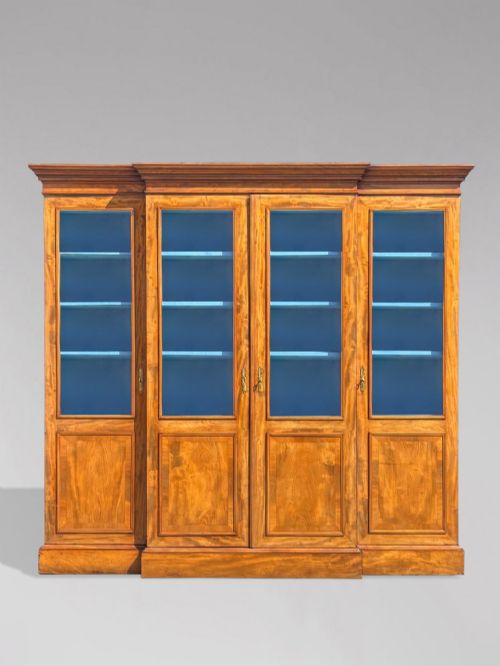
- A piece of furniture where the central section projects forward from the side sections. Large bookcases and credenzas utilise this architectural configuration.
- Pier cabinet
- A low cabinet designed to fit against the wall space between windows. These pieces often feature glass doors and marquetry inlay.
Walnut French Doors: Frequently Asked Questions
What periods do these cabinets represent?
The pieces span from the seventeenth century through the eighteenth and nineteenth centuries, including Victorian, Edwardian and 1920s examples.
Revival movements such as Louis XVI and Louis XV heavily influence the continental designs seen across the collection.
How were large armoires used originally?
Armoires served as primary storage furniture for garments, linens and household goods before fitted wardrobes became standard in domestic architecture.
Large four-door and two-door variants provided secure enclosed space within grand French and Victorian interiors.
Where do marble tops appear?
Marble slabs top specific sideboards, commodes, pier cabinets and corner units to provide a durable, decorative surface.
These stone additions typically complement the ormolu mounts and polished walnut timber frames of nineteenth-century pieces.
How do I distinguish revival styles?
Louis XVI revival pieces often display neoclassical symmetry, straight tapered legs and restrained geometric marquetry.
Louis XV revival furniture favours curved serpentine lines, exuberant ormolu mounts and flowing floral inlay patterns.