
Walnut Folding Console Table
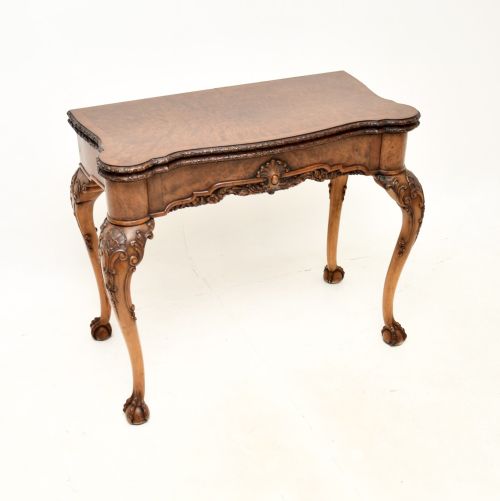
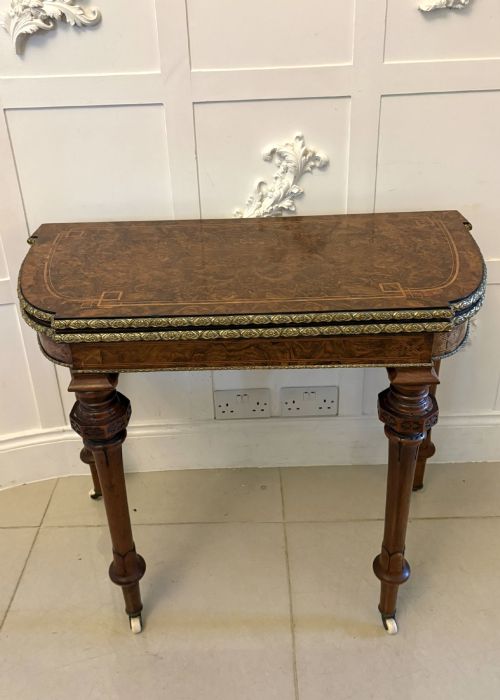
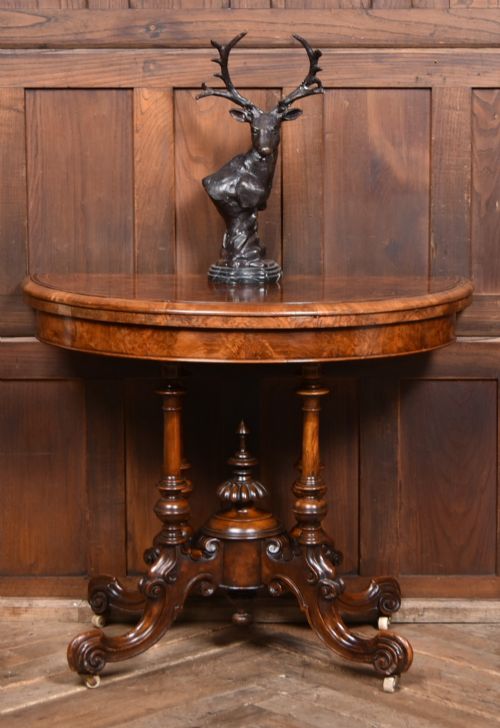
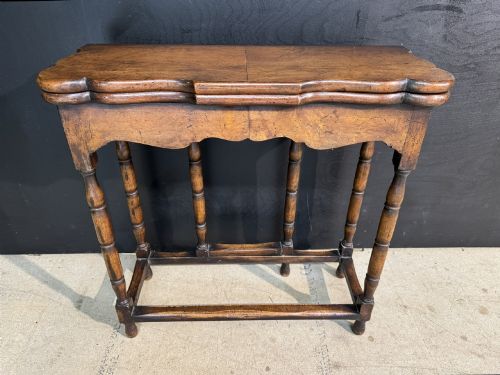
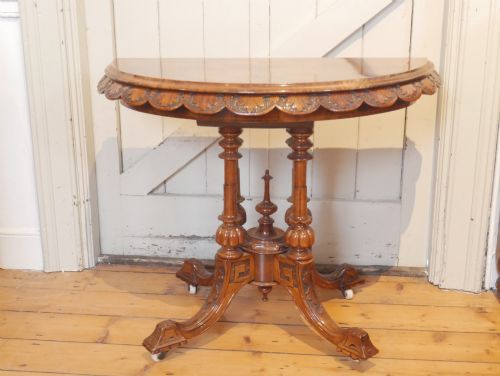
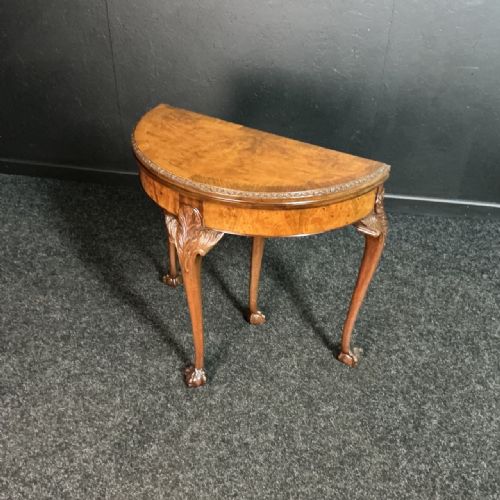
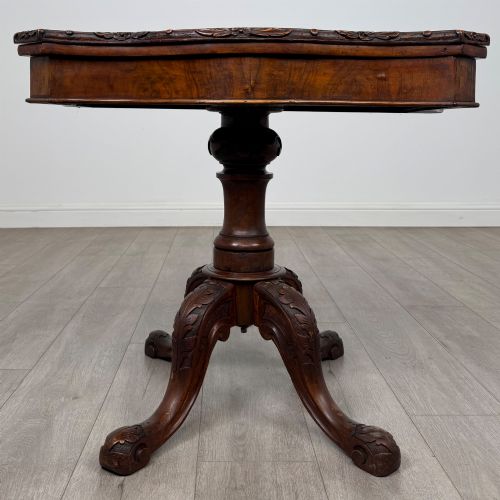
A walnut folding console table is a versatile surface that opens to reveal a felt-lined playing space or a wider top, combining practical utility with rich timber grain.
Walnut Folding Console Table
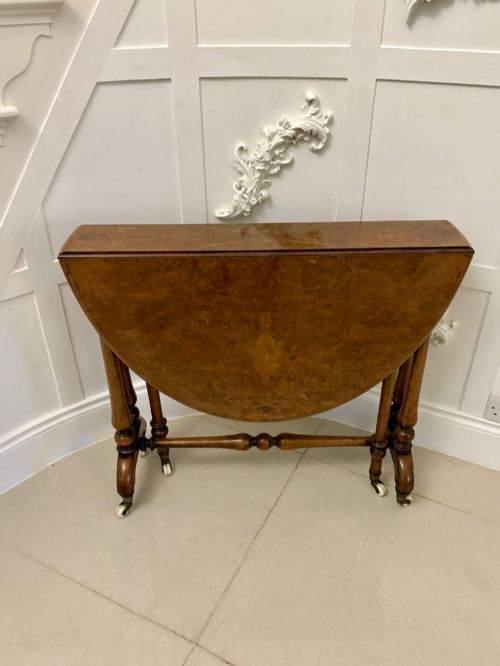
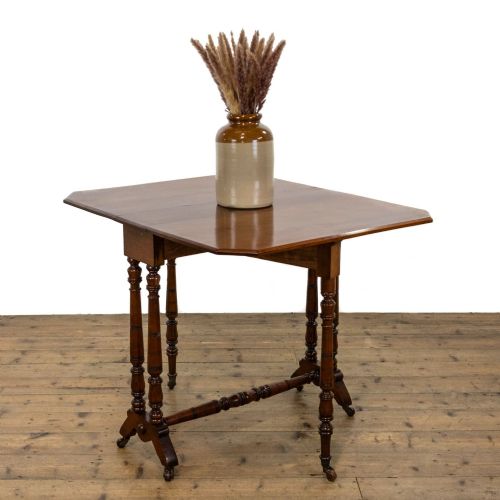
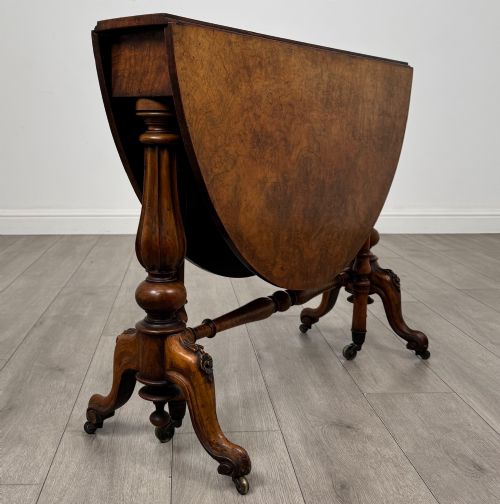
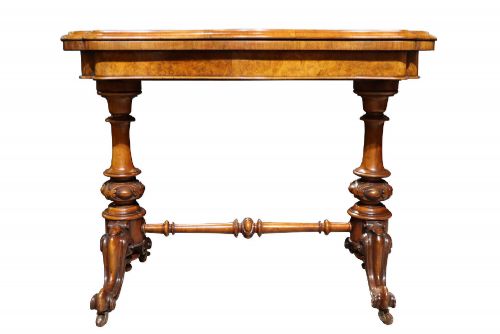
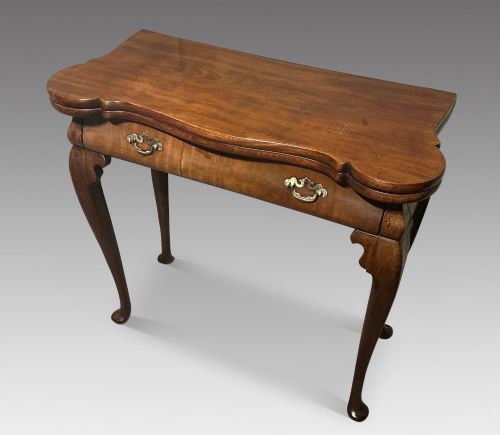
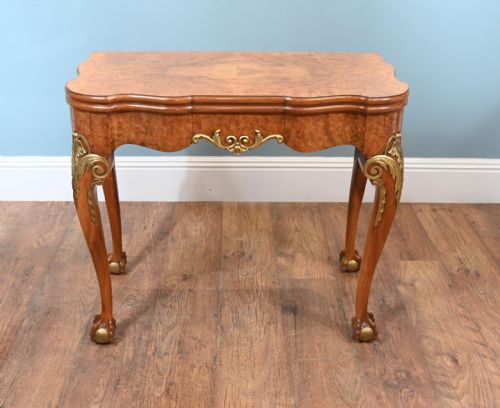
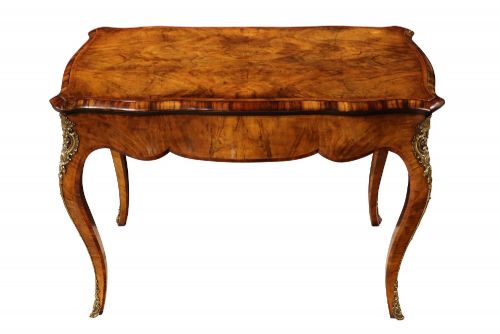
A walnut folding console table functions primarily as a card table, games table, or tea table when opened, and sits compactly against a wall when closed. The pieces gathered here span the Victorian era, the eighteenth century, and the early twentieth century, showing a strong representation of nineteenth-century craftsmanship.
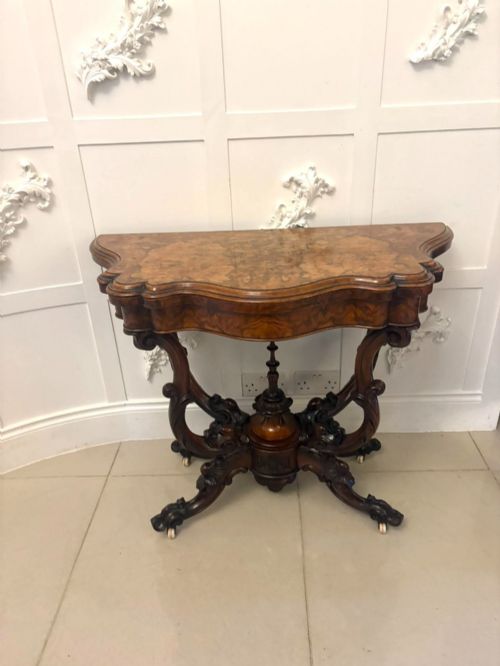
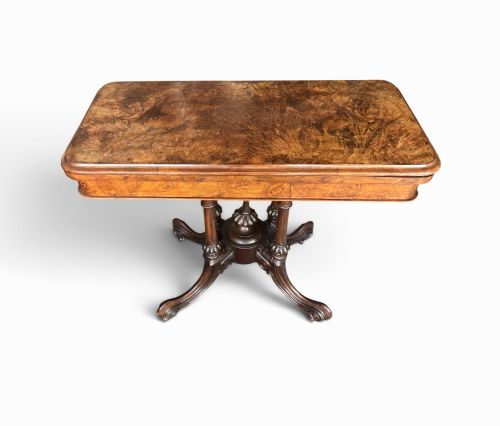
Makers produced these tables in various shapes, including rectangular, demi-lune, and serpentine forms, often utilising a fold-over top or a rotating mechanism. Buyers frequently encounter Victorian burr walnut models featuring shaped tops and carved supports alongside earlier Georgian and Queen Anne revival pieces.
Materials and construction
Cabinet makers utilised solid walnut, figured walnut, and burr walnut veneers over secondary timbers to achieve rich, swirling grain patterns across the folding tops. Workshops enhanced these surfaces using boxwood inlay, marquetry inlay, and crossbanding.
Structural embellishments frequently incorporated brass mounts, ceramic elements, or ormolu details, whilst carved wooden baskets and pedestal supports provided stability for the hinged folding mechanisms.
Judging quality in walnut furniture
Quality rests heavily on the choice of timber and the precision of the veneer work, where deeply figured burr walnut and intricate marquetry denote superior production. The crispness of carved basket bases, solid support structures, and finely cast ormolu mounts further distinguish the finer examples from standard workshop output.
The integrity of the folding or pivoting mechanism determines daily functionality, with superior pieces maintaining a completely level surface when open and sitting flush against the structural frame when closed. Cohesion in style, such as accurate proportions in Queen Anne or Louis XV revival pieces, separates master cabinet work from later imitations.
Edwards & Roberts·Epstein and Co
The Walnut Folding Console Table Glossary
- Burr walnut
- A prized timber harvested from tree growths, yielding highly figured, swirling patterns used extensively as veneer on cabinet furniture. It creates a decorative, mottled surface texture.
- Demi-lune
- A half-moon shape characteristic of console and card tables designed to stand flat against a wall. This profile allows the table to occupy minimal floor space when closed.
- Ormolu
- Gilt bronze mounted onto furniture as a decorative trim. Makers cast and gilded these metal mounts to accent corners, friezes, and bases.
- Crossbanding
- A narrow strip of veneer laid around the border of a tabletop with the grain running perpendicular to the centre panel. This technique frames the central wood and adds visual depth.
- Marquetry
- The art of applying decorative veneer pieces in geometric or pictorial patterns onto a solid wooden base. Artisans used various tinted woods to build intricate floral or figurative designs.
Walnut Folding Console Table: Frequently Asked Questions
How do these tables function?
These tables feature a hinged or pivoting top that rotates and unfolds to double the surface area, transforming a narrow console into a stable table for cards or tea.
Support mechanisms vary, including pivoting legs, swing-out frames, and central pedestals with carved bases to bear the weight of the open leaf.
Where should I place one?
A demi-lune or rectangular console fits neatly against hallway walls, beneath mirrors, or in living rooms where floor space is at a premium during daily use.
Opening the top requires clearance on at least one side, making them suitable for occasional dining, board games, or display purposes.
How do I identify Victorian examples?
Victorian pieces frequently display rich burr walnut veneers, elaborate marquetry inlay, and serpentine edges supported by carved pedestals or cabriole legs.
These nineteenth-century items often incorporate ormolu mounts, ceramic castors, and heavy pivoting mechanisms beneath the fold-over top.
What distinguishes earlier periods?
Eighteenth-century and early Georgian examples rely on solid walnut, plain figured timber, and restrained silhouettes like tea tables without complex mechanical bases.
Revival pieces from later decades imitate these earlier Queen Anne or Georgian styles while retaining the construction methods of their own manufacturing era.