


Burr Walnut Demi Lune
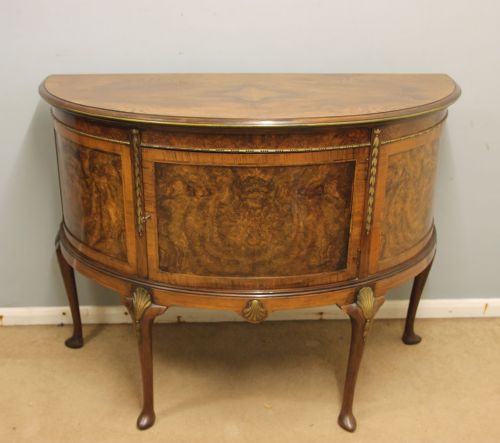
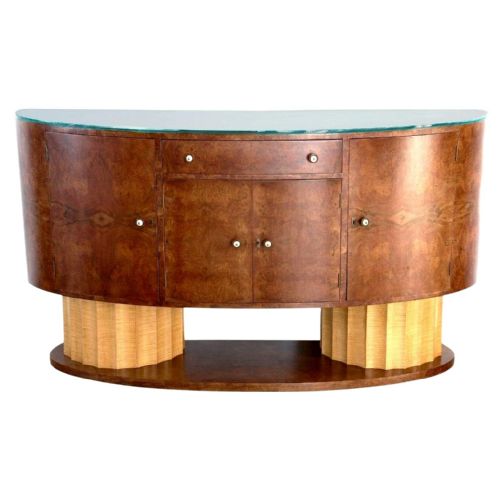
Burr walnut demi lune tables and cabinets offer sweeping half-circle forms and rich timber grain that elevate a hallway or drawing room.
Burr Walnut Demi Lune
When you search for burr walnut demi lune, you encounter half-round furniture designed to sit flat against a wall while displaying the swirling patterns of walnut growth. These items span the Victorian era, the Edwardian period, and the nineteen-thirties, taking the form of folding card tables, games tables, side cabinets, and console tables.
The most frequent versions on this page are Victorian and early twentieth-century card or games tables featuring fold-over tops. Alongside these, sideboards, commodes, and drinks cabinets appear, reflecting the enduring utility of the half-moon silhouette in domestic spaces.
What varies in quality
The distinction between standard examples and the finest pieces lies in the selection and matching of the burr walnut veneer across the curved top and front panels. Superior items display symmetrical grain patterns that flow seamlessly around the semi-circular edges without disruption.
Execution of carved details and the precision of folding mechanisms also dictate overall merit. Master workshops ensured that card tables aligned flush when closed and operated smoothly on their hinges, maintaining stability during use.
Card tables hide their secondary green baize playing surfaces discreetly beneath folded walnut tops, ready to host an impromptu Victorian whist evening.
Hille·Maple and Co·Waring and Gillow
The Burr Walnut Demi Lune Glossary
- Demi-lune
- Half-moon shape. This French term describes furniture with a flat back designed to stand against a wall and a curved front.
- Burr walnut
- Timber taken from a tree growth or burl. It produces highly figured, swirling grain patterns prized for decorative veneer work.
- Fold-over table
- A table with a hinged top that doubles its surface area when opened. These designs commonly served for card games or social evenings.
- Console table
- A table supported by brackets or legs against a wall. Historically, these served decorative purposes in halls and reception rooms.
- Whatnot
- An open set of shelves for displaying small objects. These pieces often incorporate the demi-lune footprint to fit compactly in corners or hallways.
Burr Walnut Demi Lune: Frequently Asked Questions
How were demi lune tables used?
These half-circle tables served multiple functions depending on their internal mechanisms. Many acted as console tables against hallway walls, holding lamps or decorative items.
When fitted with folding tops, they transformed into card or games tables for evening entertainment before folding back against the wall to save space.
How do I date a burr walnut piece?
Dating relies on stylistic clues, construction methods, and prevailing design revivals. Victorian examples often feature heavy timber framing and carved cabriole legs.
Later Edwardian and nineteen-thirties pieces tend toward cleaner lines, sometimes pairing walnut with sycamore in the manner of Art Deco design.
What is the difference between a console and a cabinet?
Console tables are open frames designed to stand against a wall, providing surface space for display rather than enclosed storage. Cabinets and commodes feature doors or drawers to conceal contents within the half-moon footprint.
Both shapes utilise the demi-lune profile to project less into a room than a full round or rectangular piece.
Where should I place a demi lune table?
The flat back of the semi-circular design allows these pieces to sit flush against entrance hall walls without obstructing walkways. They provide a striking focal point immediately upon entering a room.
Drawing rooms and sitting rooms also accommodate them well, either holding lamps or opening out for card games when guests visit.