

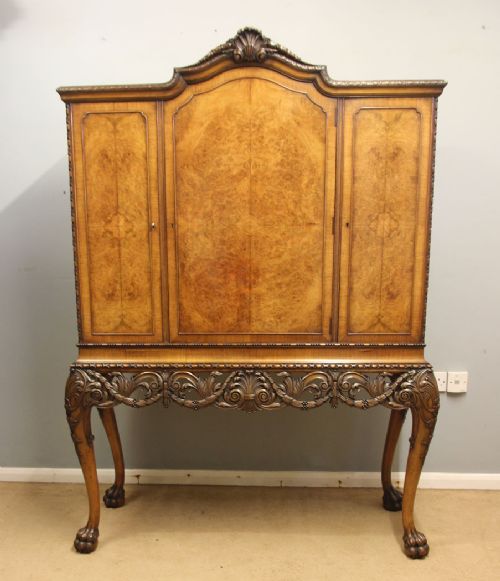
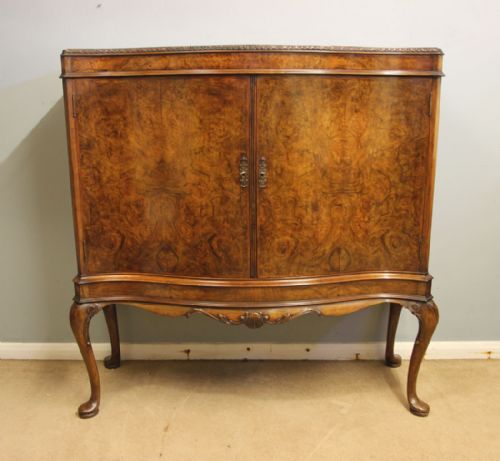


Walnut Drinks Credenza
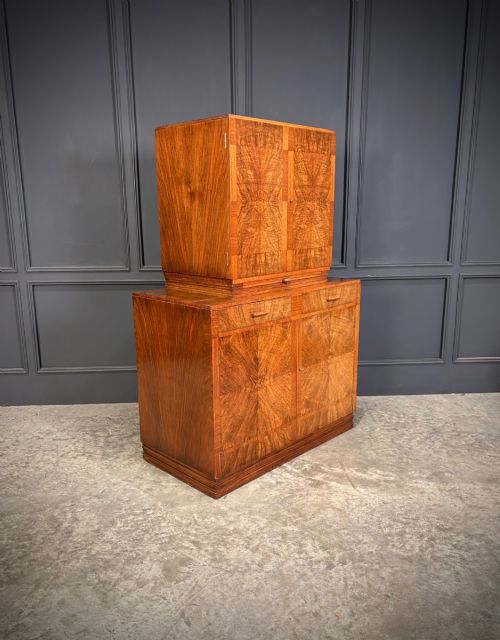
A walnut drinks credenza brings serious presence to a room, combining rich timber figure with practical storage for bottles and glassware.
Walnut Drinks Credenza
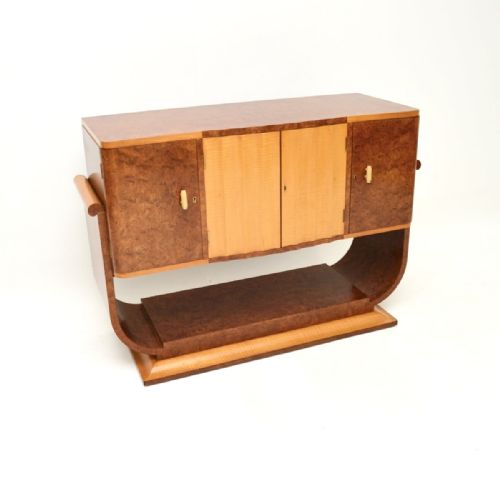
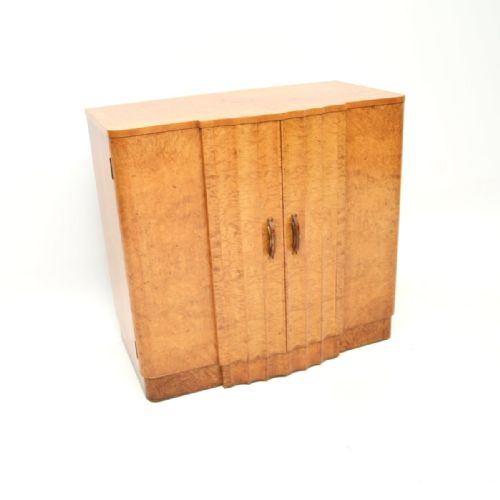
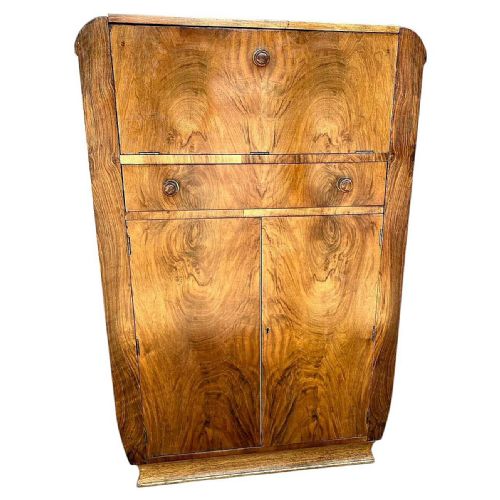
When you search for a walnut drinks credenza, you encounter sophisticated cabinetry designed specifically for entertaining and the display of spirits. These pieces span the Victorian era, the Edwardian period, and the 1930s Art Deco movement, manifesting as sideboards, credenzas, and dedicated cocktail cabinets.
The prevailing form on this page is the Art Deco cocktail cabinet, alongside traditional Victorian and Edwardian side cabinets. They originate from British and French workshops, utilising substantial timber carcasses fitted for modern social habits of their respective decades.
What varies in quality
Quality rests upon the selection and matching of the burr walnut veneer across the main doors and facade. Superior examples exhibit symmetrical grain patterns that flow seamlessly over the proportions of the cabinet.
The integration of fitted interior mirrors, glass shelving, and solid brass mounts distinguishes standard production from exhibition pieces. Structural integrity in the joinery of serpentine shapes dictates the durability of the carcass.
Walnut Drinks Credenza Retail Price Guide 2026
Typical asking prices for walnut drinks credenza among the pieces listed under this phrase on Sellingantiques today, from the lower quarter to the upper quarter. They describe what is for sale here now, not the wider market.
Listings span the nineteenth century through to 1930, uniting Victorian forms with Art Deco cocktail cabinets.
Harry and Lou Epstein
The Walnut Drinks Credenza Glossary
- Burr walnut
- A prized timber harvested from the burl growth of the walnut tree, showing dense, swirling knot patterns. It forms the primary decorative surface on high-end cabinet doors.
- Credenza
- A low dining-room sideboard or cabinet traditionally used for serving food or storing utensils. In later interpretations, the term applies to long side cabinets adapted for drinks storage.
- Marquetry
- The art of applying pieces of veneer to a structure to form decorative patterns and pictures. Craftsmen cut contrasting woods to create detailed ornamentation on the surface.
- Serpentine
- A furniture shape featuring a curved front with a convex centre flanked by concave sides. This undulating form requires advanced woodworking skill to execute properly.
- Ebonised
- Wood treated to imitate ebony, usually through chemical staining or painting timber black. It provides a sharp contrast against lighter burr walnut panels.
Walnut Drinks Credenza: Frequently Asked Questions
What is a walnut drinks credenza used for?
These cabinets serve as dedicated storage units for bottles, decanters, and glassware used during entertaining. Their interiors often incorporate mirror backs and specialised shelving designed for cocktail preparation.
Historically, they evolved to meet changing social habits, transitioning from formal dining room sideboards into dedicated cocktail stations during the Art Deco era.
How do I date a walnut drinks credenza?
Dating relies on identifying stylistic markers, construction methods, and prevailing design movements. Pieces from the 1930s often display geometric Art Deco lines and figured veneers, whereas Victorian and Edwardian examples feature more traditional revival styling.
Hardware, internal fittings, and timber preparation methods further help determine whether a cabinet originates from the nineteenth century or the early twentieth century.
Where should I place a drinks credenza?
A dining room, living room, or reception space suits these cabinets best, where they function as focal points and practical serving stations. Their finished backs and substantial proportions allow them to anchor large walls.
Consider natural light levels in the room to protect the walnut veneer and mirror glass from direct exposure that might cause fading over time.
How do I care for burr walnut furniture?
Maintenance involves dusting with a soft, dry cloth and avoiding modern silicone polishes that can degrade the historic finish. Keeping the timber away from direct heat sources and dramatic humidity changes prevents veneer lifting.
Occasional application of appropriate wax feeds the wood and preserves the depth of the grain patterns without building up heavy residue.