


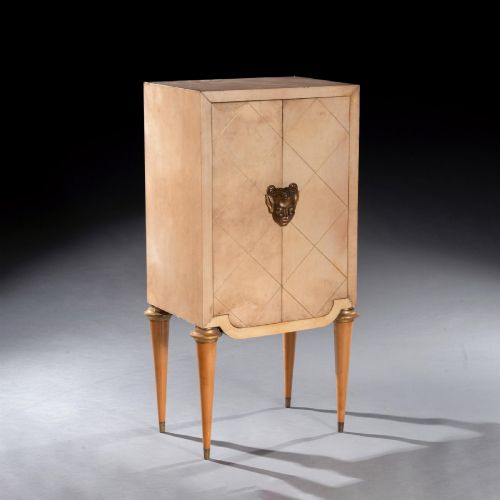


Art Deco Standing Bar
An art deco standing bar gathers friends, holding bottles and glassware in rich walnut, burr walnut, and gleaming chrome.
Art Deco Standing Bar
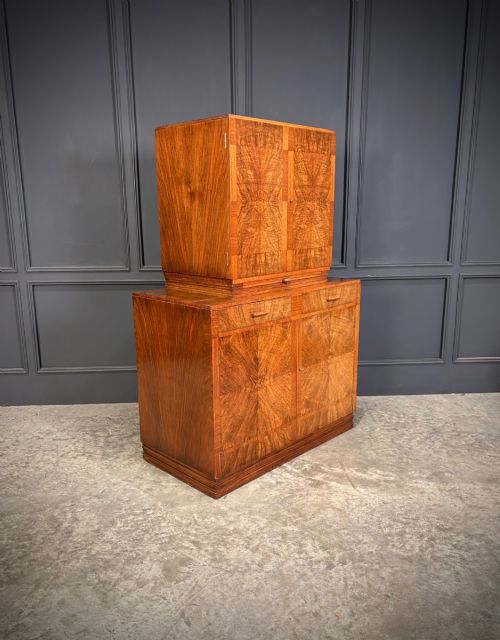
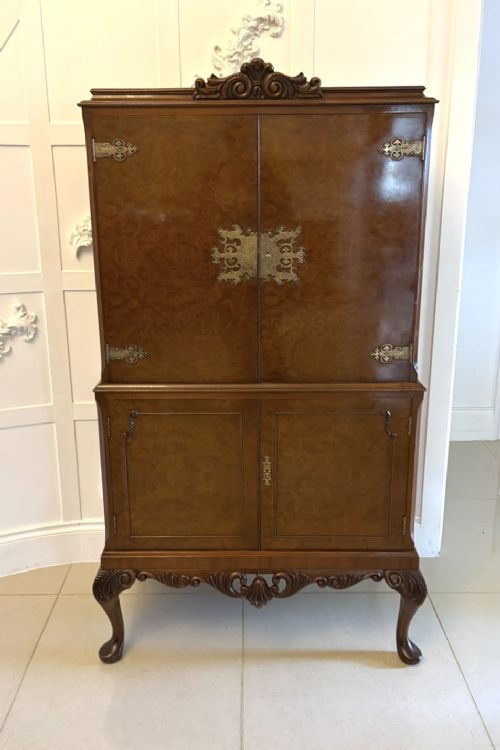
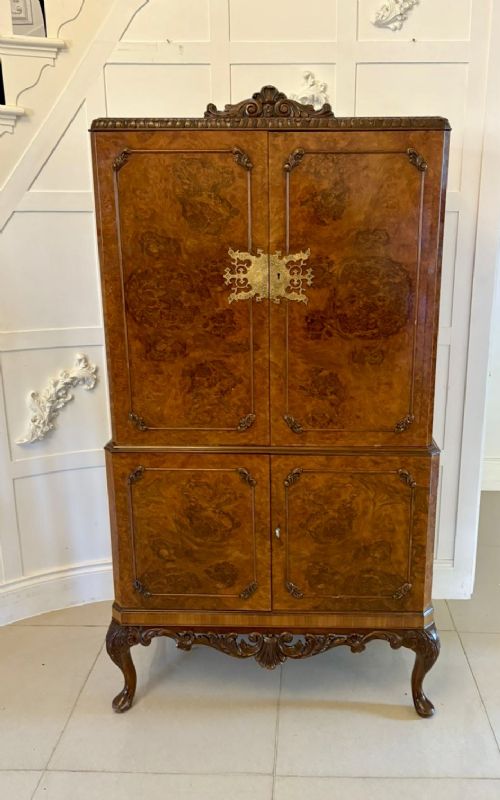
When you search for an art deco standing bar, you encounter cocktail cabinets, drinks cabinets, and cabinets designed for entertaining. The most common forms on this page take the shape of substantial walnut or burr walnut cabinets, often featuring double bow fronts or raised stands.
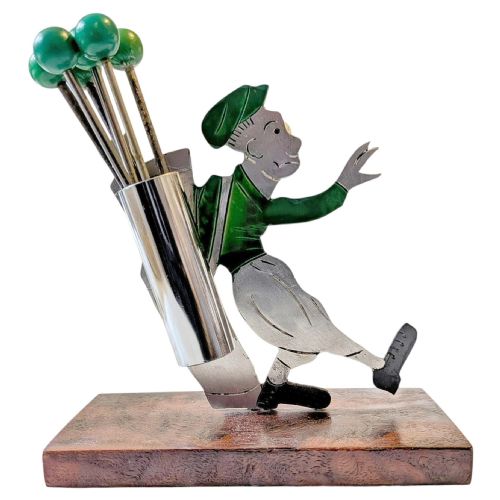
These pieces bridge multiple decades and styles, spanning the 1920s, 1930s, and 1940s, alongside occasional Victorian roots and Queen Anne Revival influences. Alongside the large standing furniture, you also find smaller barware items, including cocktail stick sets featuring novelty figures by Sudre in bakelite and chrome.
Makers such as Hille, Epstein and Co, Maurice Jallot, and Liberty's of London appear in the record, representing fine British and French cabinet-making traditions. The core of the selection remains dedicated to walnut and burr walnut drinks furniture created for the home.
Distinguishing quality in the range
Quality reveals itself in the selection of veneers, particularly the grain matching of burr walnut across the cabinet doors and bow fronts. Superior examples exhibit considered proportion and balanced integration of stands, alongside specialised interior fittings like sliding shelves.
Attribution to known makers such as Hille, Epstein and Co, or Liberty's of London elevates a piece above anonymous production. Smaller barware items demonstrate quality through the intricacy of novelty castings, such as the figural cocktail stick sets by Sudre.
Art Deco Standing Bar Retail Price Guide 2026
Typical asking prices for art deco standing bar among the pieces listed under this phrase on Sellingantiques today, from the lower quarter to the upper quarter. They describe what is for sale here now, not the wider market.
Listings feature walnut, burr walnut, mahogany, brass, chrome, and bakelite across items originating in the 1920s, 1930s, and 1940s.
Sudre·Maurice Jallot·Hille·Epstein and Co·Liberty's of London
The Art Deco Standing Bar Glossary
- Burr walnut
- A figured wood grain taken from the wart or burl growths on walnut trees. It creates intricate, swirling patterns highly prized for cabinet fronts.
- Cocktail cabinet
- A specialised piece of furniture designed to store bottles, glasses, and mixing equipment. They typically feature fitted interiors with drop-down or sliding shelves for serving drinks.
- Bakelite
- An early form of synthetic plastic developed in the early twentieth century. It appears frequently in handles, knobs, and bar sets for its durable and tactile qualities.
- Barware
- Equipment and utensils used for preparing and serving drinks. This category includes cocktail stick sets, shakers, and serving pieces in silver plate and chrome.
Art Deco Standing Bar: Frequently Asked Questions
What is an art deco standing bar used for?
These cabinets serve as dedicated storage and serving stations for alcoholic beverages, glassware, and mixing accessories.
Interior compartments often include mirrors, pull-out shelves, and specialised racks designed to hold bottles securely during entertaining.
How do I care for a burr walnut cabinet?
Keep the wood away from direct sunlight and heat sources to prevent the natural veneers from drying out or fading.
Dust regularly with a soft, dry cloth and apply occasional specialist wax polish to maintain the sheen of the timber.
How can I tell a 1930s cabinet from a Victorian one?
Nineteen-thirties pieces tend to showcase streamlined geometry, burr walnut veneers, and chrome or bakelite hardware.
Victorian or revival examples lean toward traditional forms like Queen Anne styling, heavier carved details, and darker polished timber surfaces.
Where were these cocktail cabinets made?
The selection includes pieces originating from both British workshops and French designers.
London department stores and Parisian furniture makers both contributed distinct aesthetic approaches to the cocktail cabinet form.