



Walnut Dressing Chest
When you search for a walnut dressing chest, you are looking at centuries of fitted drawers, pivoting mirrors and figured grain designed for the bedroom.
Walnut Dressing Chest
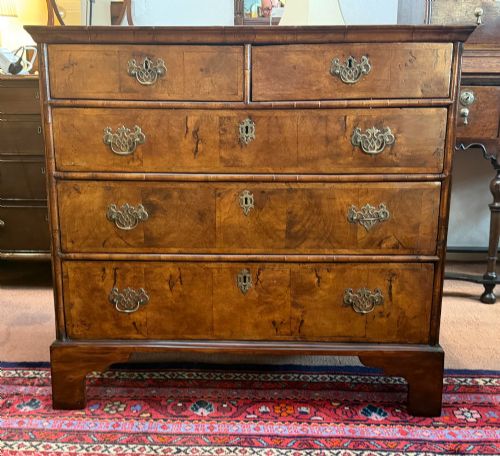
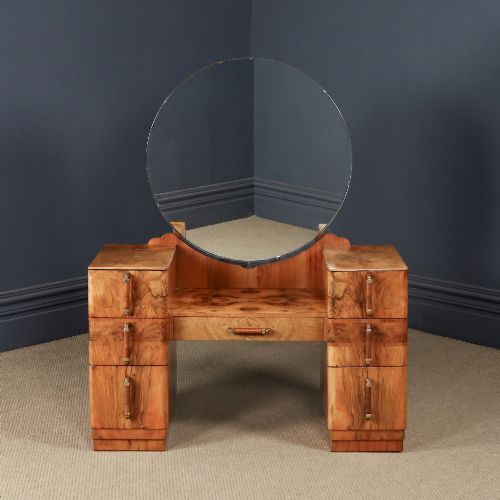
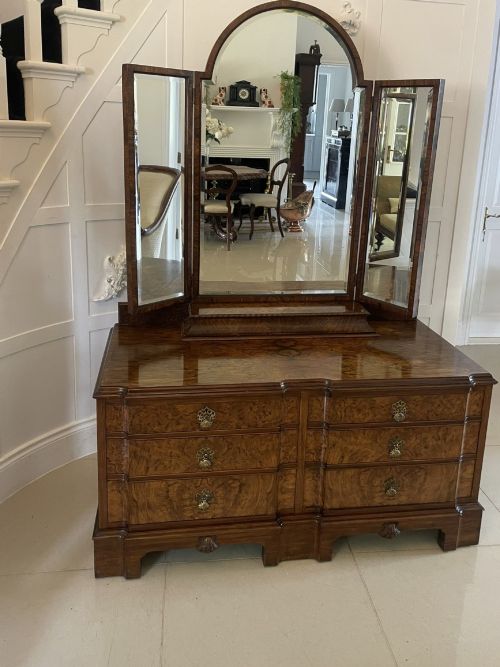
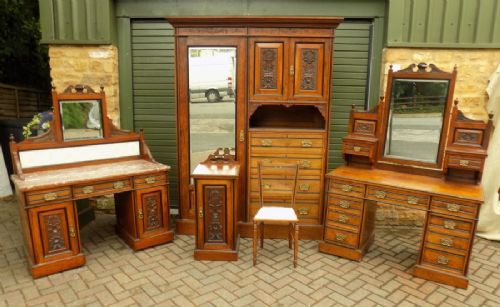
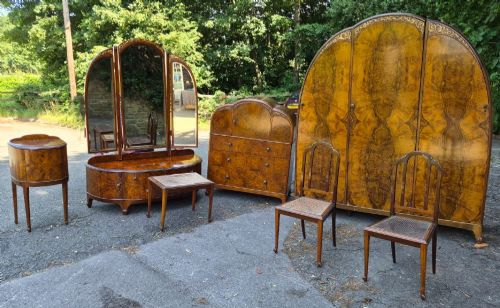
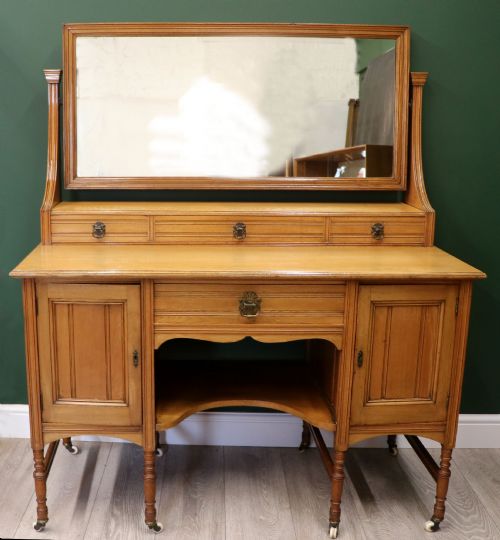
A walnut dressing chest brings together the functional storage of a chest of drawers with the personal grooming space of a vanity table, often incorporating swing mirrors or fitted compartments. You will encounter these pieces spanning from the 18th Century and Georgian periods through to Victorian designs and Art Deco interpretations from the 1930s.
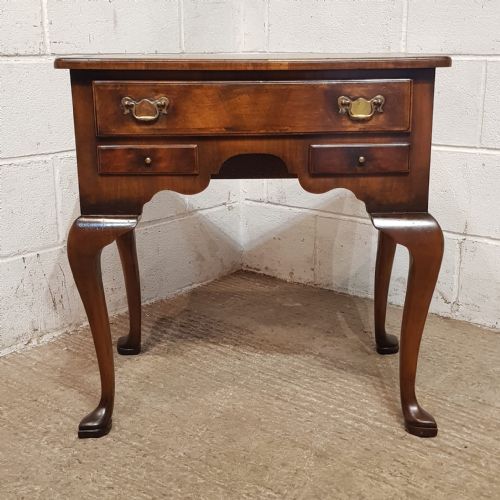
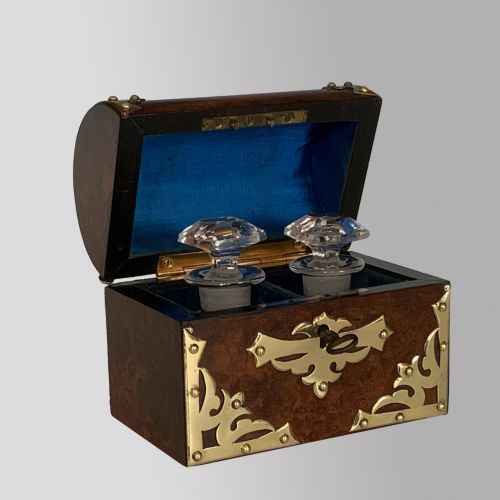
The form adapts across eras, appearing as compact lowboys, kneehole desks with recessed cupboards, grand Victorian duchess suites and streamlined moderne pedestals. Alongside larger bedroom items, the phrase frequently captures smaller tabletop dressing boxes, jewellery chests and side tables sharing the same timber and craftsmanship.
Makers and workshops across England, America and Continental Europe utilised the dense grain to build these pieces for domestic chambers, ranging from simple satin walnut utility items to elaborate burr-veneered masterpieces. The survival of these varied forms reveals how domestic dressing rituals evolved from the Georgian period into the 20th century.
Materials and Construction
Cabinet makers constructed these pieces using solid foundations of oak, pine or mahogany, onto which they applied finely figured walnut veneers and burr walnut slices to create dramatic patterns across drawer fronts and tops. Crossbanding and string inlay in contrasting woods frequently border the primary walnut surfaces, defining the edges of panels and tabletops.
Secondary materials such as brass for handles, key escutcheons and mounts, along with mirror glass and occasional marble tops, complete the structural composition. Joinery methods progressed from hand-cut dovetails on early Georgian drawers to later Victorian mechanical fittings and Art Deco laminated curves.
Listings feature walnut dressing chests spanning from the 18th Century and Georgian era through Victorian designs to 1930s Art Deco pieces.
Distinctions in Quality
The standard of a walnut dressing chest is determined by the selection of the veneer, where symmetrical matching of burr walnut figures across drawer fronts demonstrates superior workshop practice. Early pieces rely on thick, rich walnut timbers with patinated surfaces, whereas later examples depend on the precision of the cabinet work and the integrity of the original polish.
Hardware and internal fittings also divide the ordinary from the exceptional, visible in original brass drop handles, secondary timber choices inside drawer boxes, and the complexity of fitted compartments with secret drawers or silver fitments.
Frank Taylor and Co.·Shoolbred and Co·Maurice Adams·Parkins and Gotto·Wylie and Lochhead Glasgow
The Walnut Dressing Chest Glossary
- Burr walnut
- A veneer sliced from the gnarled growths of the walnut tree, prized for its swirling, organic patterns. It creates a highly decorative surface on drawer fronts and tabletops.
- Lowboy
- A small, low table with drawers, typically standing on four legs, functioning as a dressing table or side table in 18th-century interiors. These often feature cabriole legs.
- Kneehole desk
- A bureau or dressing chest featuring a central recess for the user's knees, flanked by pedestals of small drawers. This compact form became popular during the Georgian period.
- Cheval mirror
- A full-length mirror hung in a frame that allows it to tilt or swing. Some examples are designed to sit atop a dressing chest or stand independently.
- Crossbanding
- A narrow strip of veneer applied across the grain of the primary surface to form a border. It frames the central panel of a drawer or tabletop.
Walnut Dressing Chest: Frequently Asked Questions
What is a lowboy dressing chest?
A lowboy is a compact table with one or more tiers of drawers, standing on slender legs, which served as a dressing table before taller mirror-backed chests became fashionable.
These pieces offer versatile proportions that suit modern hallways and living spaces as well as bedrooms.
How do I date a walnut dressing chest?
Dating relies on construction details such as hand-cut dovetails, the thickness of the walnut veneers, and stylistic markers like cabriole legs or Art Deco geometric lines.
Georgian examples display simpler solid timber or plain veneers, while Victorian and Edwardian pieces often incorporate elaborate mirrors and matching bedroom suites.
Are these dressing chests suitable for modern bedrooms?
Their modest footprints and functional drawer space make them practical for contemporary storage and surface use.
Many incorporate mirrors and hidden compartments that accommodate modern jewellery and daily accessories without occupying excessive floor space.
What is burr walnut veneer?
Burr walnut is cut from the knotted burls of the tree, producing intricate, swirling grain patterns that were favored by high-end cabinet makers.
This material elevates the visual impact of drawer fronts and tabletops across 18th-century and Art Deco pieces alike.