


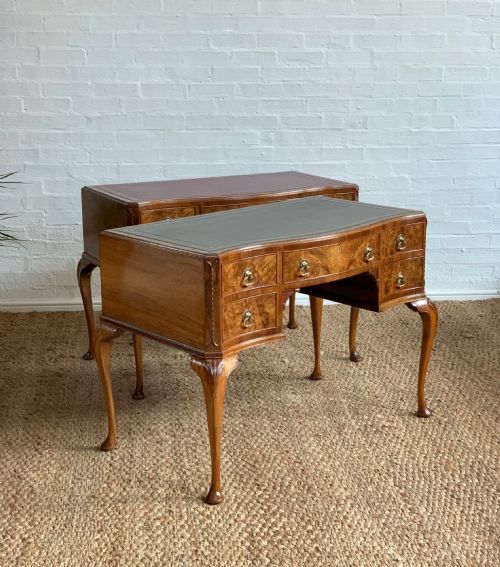
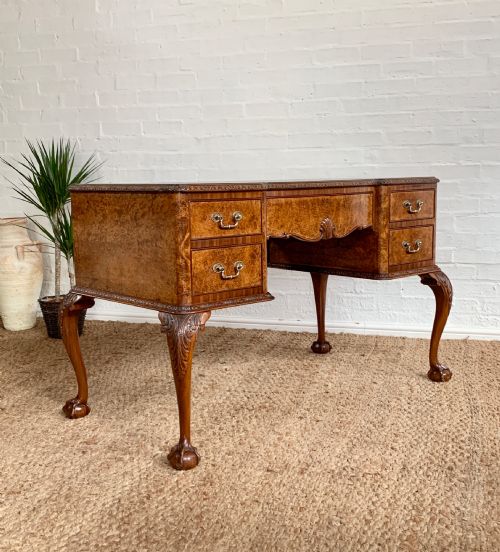

Walnut Dressing Bureau
These walnut dressing bureau pieces bring together fitted writing compartments and mirrors in rich timber.

Walnut Dressing Bureau
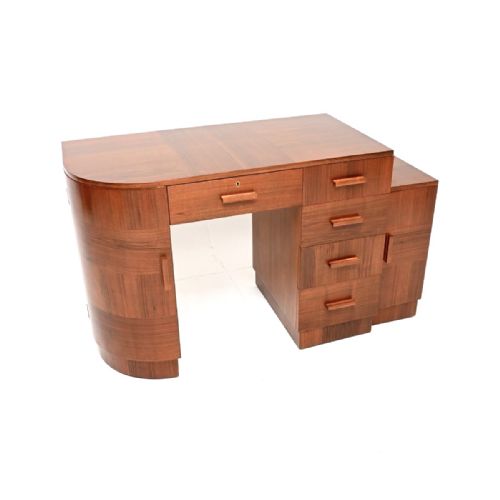
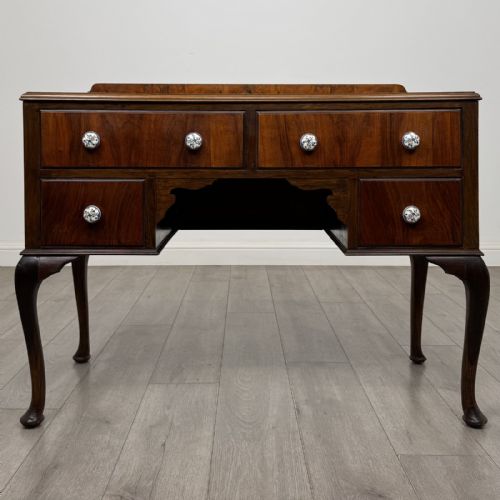
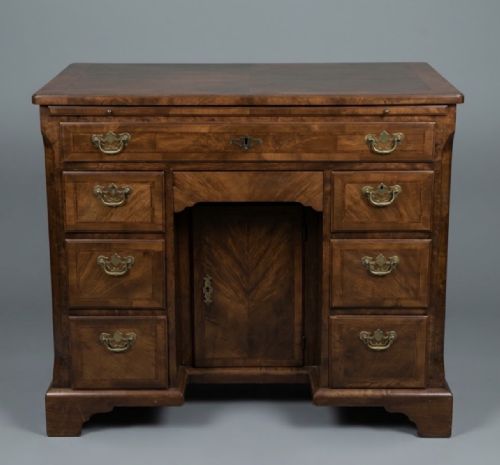
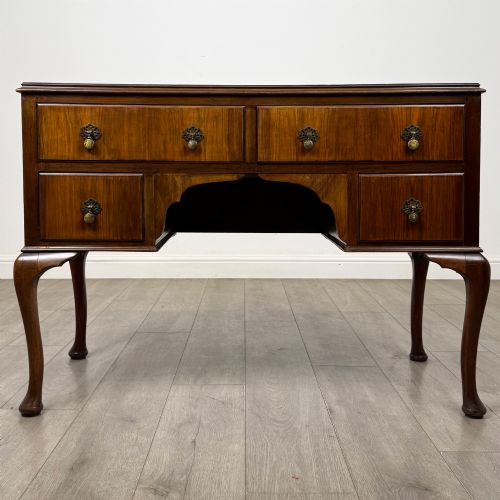
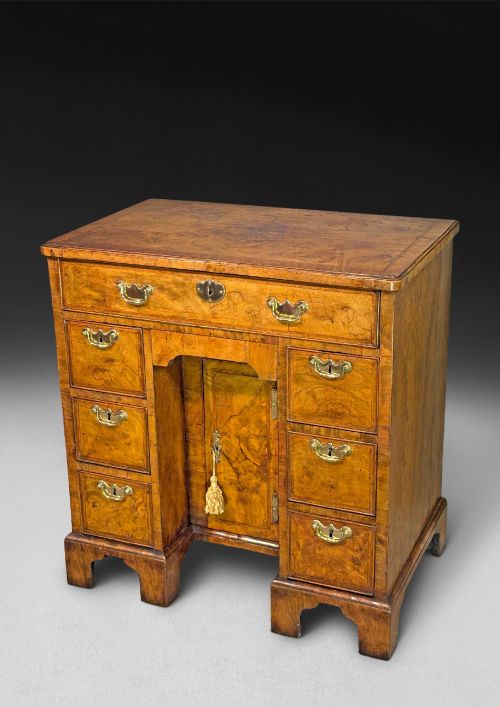
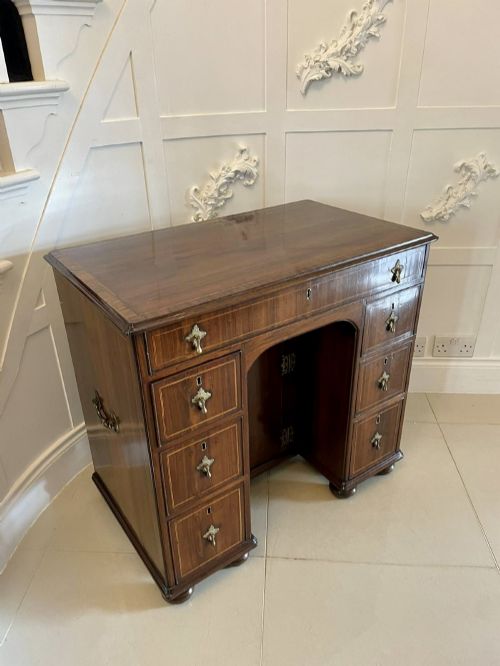
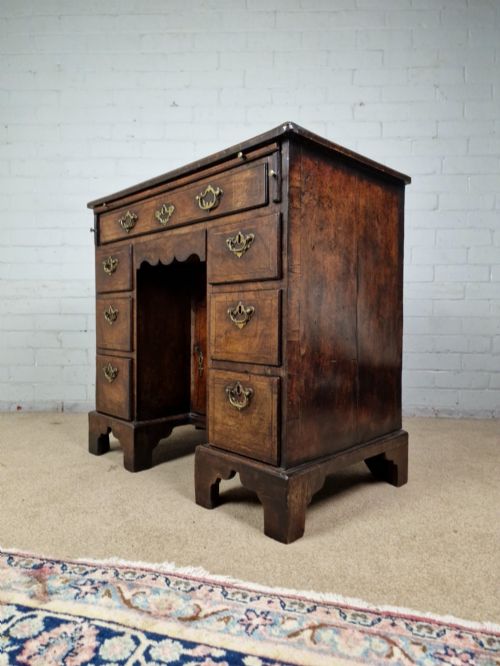
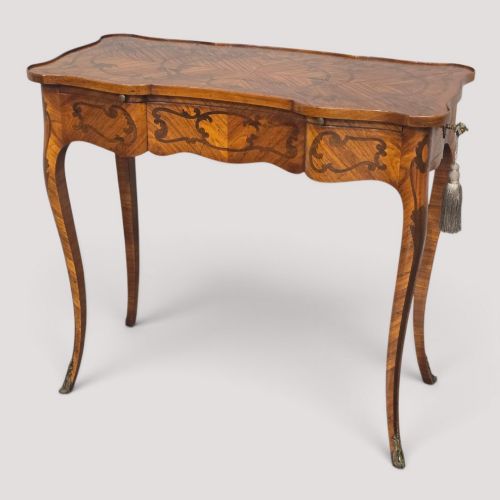
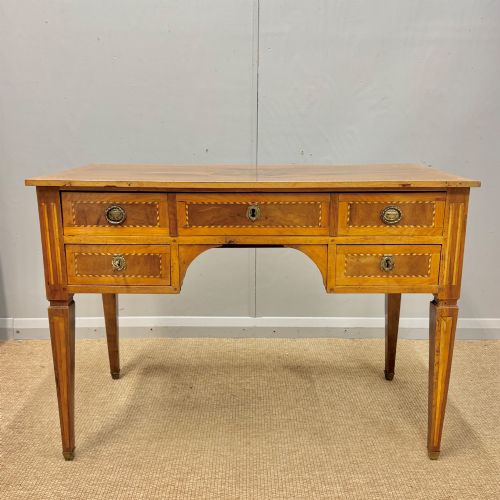
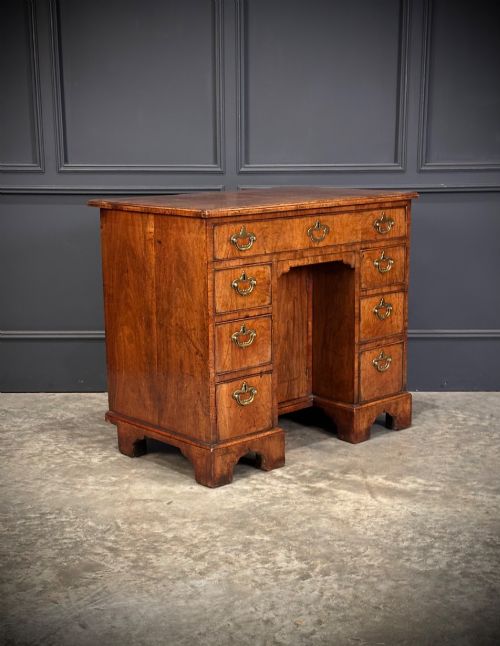
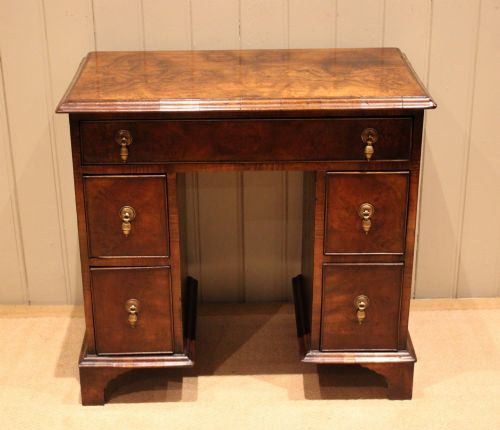
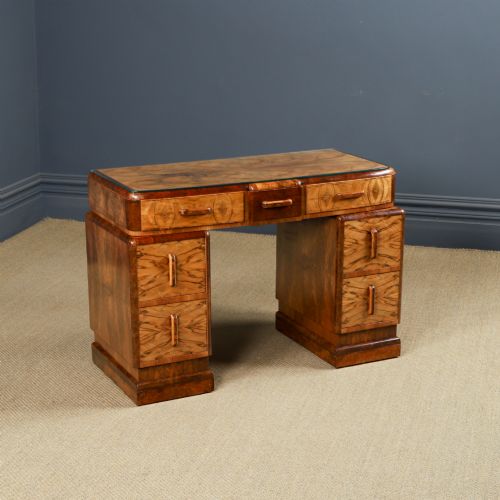
A walnut dressing bureau combines the compartments of a small writing desk with the glass mirror of a dressing table, reflecting forms seen across the eighteenth and twentieth centuries. The pieces on this page lean heavily towards kneehole desks, writing tables, and tabletop bureau mirrors dating from the Georgian era through to the Art Deco period.
Makers and cabinet makers often utilised compact footprints for these items, making them suitable for bedrooms and dressing rooms alike. Buyers will encounter seventeenth and eighteenth-century examples alongside later revivals in the Queen Anne and George II styles.
The integration of a bureau fitment into a table mirror or pedestal desk creates a dual-purpose item designed for writing correspondence and grooming. Surviving examples demonstrate how domestic furniture adapted to private chambers over three centuries.
How they were made
Cabinet makers constructed these pieces using solid walnut, oak, and pine for internal carcases, applying finely figured walnut veneers and burr walnut across the primary surfaces. Cross-banding and feather banding frequently edge the drawer fronts and writing flaps to frame the grain.
Secondary timbers such as fruitwood support internal partitions, while brass handles, escutcheons, and hinges secure the drawers and adjustable mirror frames. Writing surfaces often feature inset green tooled leather panels bordered by blind tooling.
Walnut Dressing Bureau Retail Price Guide 2026
Typical asking prices for walnut dressing bureau among the pieces listed under this phrase on Sellingantiques today, from the lower quarter to the upper quarter. They describe what is for sale here now, not the wider market.
Some dressing mirrors hide tiny secret compartments behind miniature drawers, perfect for misplaced love letters.
What varies in quality
The choice of timber grain dictates much of the visual merit, with highly figured burr walnut and fiddleback veneers marking out superior cabinet work. The depth of colour and the preservation of the original polish distinguish pieces that retain their character from those heavily restored.
Construction details such as hand-cut dovetails on drawer linings, original brass hardware, and the crispness of inlay work separate standard output from workshops of notable standing.
Wylie & Lochhead Glasgow·Maples of London
The Walnut Dressing Bureau Glossary
- Kneehole desk
- A compact writing desk featuring a central recessed cupboard or knee space flanked by banks of small drawers.
- Burr walnut
- Timber taken from the warted growths of a walnut tree, yielding complex, swirling grain patterns highly prized for veneer work.
- Feather banding
- Narrow strips of veneer cut diagonally and laid in a herringbone pattern around the borders of drawer fronts and tabletops.
- Dressing table mirror
- A tabletop glass mounted on upright pivots, frequently constructed with small drawers or a bureau fitment in the base.
Walnut Dressing Bureau: Frequently Asked Questions
What is a walnut dressing bureau?
A walnut dressing bureau is a dual-purpose piece of furniture that combines a small writing desk or bureau fitment with a dressing mirror. These items were designed for private chambers to accommodate both correspondence and personal grooming.
Surviving examples range from eighteenth-century Georgian designs to twentieth-century interpretations in the Art Deco and Queen Anne revival styles.
How do I identify the period?
Dating these pieces relies on examining construction methods, timber choice, and hardware. Eighteenth-century examples often feature solid drawer linings with hand-cut dovetails and period brasses.
Later nineteenth and twentieth-century revivals typically display machine-cut elements and different veneer application techniques while imitating earlier Georgian or Queen Anne aesthetics.
Where were these pieces used?
These items were traditionally placed in bedrooms, dressing rooms, or private studies where space-saving dual-purpose furniture was required. The combination of a writing surface and a mirror served daily domestic routines.
Today, they function well in contemporary homes as compact writing desks or feature pieces in hallways and bedrooms.
What is burr walnut?
Burr walnut is a decorative veneer harvested from the knotty growths on walnut trees. It displays intense, swirling grain patterns that create a highly figured surface.
Cabinet makers used this timber on prominent surfaces like drawer fronts and writing flaps to catch the light and add visual depth.