



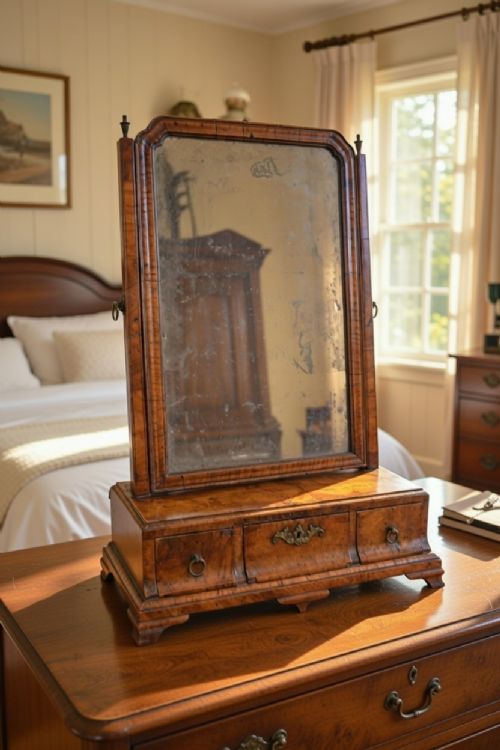

Walnut Dressing Box
A walnut dressing box brings together rich timber, brass mounts and fitted compartments to organise personal valuables.
Walnut Dressing Box
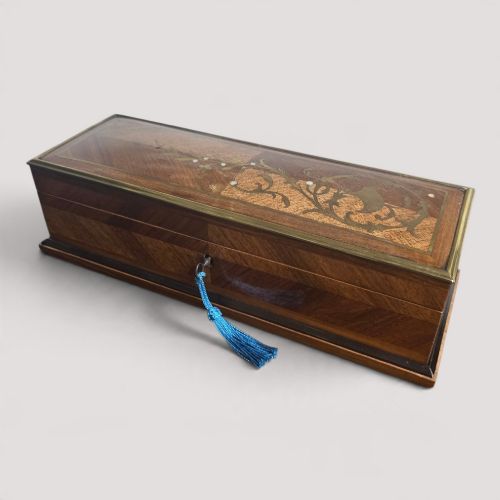
A walnut dressing box is a compact lidded container designed for personal grooming items, jewellery and trinkets, frequently incorporating a fitted interior with compartments and a mirror. When you search for this phrase, you encounter everything from small portable boxes to larger travelling vanity cases and table-standing swing mirrors.
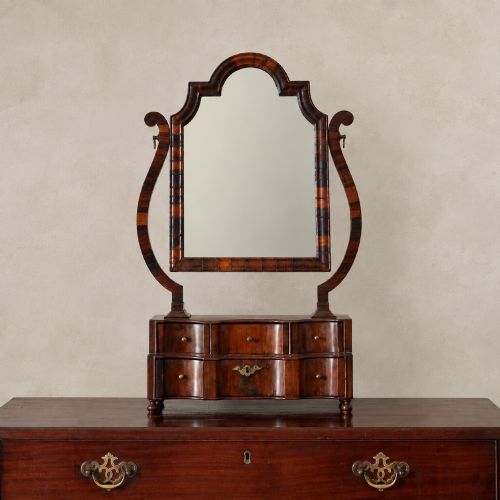
The pieces on this page span the 18th century to the Victorian era, showing how these objects evolved from plain Georgian toilet mirrors into elaborate burr walnut cases with velvet linings and silver fittings.
Materials and construction
Cabinet makers utilised solid walnut and figured veneers like burr walnut over secondary timbers, often accentuating the grain with parquetry or marquetry patterns. Brass featured heavily as binding, handles, locks and escutcheons, giving structural reinforcement and contrast to the dark wood.
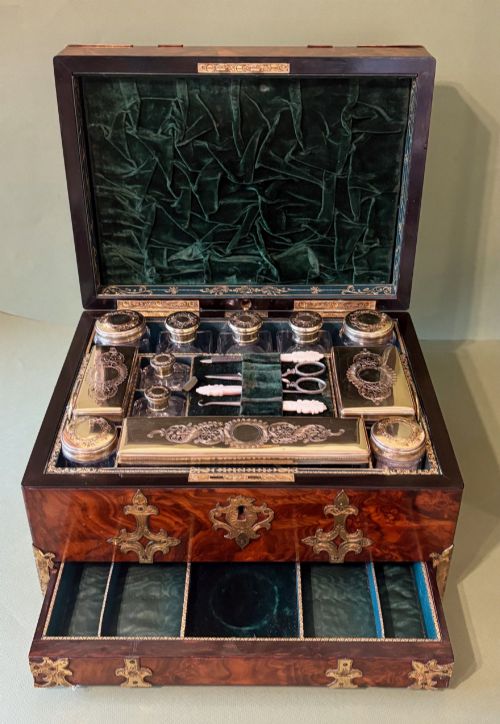
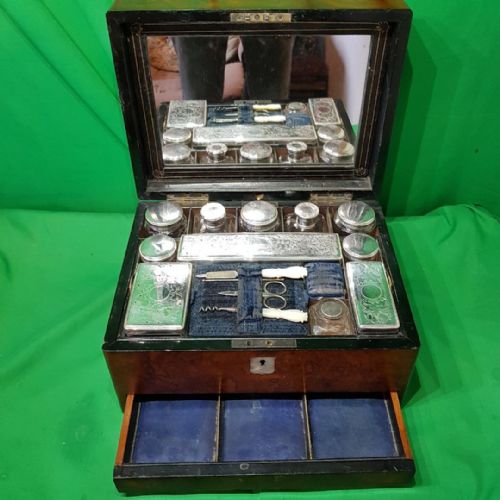
Interiors combined glass mirrors, velvet linings and fitted compartments for jewellery, razors and silver-topped glass bottles. Mother-of-pearl inlay and ormolu mounts added decorative detail to higher-status Victorian vanity cases.
Walnut Dressing Box Retail Price Guide 2026
Typical asking prices for walnut dressing box among the pieces listed under this phrase on Sellingantiques today, from the lower quarter to the upper quarter. They describe what is for sale here now, not the wider market.
Some Victorian travelling sets included dedicated compartments for seven days of individual razors.
Assessing quality and execution
Quality rests in the selection of the timber veneers and the precision of the joinery, where finely figured burr walnut and neat dovetails distinguish better examples. The complexity of the interior layout and the presence of original silver, glass and velvet fittings separate standard boxes from more complete travelling sets.
Parkins and Grotto·JH Browne of The Waldorf Hotel
The Walnut Dressing Box Glossary
- Burr walnut
- A figured wood grain taken from the wart or burl growths of the walnut tree, prized for its swirling patterns. Cabinet makers selected these veneers for the exterior lids of high-end boxes.
- Toilet mirror
- A small swing mirror mounted on a box base with small drawers, also known as a dressing table mirror. These pieces sat on top of a chest or dressing table in the 18th century.
- Ormolu
- Gilt bronze applied as decorative mounts on furniture and boxes. It provides a bright metallic contrast against dark walnut surfaces.
- Parquetry
- Geometric patterns formed by fitting small pieces of veneer together. It appears on Victorian keepsake and trinket boxes.
Walnut Dressing Box: Frequently Asked Questions
What is a walnut dressing box used for?
These boxes served to store jewellery, cosmetics, hair brushes and personal grooming tools securely in the bedroom or during travel.
Victorian examples often included specific slots for razors, scent bottles and small instruments alongside lined trays for rings and brooches.
How do I date a walnut dressing box?
Dating relies on construction methods, hardware and overall style, with 18th-century pieces favouring simple toilet mirrors and Georgian proportions.
Later Victorian versions frequently display burr walnut veneers, brass binding, bevelled glass and complex spring-release compartments.
Where should I place a dressing box at home?
Compact box forms sit comfortably on dressing tables, chests of drawers or sideboards as decorative storage for modern trinkets.
Toilet mirrors function practically on top of a matching table or chest, reflecting light and providing a usable mirror surface.
Did these boxes travel with their owners?
Many Victorian vanity cases and travelling sets were built with sturdy brass handles and heavy locks specifically for transport on trains or carriages.
Other smaller boxes and table mirrors remained stationary inside the home, serving as static dressing room furniture.