


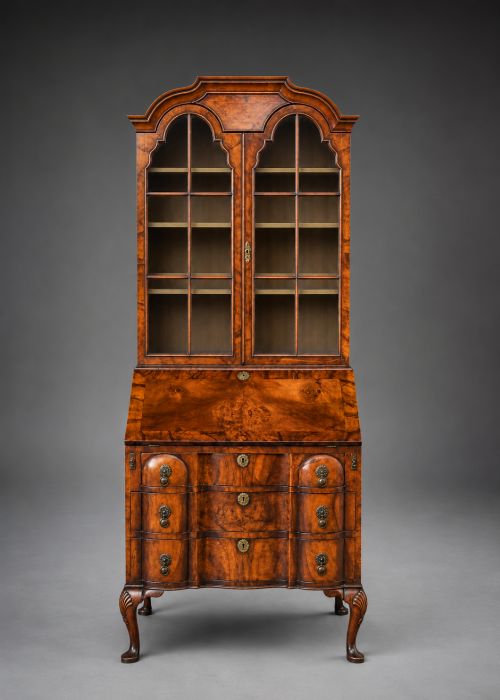


Walnut Double Dome Bookcase
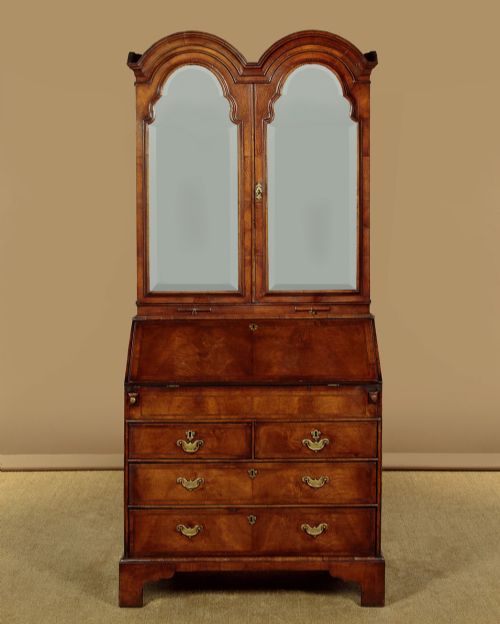
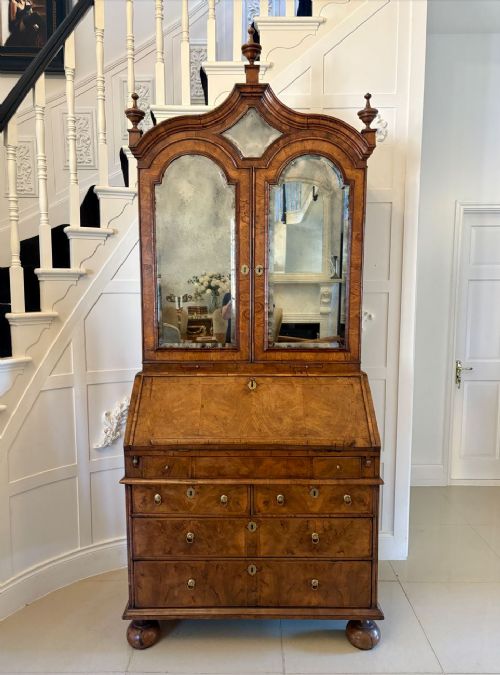
A walnut double dome bookcase is a commanding architectural cabinet that offers grand display space above a fitted desk, bringing rich grain and presence to a room.
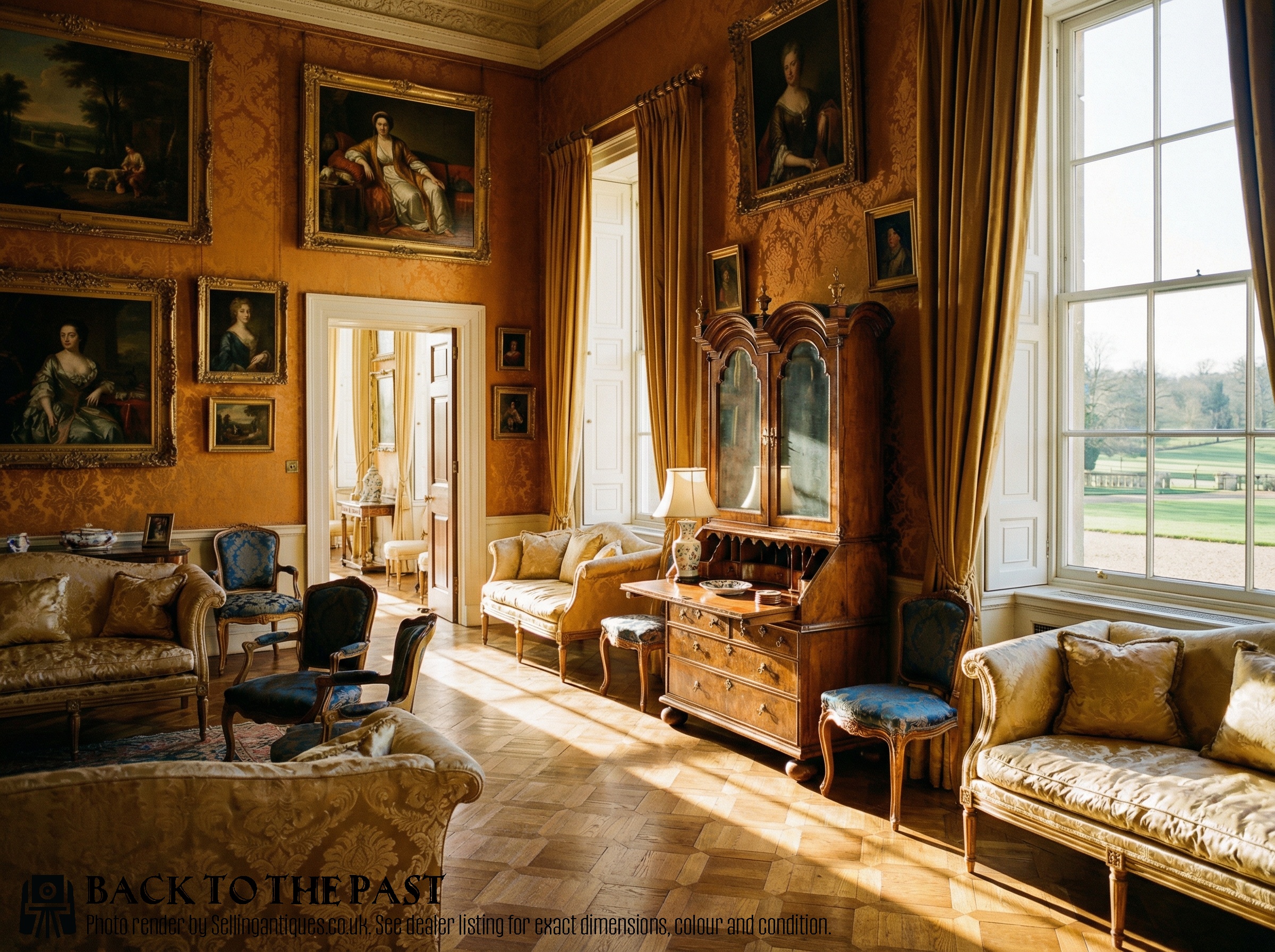
Walnut Double Dome Bookcase
When you search for a walnut double dome bookcase, you encounter tall architectural cabinets designed to store volumes and house a writing surface behind panelled doors. These pieces combine a stepped double-arched crest with bureau bases or tall display compartments, originating principally from the seventeenth and eighteenth centuries alongside later revivals.
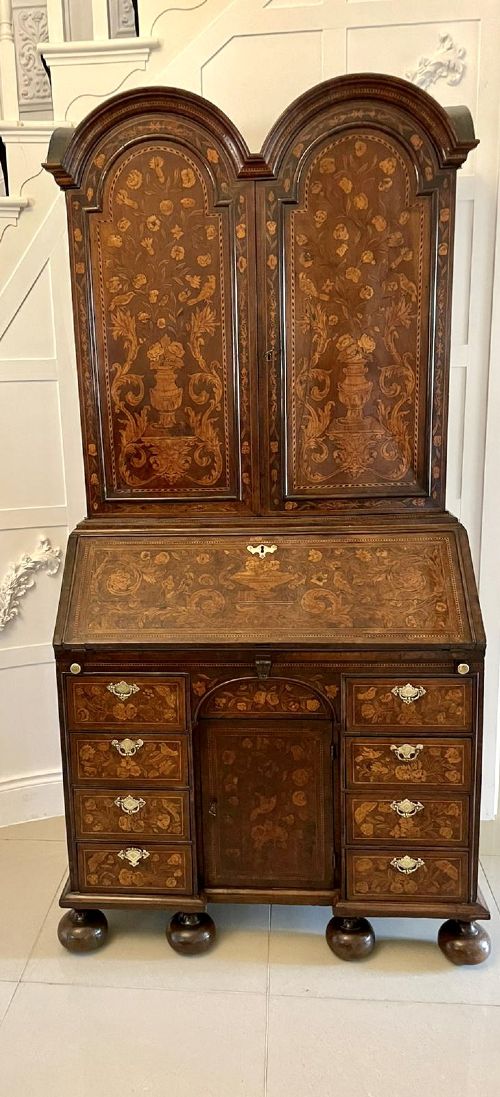
The versions most commonly met on this page span the Queen Anne, George I and William and Mary periods, constructed in richly figured timbers with arched upper cornices. Alongside genuine early examples, later Edwardian and twentieth-century interpretations appear, maintaining the traditional silhouette and fitted interior compartments.
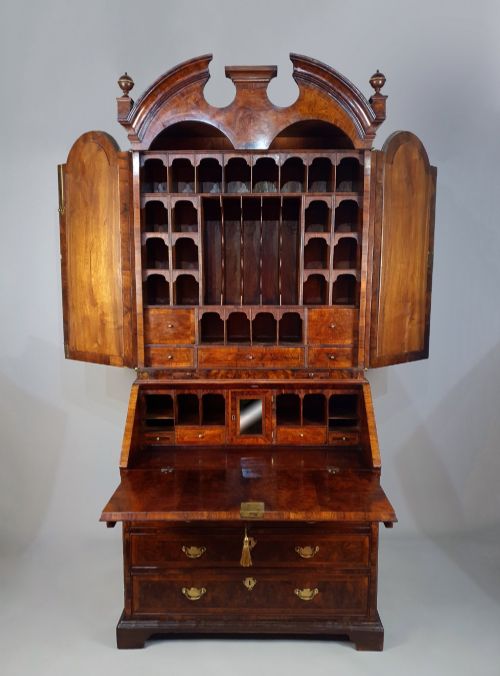
Makers constructed these cabinets in distinct sections, pairing a deep upper bookcase with a slant-front bureau or double-door cabinet base. This modular form allowed owners to transport heavy furniture up staircases and position imposing library furniture within panelled domestic interiors.
How they were made
Cabinetmakers constructed the primary carcasses of these bookcases using solid oak or pine, applying thin veneers of figured walnut and burr walnut to the visible exterior surfaces. They selected timber with dramatic grain patterns to create symmetrical book-matched panels across the doors and fall-front desks.
Craftsmen utilised delicate crossbanding and featherbanding in contrasting light and dark woods to frame the drawer fronts and door panels, adding linear definition. Elaborate pieces incorporated fruitwood and floral marquetry, setting intricate botanical designs into the walnut ground.
Glazing bars in the upper doors divided the glass into individual panes, securing them with traditional putty and fine mouldings. Brass hardware, including escutcheons and drop handles, completed the construction, fastened to the drawers with hand-cut pins.
Walnut Double Dome Bookcase Retail Price Guide 2026
Typical asking prices for walnut double dome bookcase among the pieces listed under this phrase on Sellingantiques today, from the lower quarter to the upper quarter. They describe what is for sale here now, not the wider market.
Listings feature walnut double dome bookcases spanning the seventeenth, eighteenth, and nineteenth centuries, alongside Edwardian and 1920s examples.
What varies in quality
The selection of timber dictates the visual impact, with top-tier examples displaying dense, highly figured burr walnut and meticulous grain matching across multiple panels. Lesser pieces rely on plainer stocks with minimal figure and less careful placement of veneer sheets.
Construction methods reveal the hand of the principal workshop, seen in the crispness of the double-arched mouldings and the precision of the dovetail joints within the internal drawers. Superior cabinets maintain structural integrity through thick secondary woods and well-fitted interior pigeonholes that operate smoothly without binding.
The Walnut Double Dome Bookcase Glossary
- Double dome
- A cabinet top featuring two parallel rounded arches rising from the cornice. This architectural roofline defines the most sought-after library furniture of the early eighteenth century.
- Burr walnut
- Wood taken from the gnarled growths of a walnut tree, yielding swirling, knotty grain patterns. Cabinetmakers sliced this timber into fine veneers for high-status furniture fronts.
- Featherbanding
- A decorative inlay technique using small strips of veneer cut diagonally to form a herringbone pattern. Craftsmen placed these borders around drawer perimeters and door edges.
- Marquetry
- Inlaid patterns formed by fitting contrasting pieces of wood veneer into a background sheet. Floral and botanical motifs frequently decorate walnut and fruitwood surfaces.
- Bureau bookcase
- A combination form uniting a slant-front writing desk with an enclosed set of upper bookshelves. The hinged flap opens to reveal small drawers and pigeonholes above the main case.
Walnut Double Dome Bookcase: Frequently Asked Questions
What is a double dome bookcase?
A double dome bookcase is a tall storage cabinet featuring twin arched sections at the very top, designed to house books and writing materials.
These pieces typically combine upper glass-fronted display shelves with a lower bureau or cabinet base, creating a substantial focal point for a library or study.
How do I date an antique walnut bookcase?
Dating relies on examining construction techniques, timber choices, and hardware styles alongside the overall proportions of the piece. Early eighteenth-century examples feature solid secondary woods like oak, hand-cut dovetails, and specific cornice mouldings that evolved over subsequent revivals.
Comparing the grain patterns, veneer thicknesses, and lock mechanisms helps distinguish seventeenth and eighteenth-century originals from Edwardian or later interpretations.
Where were these bookcases placed?
These imposing cabinets stood in the principal reception rooms, libraries, and private studies of large houses and town residences. Their grand scale suited high ceilings and wealthy domestic interiors where owners displayed valued book collections.
The lower bureau section provided a private writing surface for correspondence and household management, keeping documents secured behind locked doors.
How do I care for antique walnut furniture?
Maintaining walnut furniture requires stable room humidity and protection from direct sunlight to prevent the veneers from drying out or fading. Gentle cleaning with a soft, dry cloth preserves the finish without harming the historic surface.
Avoiding extreme temperature fluctuations prevents the oak and pine carcassing from expanding and putting pressure on the delicate walnut veneers.