

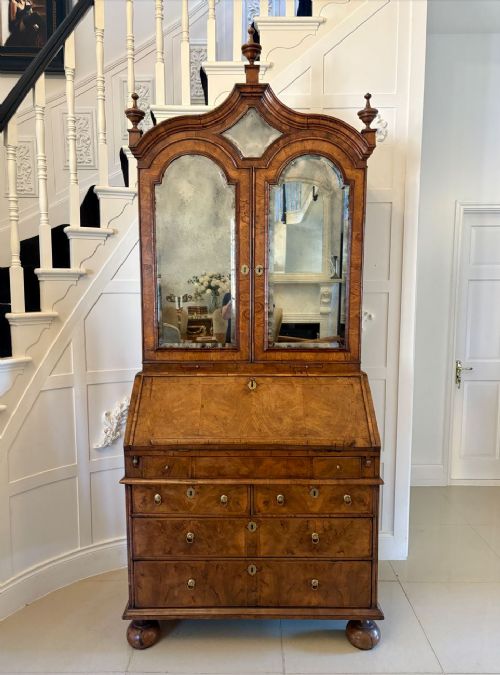


Georgian Double Dome Bureau
A georgian double dome bureau is a commanding cabinet piece designed for writing and storage, bringing architectural grandeur and rich figured timbers into a room.
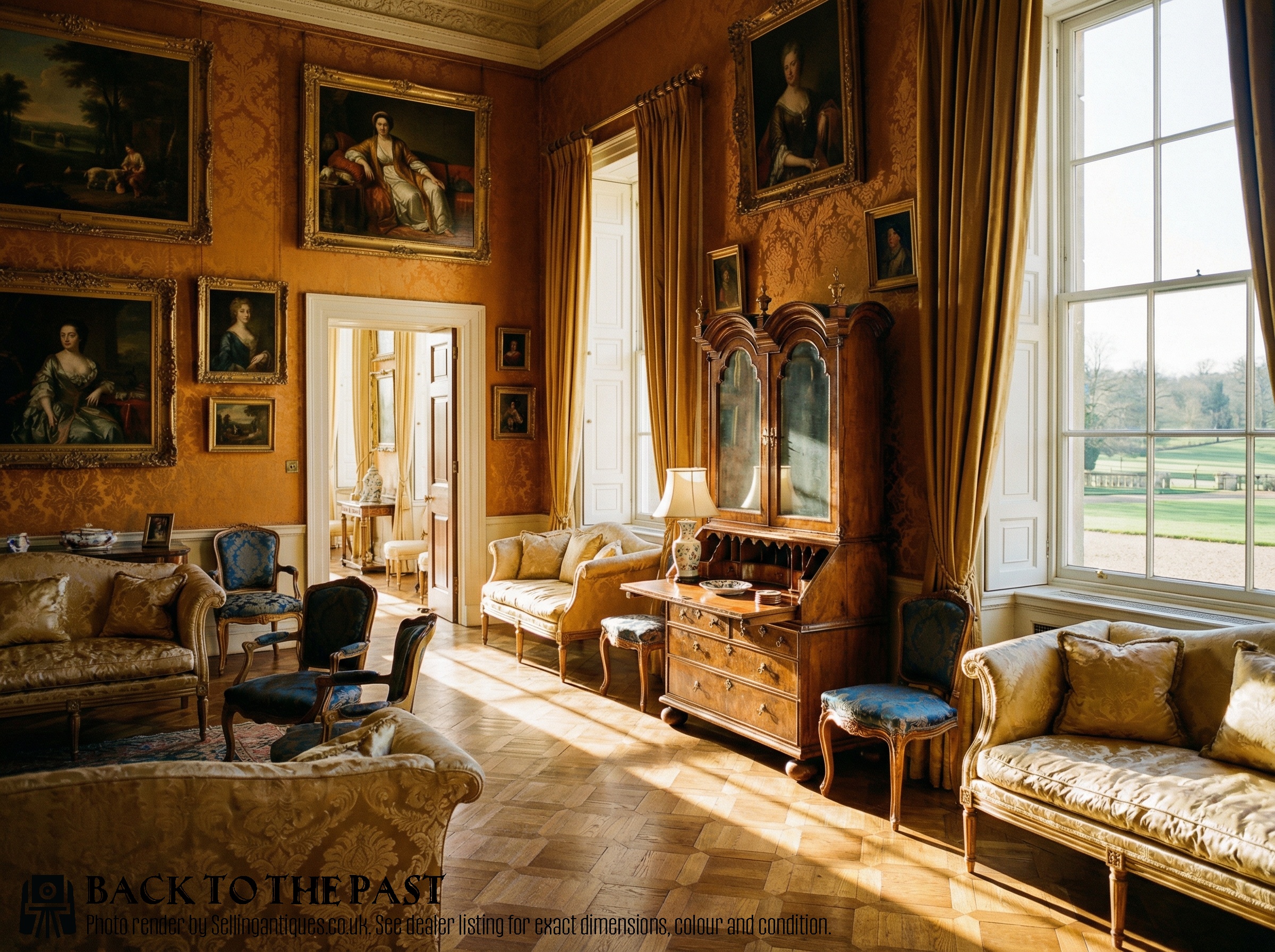
Georgian Double Dome Bureau
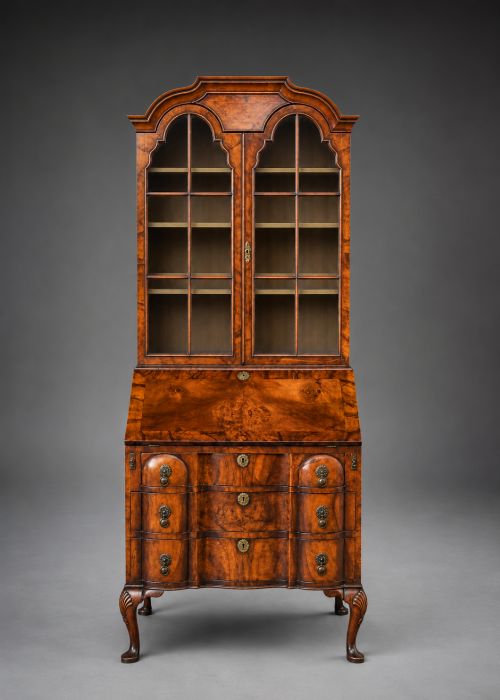
A georgian double dome bureau combines a sloping writing flap with a tall upper bookcase enclosed by arched or rounded twin doors. These sophisticated pieces emerge primarily from the early eighteenth century during the reigns of Queen Anne, George I, and George II, alongside later revival interpretations.
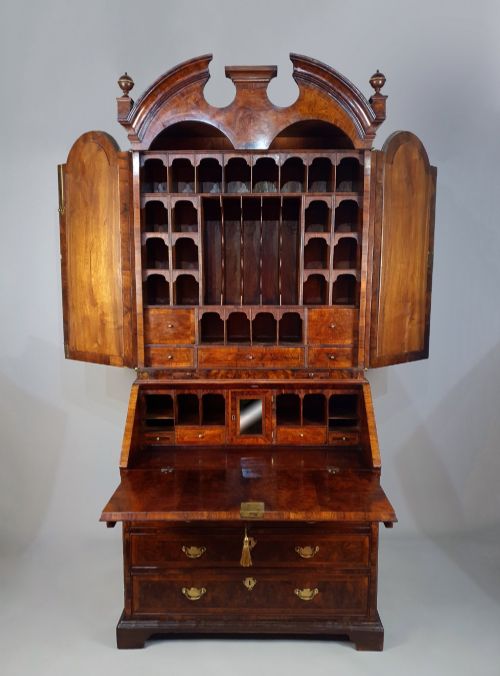
The layout typically positions fitted pigeonholes and small drawers behind the fall-front desk, sitting beneath towering upper sections defined by arched cornices. Bureau bookcases and bureau cabinets appear frequently on the floor, showcasing substantial proportions designed for serious domestic administration.
Materials and construction
Cabinetmakers constructed these pieces using solid oak for internal framing and drawer carcasses, applying figured burr walnut veneers across the primary exterior surfaces. Featherbanding and crossbanding frequently border the drawer fronts and door panels to frame the grain.
Upper doors integrate glass panes or mirror glass within wooden mullions to lighten the heavy timber facade. Brass hardware, including drop handles and escutcheons, secures the drawers and fall-front desk while adding metallic contrast to the dark wood.
Georgian Double Dome Bureau Retail Price Guide 2026
Typical asking prices for georgian double dome bureau among the pieces listed under this phrase on Sellingantiques today, from the lower quarter to the upper quarter. They describe what is for sale here now, not the wider market.
Many bureau interiors conceal tiny secret drawers behind pigeonholes, designed for hiding private correspondence from prying eyes.
Judging quality in walnut furniture
The value and distinction of a piece rest upon the choice of burr walnut veneer and how symmetrically the grain patterns match across the facade. Exceptional examples display continuous, lively figuring that wraps around the curves of the double dome top and falls uniformly down the desk front.
Structural integrity also dictates worth, separating period originals from later Edwardian and nineteenth-century interpretations that emulate the early eighteenth-century aesthetic. Original mirror glass plates, intact brasses, and untouched internal fitments elevate an example above those altered over time.
The Georgian Double Dome Bureau Glossary
- Double dome
- An upper cabinet cornice featuring two arched or rounded projections side by side. This architectural roofline defines the silhouette of the tallest case furniture from the early eighteenth century.
- Burr walnut
- Timber sliced from the gnarled growths of a walnut tree, yielding intricate swirling grain patterns. Cabinetmakers selected these highly decorative veneers for the most prominent display surfaces.
- Featherbanding
- Narrow strips of veneer laid diagonally to form a herringbone pattern around the borders of drawer fronts and panels. This delicate inlay frames the primary wood panels.
- Bureau bookcase
- A combination of a slope-front writing desk and an upper shelving cabinet with doors. These dual-purpose pieces served as both working desks and libraries.
Georgian Double Dome Bureau: Frequently Asked Questions
What is a double dome bureau?
A double dome bureau is a tall piece of case furniture featuring a sloping writing flap below an upper bookcase crowned with two arched domes.
These cabinets provide enclosed shelving above and a fitted writing compartment below, making them substantial focal points for early eighteenth-century interiors.
How do I date a walnut bureau?
Dating relies on examining the construction methods, secondary timbers like oak, and the specific characteristics of the walnut veneers and brass hardware.
Period pieces from the early eighteenth century display distinct cabinetmaking traits that differ from later Edwardian and nineteenth-century revival interpretations.
Are these pieces made of solid walnut?
Most pieces utilise figured burr walnut veneers applied over solid oak or pine carcasses rather than being carved from solid walnut throughout.
This technique protected the expensive and decorative timber while ensuring structural stability for the tall upper bookcase sections.
How should I care for burr walnut?
Keep walnut furniture away from direct sunlight and steady heat sources to prevent the delicate veneers from drying out and lifting.
Applying occasional appropriate wax polish helps maintain the lustre of the timber and preserves the historical surface finish.