
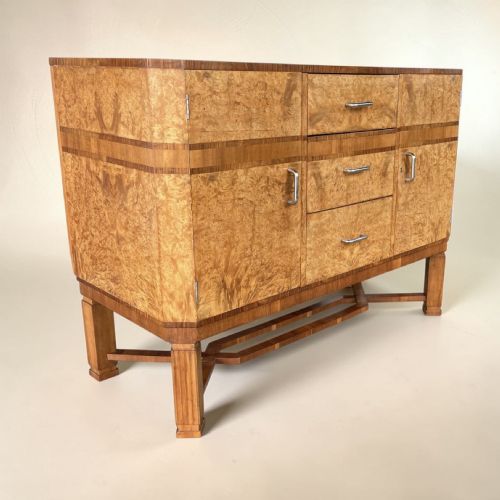
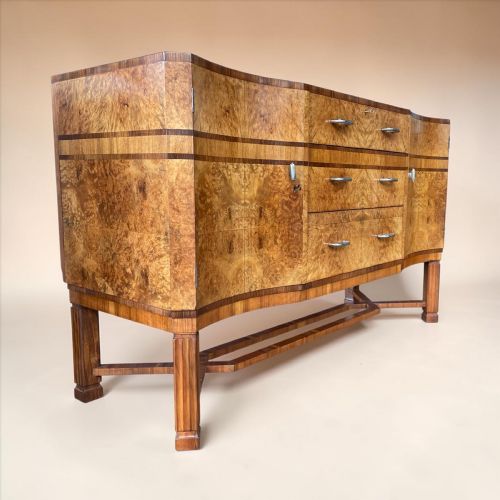
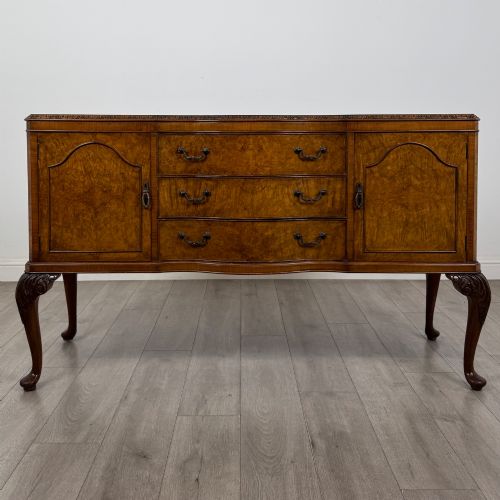
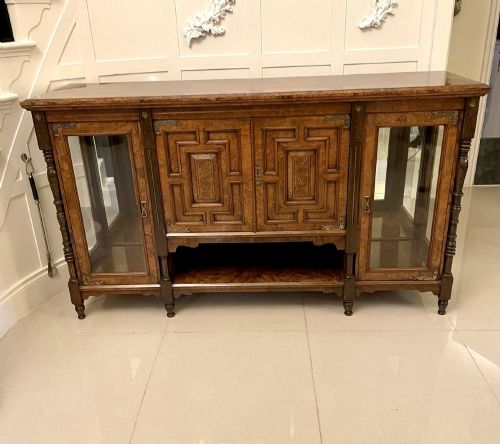

Walnut Dining Credenza
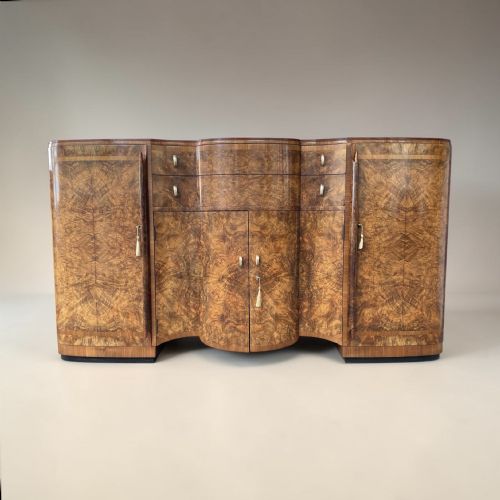
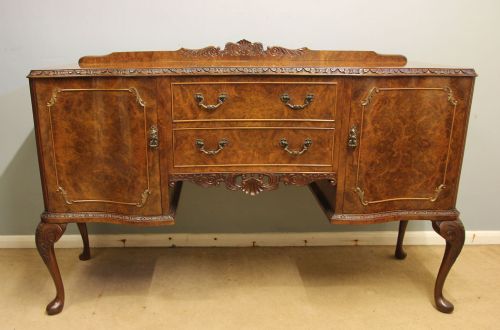
These walnut dining credenza pieces bring deep timber grain and substantial presence to a room, serving as both storage and focal point.
Walnut Dining Credenza
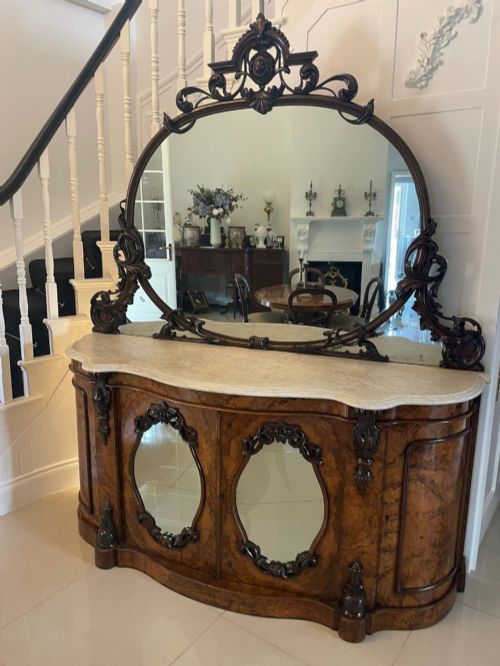
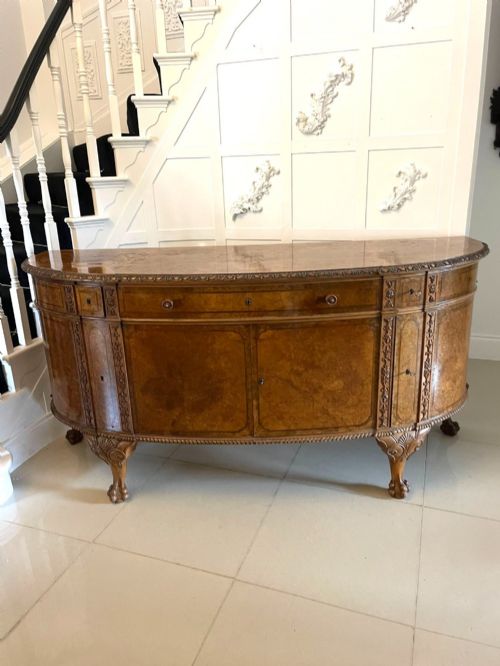
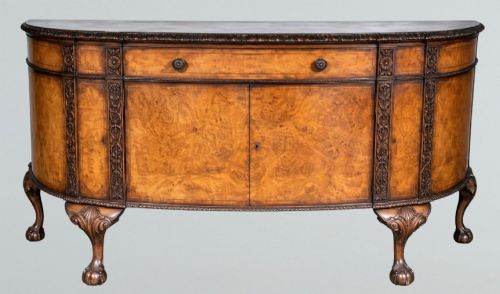
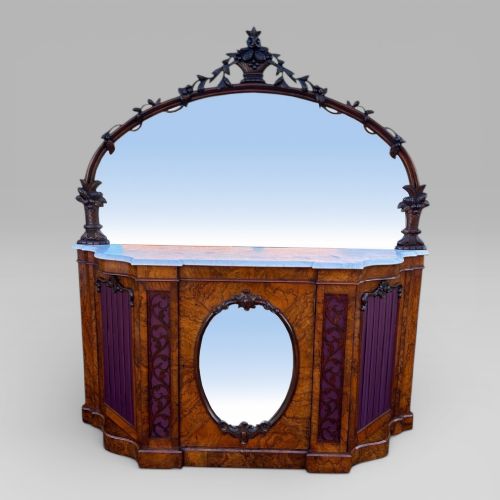
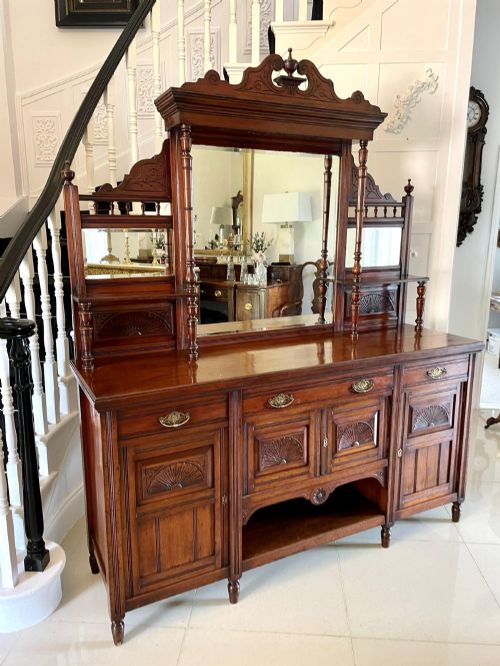
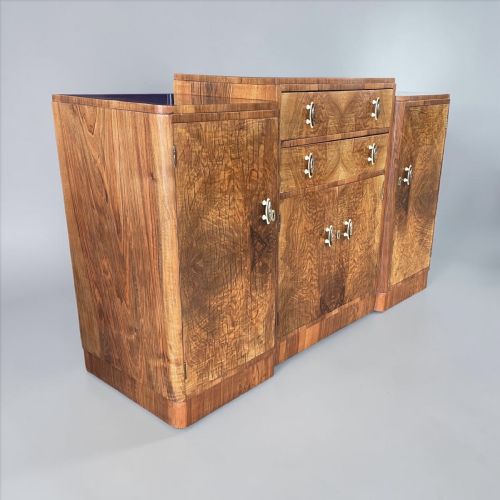
A walnut dining credenza functions as a substantial serving piece and storage cabinet within the dining room, drawing the eye through its rich timber surfaces. When searching for this phrase, buyers encounter forms ranging from Victorian mirror-backed designs to streamlined Art Deco cabinets.
The pieces listed here span periods from the mid nineteenth century through the Edwardian era and into the Art Deco epoch of the nineteen-thirties. Sideboards, buffets and servers appear alongside formal credenzas, constructed to hold dining silver, linen and glassware.
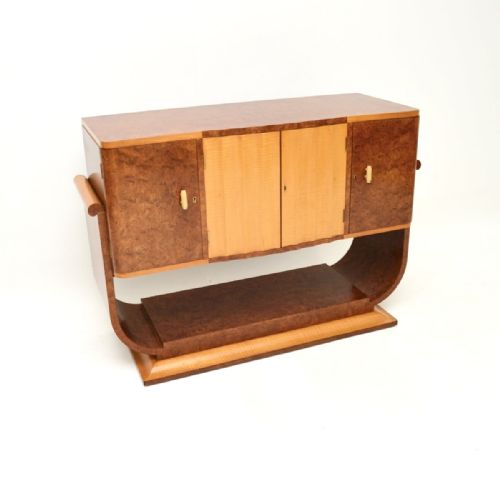
Victorian examples often feature carved mirror backs and marble tops, whereas nineteen-thirties pieces favour geometric lines and figured veneers. Each variant offers a distinct architectural response to the requirements of dining room hosting across different decades.
Distinctions in craftsmanship
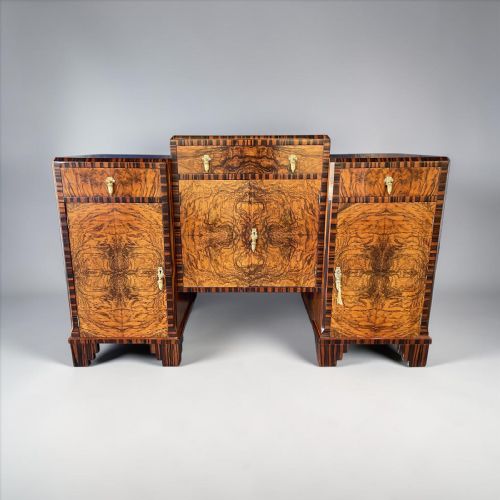
Quality reveals itself in the selection of the timber veneers, where book-matched burr walnut creates a symmetrical, balanced pattern across the facade. Superior pieces display crisp carving, tight joinery and original brass mounts rather than later replacements.
The integrity of the internal drawers and the weight of the marble or timber tops separate standard utility furniture from exceptional cabinet work produced by noted firms.
A twelve-piece cutlery set once travelled alongside a burr walnut sideboard, ready for immediate dinner party service.
Maurice Adams·Hille·Harry and Lou Epstein·Hamptons of Pall Mall London
The Walnut Dining Credenza Glossary
- Burr walnut
- A veneer taken from the knotted growth of a walnut tree, yielding a swirling, highly decorative grain pattern. Cabinet makers prize this material for principal door panels and drawer fronts.
- Credenza
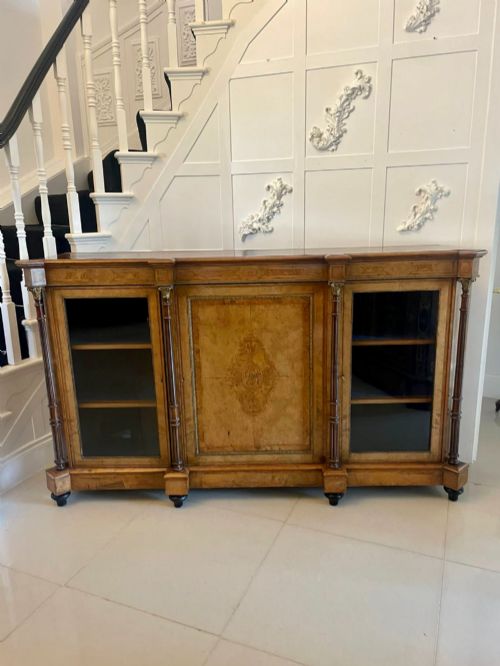
- A low dining room cabinet traditionally used for displaying silver and serving food. Victorian versions frequently incorporated glazed central cupboards and mirrored backs.
- Marquetry
- The art of applying pieces of veneer to a structure to form decorative patterns or pictures. Craftsmen utilise different coloured woods to achieve tonal contrast.
- Crossbanding
- A narrow strip of veneer laid around the border of a panel with the grain running at right angles to the centre. This technique frames the primary timber surface.
- Breakfront
- A piece of furniture whose central section projects forward from the flanking outer sections. This architectural arrangement creates depth and shadow across the frontage.
Walnut Dining Credenza: Frequently Asked Questions
How do I style a walnut credenza in a modern dining room?
Pair the rich timber tones with neutral walls and simple ceramics to let the burr grain stand out as a focal point. Introduce metallic accents through lighting that complement the original brass hardware.
Keep the surface uncluttered by utilising the internal cabinet space for dining ware and linens. A single large mirror or piece of art hung above the cabinet ties the arrangement together.
How should I care for antique walnut wood?
Maintain the timber by dusting regularly with a soft, dry cloth and applying a quality beeswax polish periodically to nourish the grain. Avoid placing the piece in direct sunlight or near heat sources to prevent the veneer from drying out.
Keep marble tops sealed against acidic spills and lift objects rather than sliding them across the wooden surface to protect the finish.
How can I tell a Victorian credenza from an Art Deco piece?
Victorian pieces from the mid to late nineteenth century display ornate carvings, mirror backs, heavy mouldings, and often marble tops. They lean towards revival styles like Gothic or Renaissance.
Art Deco pieces from the nineteen-thirties feature clean, geometric lines, symmetrical burr walnut and sycamore veneers, and minimal surface ornamentation, reflecting modernism.