

Walnut Dining Buffet
A walnut dining buffet brings rich timber grain and substantial storage to the room, anchoring the dining space with enduring presence.
Walnut Dining Buffet
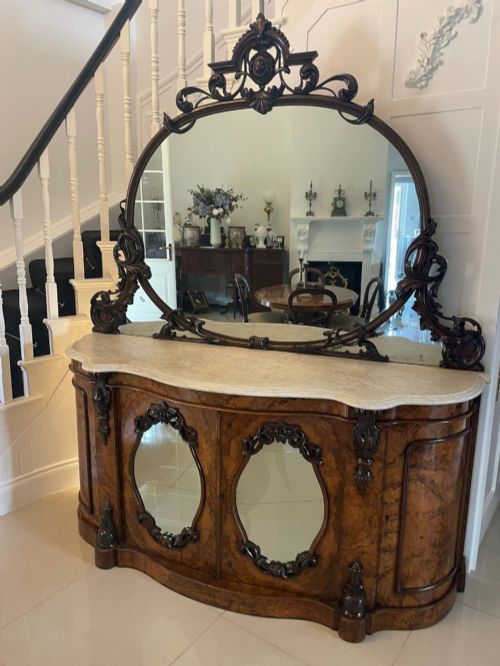
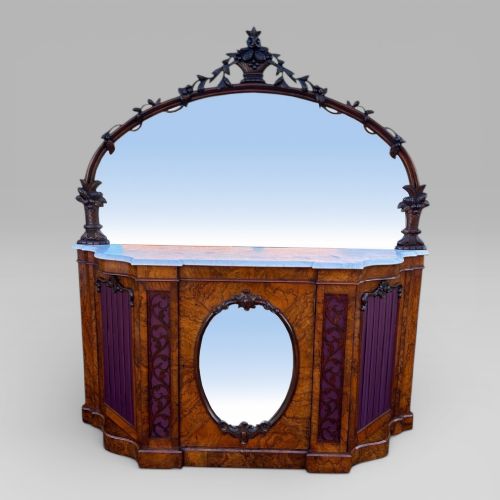
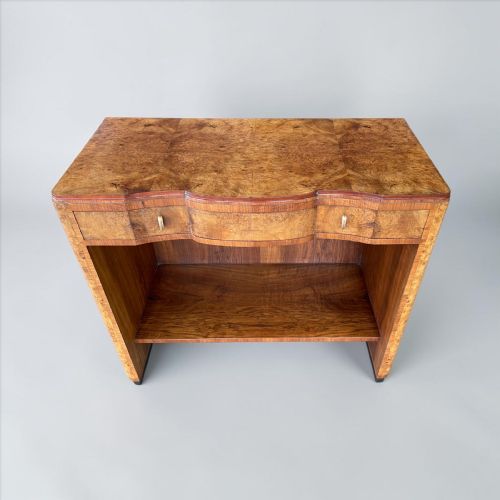
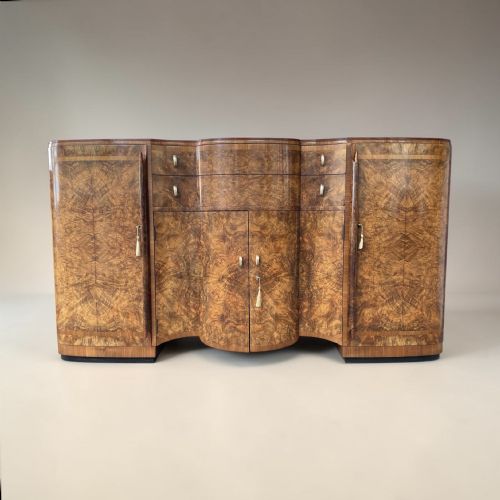
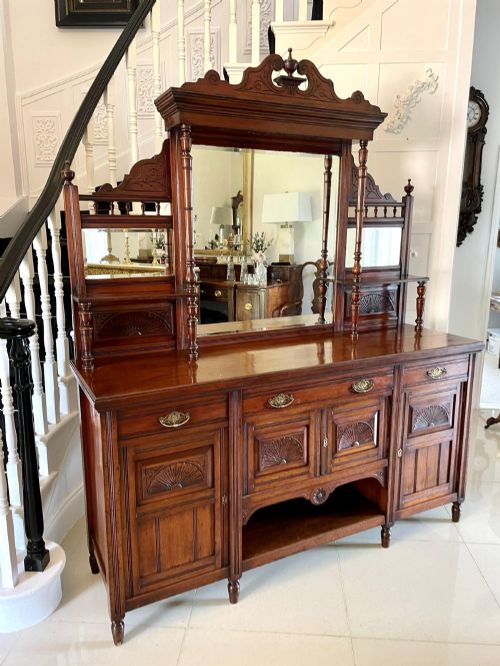
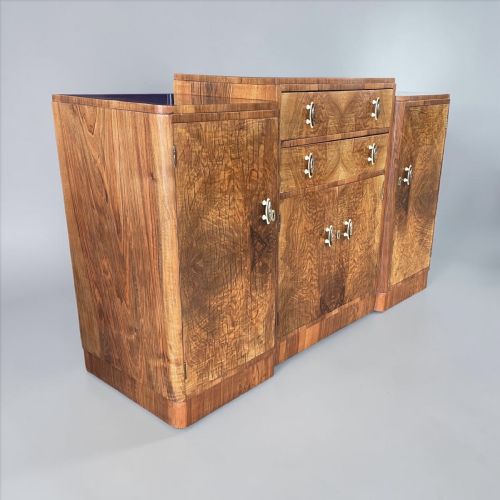
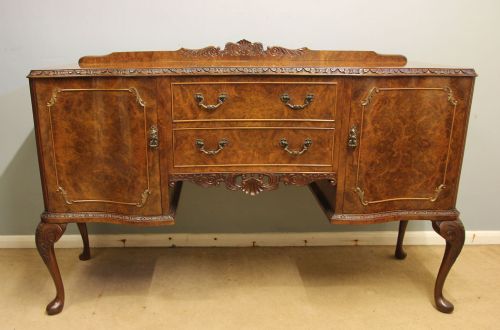
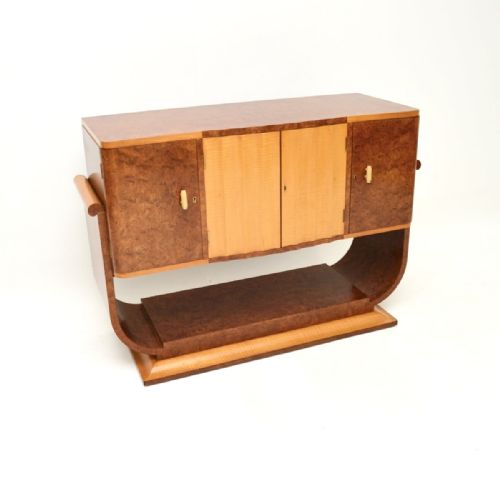
A walnut dining buffet encompasses low storage units, serving tables, and credenzas designed to hold tableware and assist with dining service. The phrase covers a span of forms from Victorian mirror-backed sideboards to streamlined Art Deco server cabinets.
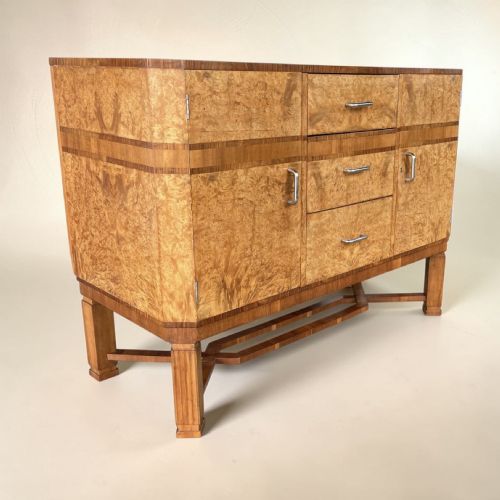
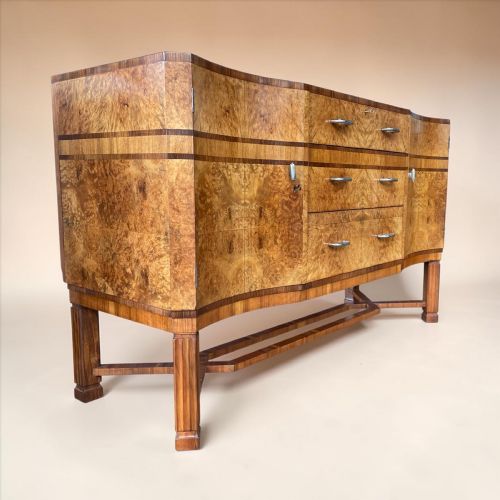
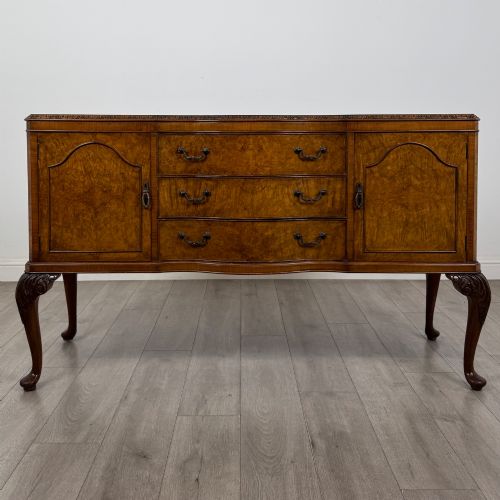
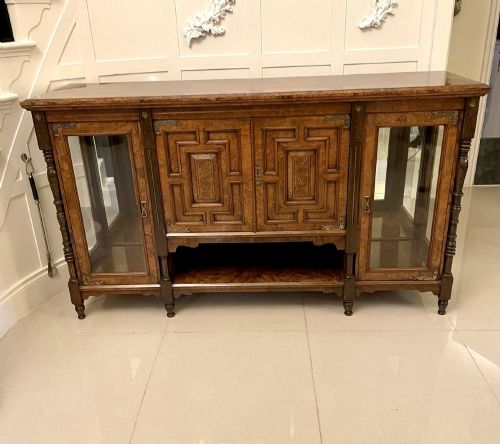
Victorian and Edwardian iterations tend to feature carved details, marble tops, or inlaid motifs, whilst pieces from the nineteen-thirties lean towards geometric lines and figured veneers. Most examples on this page date from the nineteenth and twentieth centuries.
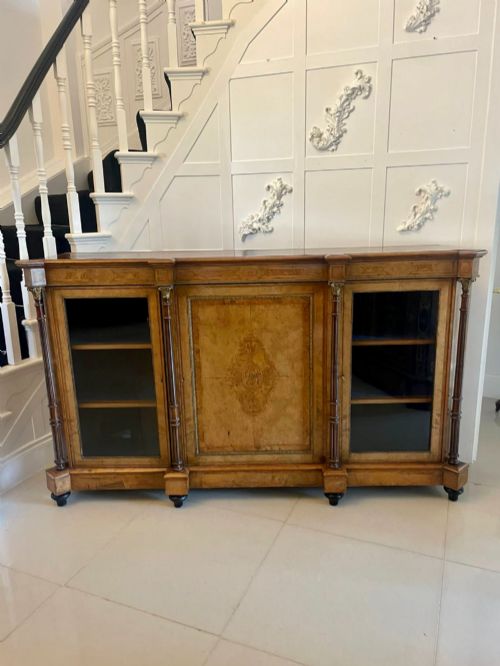
Makers such as Hille and Epstein appear alongside unassigned pieces, ranging from compact servers to large breakfront configurations. Buyers select these items to suit formal dining rooms and contemporary interiors alike.
Materials and construction methods
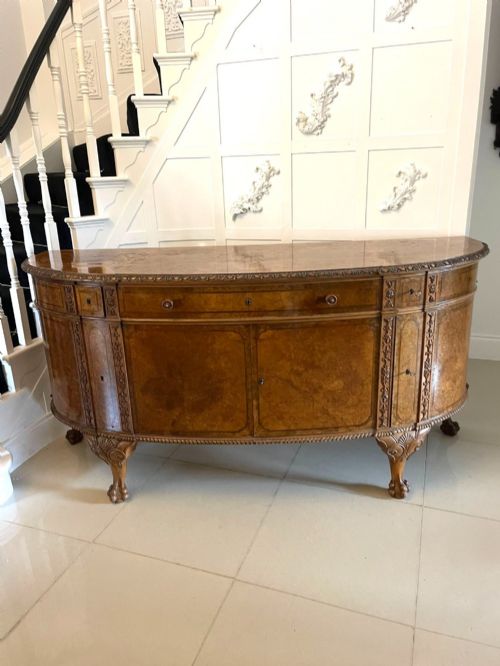
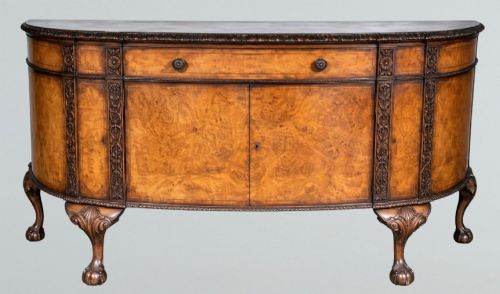
Makers utilised solid walnut and walnut veneer, frequently selecting burr walnut for its complex, swirling grain patterns. Sycamore, oak, and hardwood appear as secondary timbers or contrasting banding on twentieth-century pieces.
Decorative embellishments include brass hardware, glass panels, mother-of-pearl inlay, and marble tops. Carving, marquetry, and mirror backs are common on nineteenth-century designs, whilst later server cabinets rely on the natural grain of the wood for visual impact.
Listings feature walnut dining buffet pieces spanning the Victorian, Edwardian, and Art Deco eras, constructed from solid walnut, burr walnut, and marble.
Factors of distinction
The selection of the timber veneer dictates much of the visual appeal, with heavily figured burr walnut commanding attention through its depth and movement. Superior examples exhibit precise matching of grain patterns across doors and drawer fronts.
Construction standards are evident in the crispness of carved wooden details, the integration of brass fittings, and the stability of large mirror backs or marble slabs. Signed pieces by established firms demonstrate higher craftsmanship in joinery and internal cabinetry.
Maurice Adams·Hille·Epstein·Harry and Lou Epstein·Hamptons of Pall Mall London
The Walnut Dining Buffet Glossary
- Credenza
- A low storage cabinet, often featuring glass doors or cupboards, used for holding dining accessories. Victorian versions frequently incorporate mirrored backs.
- Marquetry
- The art of applying pieces of veneer to a structure to form decorative patterns and pictures. It utilises various wood types to create contrast.
- Dumb waiter
- A tiered serving table used to hold dishes and cutlery near the dining table. These pieces minimise the need for constant service during meals.
- Breakfront
- A piece of furniture where the central section projects forward from the side sections. This layout adds architectural depth to large sideboards.
Walnut Dining Buffet: Frequently Asked Questions
How do I style a walnut dining buffet?
Pair the rich timber tones with neutral wall colours to let the grain pattern stand out in the room. Place ceramics, lamps, or serving dishes on top to balance practical storage with display.
Keep surrounding furniture in complementary wood tones or contrasting painted finishes. The substantial presence of these pieces works well as a focal point in both traditional and modern dining spaces.
What is the difference between a buffet and a sideboard?
Buffets generally stand higher and focus on surface space for serving food during meals. Sideboards often incorporate more enclosed cupboard and drawer storage for dining paraphernalia.
In practice, historical makers and modern listings frequently use the terms interchangeably for similar dining room furniture.
How do I care for walnut veneer?
Dust the surface regularly with a soft, dry cloth to prevent dirt accumulation on the delicate timber. Avoid placing the piece in direct sunlight or near heat sources to protect the veneer from drying out.
Apply a quality beeswax periodically to nourish the wood and maintain its natural sheen. Keep moisture away from unsealed joints and wipe up spills immediately.
How do I date an antique walnut buffet?
Examine the hardware, construction techniques, and overall style to narrow down the period. Victorian pieces often display heavy carving and mirror backs, whilst nineteen-thirties items favour clean lines and geometric burr walnut veneers.
Maker signatures or stamps inside drawers can provide a precise attribution to a specific firm and decade.