



Walnut Desk Casket
These walnut desk caskets are tactile, beautifully figured receptacles designed to keep correspondence and small valuables secure on a writing table.

Walnut Desk Casket
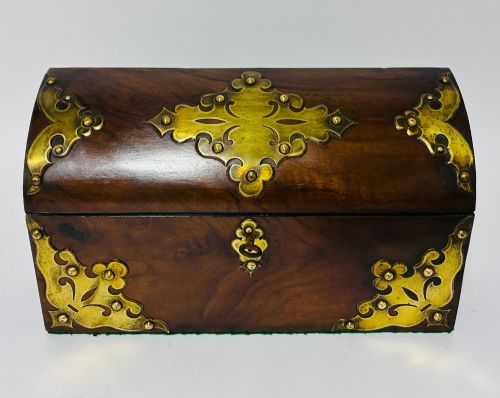
A walnut desk casket is a portable container designed for letters, stationery, and small personal valuables, appearing primarily in Victorian iterations from the nineteenth century alongside earlier seventeenth-century forms. These pieces serve as functional tabletop storage, often taking the shape of stationery boxes, jewellery boxes, or small table cabinets.
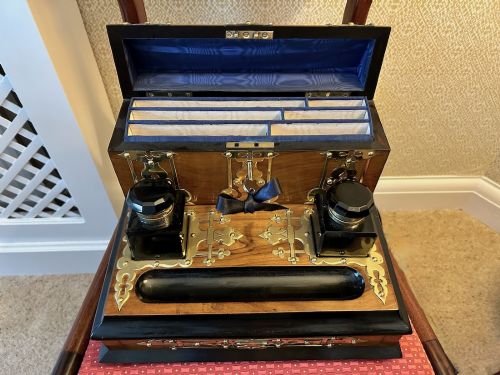
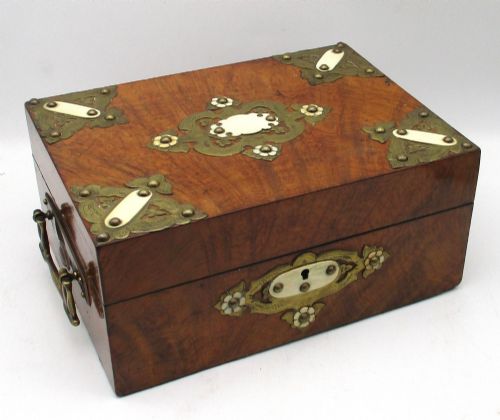
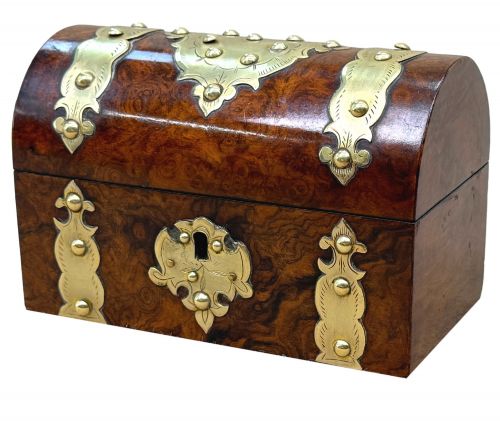
The versions most frequently encountered on this page date from the mid to late nineteenth century and utilise rich walnut timbers. They range from dome-top stationery boxes to brass-mounted designs and marquetry inlaid table boxes.
What Varies in Quality
Quality reveals itself in the choice of timber veneer, particularly the depth and movement of the burr walnut figuring across the lid and panels. Superior examples display careful book-matching and seamless integration of brass mounts.
The complexity of internal fittings and decorative techniques, such as marquetry inlay or Tunbridge ware details, separates standard boxes from finer productions. Intricate hand-painted porcelain plaques and well-preserved interior linings also elevate the standing of a piece.
Walnut Desk Casket Retail Price Guide 2026
Typical asking prices for walnut desk casket among the pieces listed under this phrase on Sellingantiques today, from the lower quarter to the upper quarter. They describe what is for sale here now, not the wider market.
One stationery box comes complete with hand-painted porcelain, proving that Victorian letter writers appreciated a splash of colour with their ink.
The Walnut Desk Casket Glossary
- Burr walnut
- A figured wood grain obtained from the wart-like growths on walnut trees, prized for its swirling patterns. It is sliced into thin veneers for decorative cabinetwork.
- Stationery box
- A tabletop cabinet fitted with dividers and slots designed specifically for holding writing paper, envelopes, and correspondence. These boxes often feature sloping lids or folding fronts.
- Marquetry
- The art of applying small pieces of veneer to a structure to form decorative patterns and pictures. It utilises various wood types to create tonal contrast on the surface.
- Table cabinet
- A small freestanding piece of furniture designed to sit on a desk or table rather than the floor. It typically includes doors or drawers rather than a simple hinged lid.
- Tunbridge ware
- A specific type of decorative woodwork characterised by small mosaic patterns made from many tiny blocks of naturally coloured woods. Originating in Kent, it decorated the surfaces of small boxes.
Walnut Desk Casket: Frequently Asked Questions
What fits inside a walnut desk casket?
These boxes were traditionally used to store folded letters, writing paper, envelopes, and small desktop accessories like seals and inks. Many internal layouts include dedicated slots and partitions specifically sized for correspondence.
Today, they suit modern stationery, fountain pens, or personal trinkets. The fitted compartments keep smaller items orderly on a surface.
How do I date a walnut desk casket?
Dating relies on construction methods, hardware styles, and timber choices. Mid to late nineteenth-century examples often feature brass mounts, dome tops, and walnut veneers characteristic of the Victorian era.
Earlier pieces from the seventeenth century display heavier timber construction and simpler joinery without mass-produced hardware. Looking at internal linings and hinges helps narrow the manufacturing period.
Are these boxes meant for travel?
While portable, these caskets are primarily designed as static tabletop accessories for the desk or study rather than luggage. Their brass mounts and secure locks protect contents during movement around a home.
They function best as permanent fixtures on a writing table or cabinet. Frequent travel can stress the delicate veneers and interior fittings.
What is burr walnut?
Burr walnut comes from a tree growth that produces highly distorted, swirling grain patterns full of knots and eyes. Cabinetmakers slice this timber into thin sheets to veneer prominent surfaces like box lids.
This material creates a highly decorative finish that reflects light differently depending on the angle. It was a favourite choice for high-end Victorian decorative objects.