



Walnut Corner Etagere
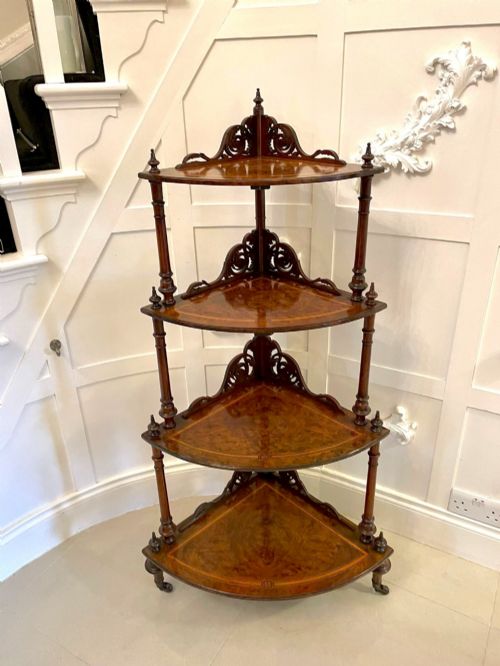
A walnut corner etagere brings tiered display space and rich nineteenth-century timber into an unused room angle.
Walnut Corner Etagere
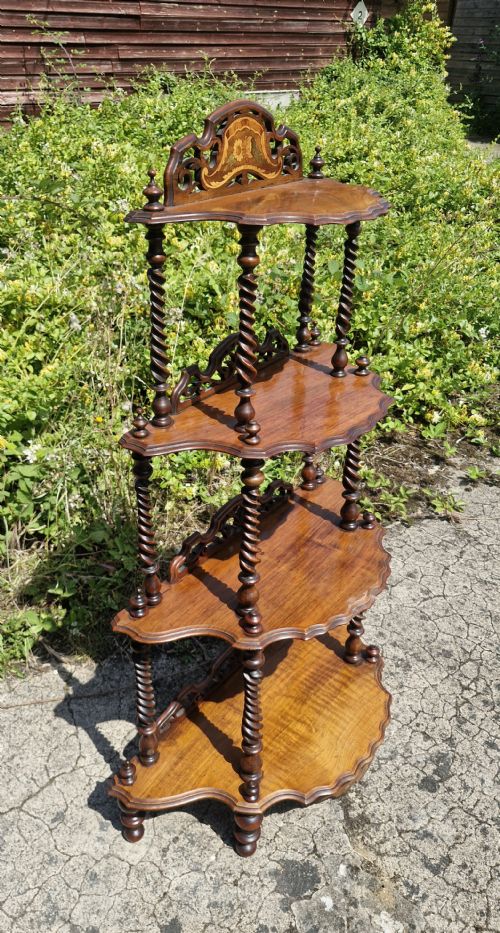
A walnut corner etagere is a multi-tiered display stand designed to fit snugly into the corner of a room, saving floor space while offering multiple levels for ornaments and books. When searching for a walnut corner etagere, you encounter tiered corner furniture dating predominantly from the Victorian era.
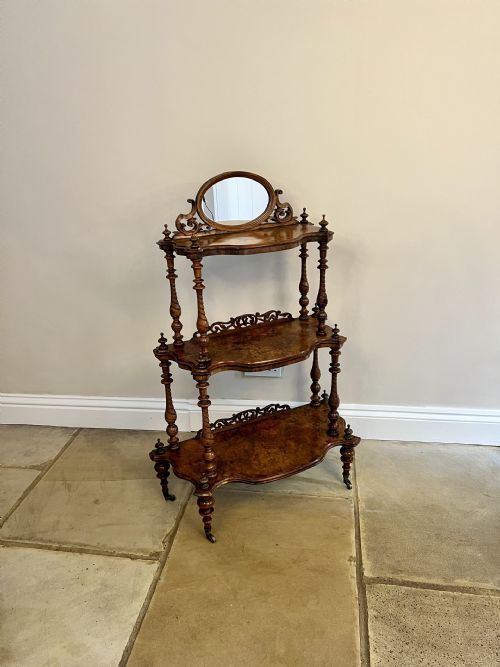
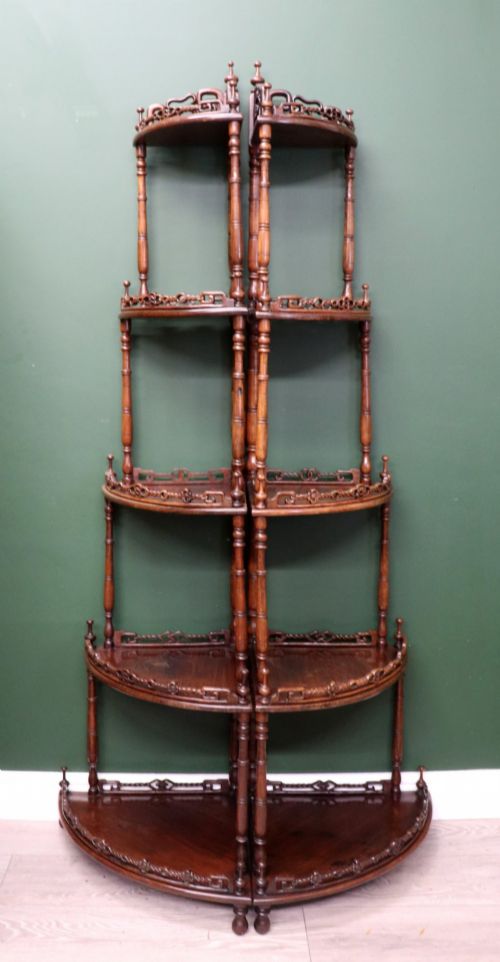
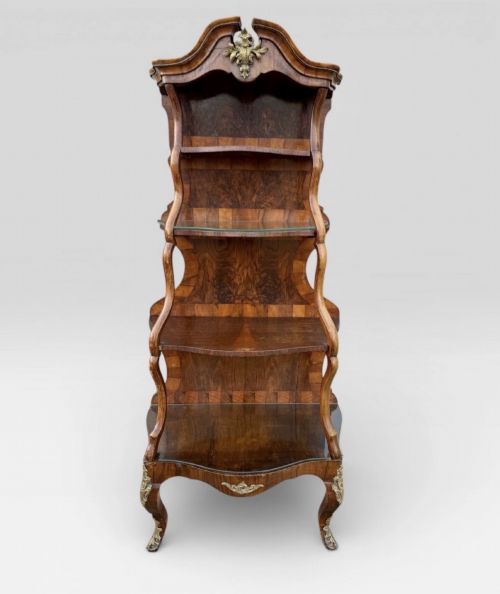
Makers and manufacturers utilised walnut, burr walnut, and mahogany, frequently incorporating inlaid details and glass elements. These stands appear in forms ranging from three-tier corner units to larger six-tier displays and demi-lune display console tables.
How they were made
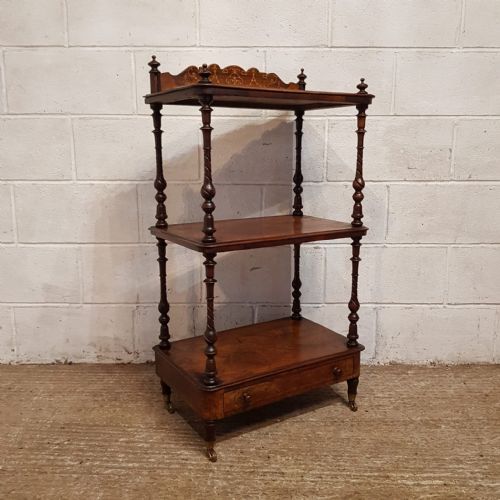
Cabinet makers constructed these etageres using solid walnut and figured burr walnut veneers over secondary timbers such as mahogany. Surfaces often feature marquetry, wood inlay, boxwood inlay, and satinwood detailing to accentuate the grain of the primary timber.
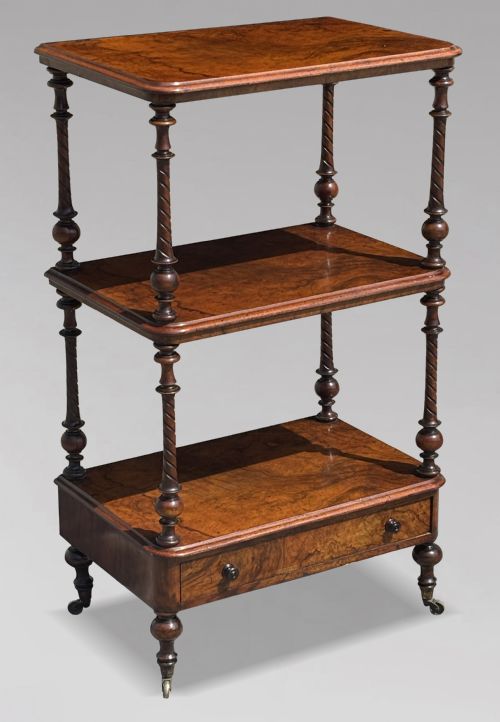
Structural embellishments relied on brass, gilt metal, and carved elements including hollow barley twist supports. Glazed components and tiered shelving frames were joined to create sturdy vertical display units capable of holding heavy porcelain and decorative objects.
Listings feature walnut, burr walnut, mahogany, and satinwood across Victorian, Edwardian, and Rococo Revival styles spanning the mid to late nineteenth century.
What varies in quality
Quality in a nineteenth-century corner etagere rests on the choice of timber and the execution of decorative details. Pieces featuring highly figured burr walnut veneers, meticulous boxwood and satinwood inlay, and finely turned or carved supports sit at the upper end of the range.
Exhibition quality pieces demonstrate superior joinery in their multi-tiered structures, maintaining stability across four to six shelves without relying on crude fasteners. The crispness of the Rococo Revival carving and the precision of the marquetry inlay distinguish standard country house furnishings from finer salon pieces.
The Walnut Corner Etagere Glossary
- Etagere
- A piece of furniture consisting of a set of open shelves for displaying small objects or ornaments. These tiered stands were popular in nineteenth-century drawing rooms for showing off porcelain and decorative arts.
- Burr walnut
- A prized timber veneer obtained from the warted excrescences of walnut trees, showing swirling, highly decorative grain patterns. It was frequently selected for the top surfaces and doors of high-status Victorian furniture.
- Marquetry
- The art and craft of applying pieces of veneer to a structure to form decorative patterns and pictures. Craftsmen utilised contrasting woods like boxwood and satinwood within walnut panels.
- Whatnot
- A multi-tiered movable set of shelves used for storage or display. The term emerged in the nineteenth century for these open shelving units.
- Demi-lune
- A half-moon shape used for tables and console stands designed to sit flat against a wall or corner. This curved profile softens the angles of a room.
- Barley twist
- A type of column turning resembling the twists of a barley sugar stick. It adds textural depth to the vertical supports of display stands.
Walnut Corner Etagere: Frequently Asked Questions
What is a walnut corner etagere?
A walnut corner etagere is a tiered open shelving unit made of walnut designed to fit into the corner of a room. It provides vertical display space for ornaments while utilising otherwise empty wall junctions.
These pieces typically date from the Victorian period and feature multiple shelves supported by turned columns or carved uprights.
How were these corner shelves used?
In nineteenth-century homes, these stands served as display furniture for ceramics, small sculptures, books, and decorative objects. They kept prized ornaments visible and organised in drawing rooms and parlours.
The open tiers allowed light to pass through while keeping collections elevated off the floor.
How do I style an etagere at home?
An etagere works best in a neglected room corner where it can add architectural interest and vertical display capacity. Balance heavier ceramic or glass objects on lower shelves while keeping lighter items near the top.
Allow negative space around objects so the burr walnut grain and inlaid details remain visible.
How do I date a Victorian walnut etagere?
Dating relies on stylistic clues, construction methods, and recorded dates within specific decades of the nineteenth century. Pieces from the 1850s and 1860s often exhibit Rococo Revival curves and rich burr walnut veneers.
Later Victorian and Edwardian examples from the 1880s and 1890s frequently incorporate more linear inlaid designs and varying tier counts.