

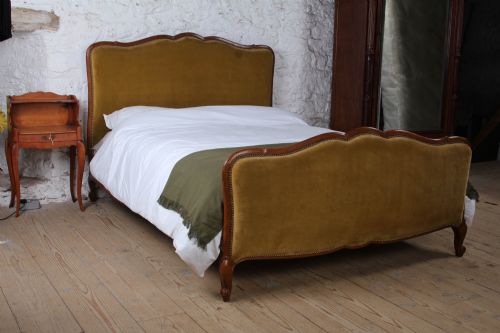


Walnut Corbeille Bed
A walnut corbeille bed brings curved French romance and deep timber warmth directly into the bedroom.
Walnut Corbeille Bed
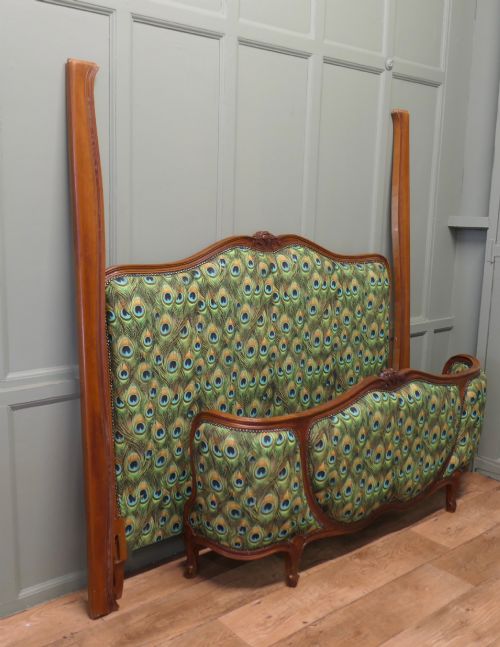
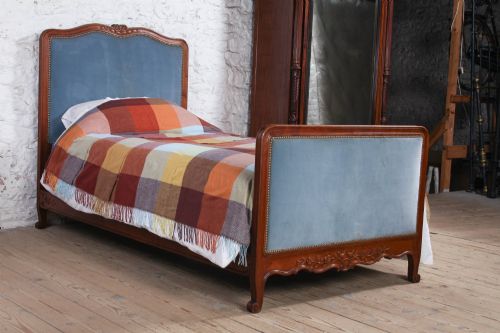
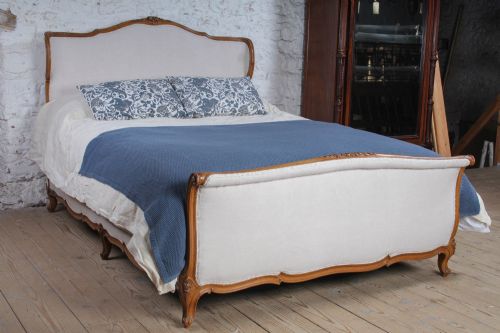
A walnut corbeille bed takes its name from the French word for basket, describing the curved, enveloping shape of the headboard and footboard that embraces the mattress. These pieces typically appear in revival styles such as Louis XV, Louis XVI, and French Rococo, reflecting classic continental design traditions.
The evidence shows examples dating from the Victorian and Edwardian eras through the 1900s, 1910s, 1920s, and 1930s. Buyers will find double, king, super king, and emperor sizes, often constructed from rich timber and accompanied by upholstered panels, velvet, or linen blend fabrics.
Most pieces on this page lean towards French Chateau, French Provincial, and carved wood aesthetics. Whether finished with floral hand-painted panels or left as polished burr walnut, these frames serve as the definitive centrepiece of a traditionally styled bedroom.
How they were made
Craftsmen shaped these frames from solid timber and walnut veneers, often selecting burr walnut for its rich, swirling grain patterns. Structural integrity relied on traditional joinery techniques, while the characteristic basket curves were achieved through steam-bending and precise hand-carving.
Upholstered sections incorporated durable textiles, velvet, and linen blends, secured with careful tacking or piping along the curved edges. Brass components occasionally appear in fittings, providing subtle metallic contrast to the dark wood tones.
Walnut Corbeille Bed Retail Price Guide 2026
Typical asking prices for walnut corbeille bed among the pieces listed under this phrase on Sellingantiques today, from the lower quarter to the upper quarter. They describe what is for sale here now, not the wider market.
One daybed was recently spotted wearing a fresh new coat of upholstery, ready to nap in absolute French style.
What varies in quality
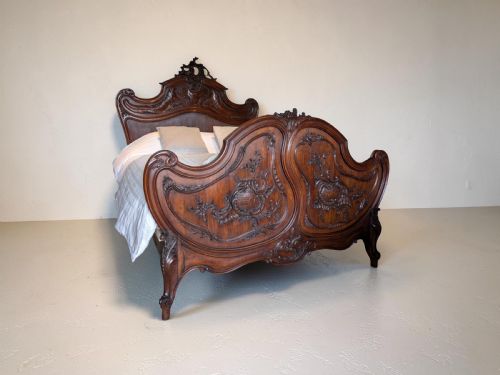
The depth and crispness of the hand-carving set finer examples apart from simpler production pieces. Skilled carvers produced fluid acanthus leaves and scrolling motifs that follow the natural contour of the basket frame without stiffness.
The selection of the timber veneer dictates visual distinction, with symmetrical burr walnut figuring commanding greater presence than plain wood. Additionally, the proportion of the curved wings relative to the main headboard defines the architectural harmony of the piece.
The Walnut Corbeille Bed Glossary
- Corbeille
- Basket-shaped bed frame featuring a curved, enveloping headboard and footboard. This distinctive French silhouette creates a cocooning effect.
- Louis XV Style
- Eighteenth-century revival design characterised by asymmetrical curves, cabriole legs, and naturalistic floral carvings. It forms the basis for many continental bed frames.
- Burr Walnut
- Highly prized wood veneer showing intricate, swirling growth patterns caused by tree deformities. It provides exceptional decorative depth on large flat or curved surfaces.
- Upholstery Fabric
- Textile covering applied to the interior panels of the headboard and footboard. Materials range from traditional velvet to modern linen blends.
Walnut Corbeille Bed: Frequently Asked Questions
What is a corbeille bed?
A corbeille bed is a traditional French bed design featuring a curved, basket-like headboard and footboard that wrap around the mattress edges.
These frames combine substantial timber construction with upholstered panels and decorative carving to create an enveloping sleeping space.
How do I choose the right size?
Bed sizes range from double and king to super king and emperor proportions. You should measure your room carefully, keeping in mind that the curved wings of a corbeille frame extend slightly wider than standard straight beds.
Check the mattress dimensions specified in each listing to ensure modern standard mattresses will fit the historical wooden rebate.
How do I live with antique French beds?
Living with these pieces involves appreciating their historical timber patination and integrating them into contemporary or traditional bedroom schemes. Regular dusting with a soft cloth preserves the polished walnut finish.
Ensure the room humidity remains stable to protect the solid wood and veneer from seasonal expansion and contraction.
How do I identify the period?
Dating relies on the style of the carving, the choice of revival movement such as Louis XV or Rococo, and construction methods. Pieces span the Victorian and Edwardian eras up to the 1930s.
Examining the underlying timber, fixings, and upholstery tacking helps establish whether a frame dates from the early twentieth century or later revivals.