

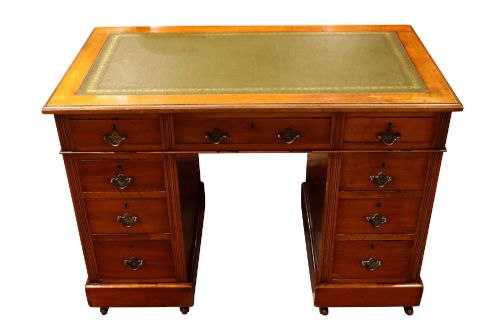
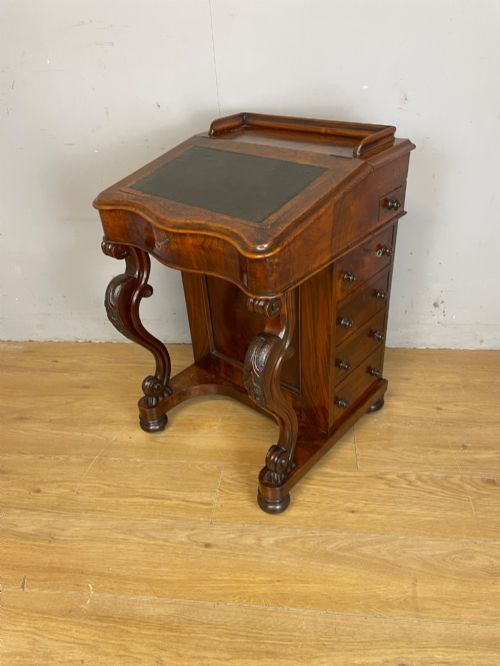
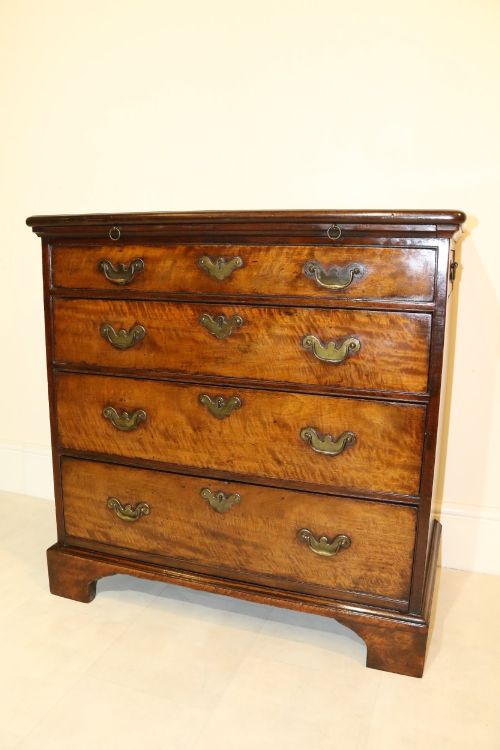
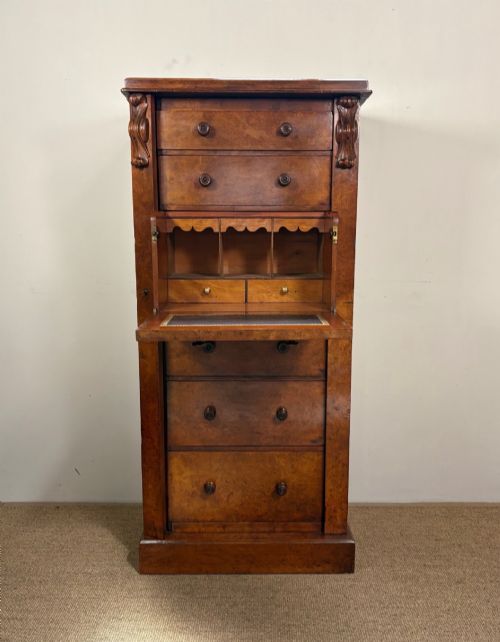
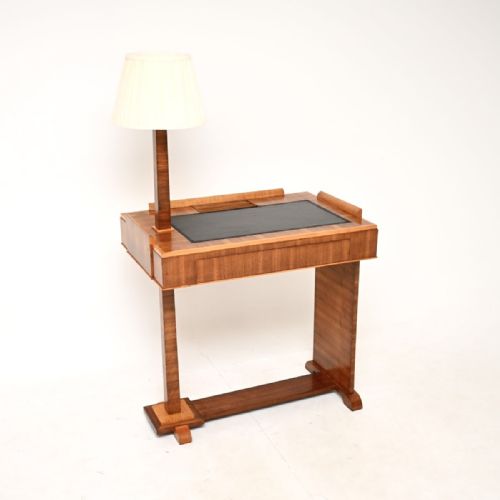
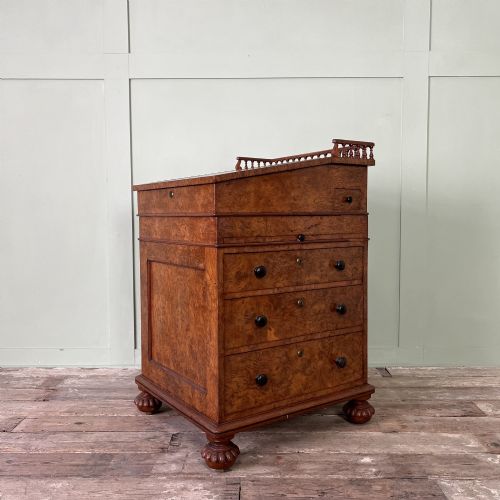

Walnut Compact Writing Desk
These walnut compact writing desk pieces offer small-scale writing surfaces and practical storage, combining rich timbers with period craftsmanship.
Walnut Compact Writing Desk
A walnut compact writing desk encompasses small-scale writing furniture designed for domestic use, frequently taking the form of a Davenport, a bureau, or a pedestal desk. These pieces originate from various periods including the 18th century, the Victorian era, the Edwardian period, and the Art Deco years of the 20th century.
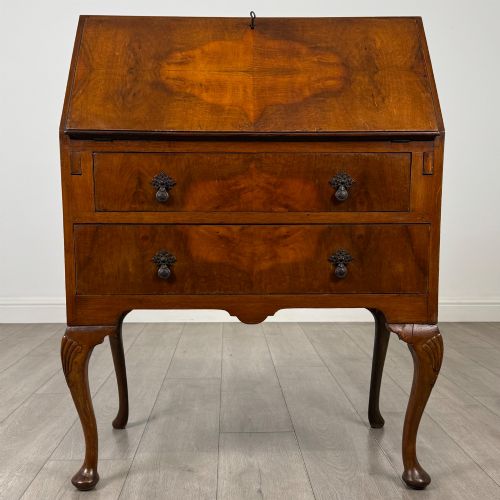
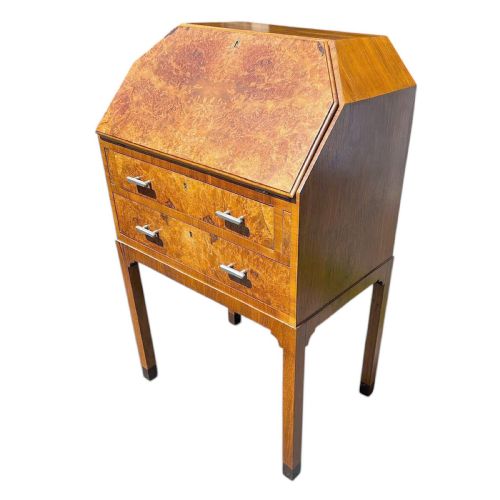
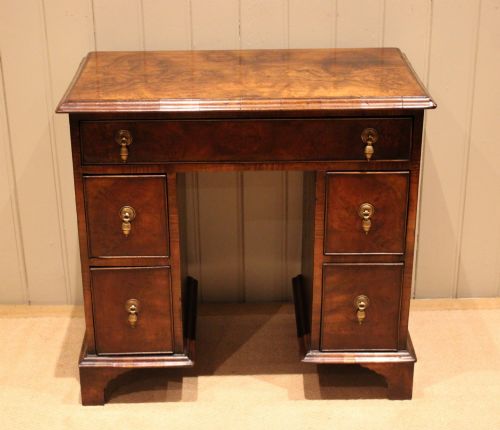
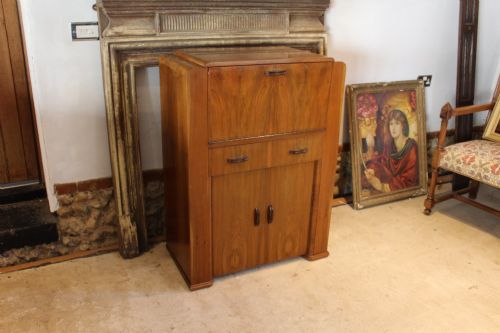
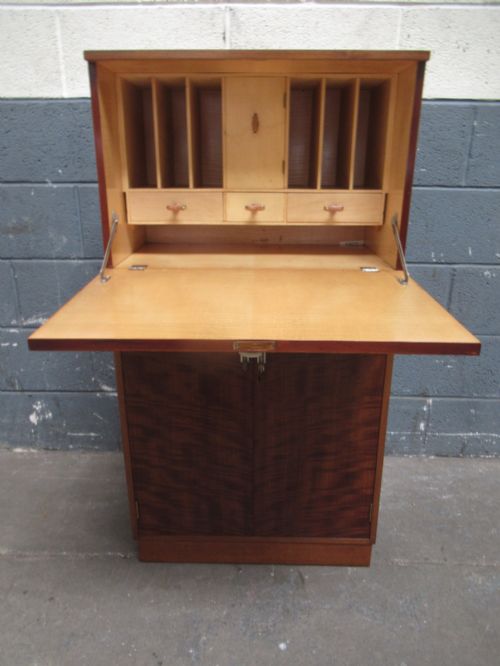
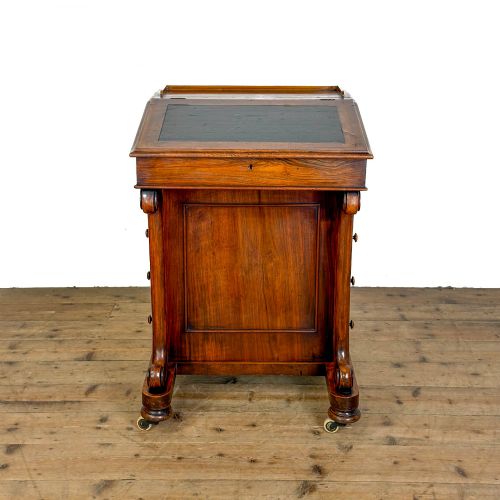
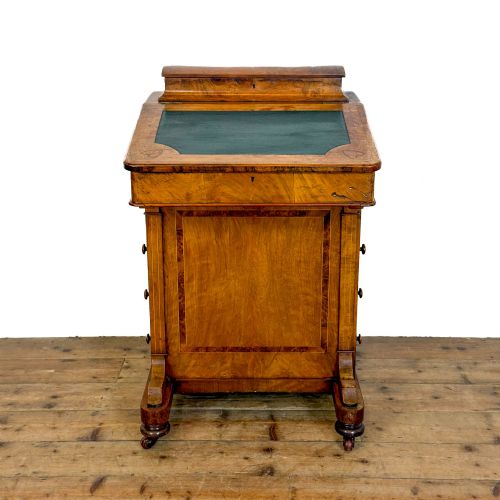
The most common version met on this page is the Victorian Davenport desk, often fashioned from burr walnut with fitted stationary compartments and side drawers. Alongside these, buyers encounter Georgian and George I style kneehole desks, alongside later Art Deco writing desks and bureau bookcases.
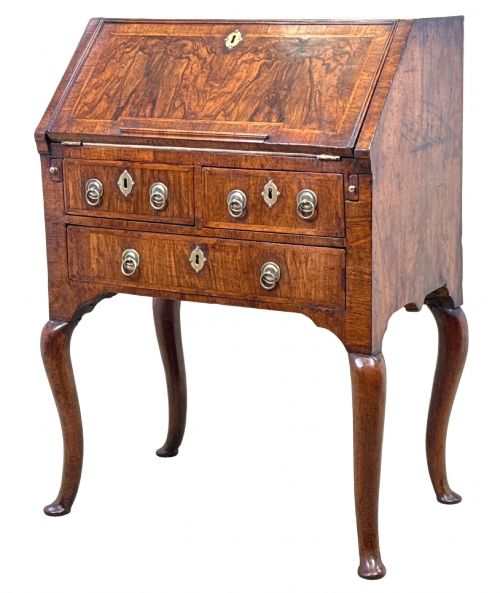
Forms vary from early 18th century walnut bureaus on legs and bachelor writing chests to small proportioned pedestal desks and pop-up Davenport desks. The overarching characteristic remains their modest footprint, tailored for writing and storage in tighter spaces.
Materials and construction methods
Construction relies heavily on walnut and burr walnut veneers applied over secondary timbers, often enhanced with boxwood inlay, sycamore interiors, and satinwood fittings. Cabinet makers utilised brass hardware, leather writing inserts, and ebonised details to accent the figured wood grains.
Joinery techniques span traditional dovetailing in drawer construction to specialised mechanisms found in pop-up Davenport desks and piano top writing cabinets. Carcasses combine solid woods like oak or elm with decorative walnut surfaces selected for rich figuring.
Surface finishing involves polishing to highlight the natural grain patterns of the burr walnut and crossbanding. Marquetry details and inlaid floral motifs appear on select Victorian and Edwardian examples, demonstrating detailed hand-working.
Listings feature walnut compact writing desk pieces spanning from the 18th century through the Victorian, Edwardian, and Art Deco periods.
Distinctions in craftsmanship and design
Quality separates through the selection of timber veneers, where highly figured burr walnut and symmetrical grain matching command attention over plain timber surfaces. The crispness of boxwood inlay and the precision of marquetry further distinguish finer examples.
Internal fittings and mechanical complexity dictate the tier of a piece, from simple sloping desk lids to intricate pop-up stationery compartments with satinwood interiors. The integrity of the original leather writing surface and fitted interior drawers indicates superior original manufacture.
Proportion and execution of period styling, whether adhering to Queen Anne style, Georgian proportions, or Art Deco geometric lines, define the overall success of the piece. Maker attribution, when present through signatures or stamps from firms like Gillow and Co, elevates historical interest.
F.H. Marshall & Co Glasgow·Gillow & Co
The Walnut Compact Writing Desk Glossary
- Davenport
- A compact pedestal desk featuring a sloping writing surface, typically with drawers opening to one side.
- Burr walnut
- Timber taken from a tree growth or burl, yielding swirling, highly decorative grain patterns prized in fine cabinet making.
- Bureau
- A desk with a sloping flap that opens to reveal a fitted interior of small drawers and pigeonholes.
- Crossbanding
- A strip of veneer applied perpendicularly to the grain of the main surface to create a decorative border.
- Marquetry
- Decorative patterns formed by inserting pieces of wood, veneer, or other materials into a veneered surface.
- Kneehole desk
- A pedestal desk featuring an open recess in the centre for the user's knees, flanked by banks of drawers.
Walnut Compact Writing Desk: Frequently Asked Questions
What is a Davenport desk?
A Davenport desk is a compact writing cabinet featuring an angled writing slope above a pedestal of side drawers. It was originally designed for use in small spaces.
These pieces typically include interior compartments for stationery and maintain a smaller footprint than standard partner or pedestal desks.
How do I identify a bureau?
A bureau consists of a hinged sloping flap that drops down to form a writing surface, enclosing a cluster of small drawers and pigeonholes inside. Below the flap, multiple full-width drawers provide storage.
Earlier examples stand on legs or frames, while later Victorian and Edwardian versions sit above chest bases.
Where were compact desks used?
These pieces served as personal writing furniture in domestic bedrooms, private studies, and drawing rooms where full-sized library tables proved impractical. Their modest scale allowed them to fit neatly against walls or in corners.
Owners kept them for correspondence, diary writing, and storing private papers.
How do I date a walnut desk?
Dating relies on observing structural characteristics, hardware, timber preparation, and stylistic revival influences such as Queen Anne style or George I style. 18th century pieces often display different carcass construction and foot forms compared to Victorian or Edwardian reproductions.
Cabinet making techniques and interior secondary woods help confirm the period of manufacture.