


Walnut Clothes Closet
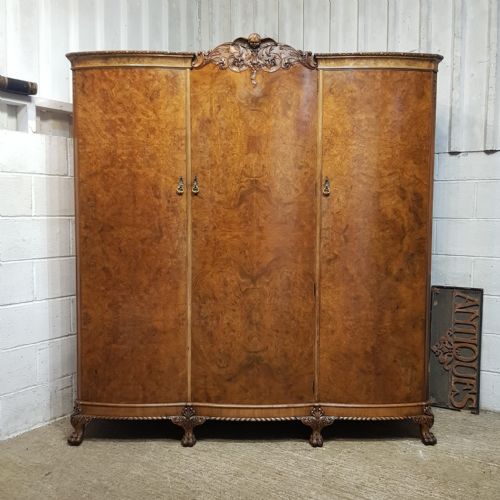
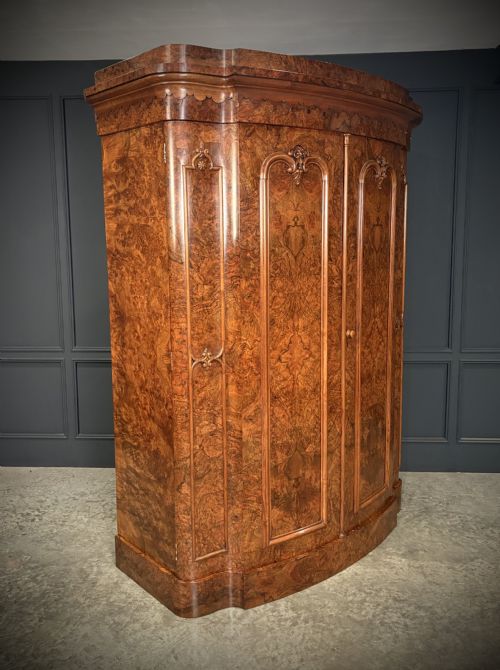
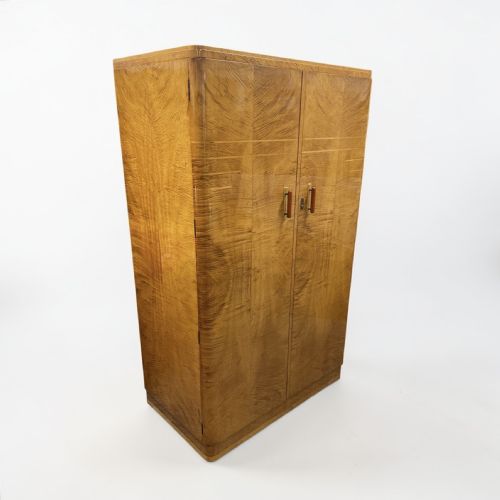
These walnut clothes closet designs bring warm timber grain and practical storage to a room, spanning styles from Victorian and Art Deco to Queen Anne Revival.
Walnut Clothes Closet
A walnut clothes closet provides substantial hanging space and internal fittings behind polished wooden doors. These large storage pieces appear in forms such as wardrobes, armoires, and fitted closets.
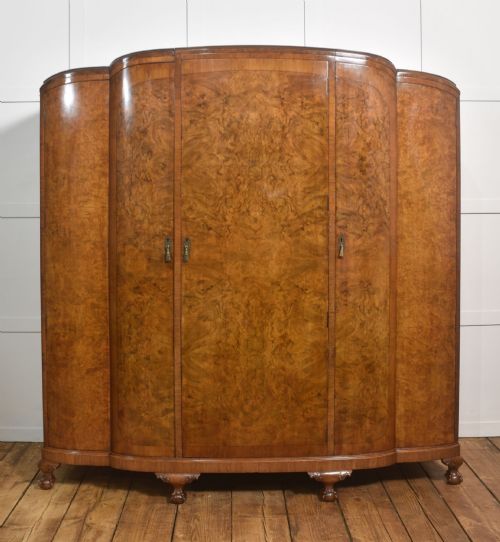
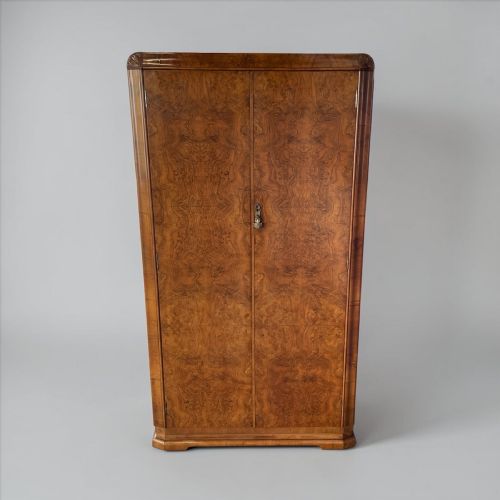
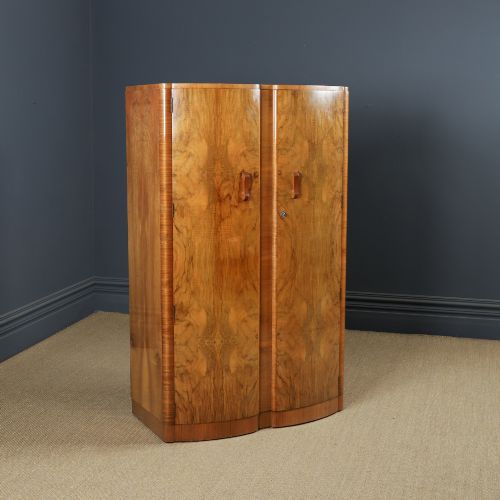
The selection here ranges from nineteenth century Victorian and Dutch Baroque examples to early twentieth century Art Deco models and Queen Anne Revival pieces. Buyers most frequently encounter Art Deco designs featuring bold curves and veneered surfaces from the nineteen-thirties.
Makers utilised architectural silhouettes including bow fronts, serpentine shapes, and breakfront profiles. Interior fittings often include hanging rails, shelves, and compartments tailored for garments.
How they were made
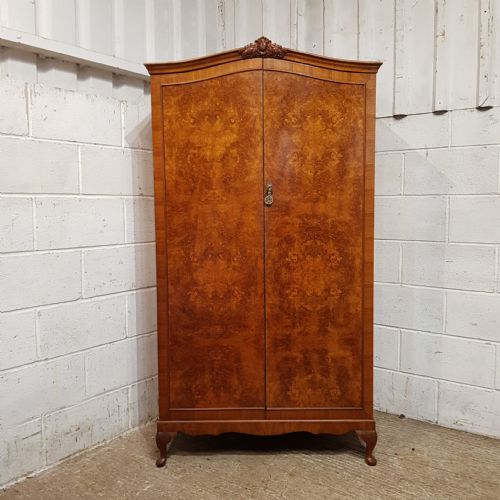
Cabinet makers constructed these pieces using solid oak internal framing overlaid with walnut veneers, burr walnut, and figured wood veneer. The distinctive swirling patterns on the exterior derive from carefully matched veneer leaves applied to the carcase.
Hardware details typically include cast brass handles, hinges, and locking escutcheons fitted to the doors. Structural elements combine solid timbers with specialised veneering techniques to achieve decorative fronts.
Materials recorded across the inventory include solid oak, brass hardware, and several walnut veneer variants.
What varies in quality
The sophistication of the timber figuring dictates much of the visual distinction between examples, with matched burr walnut veneers commanding attention. Superior pieces display continuous grain alignment across multiple doors and curved drawer fronts.
Internal cabinetry and fitted compartments demonstrate the standard of the original commission, ranging from basic hanging space to complex fitted interiors. The precision of the joinery around serpentine and bow front curves marks the work of skilled cabinet makers.
Jean Faure·Harry and Lou Epstein
The Walnut Clothes Closet Glossary
- Breakfront
- A cabinet design where the central section projects forward from the flanking wings. This architectural arrangement creates depth and shadow on large wardrobe facades.
- Serpentine
- A furniture front shape that curves outward in the middle and inward at the sides. This fluid contour requires precise carpentry, particularly when applied to large closet doors.
- Armoire
- A tall cupboard used for storing clothes, historically preceding the modern fitted wardrobe. Many examples include internal hanging space and shelving behind double doors.
Walnut Clothes Closet: Frequently Asked Questions
How do I date a walnut wardrobe?
Dating relies on observing the stylistic characteristics, construction methods, and material choices present in the piece. Victorian examples display heavy proportions, while nineteen-thirties pieces show streamlined Art Deco curves.
Reviewing the interior fittings and the specific type of wood veneer also helps place the wardrobe within periods spanning from eighteen-hundred to nineteen-thirty.
What styles are available?
The selection encompasses several distinct design movements, including Victorian, Dutch Baroque, Queen Anne Revival, and Art Deco. Each period brings specific silhouettes, from bow fronts to breakfront configurations.
Art Deco versions often feature dramatic burr walnut veneer patterns and rounded serpentine shapes, whereas earlier styles employ more traditional architectural mouldings.
Are these closets fitted inside?
Many examples include fitted interiors with specialised compartments, hanging rails, and shelving designed for garment organisation. Original configurations vary according to the period and the specific commission.
Art Deco and later models frequently incorporate sophisticated internal cabinetry behind their main doors to maximise storage utility.