



1920s Burr Walnut Wardrobe
A 1920s burr walnut wardrobe brings extraordinary grain and presence to a bedroom, offering a practical scale paired with striking twentieth-century design.
1920s Burr Walnut Wardrobe
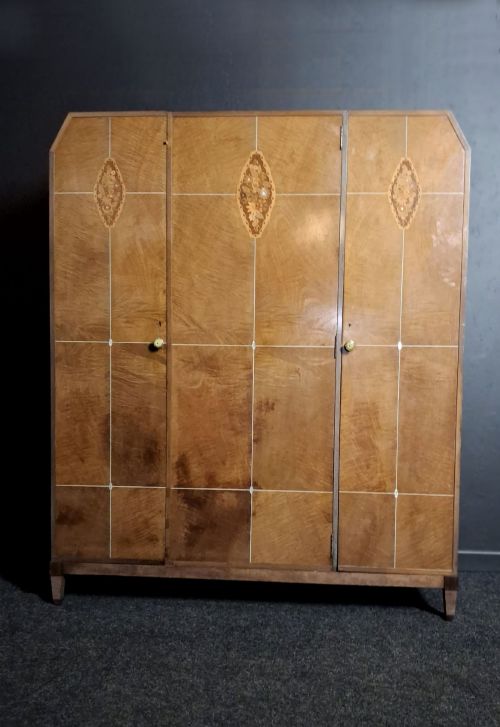
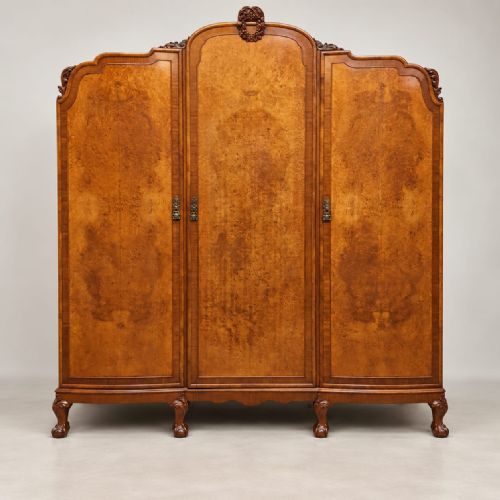
A 1920s burr walnut wardrobe encompasses substantial triple configurations, fitted interiors, and compactum formats that survive from the interwar decades. Buyers seeking this phrase encounter pieces dating from 1920 to 1930, spanning both early revival interpretations and later Art Deco designs.
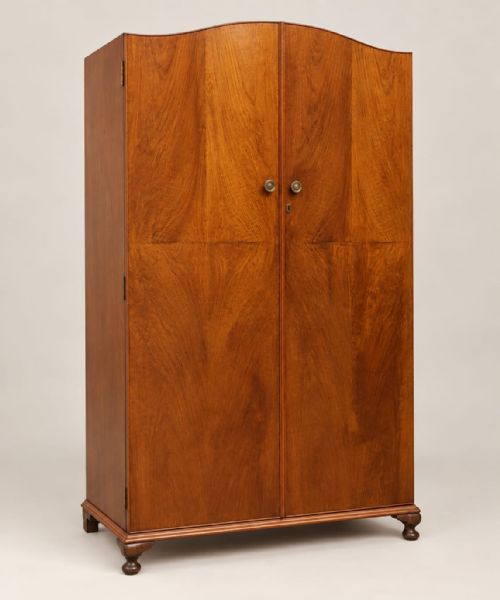
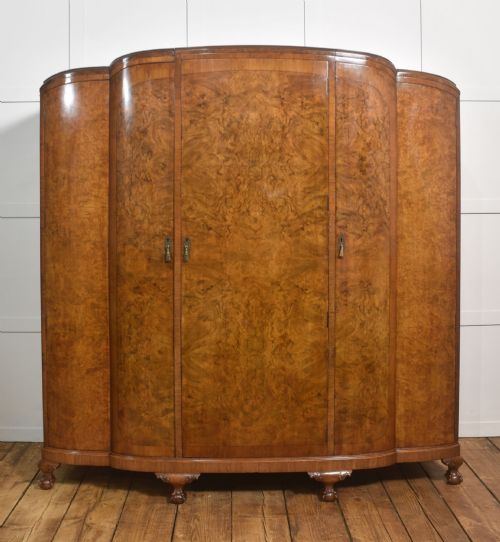
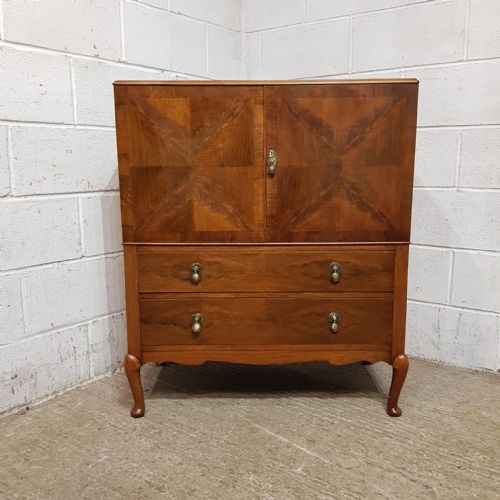
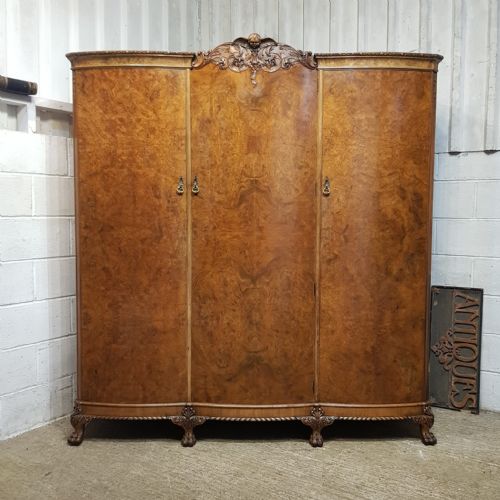
The form varies from grand serpentine fronted triple wardrobes to smaller fitted single pieces and matching tallboys. These examples demonstrate the distinct architectural ambitions of cabinet makers working during the 1920 and 1930 periods.
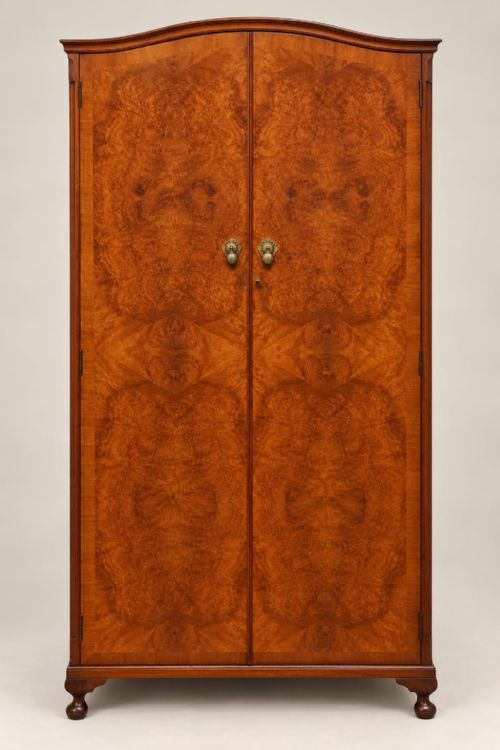
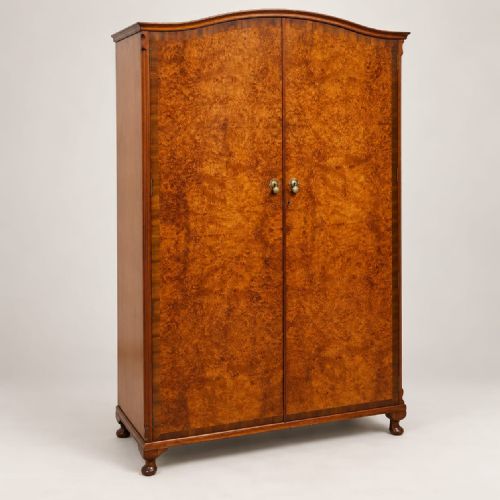
Art Deco styling heavily influences the later examples in the range, bringing clean geometric lines to contrast with the organic swirling patterns of the wood. Queen Anne Revival pieces also appear, offering traditional proportions executed in modern figured veneers.
Materials and construction methods
Makers utilised burr walnut veneer applied over solid carcases, often combining walnut veneer and solid oak elements for structural stability. The intricate figuring of the burr walnut creates dramatic patterns across large door surfaces.
Fittings and hardware incorporate brass and occasionally bakelite details, reflecting the manufacturing tastes of the 1920 and 1930 decades. Interior layouts often include dedicated compartments for hanging, shelving, and drawers within compactum designs.
1920s Burr Walnut Wardrobe Retail Price Guide 2026
Typical asking prices for 1920s burr walnut wardrobe among the pieces listed under this phrase on Sellingantiques today, from the lower quarter to the upper quarter. They describe what is for sale here now, not the wider market.
Split side compactums hide ingenious internal compartments designed to keep 1920s accessories precisely ordered.
Distinguishing quality in walnut furniture
Quality rests upon the selection and matching of the burr walnut veneer across the primary surfaces. Superior examples display symmetrical grain patterns that flow seamlessly across multiple doors and drawers.
The complexity of the carcase construction dictates the grade of the piece, with breakfront, serpentine, and split side compactum formats requiring advanced cabinet making skill. The integration of fitted interior elements and robust brass hardware further separates standard production from finer commissions.
The 1920s Burr Walnut Wardrobe Glossary
- Burr walnut
- A timber figured with small knot growths that produce swirling, abstract patterns when sliced into veneer. It remains prized for decorative cabinet fronts.
- Compactum
- A multi-functional wardrobe combining hanging space, shelves, and internal drawers within a single unified cabinet. This layout maximises storage efficiency.
- Breakfront
- A piece of furniture where the central section projects forward from the flanking outer sections. This architectural arrangement creates depth and shadow.
- Serpentine front
- A cabinet front featuring a convex centre flanked by concave curves, forming a gentle wave shape. Executing this contour in veneer demands high technical precision.
- Tallboy
- A case piece standing taller than a standard chest of drawers, often combining wardrobe compartments or shelving above drawers. It provides vertical storage for restricted floor spaces.
1920s Burr Walnut Wardrobe: Frequently Asked Questions
How do I care for burr walnut?
Keep the timber away from direct sunlight and excessive heat sources to prevent the veneer from drying out or lifting.
Polish the surface gently with a dry, soft cloth and avoid chemical sprays that might damage the historic polish.
What is a compactum wardrobe?
A compactum combines hanging space, shelving, and internal drawers into one integrated storage unit.
This format was designed to offer complete bedroom storage efficiency without requiring multiple pieces of furniture.
How do I date these wardrobes?
Look to the overall styling, noting whether the piece leans towards traditional Queen Anne Revival curves or geometric Art Deco lines.
Hardware materials like bakelite and brass placement also offer chronological clues pointing to the 1920 and 1930 periods.