


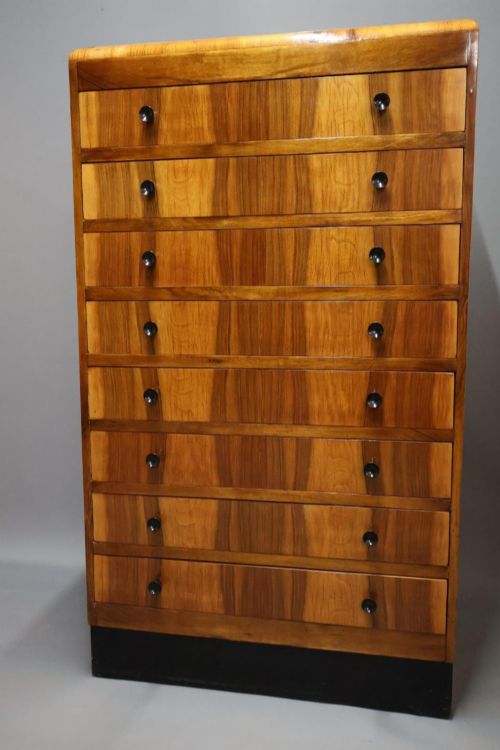


Walnut Chiffonier Cabinet
A walnut chiffonier cabinet brings rich timber figure and practical enclosed storage to a room, led by nineteenth-century Victorian examples.
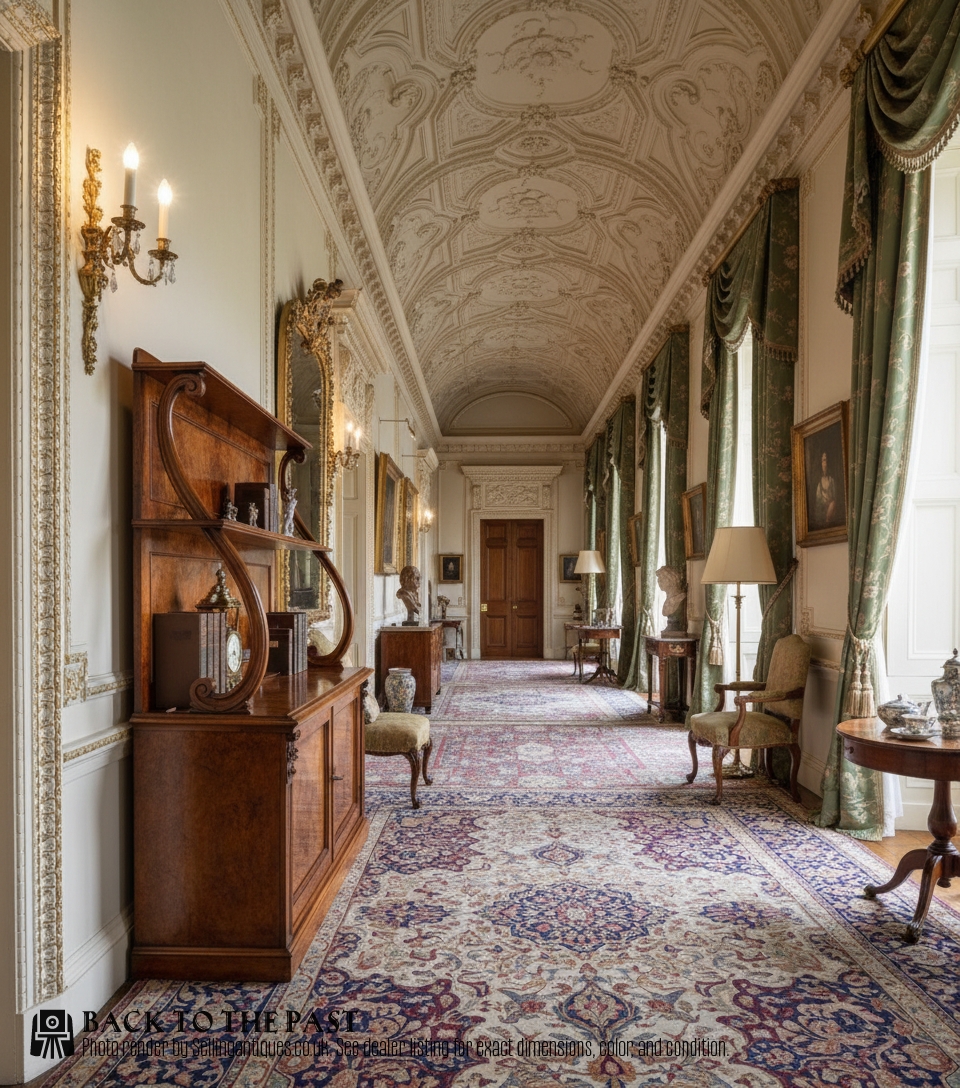
Walnut Chiffonier Cabinet
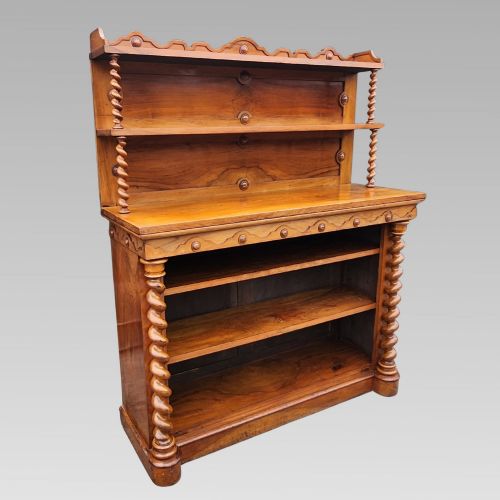
A walnut chiffonier cabinet combines low enclosed shelving with display surfaces, drawing on forms such as credenzas, sideboards, and tallboys. These pieces serve as functional storage units with a decorative presence in a room.
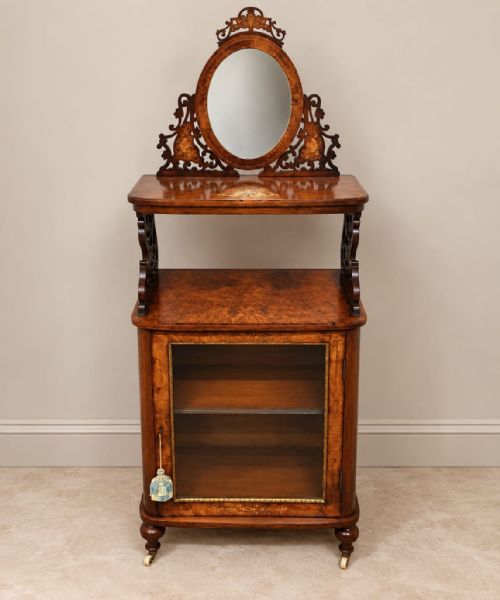
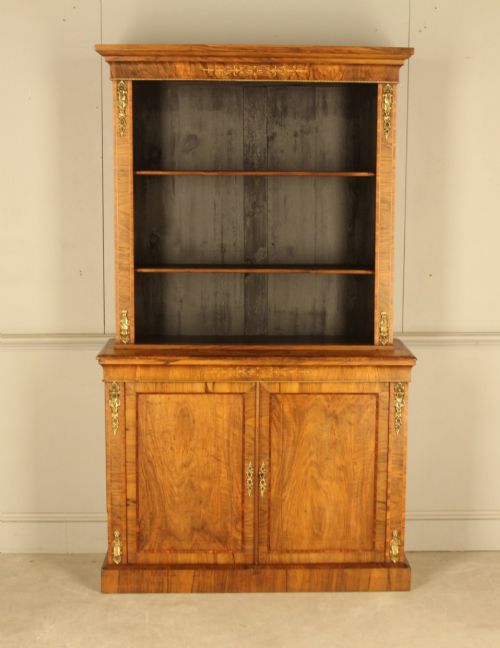
Nineteenth-century Victorian designs dominate the selection, frequently utilising burr walnut veneers, inlaid marquetry, and glass doors. Alongside these, buyers find later variations including Art Deco interpretations and Edwardian pieces.
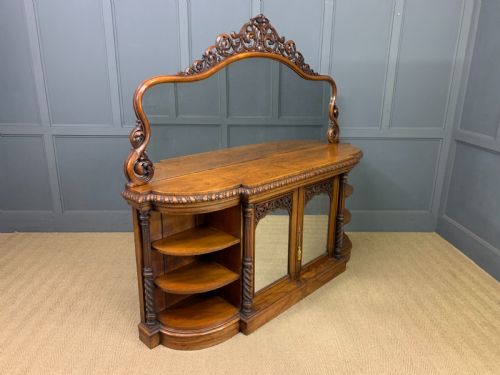
The assortment spans diverse regional workshops and stylistic revivals, ranging from mirror-backed credenzas to compact side cabinets and secretaires.
How they were made
Cabinetmakers applied highly figured burr and figured walnut veneers over sound carcass timbers to create rich surface patterns. Marquetry inlay, brass mounts, and ebonised wood details frequently accent the primary timber.
Many cabinets incorporate inset marble tops, mirrored backs, and glazed doors framed by carved mouldings and ormolu mounts. Joinery techniques balance structural rigidity with decorative display capabilities.
Some nineteenth-century cabinets hide secret compartments behind fitted drawers.
What varies in quality
Quality rests upon the selection and matching of the walnut veneer, particularly the symmetry and depth of burr grain across the doors and top surfaces. Finer examples display meticulous marquetry and crisply carved wooden details rather than routine production work.
Gillows·James Plunckett Art Furniture Makers
The Walnut Chiffonier Cabinet Glossary
- Burr walnut
- A veneer taken from the growth excrescences of a walnut tree, yielding highly swirled, knotty patterns. It is prized for its decorative optical depth on cabinet doors.
- Credenza
- A low-profile side cabinet, often featuring curved glass ends or central mirrored doors. This form emerged strongly during the Victorian period for formal display.
- Marquetry
- The art of applying thin pieces of wood veneer to a structure to form decorative patterns or pictures. Floral motifs are common in nineteenth-century French and English pieces.
- Ormolu
- Gilded bronze mounts applied to furniture edges and feet for decorative contrast. It signals high-status cabinetmaking from revivalist periods.
- Chiffonier
- A compact sideboard equipped with drawers and enclosed lower shelves. It often supports an upper tier of display shelving or a mirror.
Walnut Chiffonier Cabinet: Frequently Asked Questions
What is a walnut chiffonier cabinet used for?
These cabinets provide enclosed shelving and surface space for storing tableware, books, or decorative objects in principal rooms.
Their substantial top surfaces and display compartments also serve to exhibit porcelain, glassware, or decorative ornaments.
How do I date a walnut chiffonier cabinet?
Dating relies on observing construction methods, timber preparation, and prevailing stylistic indicators such as Victorian revivalism or Art Deco geometry.
Hardware details, glass manufacturing traits, and secondary woods inside drawers also help determine the period of manufacture.
Are marble tops original to these cabinets?
Marble tops frequently appear on nineteenth-century credenzas and side cabinets, particularly those influenced by French design.
These stone slabs were integrated to provide a durable, heat-resistant surface for serving or display.
How should I care for burr walnut veneer?
Burr walnut requires stable indoor humidity away from direct sunlight to prevent veneer lifting and timber fading.
Routine maintenance involves gentle dusting with a dry cloth and occasional application of appropriate furniture wax to nourish the grain.