

Walnut Centre Coffee Table
A walnut centre coffee table brings rich grain and practical low surfaces to a room, spanning periods from Victorian to Art Deco.
Walnut Centre Coffee Table
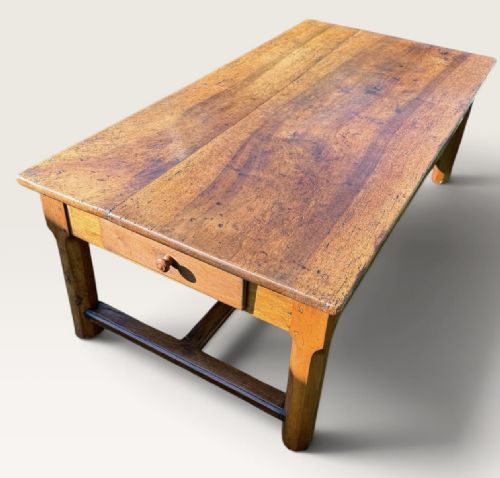
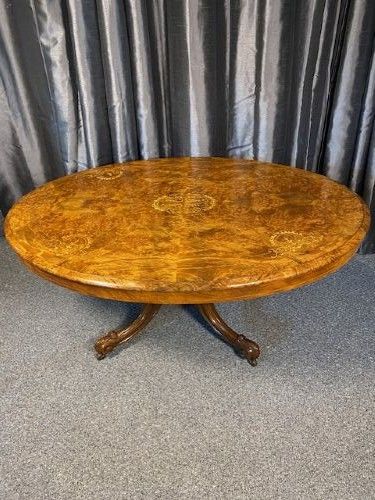
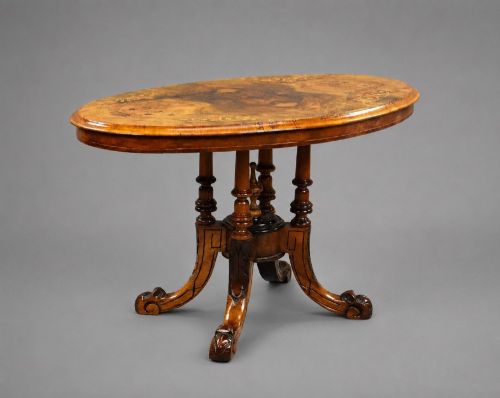
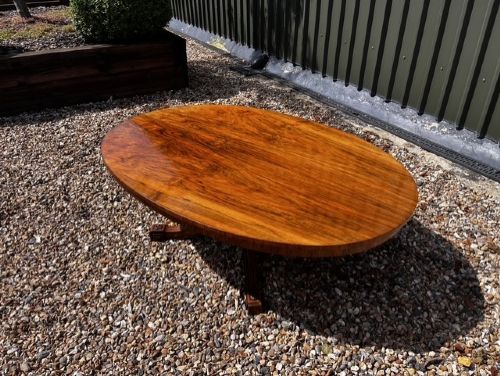
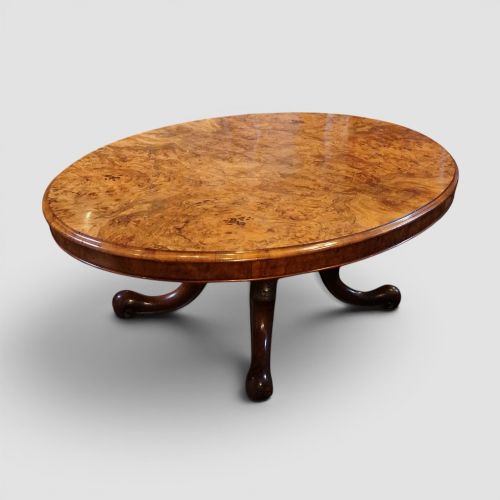
When you search for a walnut centre coffee table, you encounter low tables adapted or made for domestic reception rooms. The selection draws heavily on nineteenth-century Victorian pieces and 1930s Art Deco designs, often originating as larger centre tables or occasional tables lowered for modern use.
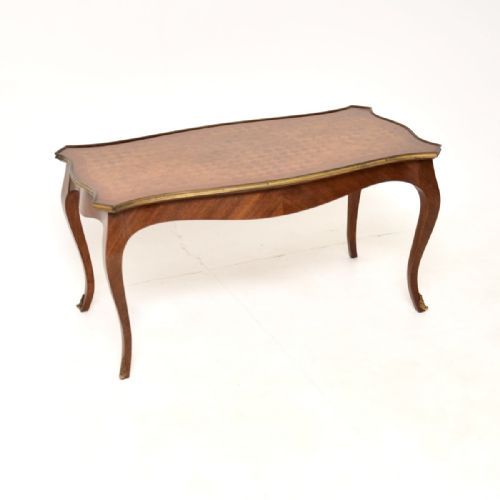
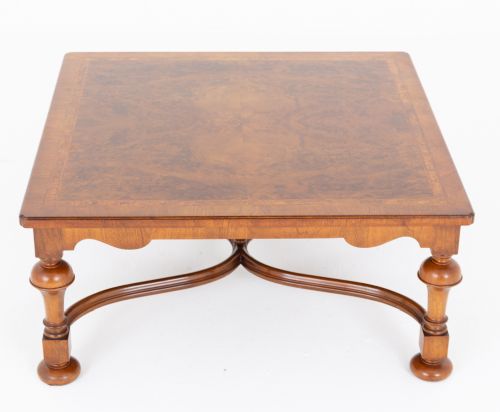
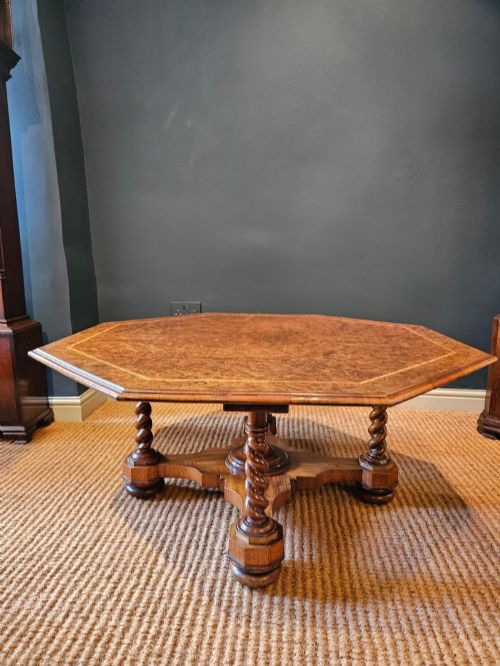
Forms range from oval and round shapes to octagonal and rectangular formats. Many pieces showcase specific stylistic revivals, including Queen Anne, Louis XV, and French Chateau interpretations alongside simpler rustic farmhouse variants.
How they were made
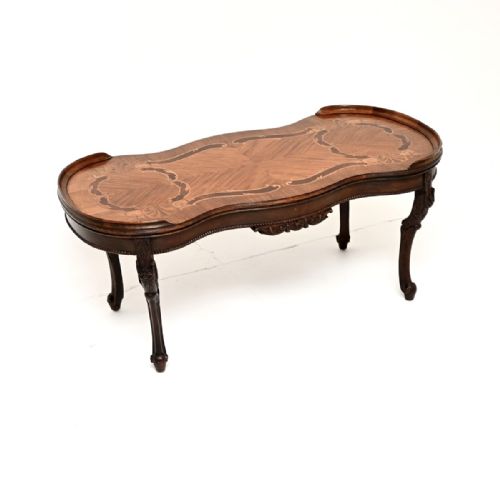
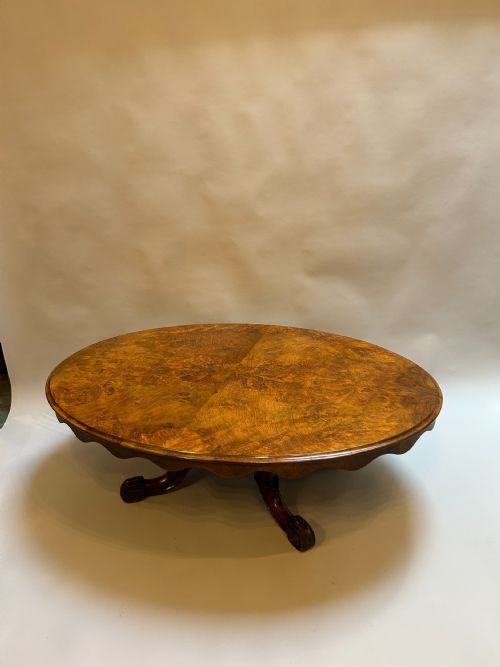
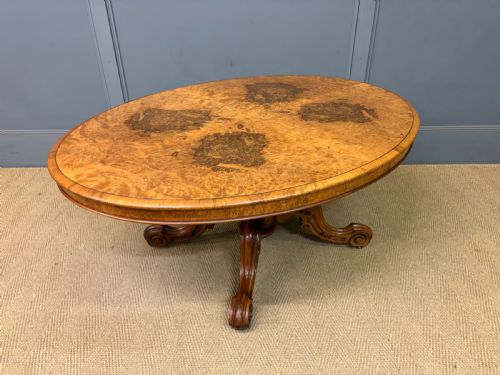
Cabinetmakers utilised solid walnut and figured veneer, notably burr walnut, applied over secondary timbers to create striking patterned surfaces on top. Workshops incorporated decorative techniques such as marquetry, parquetry inlay, and hand-carved bases.
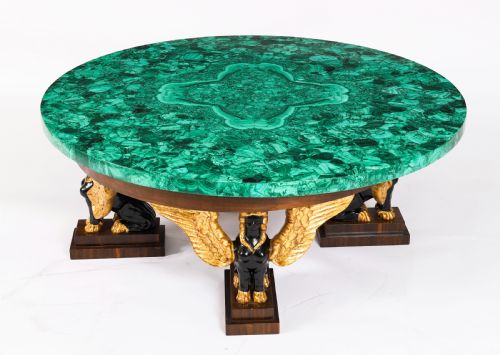
Structural elements frequently include brass mounts, ormolu details, and occasional glass or marble tops. Some nineteenth-century surfaces are paired with alternative supports like cast iron tripod bases.
Styles span from Victorian and Queen Anne Revival to French Chateau, Rococo, and Art Deco iterations.
What varies in quality
Quality rests in the selection of the timber veneer and the precision of the surface decoration. Burr and figured walnut displays lively, contrasting grain patterns that mark out superior cabinet work from plain stock.
The finesse of the hand-carved elements, the accuracy of the marquetry inlay, and the integration of metal mounts or brass fittings distinguish workshop execution. Maker attribution, as seen in pieces by firms like Holland and Sons, elevates the standing of an individual table.
Holland and Sons
The Walnut Centre Coffee Table Glossary
- Burr walnut
- A prized veneer taken from the wart-like growths on walnut trees, yielding complex and swirling grain patterns. It is heavily utilised in Victorian and Art Deco table tops.
- Marquetry
- The art of forming decorative patterns on a wooden surface by fitting together small pieces of veneer of different woods and materials. It appears frequently on Victorian and French tables.
- Parquetry
- A geometric mosaic of wood pieces used for decorative floors and table tops. This technique is typical of French inlaid pieces.
- Ormolu
- Gilded bronze mounts applied to furniture edges and legs. This decorative hardware is characteristic of French styles.
- Pie crust
- A raised, carved decorative rim shaped in alternating curves resembling a pastry crust. This edge detail is found on select walnut tables.
Walnut Centre Coffee Table: Frequently Asked Questions
What is a walnut centre coffee table?
These pieces are low tables constructed from walnut timber or veneer, designed to sit centrally in a living space for everyday use. Many originated as nineteenth-century centre or occasional tables that were subsequently reduced in height.
They combine decorative woodwork, such as burr grain or inlay, with functional surface area. The category includes both traditional Victorian examples and streamlined Art Deco geometric designs.
How do I identify a Victorian walnut table?
Victorian examples often feature rich burr walnut veneer, intricate marquetry inlay, and hand-carved wooden bases. The timber tends to have a deep, warm tone developed over many decades of polishing.
Construction methods from this era typically employ solid secondary timbers beneath the walnut surfaces. Look for traditional joinery and period-specific proportions associated with nineteenth-century reception rooms.
Are Art Deco walnut tables different?
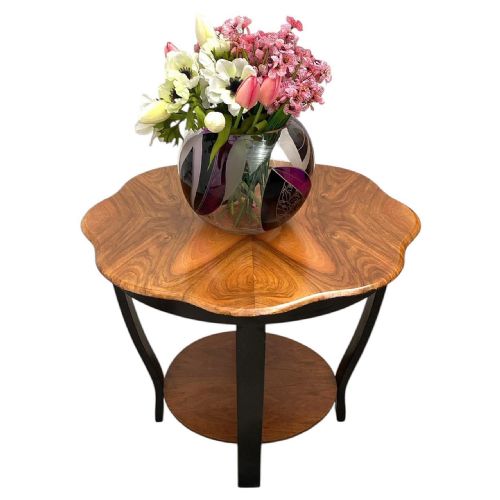
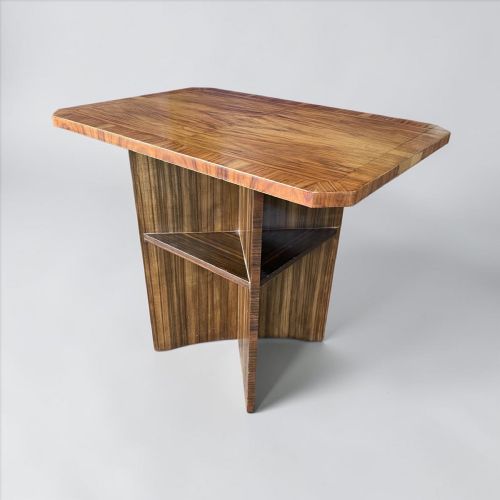
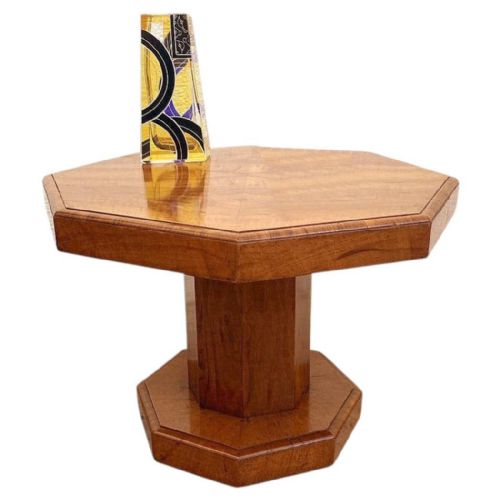
Art Deco pieces from the 1920s and 1930s lean towards geometric simplicity, featuring figured or bleached walnut. They frequently incorporate stepped profiles, two-tier storage shelves, and minimalist pedestals.
Unlike ornate Victorian designs, these tables rely on the natural grain patterns of the wood rather than complex floral inlay to create visual interest. They suit modern interiors through their clean architectural lines.