
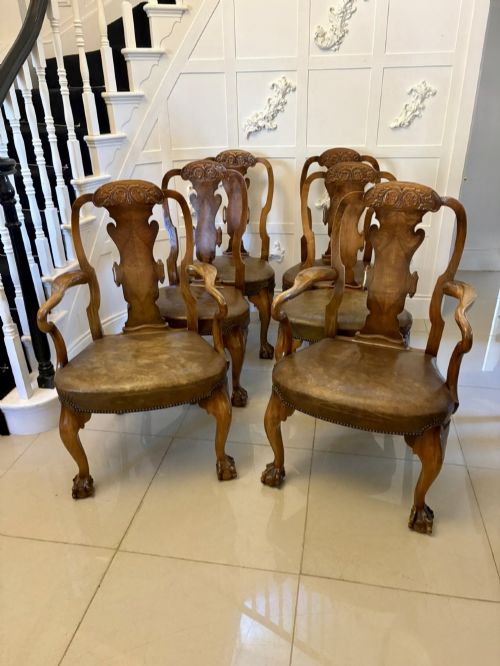
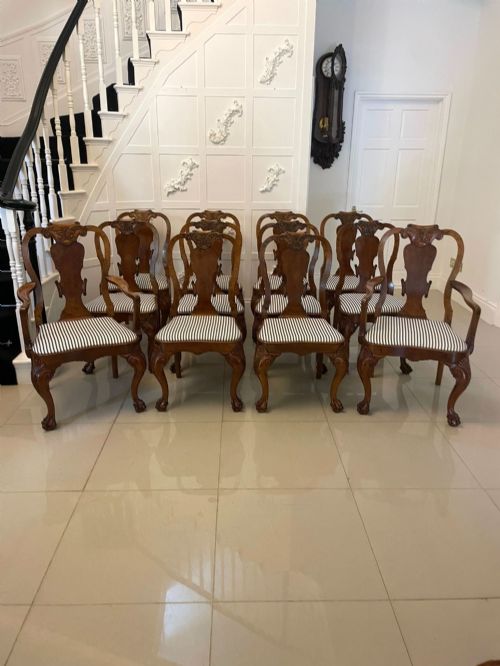
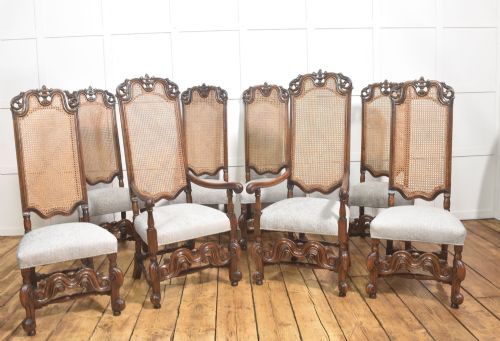
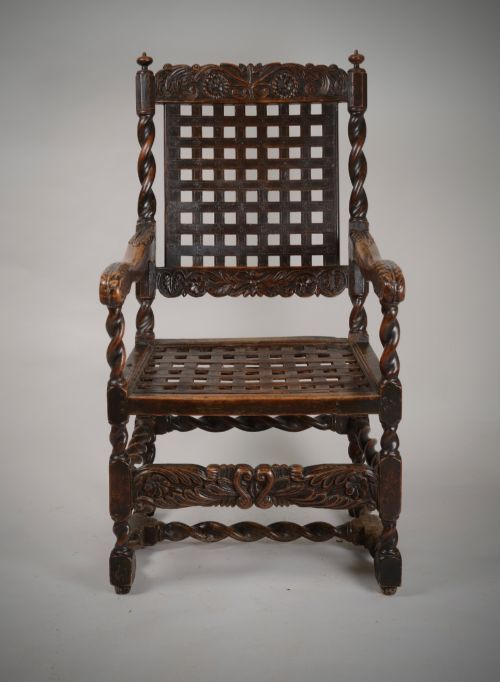
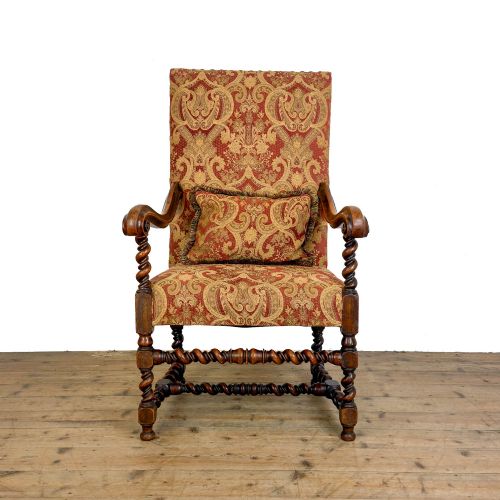
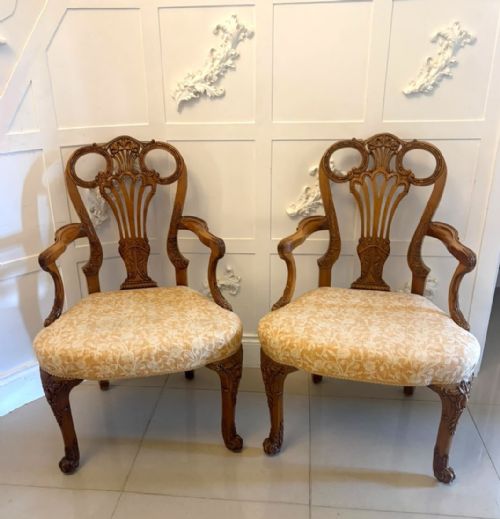
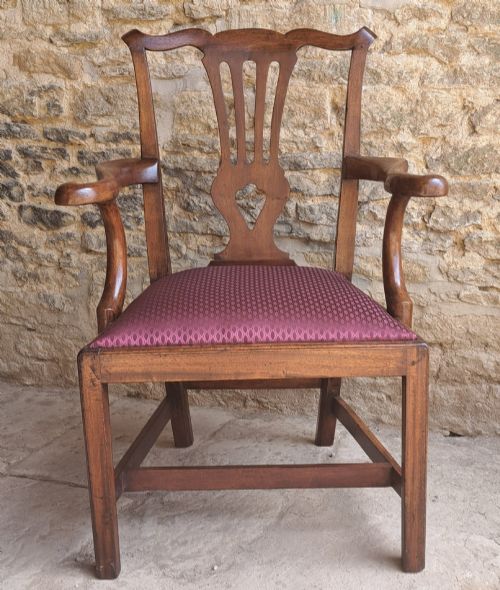
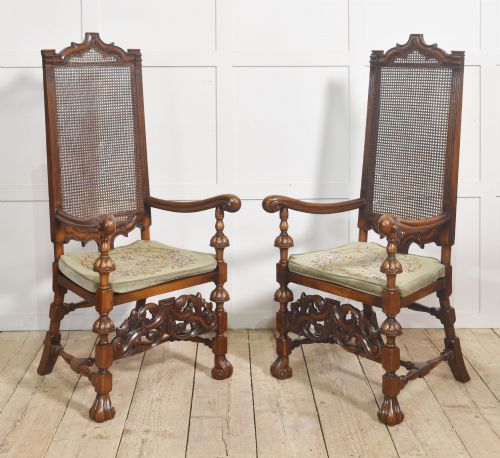
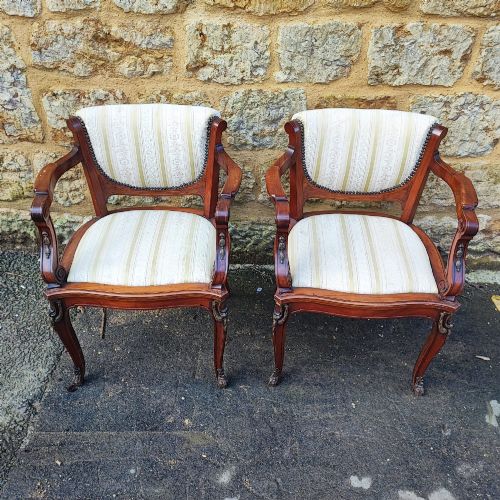
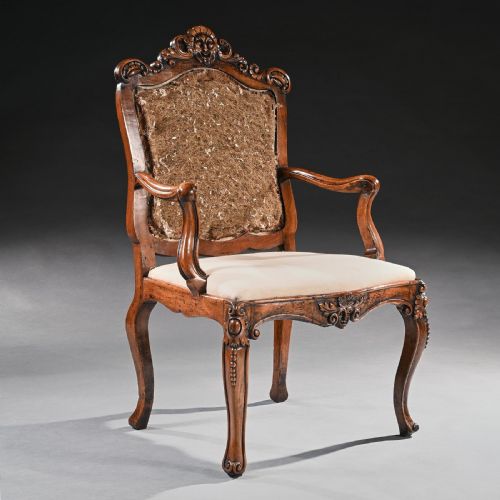
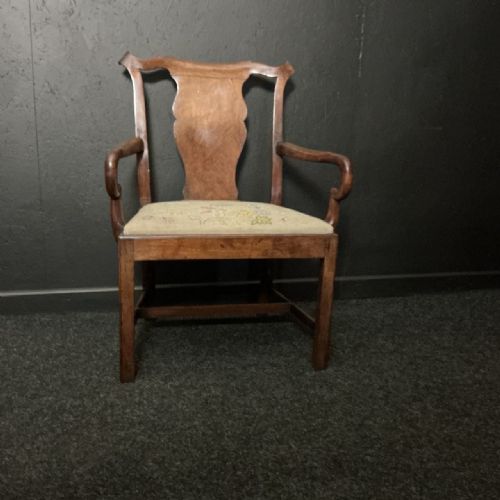
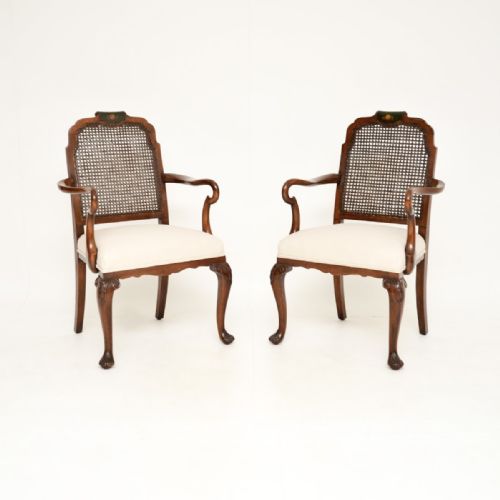
Walnut Carver Armchairs
These walnut carver armchairs combine solid timber and supportive armrests, offering practical seating shaped by centuries of cabinetmaking tradition.
Walnut Carver Armchairs
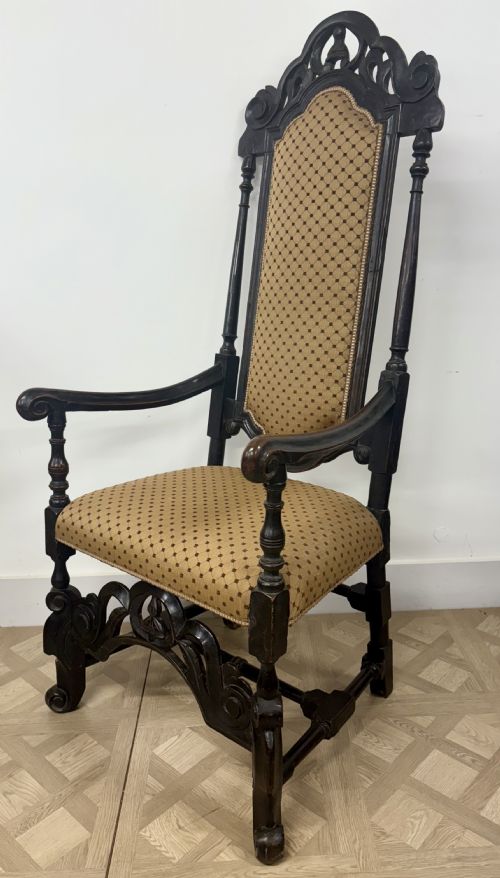
Walnut carver armchairs combine the structural height of a dining chair with the comfort of open or closed armrests, serving as primary seats at a dining table or secondary chairs in a study or library. These pieces range from high-backed seventeenth-century designs to later revival forms produced across the Victorian and Edwardian eras.
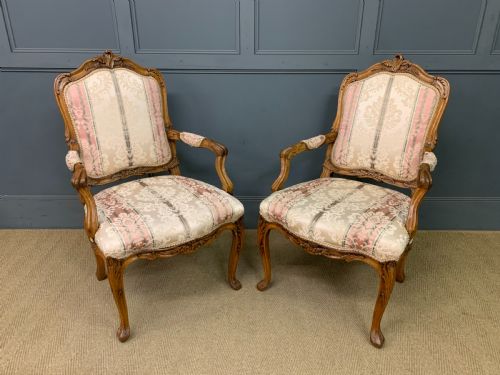
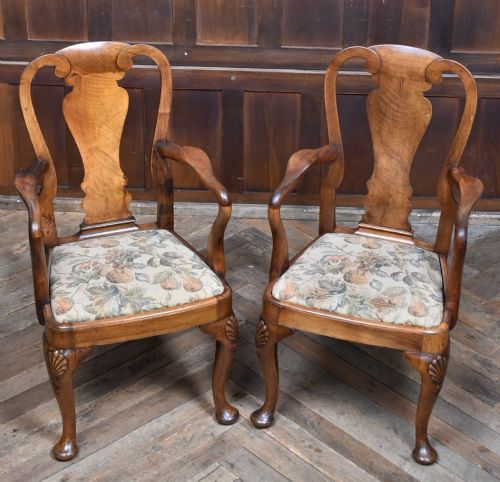
The versions most commonly met on this page include nineteenth-century dining sets and twentieth-century pairs executed in Queen Anne and later revival styles. Makers across Britain, France, Italy and the Netherlands utilised local hardwoods to create forms that function equally well as desk chairs or drawing room seating.
Object types span simple elbow chairs with drop-in seats to sculptural high-back examples featuring elaborate carving and marquetry inlay. Buyers encounter both single scholarly pieces and matched pairs intended for placement at the heads of dining tables.
How they were made
Cabinetmakers constructed these frames primarily from solid walnut, selected for its dense grain and capacity to hold crisp hand-carved detail. Joinery relied on traditional mortise and tenon construction, reinforced in many instances by shaped stretchers connecting the legs.
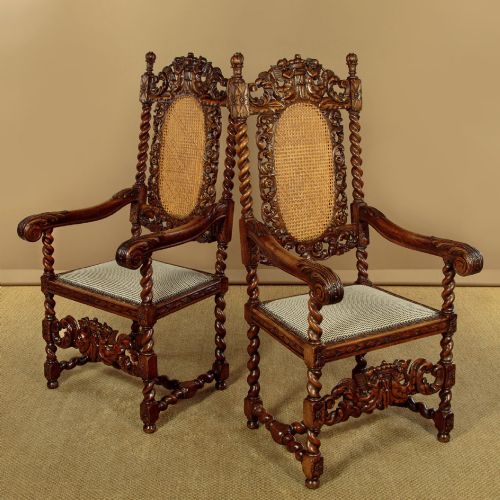
Seating areas incorporated drop-in upholstered pads, woven cane panels, or stretched leather secured with brass tacks. Upholstery materials such as velvet, fabric, and tapestry provided cushioning over webbing or squab foundations.
Surface decoration frequently involved marquetry inlay using contrasting veneers, along with applied mouldings and turned elements like barley twists. Lacquering and French polishing finished the wood, protecting the timber while emphasising its natural figure.
Several chairs arrive with stories of royal revivals, proving that past generations loved looking backward just as much as we do.
What varies in quality
The refinement of the carved ornamentation distinguishes standard production from exceptional examples, particularly where crest rails and cabriole legs show deep, deliberate hand-chiseling rather than shallow machine profiling. Proportional balance between the rake of the back and the sweep of the arms also determines the visual success of the piece.
The integrity of the original timber framing and the tightness of the structural joints dictate long-term durability. Chairs retaining their early cane panels or period upholstery foundations command greater interest among purists than those subjected to total structural rebuilding.
J. & T. Scott·Shoolbred
The Walnut Carver Armchairs Glossary
- Carver chair
- An armchair designed with open sides to accommodate the fuller garments of past centuries, typically used at the head of a dining table.
- Cane
- Woven rattan or split cane used to form light, supportive backrests and seats on seventeenth- and eighteenth-century style chairs.
- Marquetry
- Decorative patterns formed by fitting contrasting pieces of veneer into a prepared wooden surface, often seen on Dutch examples.
- Cabriole leg
- A furniture leg that curves outward at the knee and tapers inward toward the foot, characteristic of Queen Anne and eighteenth-century designs.
- Elbow chair
- An alternative historical term for a chair fitted with armrests, frequently used interchangeably with carver in period inventories.
Walnut Carver Armchairs: Frequently Asked Questions
What is a carver armchair?
A carver armchair is an armed seat traditionally designed to sit at the head or foot of a dining table. These chairs feature supportive elbow rests while maintaining a lighter profile than a heavy armchair.
In historical settings, they offered comfort to the host while matching the surrounding side chairs. Today, they function equally well as standalone desk chairs or occasional seating.
How do I date an antique walnut chair?
Dating relies on observing construction methods, timber selection, and stylistic details such as leg shapes and backrest proportions. Earlier pieces from the seventeenth and eighteenth centuries often display pegged joinery and hand-carving.
Later Victorian and Edwardian examples frequently reproduce these earlier styles while utilising machine-assisted production techniques. Examining the wear patterns on the feet and joints provides further clues to age.
Can these chairs be used daily?
Most antique walnut carver armchairs remain sturdy enough for regular use provided the structural joinery is secure. Sound timber frames handle normal sitting weight without issue.
Care should be taken with delicate cane panels or historic upholstery fabrics. Adding subtle protective pads can help preserve fragile surfaces during everyday use.
Why choose walnut over other timbers?
Walnut offers a dense, stable grain that allows carvers to execute intricate details without splintering. Its rich natural colour and attractive figure make it highly decorative.
Cabinetmakers favoured it for high-status seating because it held polish well and resisted warping better than softer woods. This durability explains why so many walnut chairs survive in good condition today.