
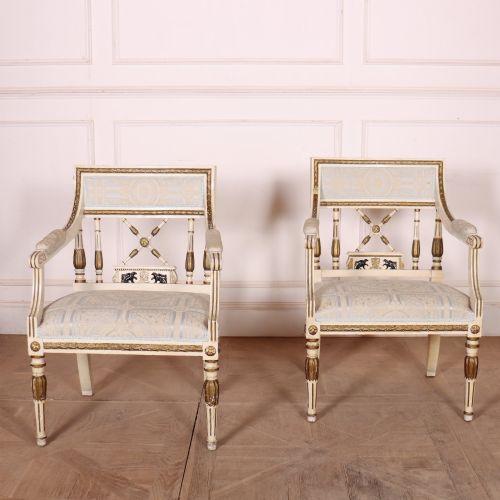
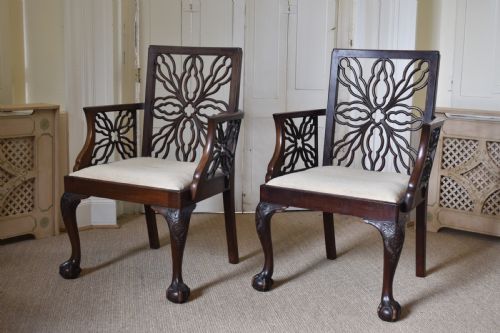
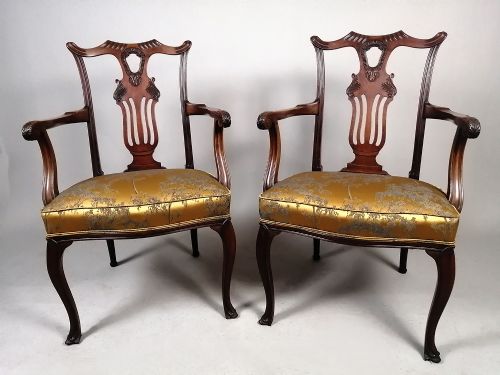
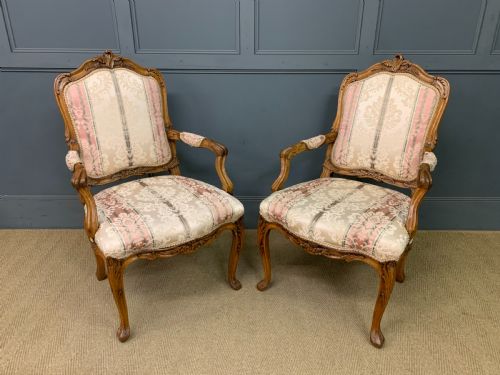
Vintage Carver Chairs Pair
These vintage carver chairs pair options bring matched seating with armrests into a dining room or study.
Vintage Carver Chairs Pair
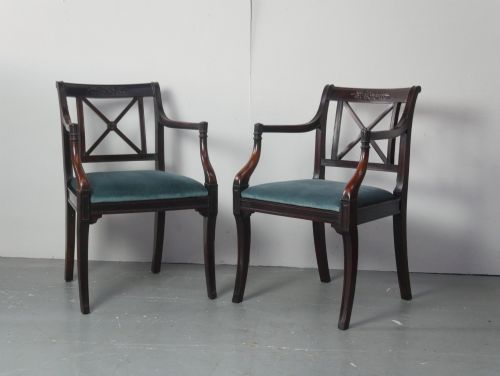
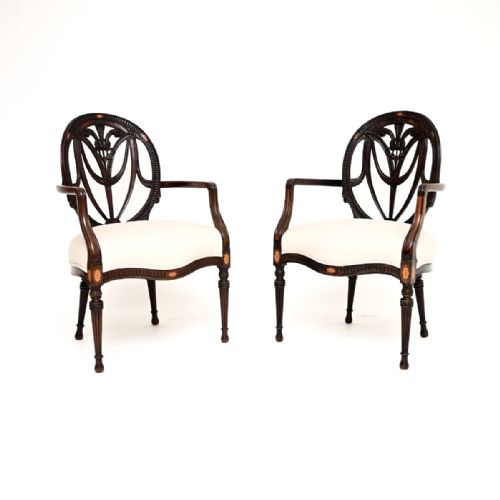
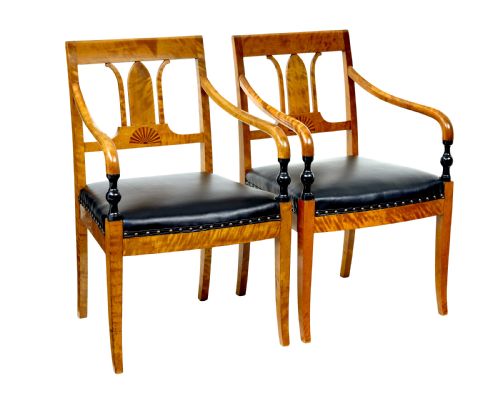
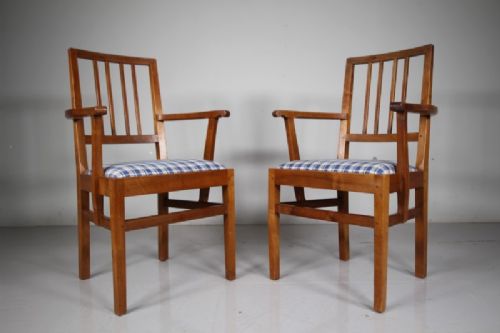
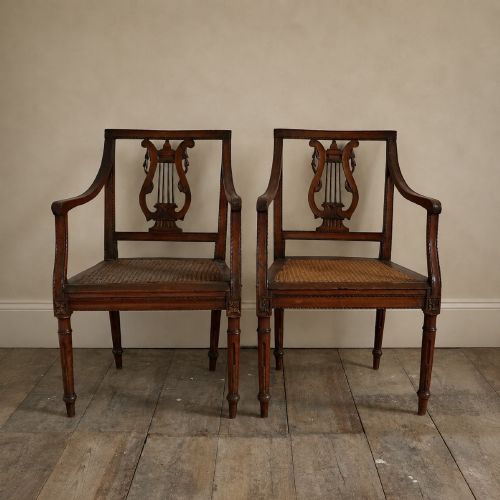
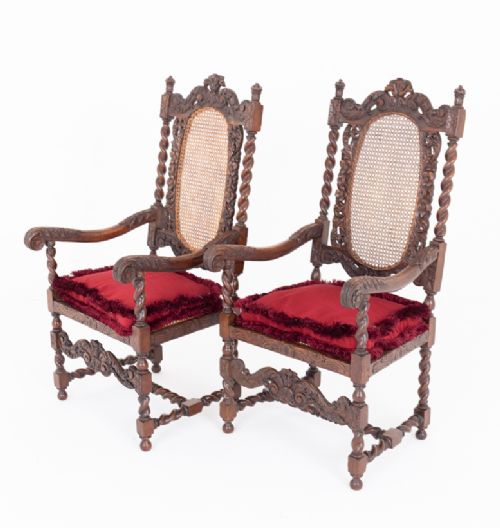
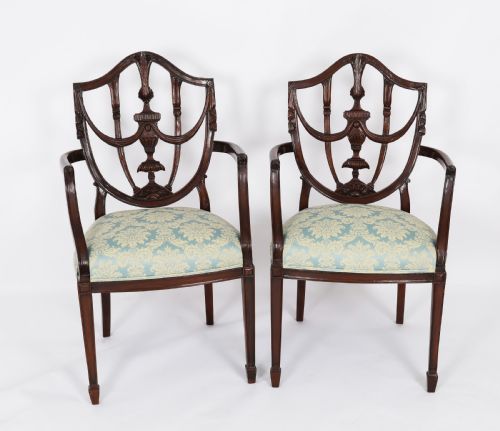
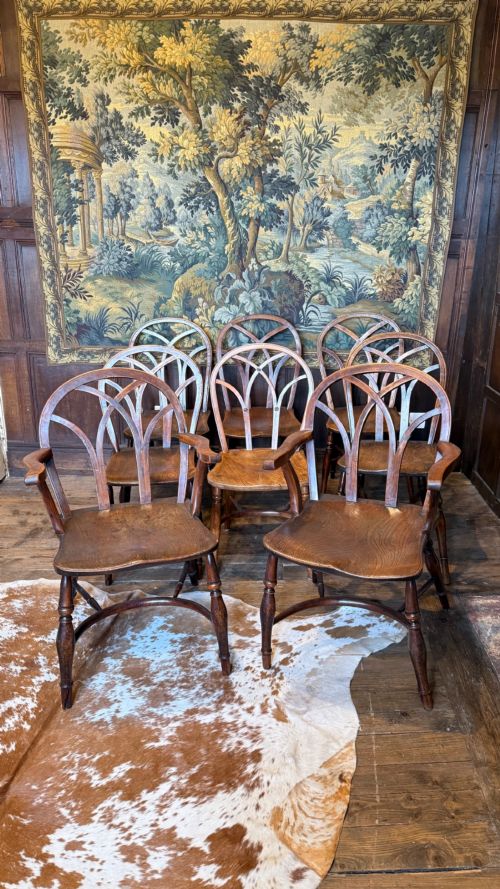
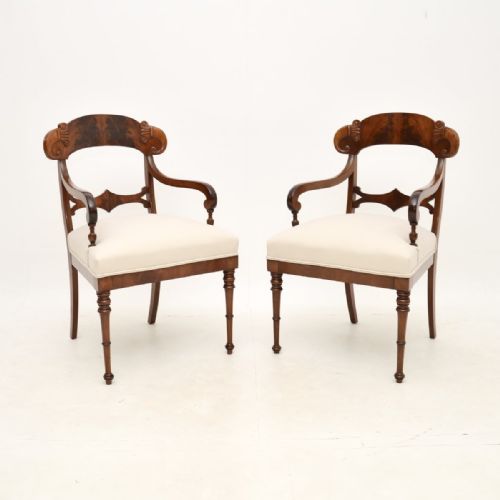
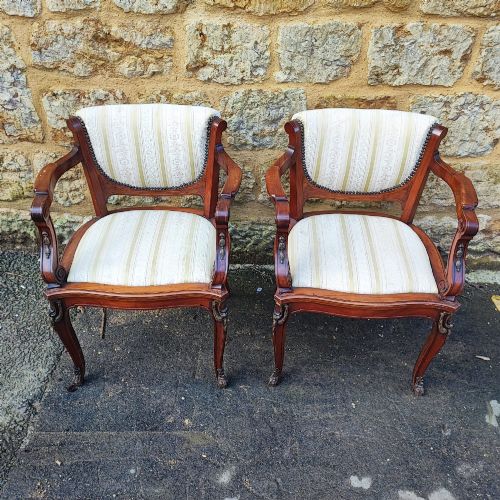
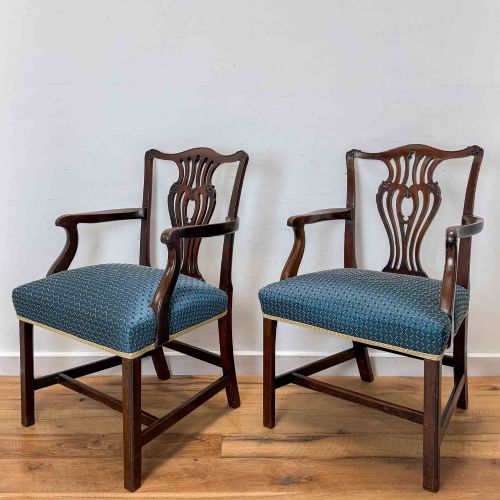
A vintage carver chairs pair provides two matching armchairs designed traditionally for the head of a dining table or as occasional seating. The selection spans periods from the nineteenth century through the nineteen-thirties, reflecting diverse historical revivals.
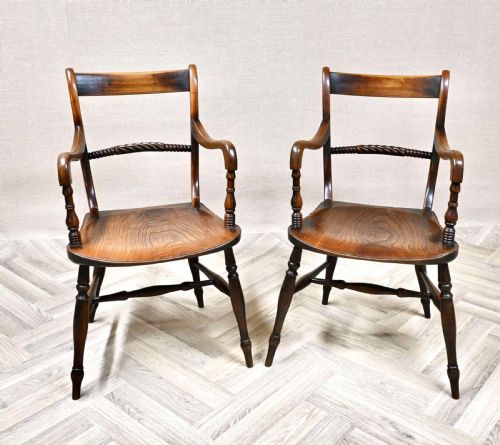
Most examples found here date across the Edwardian era, the nineteen-twenties, and the nineteen-thirties, utilising timber frames such as mahogany, oak, walnut, and elm. Buyers encounter formal revival styles alongside country-made spindle back designs.
Formations range from open armchairs and library chairs to salon chairs and Windsor variants. Many retain original or replacement upholstery in fabric, leather, cane, or tapestry.
Materials and construction methods
Frames rely on sturdy timbers including mahogany, oak, walnut, birch, and elm, often shaped using traditional joinery and steam bending for components like bentwood or Windsor backs.
Surface ornamentation incorporates hand carving, string inlay, satinwood detailing, lacquering, and brass hardware.
Seats employ cane webbing, leather upholstery, woven tapestry, or drop-in fabric pads secured with studs.
Some nineteenth-century Windsor chairs come equipped with crinoline stretchers, offering a curved metal or wooden brace that keeps restless feet off the floor.
Distinctions in quality and execution
The standard of a pair rests on the precision of the timber joinery, the crispness of any hand carving, and the selection of figured wood veneers.
Makers who utilised solid hardwoods and detailed inlay work produced durable frames that retain structural integrity over generations.
Upholstery execution and the preservation of original seating materials, such as intact cane panels or hand-tooled leather, elevate individual pairs.
Edward Barnsley·William Morris·Thonet
The Vintage Carver Chairs Pair Glossary
- Carver chair
- An armchair, traditionally placed at the head of a dining table. The design includes supporting armrests attached to the main frame.
- Caning
- A method of weaving rattan or plant material to form light, patterned panels for seats and backs. It provides flexible support.
- Inlay
- A technique where pieces of contrasting timber or material are inserted into recesses in the wood surface to form decorative patterns.
- Spindle back
- A chair back constructed from a series of thin, turned wooden rods. These vertical elements offer structural support while keeping the frame light.
Vintage Carver Chairs Pair: Frequently Asked Questions
How do I style a pair in a dining room?
Place the two carver chairs at opposite ends of a rectangular dining table to create a balanced focal point. They anchor the arrangement while offering comfortable armrests for seated guests.
Alternatively, position the pair together as fireside seating or flank a sideboard with them when not in use around the table.
Are these chairs suitable for daily use?
Solid timber construction and traditional joinery make these chairs durable for everyday seating requirements. Checking the stability of the frame and joints ensures long-term reliability.
Upholstered or caned seats may require gentle maintenance or occasional restoration depending on their age and condition.
How do I identify the period of a chair?
Examine the timber species, joinery techniques, and stylistic revival cues visible in the design. Details like string inlay point towards Edwardian or later revival periods.
Tool marks, timber shrinkage, and hardware fastenings offer further clues to help distinguish nineteenth-century examples from nineteen-thirties pieces.
What is the difference between a carver and an armchair?
The term carver traditionally denotes an armchair designed to match a set of dining chairs, historically used by the person carving the meat. Today, the names are often used interchangeably for any antique armchair.
Dining armchairs specifically serve at a table, whereas library or salon variants are proportioned for general room lounging.