
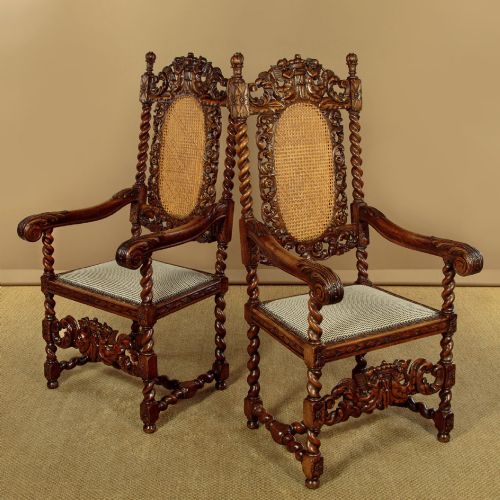
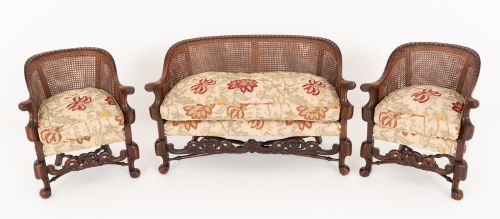
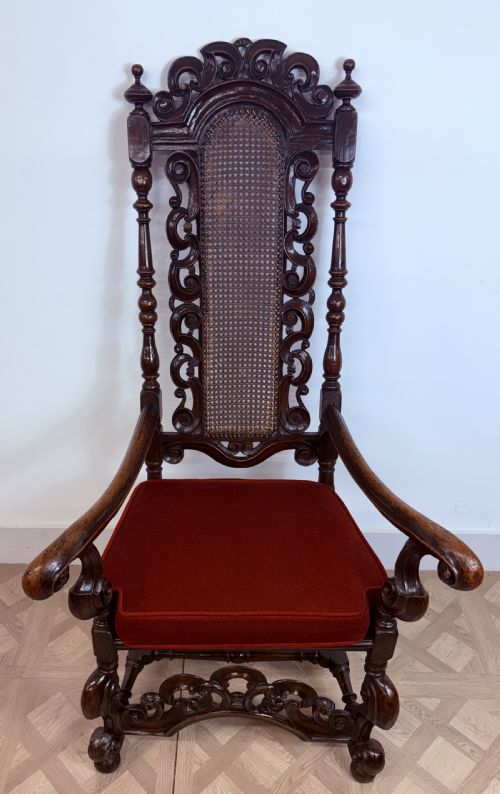
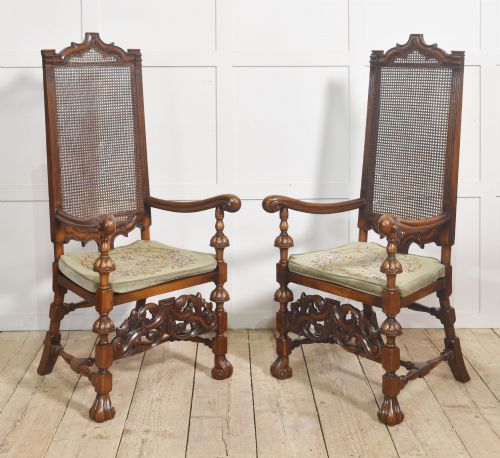
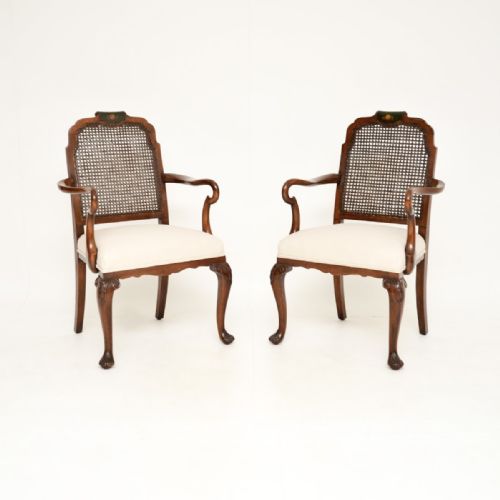

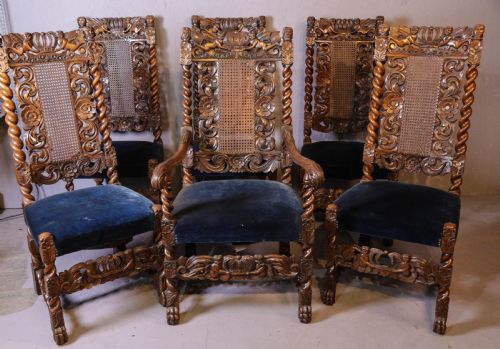


Walnut Caned Armchair
A walnut caned armchair brings together rich timber and woven panels, offering a seating choice shaped by centuries of design.
Walnut Caned Armchair
When you examine a walnut caned armchair, you encounter seating forms stretching from the seventeenth century through to the twentieth century. The selection spans distinct eras, including seventeenth-century origins, the Victorian period, and twentieth-century revivals.
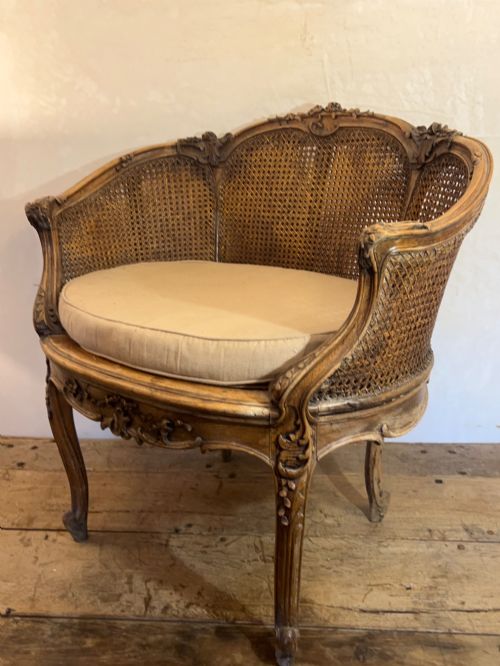
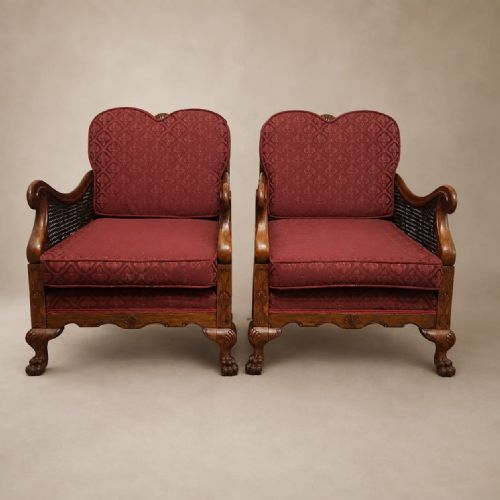
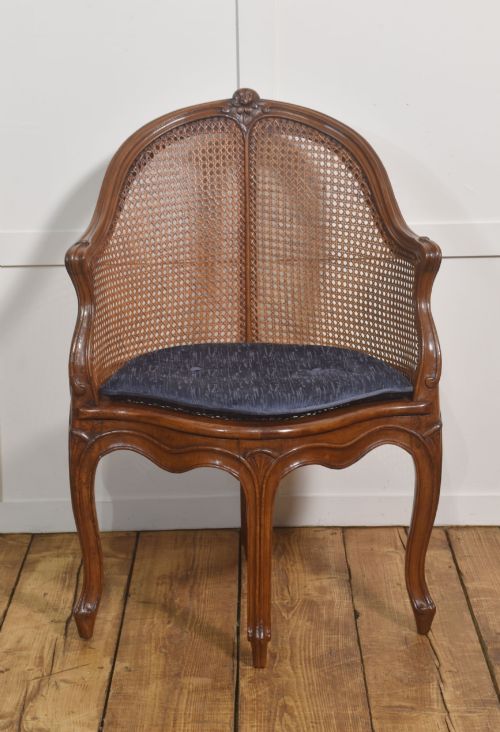
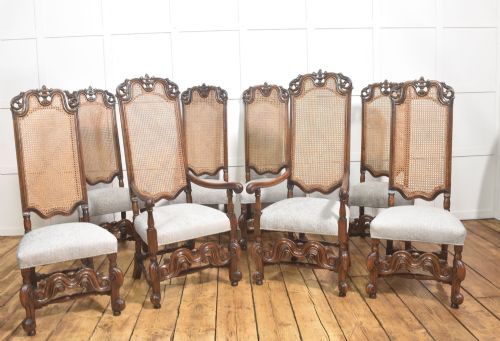
You will find various configurations on this page, from high-back dining chairs and low lounge seats to pairs of bergere armchairs and folding steamer chairs. Styles range across Carolean, Louis XV, and Renaissance revivals, alongside French and English interpretations.
The most frequently encountered pieces combine walnut frames with woven cane seats and backs, sometimes augmented by upholstered cushions or velvet fabric. The assortment includes single armchairs, pairs, and larger drawing room or dining sets.
Materials and construction methods
Makers built these frames using solid walnut, often selecting the timber for its grain pattern and deep colour before applying hand-carving techniques. Carving appears on high backs, rails, and arms, particularly in Carolean and heavily carved revival examples.
Woven cane, rattan cane, and split cane provide the characteristic flexible panels set into the wooden frames of seats and backs. Many pieces integrate textiles, upholstery fabric, or velvet alongside the cane to add softness and colour.
Foldable steamer deck chairs in walnut bring cane-weave relaxation from the liner deck straight into the Victorian drawing room.
Distinctions in construction and design
The standard of a walnut caned armchair rests on the depth and crispness of the timber carving and the tightness of the cane weaving. Elaborate relief work on seventeenth-century revival frames demands a higher level of joinery skill than plain structural rails.
Proportion and timber selection dictate the visual balance of the chair, separating straightforward utility seating from finer salon or library bergere armchairs. The integration of auxiliary materials like velvet and upholstery fabric also marks out the ambition of the original maker.
The Walnut Caned Armchair Glossary
- Bergère
- An enclosed armchair with upholstered sides and back, typically featuring a cane panel. These seats often include loose cushions for comfort.
- Carolean
- A seventeenth-century English design style associated with the reign of Charles II, characterised by scrollwork and rich walnut carving. Revival versions appeared frequently in later centuries.
- Caning
- The craft of weaving rattan or cane strips into an open mesh pattern for chair seats and backs. This technique provides flexible support.
- Splats
- The vertical wooden strips running down the centre of a chair back between the top rail and the seat. They appear in various contoured shapes.
- Rails
- The horizontal framing members connecting the legs of a chair and supporting the seat structure. They receive decorative carving in revival styles.
Walnut Caned Armchair: Frequently Asked Questions
What is a bergere armchair?
A bergere is an enclosed upholstered armchair with wooden framing, often incorporating woven cane panels along the sides and back. These seats originated in France and typically include a fitted cushion.
They appear in various styles from nineteenth-century interpretations to twentieth-century revivals, serving as deep lounge or library seating.
How do I identify a Carolean style chair?
Carolean chairs display heavy walnut carving, scrollwork, and high backs inspired by late seventeenth-century English design. You will notice intricate pierced crest rails and twisted upright supports.
Later revival periods reproduced these exact motifs during the Victorian era and around nineteen hundred.
Are these chairs suitable for daily use?
Most of these pieces function well for regular seating provided the cane work remains tensioned and the wooden joints stay stable. Many historic examples have sustained repairs or new weaving over the decades.
Placing them away from direct heat sources helps preserve both the walnut timber and the natural cane fibres.
What is the difference between cane and rattan?
Cane refers to the processed outer bark of the rattan palm, stripped into smooth strips for weaving furniture panels. Rattan is the overall climbing palm from which the cane material derives.
Both terms describe the resilient mesh surfaces seen on seventeenth-century through to twentieth-century seating.