
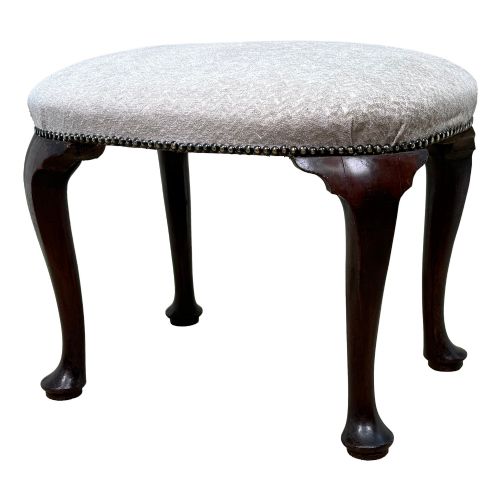
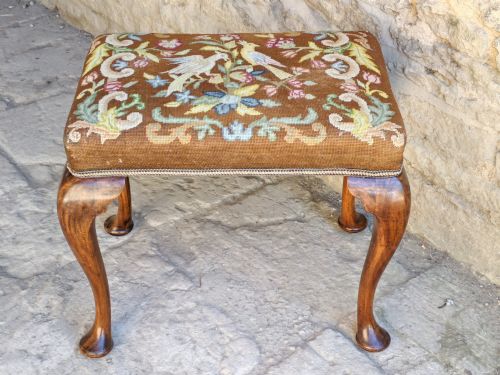
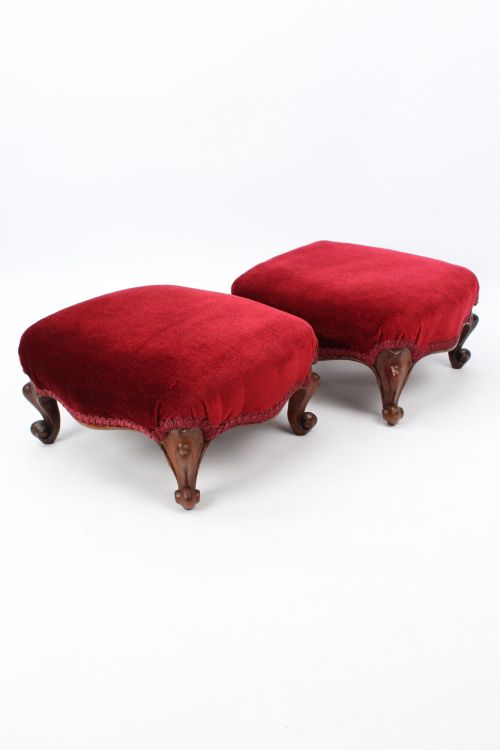
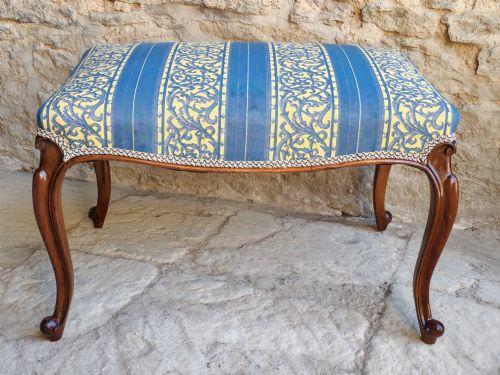


Walnut Cabriole Foot Stool
These walnut cabriole foot stool pieces are timber framed seats raised on curved legs that bring period elegance and practical comfort to any room.
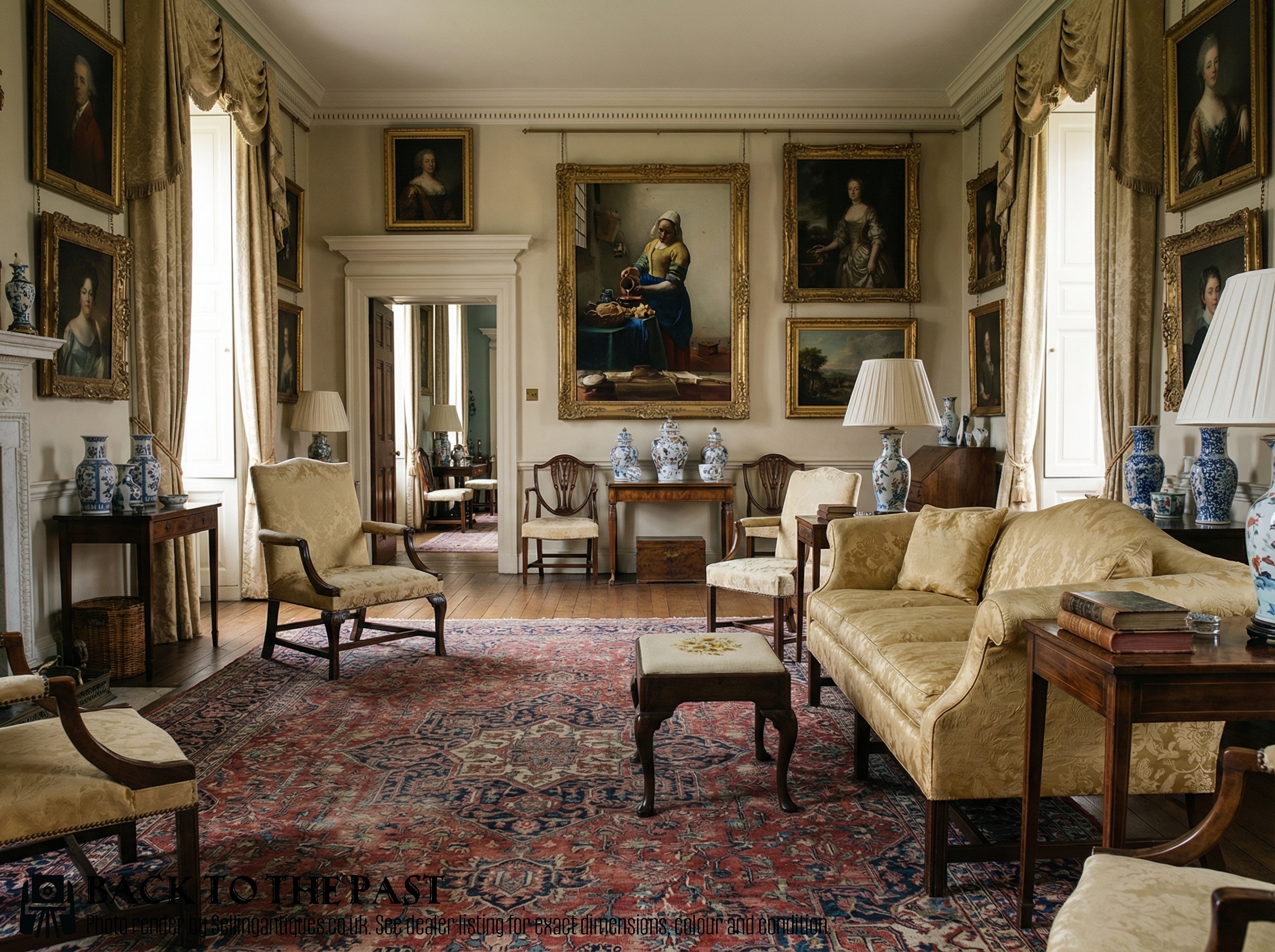
Walnut Cabriole Foot Stool
When you search for a walnut cabriole foot stool, you encounter low seating designed to support the feet or serve at a dressing table. The pieces available range from authentic eighteenth-century examples to later Victorian revivals.
Most items you meet on this page date from the Victorian era or copy earlier Queen Anne and George I styles. They appear in forms such as small single footstools, pairs, and oval shapes.
The core structure relies on dense timber frames beneath upholstered tops. Makers often shaped these as freestanding seats or dressing table accompaniments.
How they were made
Cabinetmakers used walnut for the structural frames, shaping the wood to form the characteristic curved legs. This timber provided both the necessary strength for weight-bearing joints and a suitable surface for carving.
Upholstery completed the tops using textiles such as velvet, fabric, and wool tapestry, sometimes finished with textile braid. Brass components occasionally appeared in the construction or detailing of the pieces.
Current listings span the eighteenth, nineteenth, and early twentieth centuries, featuring walnut, velvet, and tapestry.
What varies in quality
The standard of carving on the timber frames defines the distinction between standard production and superior examples. Crisp execution of the curved leg profile and refined surface finish set the better pieces apart.
The choice of covering material also marks a difference in grade. Hand-worked wool tapestry and rich velvet denote higher execution than simpler standard textiles.
The Walnut Cabriole Foot Stool Glossary
- Cabriole leg
- A furniture leg that curves outward and then tapers inward, mimicking an animal's leg. This form became a defining feature of eighteenth-century and revival seating.
- George I period
- The era spanning the early eighteenth century, known for restrained walnut furniture designs. Pieces from this time display clean lines and high-grade timber selection.
- Tapestry
- A heavy textile featuring woven designs, frequently used for seat upholstery. Wool versions provide durable and decorative surfaces on period footstools.
Walnut Cabriole Foot Stool: Frequently Asked Questions
How do I date a walnut stool?
Examine the timber colour, the sharpness of the carving, and the construction methods used in the frame. Eighteenth-century examples display different wood patination compared to nineteenth-century revivals.
Compare the leg profile and upholstery style against documented pieces from the same era to confirm the period.
Were these stools used for dressing tables?
Many smaller footstools doubled as seating for dressing tables in period bedrooms. Their compact height allowed them to tuck neatly beneath furniture when not in use.
They provided portable, low-level seating that could easily move around a parlour or dressing room.
How should I clean the tapestry top?
Gentle surface vacuuming through a mesh guard removes loose dust without disturbing fragile wool threads. Avoid using water or liquid cleaners on antique textiles.
Consult a professional textile conservator if deeper cleaning becomes necessary to preserve the fabric.
Can I use these daily?
These period pieces function well for gentle daily use, provided the frame joints remain stable. Regular weight-bearing demands sensible placement and care.
Avoid dragging the stools across carpets or hard floors to protect the delicate wooden feet from impact.