
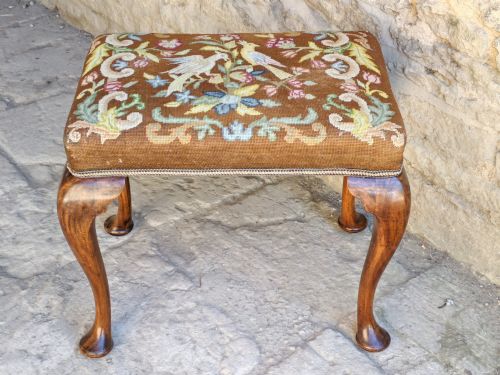
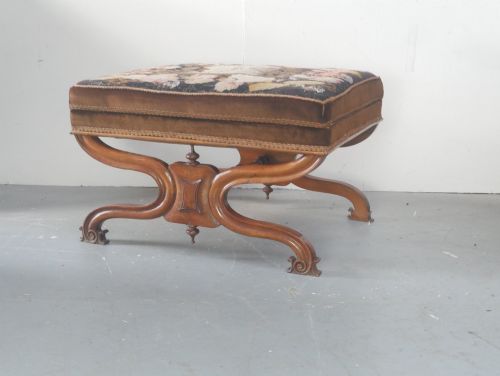
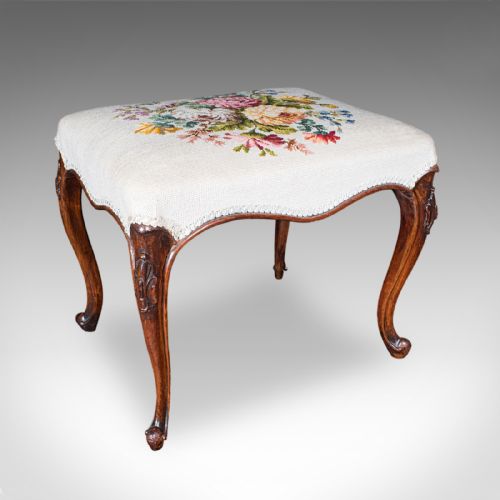
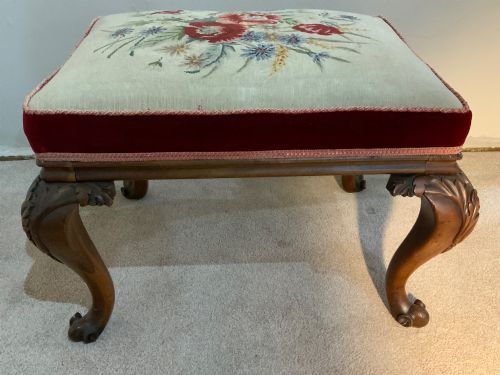
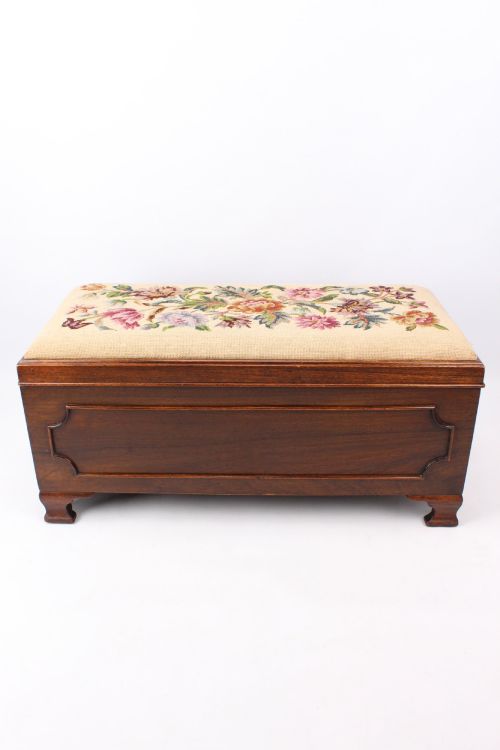
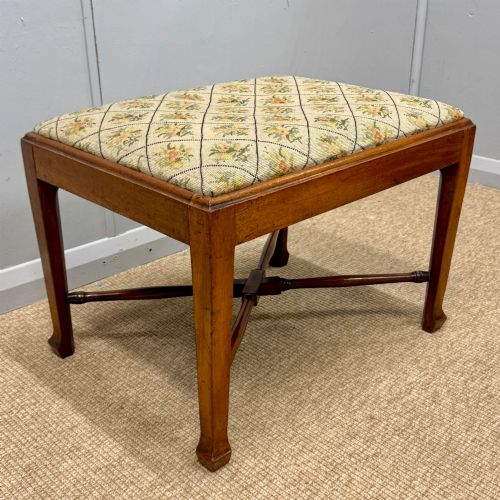
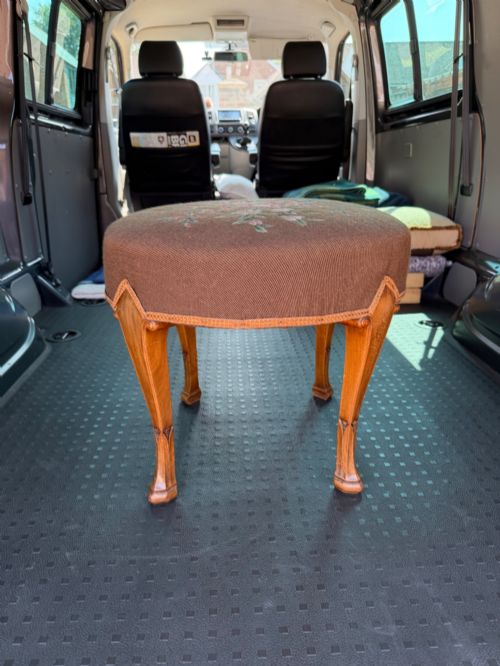
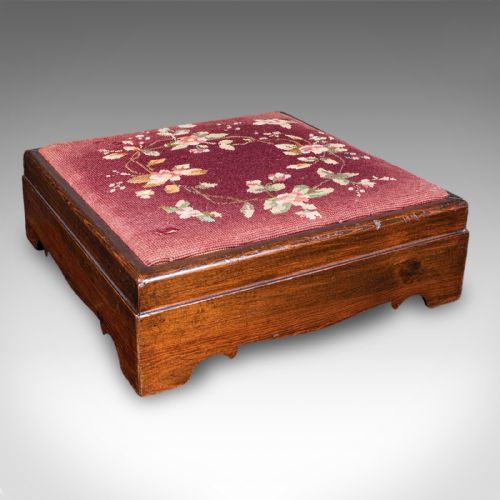


Needlepoint Upholstered Footstool
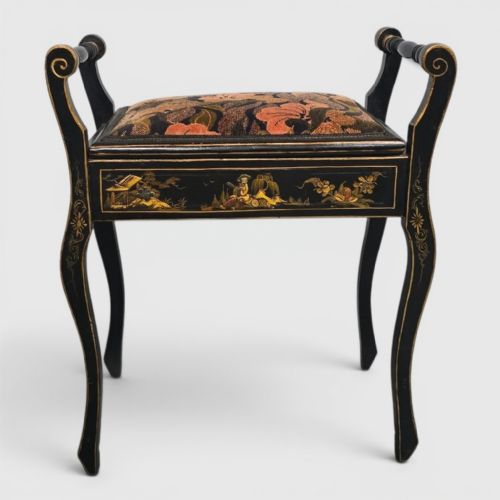
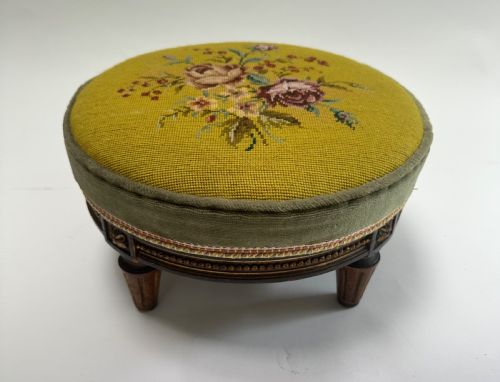
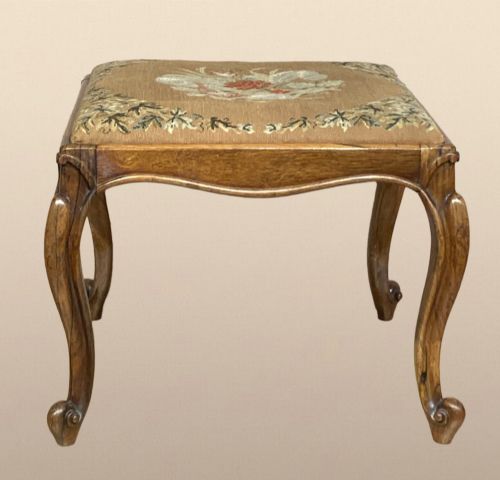
Needlepoint upholstered footstool examples combine historic timber frames with tactile textile work designed to rest feet near firesides and dressing tables.
Needlepoint Upholstered Footstool
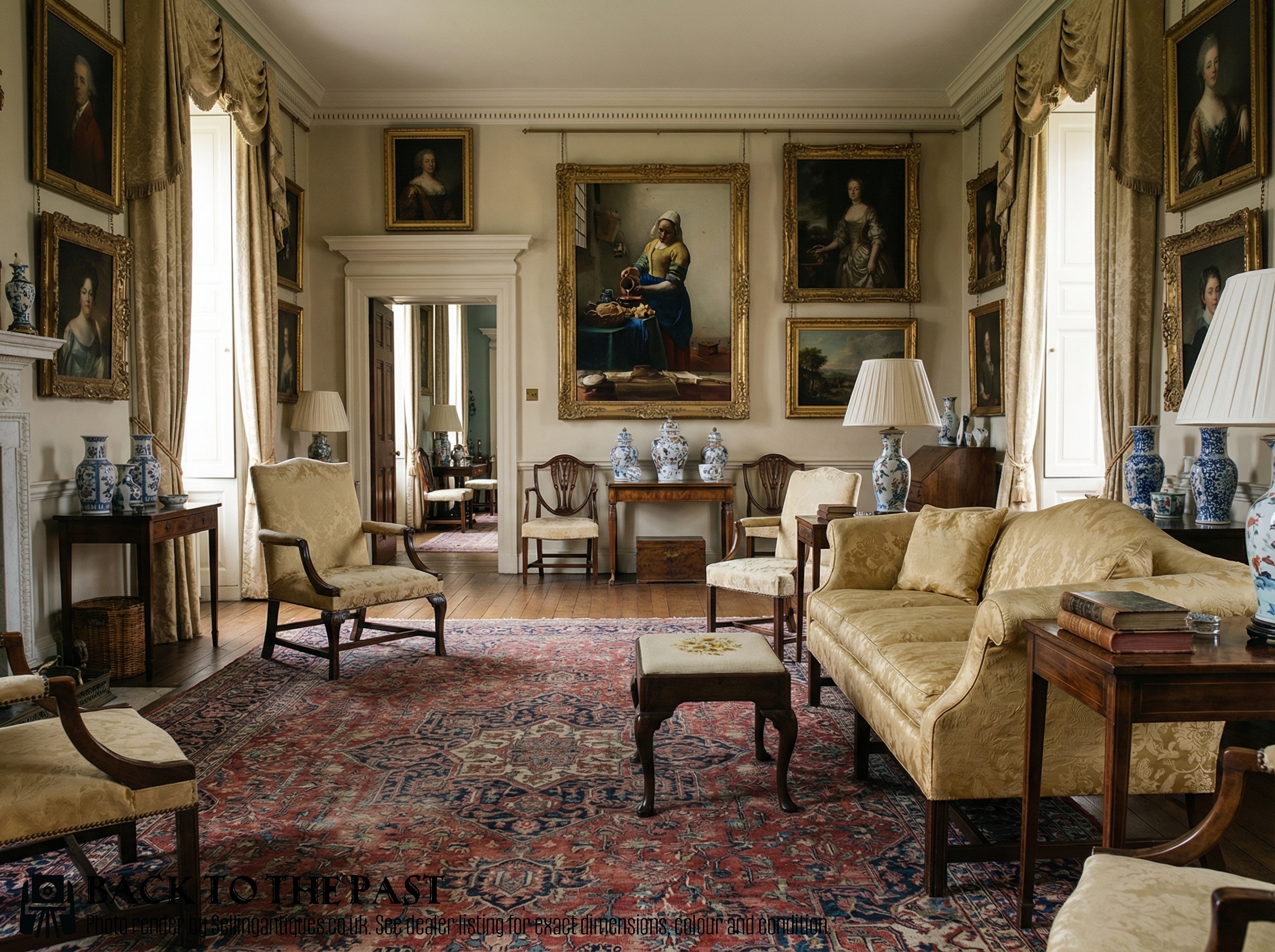
A needlepoint upholstered footstool is a low seat designed for firesides, dressing tables, and drawing rooms, appearing frequently in Victorian and nineteenth-century forms.
The selections span compact fireside stools and larger dressing table stools, resting on various woods including walnut, mahogany, and rosewood.
Makers utilised distinct revival aesthetics like Queen Anne style, Chippendale style, and Louis XV revival alongside simpler nineteenth-century vernacular designs.
Materials and Construction
Frames rely on durable hardwoods such as walnut and mahogany, carved with cabriole legs, cross stretchers, or simple turned supports.
Seating surfaces utilise hand-worked tapestry, wool, and needlepoint textiles stretched over traditional padding to support daily use.
Details incorporate brass fittings, velvet trims, and painted finishes on select French, Italian, and English frames.
The listings show walnut and mahogany as the dominant timbers, accompanied by occasional pitch pine, birch, and oak.
The Measure of Quality
Quality rests upon the crispness of timber carving, the structural integrity of the frame joints, and the density of the wood selected.
The needlepoint upholstery itself dictates the character, where tight, even stitching and well-preserved wool colours elevate the piece significantly.
The Needlepoint Upholstered Footstool Glossary
- Needlepoint
- A form of counted thread embroidery stitched on a stiff canvas mesh. It creates the durable pictorial surfaces seen on these seats.
- Cabriole leg
- A furniture leg that curves out and then in, resembling an animal's leg. This shape defines many period styles.
- Cross stretcher
- Wooden rods connecting the legs horizontally for added stability. They often feature a central finial or turning.
- Tapestry
- Hand-woven textile traditionally used for wall hangings or heavy upholstery. It provides a rich texture for footstool tops.
Needlepoint Upholstered Footstool: Frequently Asked Questions
How are these footstools cleaned?
Dust timber frames gently with a soft cloth and avoid abrasive polishes that damage antique finishes.
Vacuum needlepoint textiles on a low suction setting through a mesh screen to protect old wool threads.
Can I use a footstool daily?
Sturdily constructed nineteenth-century timber frames tolerate regular gentle use in domestic seating arrangements.
Fragile needlework or antique wool benefit from mindful placement where heavy foot traffic is absent.
How do I date a stool?
Examine the wood species, turning styles, and joinery methods visible underneath the frame.
Compare the needlework patterns and colour palettes against documented Victorian and Georgian revival design trends.
What is a gout stool?
A specialised low footrest designed with an adjustable sloping top to elevate painful joints.
These compact pieces often feature original tapestry covers and turn up in nineteenth-century archives.